

Weight Loss Batch Cooking: Save Money & Time [Guide]


Trying to beat your local Strava segment goals?
Fine-tune your training strategies to hit your target stats without downloading another app. Try asking Raye: 'How can I structure hill repeats to build short-segment power?' Ask how to hit your target
Let's be honest for a moment: trying to stay healthy in the modern world feels a bit like swimming upstream, doesn't it? We are living in what experts call an "obesogenic" environment. That is a fancy way of saying that the world around us is practically designed to make us gain weight.
Master batch cooking without the reading. Hit play below
Everywhere you look, there is food that is delicious, cheap, and packed with energy, but offers very little in the way of actual nutrition. At the same time, life has become incredibly expensive. Food prices are climbing, and we are all working harder and longer hours than ever before. When you are tired, stressed, and hungry, the last thing you want to do is chop vegetables. It is far easier to order a takeaway or grab a meal deal.
But here is the catch: that convenience comes with a heavy price tag, both for your waistline and your bank balance.
This isn't about going on a crash diet for a summer holiday. This is about playing the long game. It is about building a lifestyle that performs well forever, keeping you fuelled, happy, and financially savvy. The secret weapon? It isn't a magic pill. It is strategic meal preparation.
By reclaiming control of your kitchen, you can bypass the "convenience tax" restaurants charge, optimise your health, and actually reclaim your free time. Let's dive into how you can turn your kitchen into an engine for weight loss and wealth.
The Modern Trilemma: Health, Wealth, and Time
Most of us feel like we are stuck in a triangle where we can only pick two: Health, Wealth, or Time. We feel "time-poor," so we rely on convenience foods. In fact, recent data shows that we are spending record amounts on dining out.
The problem is that restaurant meals-even the "healthy" ones-are engineered to taste amazing. They often hit a specific ratio of salt, sugar, and fat that overrides your brain's natural "I'm full" signals. A single takeaway meal can easily contain half your daily calories without giving you the vitamins and minerals you actually need to feel energetic.

Hit a wall with form, pacing, or fatigue?
Skip searching forums. Chat directly on this page with our performance coach to solve training issues in seconds: 'How do I prevent side stitches on long runs?' Troubleshoot your run
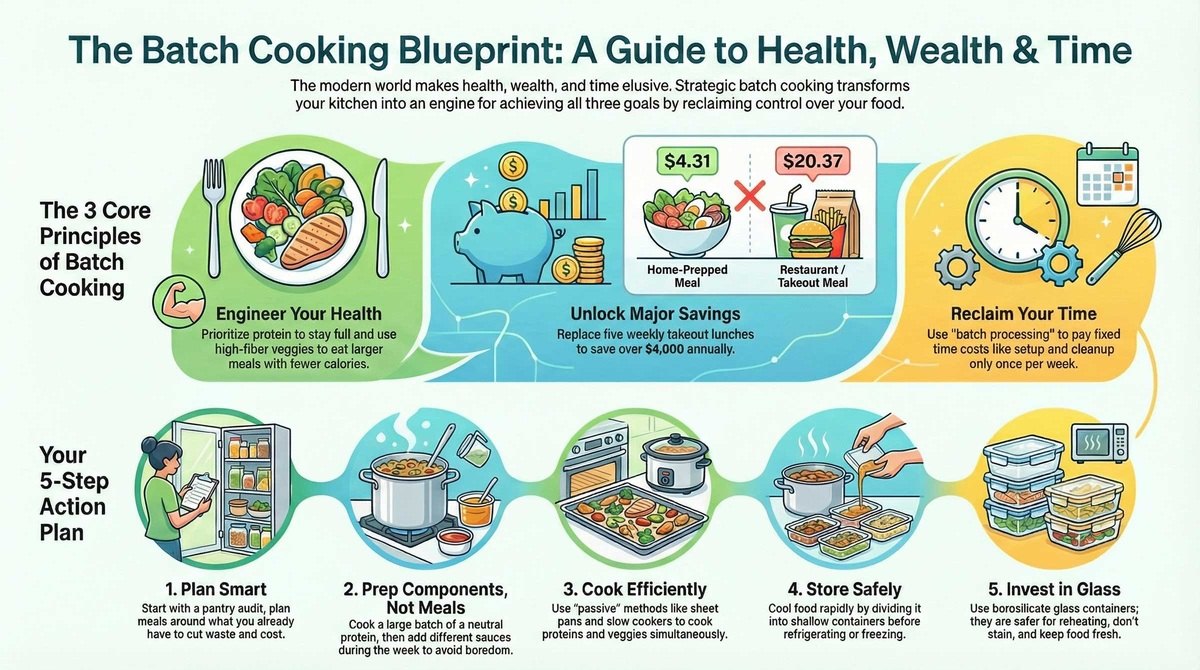
Then there is the cost. When you break it down, a meal out (or a delivery) costs about four to five times more than making a similar, healthier version at home. That is a massive financial leak. By learning to batch cook, you solve all three problems at once. You get the health benefits of controlling your ingredients, the wealth benefits of buying in bulk, and the time benefits of cooking once to eat multiple times.
The Biology of Weight Loss (Without the Jargon)
To make meal prep work for weight loss, we need to understand a tiny bit of biology. Weight loss isn't just about "calories in versus calories out." While calories matter, your hormones play a huge role in how hungry you feel and whether your body stores fat or burns it.
When we eat highly processed foods, our insulin (the storage hormone) spikes, which can make it harder to burn fat. By cooking at home, you control the sauces and marinades, avoiding the hidden sugars that spike insulin.
But it's not just about eating less; it's about eating right to keep your muscle. If you just cut calories drastically, you risk losing lean muscle mass. Muscle is your metabolic engine-it burns calories just by existing. We want to hold onto that! This means our meal prep needs to be "protein-forward."
The Magic of Protein Protein is the MVP of weight loss. It has a high "thermic effect," which simply means your body burns more calories digesting protein than it does digesting fats or carbs. Plus, protein makes you feel fuller for longer.
-
The Strategy: When planning your meals, don't start with the rice or pasta. Start with the protein (chicken, lentils, tofu, fish) and build the meal around that.
Volume Eating: The "Fullness" Hack Have you ever eaten a small bowl of pasta and felt hungry an hour later? That is because processed foods are calorie-dense but don't take up much room in your stomach. The solution is "volume eating." This involves prioritising high-fibre foods like broccoli, beans, and leafy greens. Fibre stretches your stomach, sending a signal to your brain that says, "I'm full!" Think of it this way: 200 calories of pasta is a tiny handful. 200 calories of broccoli is nearly four cups. By swapping some of the dense carbs for high-fibre veggies, you can eat a huge plate of food, feel stuffed, and still be in a calorie deficit.
The Economics of the Home Kitchen
Let's talk money. In uncertain economic times, your kitchen is your best defence against inflation. We often think healthy food is expensive, but that is usually because we confuse "nutrient-dense food" with "marketing hype." You don't need organic kale chips or expensive superfood powders.
The Real Superfoods are Cheap When you look at the cost per nutrient, basic staples are incredibly affordable:
-
Legumes (Lentils, Beans, Chickpeas): These are the most cost-effective protein source on the planet. They are shelf-stable, high in fibre, and cost pennies per serving.
-
Frozen Produce: This is a secret weapon. Frozen spinach and berries are often flash-frozen at peak ripeness, meaning they retain more nutrients than the "fresh" stuff that has been sitting on a truck for a week. plus, there is zero waste-you only use what you need.
-
Root Vegetables: Potatoes, carrots, and sweet potatoes are cheap, filling, and great for energy.
-
Canned Fish: Fresh salmon is lovely, but canned salmon or tuna gives you the same high-quality protein and Omega-3s for a fraction of the price.
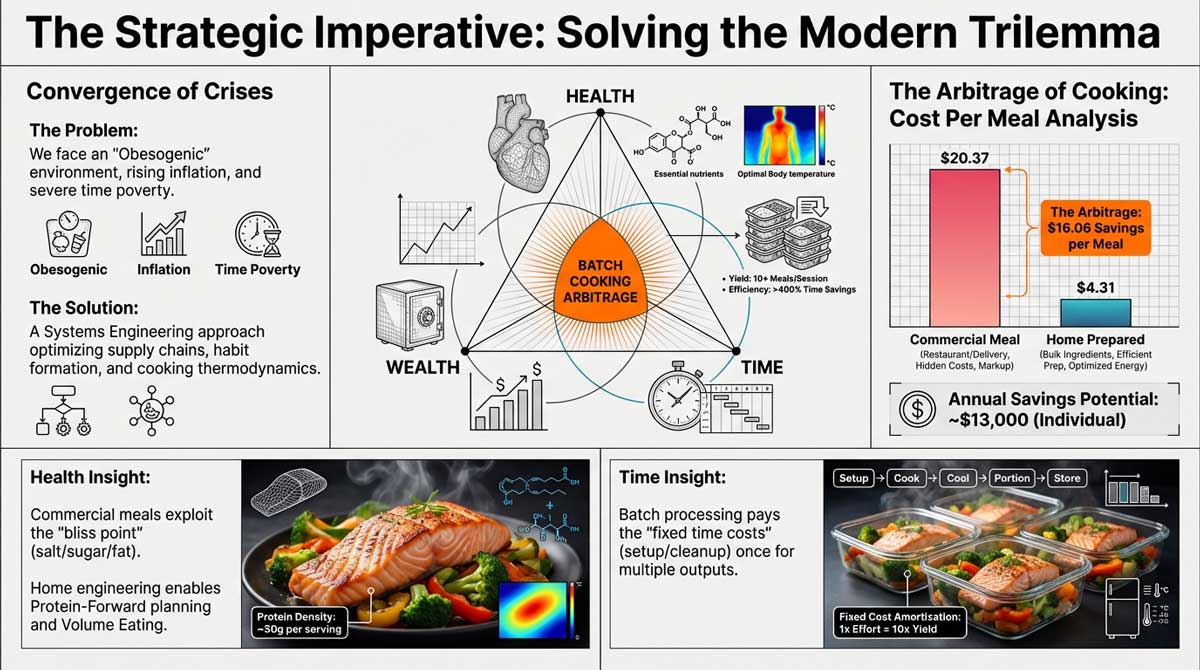
The Savings Add Up If you replace just five bought lunches a week with home-prepped meals, you could save over £80/$100 a week. Over a year, that is thousands back in your pocket. That is money you could put towards a holiday, a gym membership, or savings.
Cooking Logistics: Work Smarter, Not Harder
The biggest barrier to meal prep is the idea that it takes all Sunday. "I don't have time to cook" is a common feeling. But here is the truth: cooking seven chicken breasts takes exactly the same amount of time as cooking one. The oven doesn't care.
The goal is to utilise "Batch Processing." This means grouping similar tasks to save time.
The "Cook Once, Eat Thrice" Method One reason people quit meal prepping is boredom. No one wants to eat the exact same meal five days in a row. The solution is to prep components, not full meals. Cook a large batch of a "neutral" protein-like shredded chicken or roasted tofu-with just salt and pepper. Then, change the flavour profile throughout the week:
-
Days 1 & 2: Mix with salsa, black beans, and corn for a Mexican-style bowl.
-
Days 3 & 4: Add cucumber, tomato, feta, and lemon juice for a Mediterranean vibe.
-
Day 5: Toss with some BBQ sauce and serve with a sweet potato. You cooked the meat once, but you are eating three different cuisines.
Shopping Like a Pro Efficiency starts before you even enter the supermarket. Supermarkets are designed to make you impulse buy.
-
Shop Your Cupboards First: Before you leave, check what you already have. This prevents buying a fifth jar of cumin or letting that bag of rice go to waste.
-
Map the Store: Write your list in the order of the store layout (Produce first, then Dairy, etc.). This stops you from zig-zagging back and forth, which saves time and reduces the chance you'll walk past the biscuit aisle three times.
-
Use Tech: If you have leftover ingredients and don't know what to do, ask an AI tool like ChatGPT. Type in "I have lentils, half an onion, and some spinach, what can I make?" It reduces the "brain fog" of decision-making.
High-Efficiency Cooking Methods
You don't need to be a Michelin-star chef. You just need to use passive cooking methods.
The Sheet Pan Saviour Roasting is the best method for meal prep. It creates great flavour without needing heavy sauces. You can roast your protein (salmon, chicken thighs) on one tray and your veggies (broccoli, peppers) on another. They cook at the same time while you go and do something else.
The Slow Cooker (Dump and Go) For tougher, cheaper cuts of meat or dried beans, the slow cooker is magic. It requires about ten minutes of prep in the morning, and you come home to a house that smells amazing and a meal that is ready to eat.
Easy Recipe Ideas to Get You Started
You don't need complex recipes. You need "archetypes"-blueprints that you can tweak.
1. The Automated Breakfast: High-Protein Overnight Oats Mornings are chaotic. Solve breakfast the night before.
-
The Base: Rolled oats and chia seeds.
-
The Protein: Greek yoghurt and a scoop of protein powder. This creates a pudding-like texture that feels like a treat but is packed with nutrition.
-
The Method: Mix it in a jar, leave it in the fridge overnight. Grab and go in the morning.
2. The "Adult Lunchable" If you hate soggy sandwiches or queuing for the microwave at work, this is for you. It's a cold assembly box.
-
Protein: Hard-boiled eggs, cooked chicken slices, or edamame.
-
Crunch: Raw snap peas, carrots, or cucumber.
-
Carb/Fat: Whole grain crackers, hummus, or a handful of nuts. It mimics "grazing," which can be very satisfying, and portion control is automatic based on the container size.
3. The Friction-Reduced Dinner: The 5-Ingredient Rule When willpower is low in the evening, keep it simple.
-
Salmon & Greens: Salmon fillets and bok choy on a tray with a little miso or soy sauce. Roast. Done.
-
Sweet Potato Hash: Brown some turkey mince in a pan, add diced sweet potatoes and peppers, and use taco seasoning. It reheats beautifully.
Safety and Storage: Keeping it Fresh
You don't want your hard work to go to waste (or make you unwell).
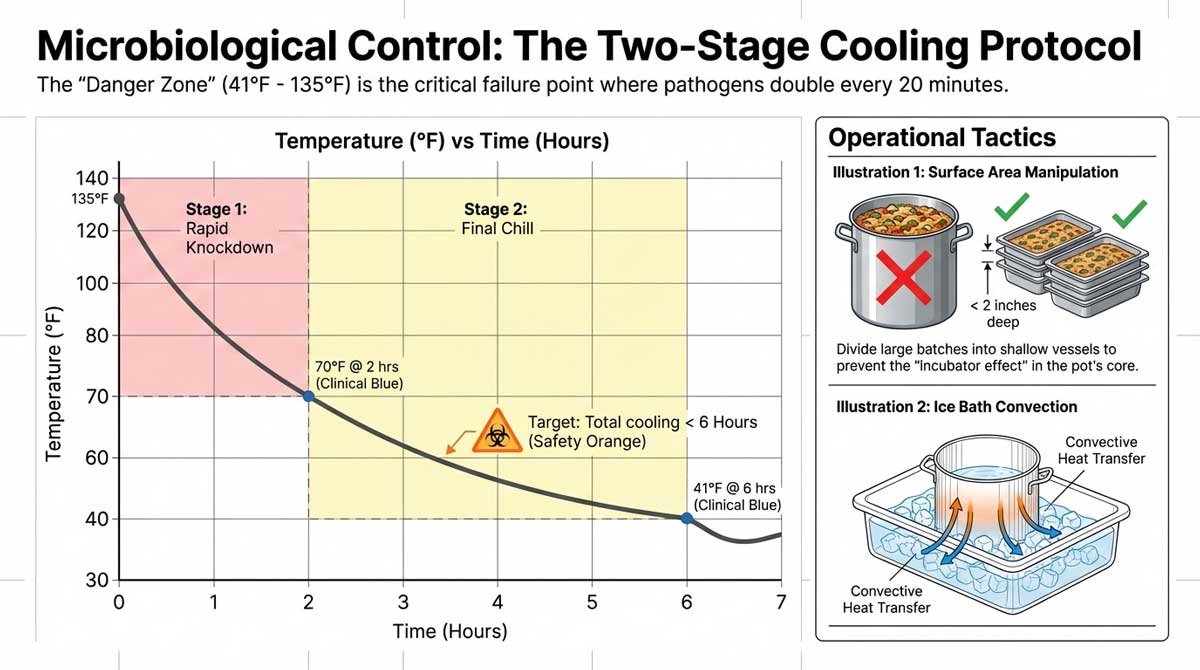
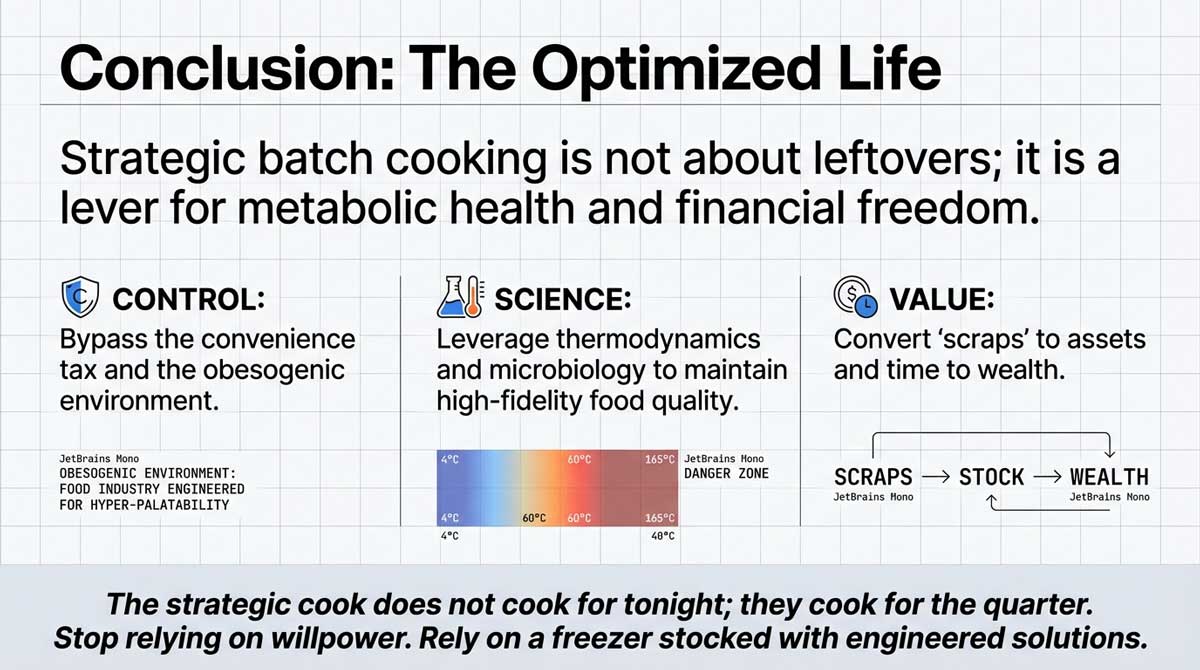
Cool It Quick Don't put a massive pot of hot chilli straight into the fridge. It stays hot in the middle for too long, which is a playground for bacteria. Divide it into shallow containers so it cools down fast.
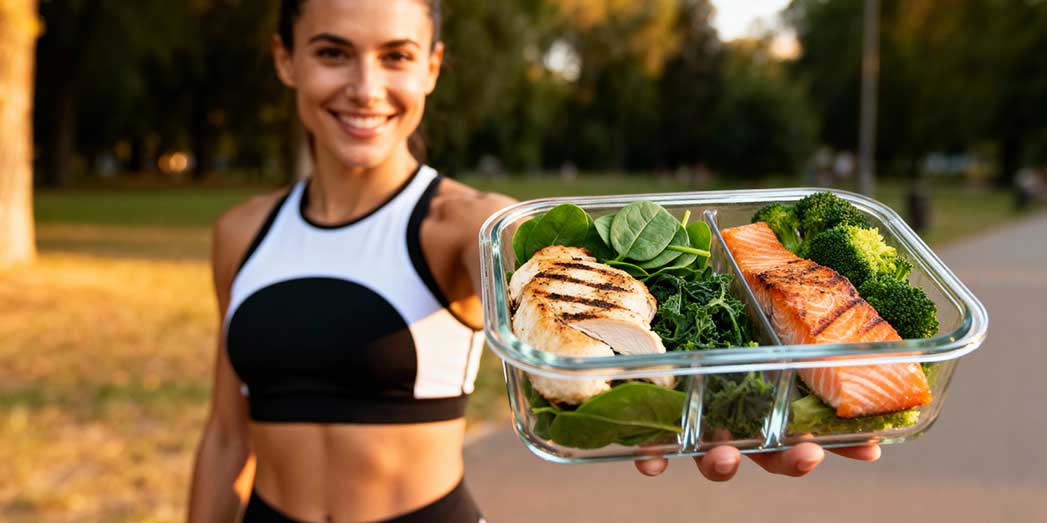
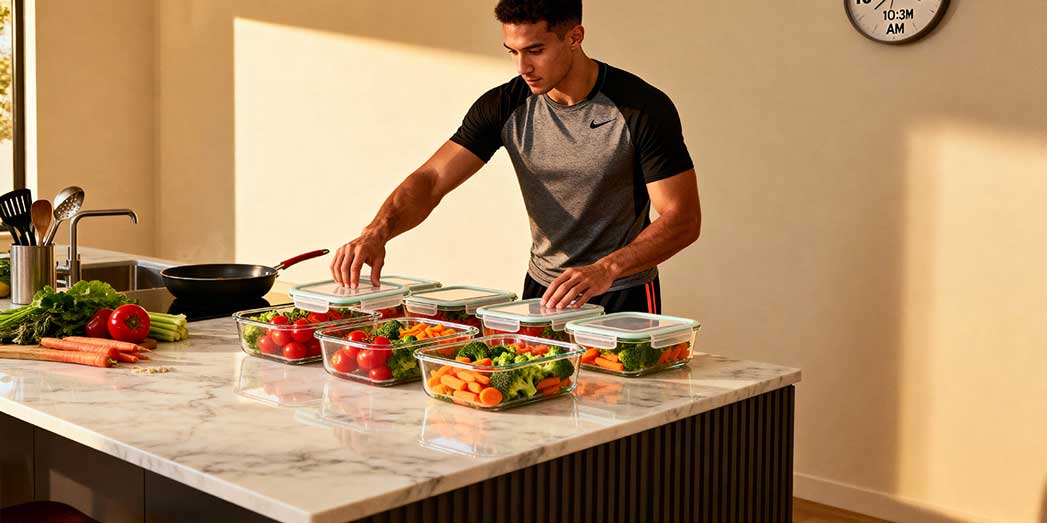
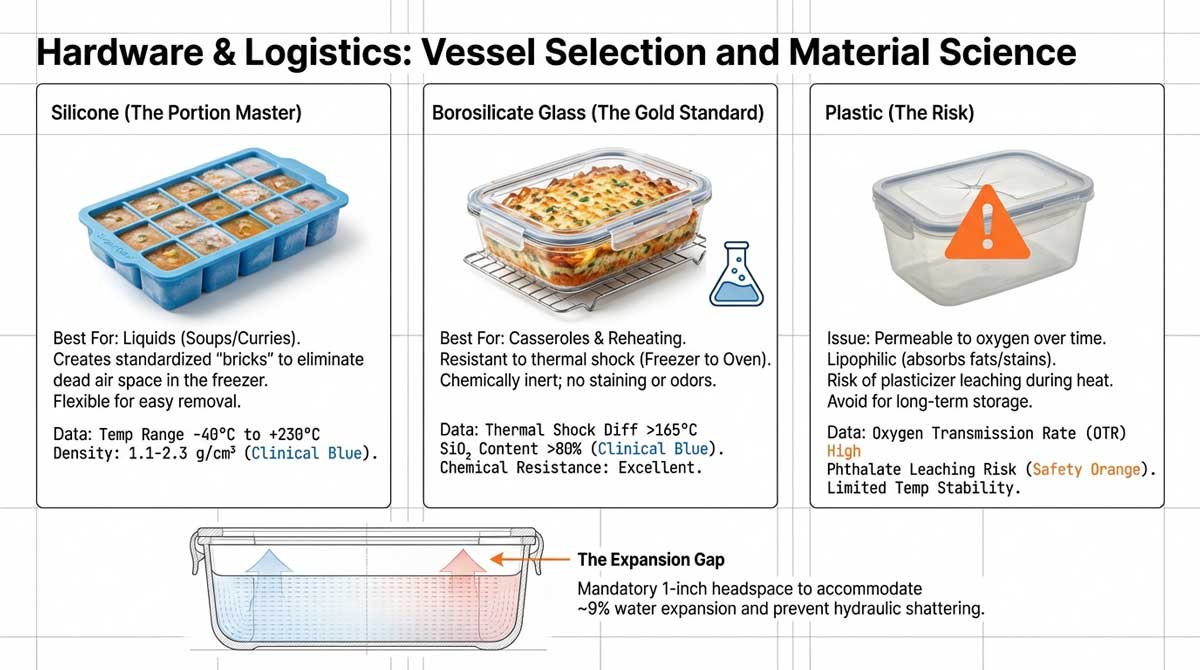
Glass vs. Plastic If you can, invest in glass containers (specifically borosilicate glass).
-
Plastic: It absorbs smells, gets stained by tomato sauce, and can leach chemicals when you microwave it.
-
Glass: It is clean, doesn't stain, and is safe to go from the freezer to the oven. Plus, food just tastes better out of glass.
The Freezer is Your Friend The fridge is good for 3-4 days. If you prep on Sunday, eat those meals by Thursday. For Friday, use your freezer stash.
-
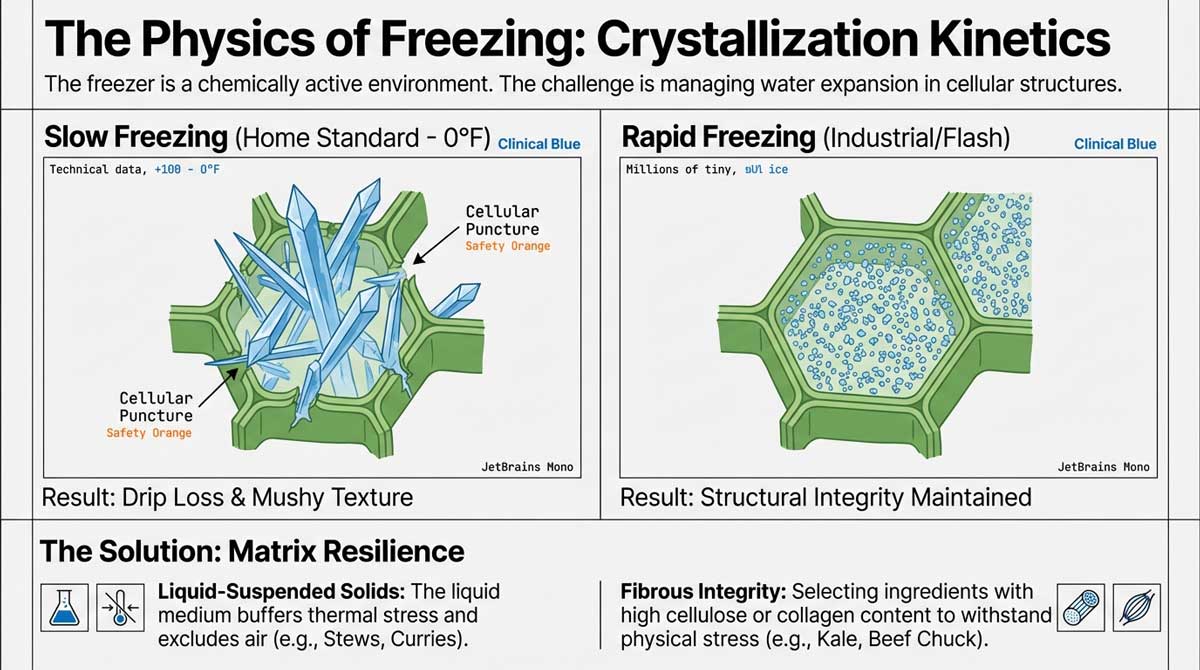
Tip: Don't freeze salads or cucumbers-they turn to mush. Cooked stews, curries, and meats freeze perfectly.
The Long Game
Shifting to this way of life is a game-changer. It moves you away from "reactive" eating-where you grab whatever is nearest because you are starving-to "proactive" fuelling.
The data is clear: the home kitchen is the most effective tool for managing your weight and your wallet. It might take a little practice to get into the rhythm, but the compounding returns are huge. You will have more money, better health, and ironically, more free time. It is not about being perfect; it is about being prepared.
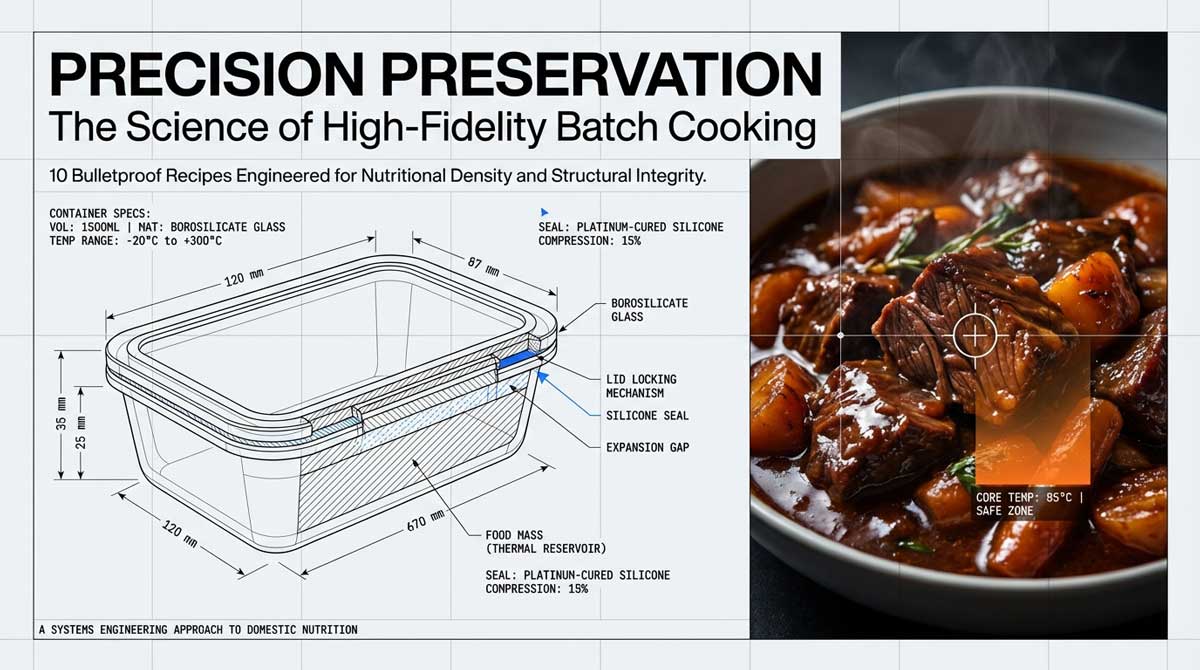
10 "Bulletproof" Freezer Recipes
Now that we have the strategy down, let's look at the execution. We have analysed the "science" of what happens to food when it freezes-how ice crystals form and how textures change-and selected 10 recipes that are specifically engineered to survive the freezer.
These aren't just random meals; they are chosen because they have "structural integrity." They won't turn into mush, they hold their flavour, and they make your life significantly easier.
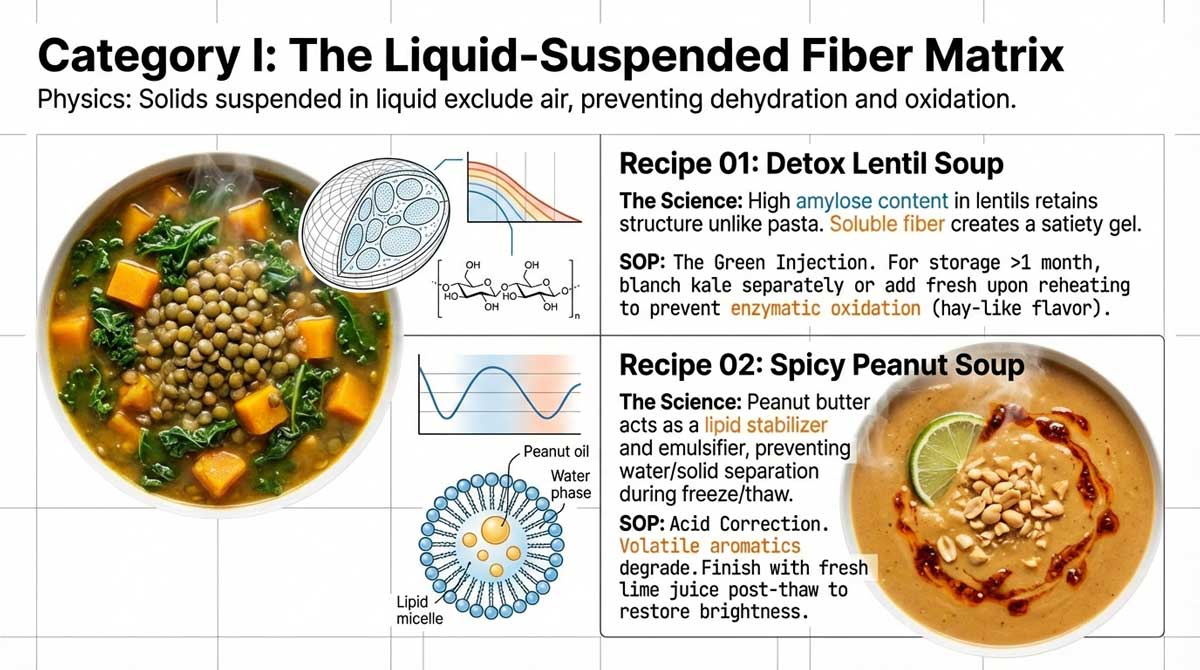
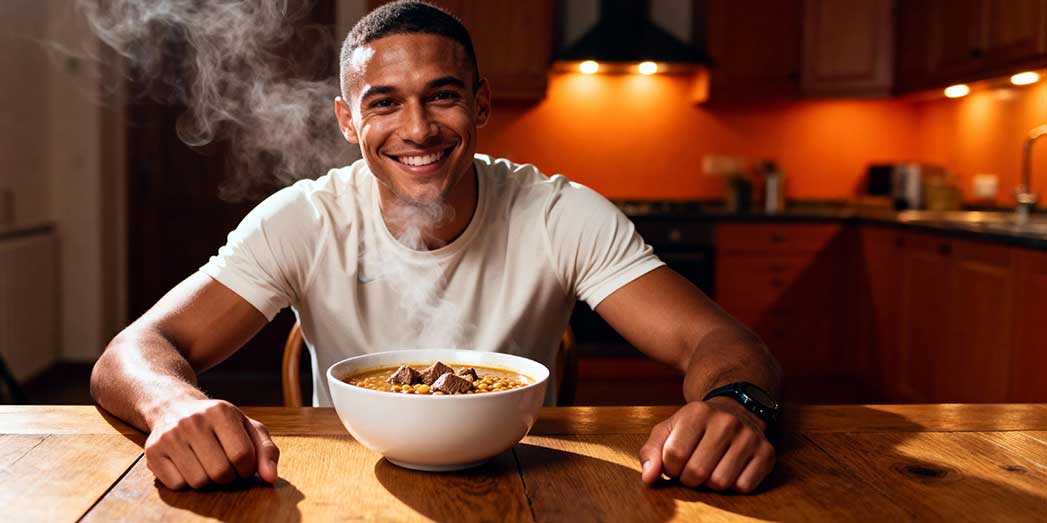
1. The "Detox" Lentil Soup
This is the ultimate freezer-friendly meal. Unlike pasta or potatoes which can get grainy or soggy when frozen, lentils actually hold their shape beautifully. They provide a massive dose of fibre which helps keep you full and stabilises your blood sugar.
-
Why it works: We use butternut squash instead of summer squash because it's denser and doesn't get watery.
-
The Method: Sauté onions, garlic, and carrots first to build a flavour base (don't just dump them in raw!). Simmer with lentils, split peas, and vegetable stock until tender.
-
The Freezer Hack: If you are freezing this for more than a month, don't add the kale yet. Freezing kale in liquid for a long time can make it taste a bit hay-like. Freeze the soup base, and just throw a handful of fresh spinach or kale in when you reheat it. It takes seconds and tastes fresh.
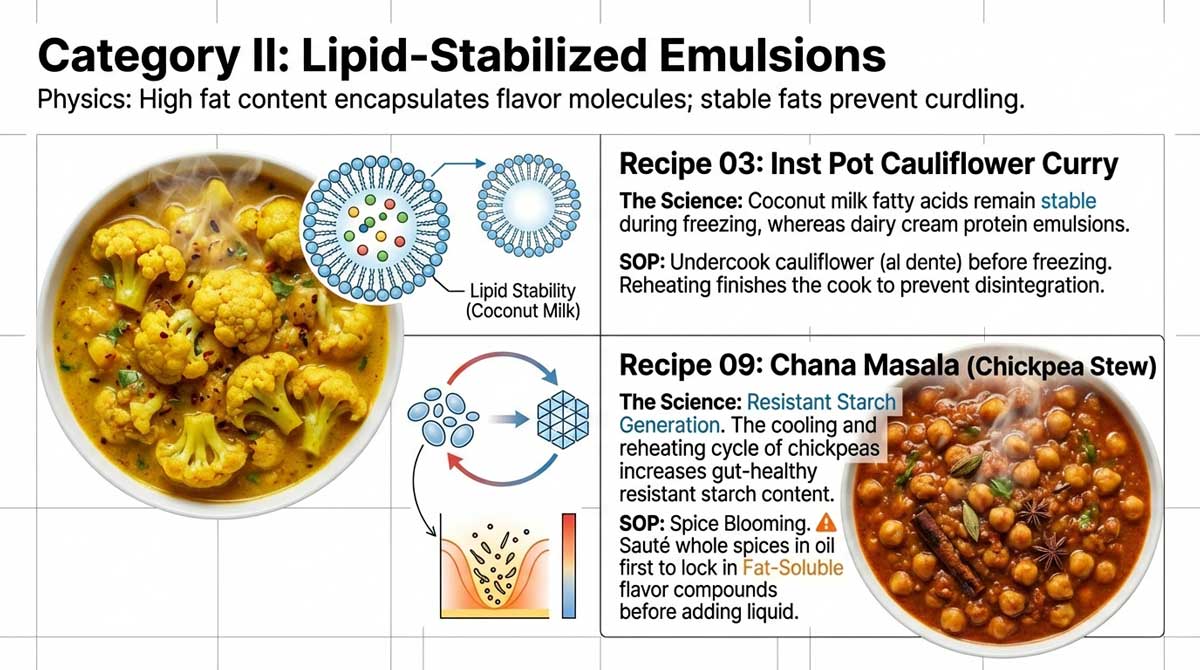
2. Instant Pot Cauliflower Curry
Curries are the kings of batch cooking. The complex spices actually get better after sitting for a while (a bit like a marinade). This recipe uses coconut milk, which is a game-changer.
-
Why it works: Dairy cream often splits and curdles when frozen. Coconut milk has a high fat content that stays stable and creamy.
-
The Method: Toss cauliflower, butternut squash, red lentils, and red curry paste into your pressure cooker.
-
The Freezer Hack: Do not overcook the cauliflower! Cook it for 4-5 minutes max on high pressure. You want the veggies to be slightly firm ("al dente") going into the freezer because they will cook a little bit more when you reheat them. If you cook them to mush now, they will be soup later.
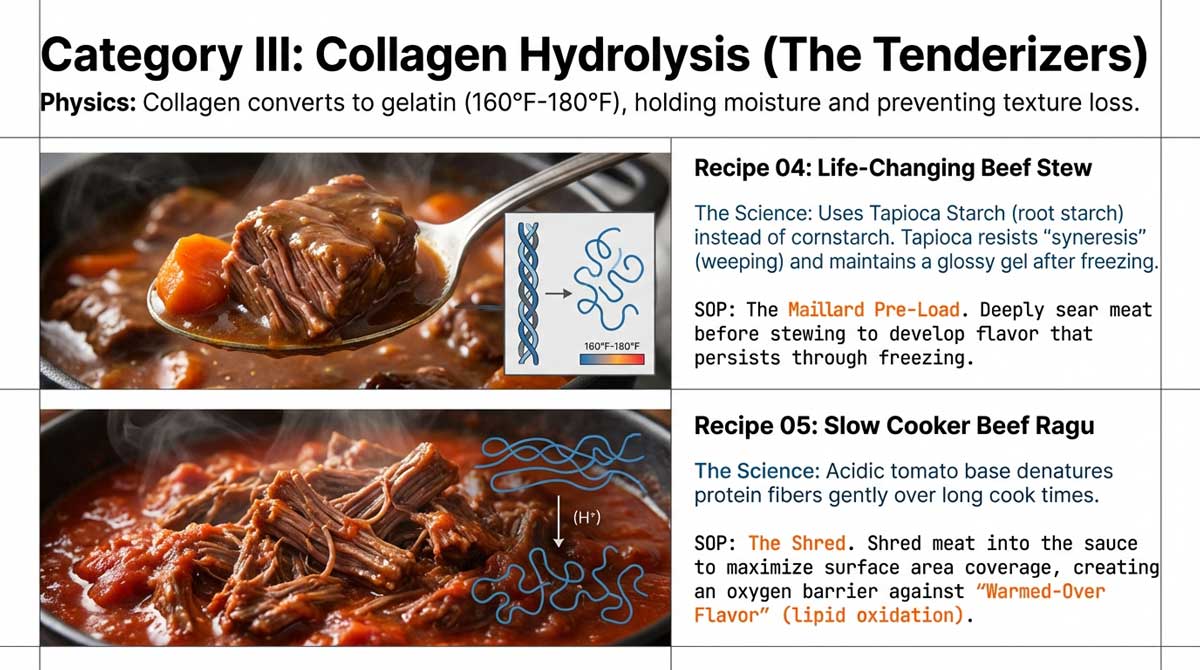
3. The Life-Changing Beef Stew
This is for the days you need serious comfort food without the guilt. By using a slow cooker, we break down the tough collagen in the meat, making it melt-in-the-mouth tender.
-
Why it works: The gelatin from the meat helps hold moisture in, so the beef doesn't dry out in the freezer.
-
The Method: Use "Chuck Roast" or a braising cut-lean cuts like sirloin will dry out. Sear the meat in a pan first to get that nice brown crust (that is where the flavour lives) before adding it to the slow cooker with carrots, celery, and beef stock.
-
The Freezer Hack: If you want a thick stew, use tapioca pearls or a little flour to thicken it. Cornstarch can sometimes get a weird, spongy texture after freezing, so we avoid it for long-term storage.
4. Slow Cooker Beef Ragu
Think of this as your high-protein pasta sauce. It is rich, acidic, and incredibly versatile.
-
Why it works: The acidity from the tomatoes helps tenderise the meat even further. Plus, shredding the meat means every single strand is coated in sauce, which protects it from "freezer burn" and drying out.
-
The Method: Cook beef flank or chuck in a bath of crushed tomatoes, garlic, and herbs until it falls apart. Shred it directly into the sauce.
-
The Freezer Hack: Remove any bay leaves or herb sprigs before you freeze it. If left in for weeks, herbs can start to release a bitter, metallic taste. Freeze in 1-cup portions so you can grab one for a quick pasta dinner or a baked potato topper.
5. Spicy Peanut Soup
This sounds unusual, but it is a "satiety bomb." It combines sweet potatoes, peanuts, and spices to keep you full for hours.
-
Why it works: Peanut butter acts as an emulsifier-it holds the liquid and solids together so the soup doesn't separate. It gives you a creamy texture without needing double cream.
-
The Method: Simmer sweet potatoes in broth, then whisk in peanut butter and some chilli for heat.
-
The Freezer Hack: The heat from the chilli stays strong in the freezer, but fresh flavours (like lime juice) fade. When you reheat this, always finish it with a fresh squeeze of lime juice and some fresh coriander. It wakes the whole dish up.
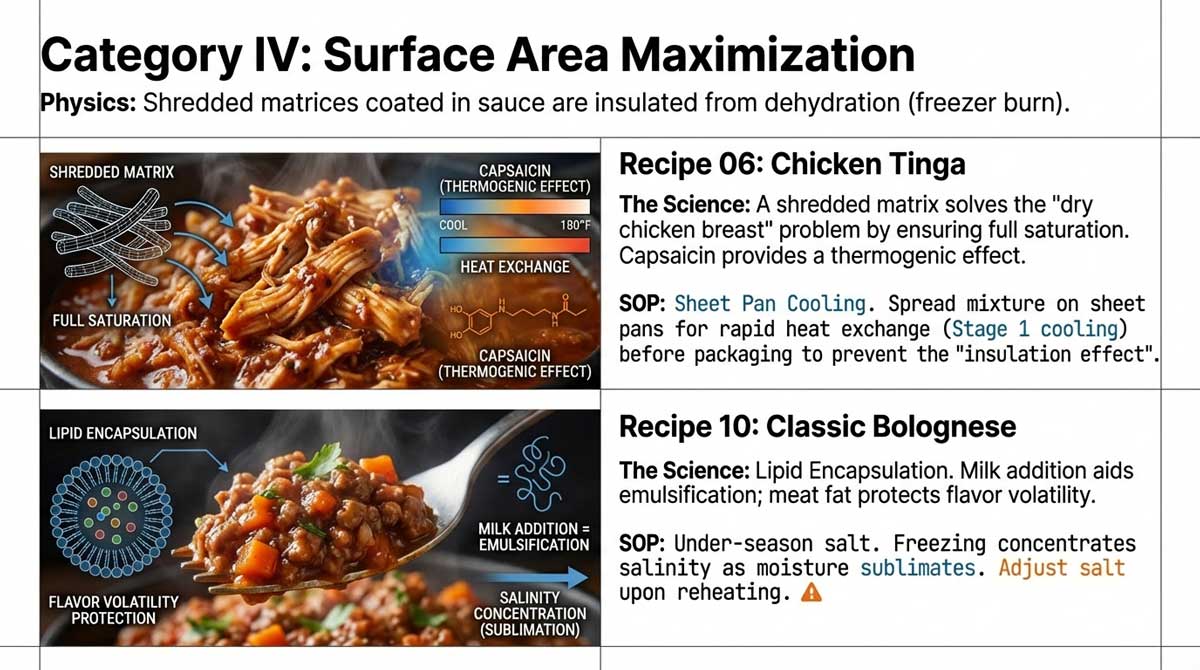
6. Chicken Tinga (Shredded Chipotle Chicken)
Chicken breast is notorious for drying out in the freezer. The solution? Shred it and drown it in sauce.
-
Why it works: By poaching the chicken in the sauce, we keep it moist. The chipotle peppers give a metabolism-boosting kick without needing loads of salt.
-
The Method: Simmer chicken breasts in a blend of tomatoes, onions, and chipotle peppers. Shred the chicken and return it to the sauce.
-
The Freezer Hack: Spread the mixture onto a baking tray to cool it down quickly before putting it in tubs. If you put a big pile of hot chicken in a tub, it stays hot in the middle for too long, which isn't safe. Quick cooling locks in freshness.
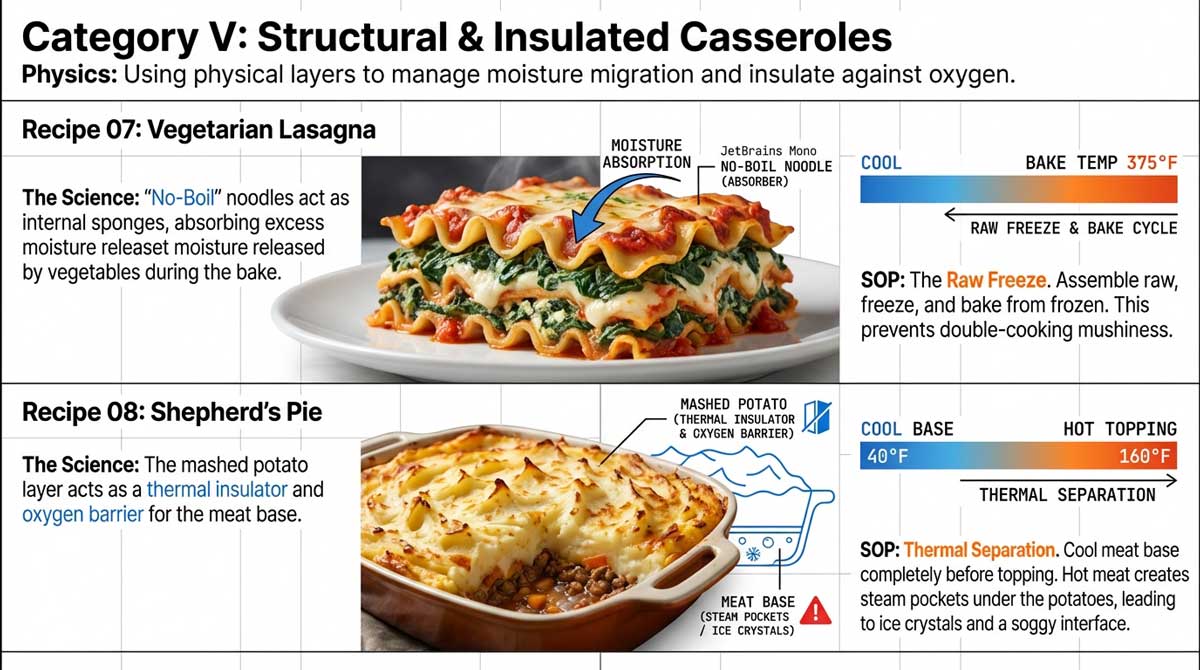
7. Vegetarian Lasagna with Spinach
Lasagna is a classic, but vegetable versions often end up being a watery mess. We can engineer our way out of that.
-
Why it works: We use "no-boil" lasagna sheets. Because they are dried, they soak up the excess moisture from the veggies like a sponge.
-
The Method: If you use frozen spinach, thaw it and squeeze it until it is bone dry. If using fresh veggies like zucchini, sauté them first to get the water out. Mix an egg into your ricotta cheese-this helps the cheese layer set firm so it doesn't separate when frozen.
-
The Freezer Hack: Assemble the lasagna raw and freeze it without baking. When you want to eat it, bake it from frozen. This prevents the "twice-cooked" mushiness you get from baking, freezing, and baking again.
8. Shepherd's Pie (The Lighter Version)
This is a complete meal in one container: protein on the bottom, carb on top. The mashed potato layer actually acts as an insulator, protecting the meat from the harsh cold of the freezer.
-
Why it works: We swap fatty lamb for lean beef or turkey to cut calories. We also "hide" extra veggies like peas, corn, and diced carrots in the meat base to bulk it up.
-
The Method: Make your meat gravy base and your mash.
-
The Freezer Hack: This is crucial: Let the meat cool down completely before you put the mash on top. If the meat is hot, steam gets trapped under the potatoes, turns into ice crystals, and makes your pie soggy. Cool meat + cool mash = perfect pie.
9. Chana Masala (Chickpea Stew)
Chickpeas are bulletproof. They have a thick skin and a dense texture that never gets mushy, making them ideal for freezing.
-
Why it works: It is cheap, high in fibre, and plant-based. The spices (cumin, coriander) are fat-soluble, meaning they lock into the oil and stay flavourful for months.
-
The Method: Sauté your spices in oil to "bloom" them, then add onions, tomatoes, and chickpeas. Simmer until the sauce is thick.
-
The Freezer Hack: Freeze the stew on its own. Don't freeze it mixed with rice, as the rice can get dry. It is much better (and takes 2 minutes) to microwave a pouch of rice fresh when you are ready to eat.
10. The "Healthy" Bolognese
A meat sauce is the fundamental unit of a freezer stash. The fat in the meat encapsulates the flavour molecules, keeping it tasting fresh for months.
-
Why it works: We add a massive amount of finely chopped veggies (onions, carrots, celery, mushrooms) to the base. You get the volume and the nutrition, but it still tastes like a rich meat sauce.
-
The Method: Brown your meat really well. Simmer it for a long time-you want a thick, concentrated sauce, not a watery one. A watery sauce will separate in the freezer.
-
The Freezer Hack: Undersalt it slightly. Freezing can sometimes concentrate flavours as moisture evaporates. You can always add a pinch of salt when you reheat it, but you can't take it out!
The Sundried Roundup
We have covered a lot of ground, from the biochemistry of freezing to the economics of buying beans. But information is only useful if you can actually use it. Here is how to take this from a blog post to your kitchen.
How can I build this into my life?
-
Start Small: Don't try to prep 21 meals your first week. Start by just prepping your lunches. Once you master that, add breakfasts.
-
The Sunday Ritual: Carve out 2 hours on a Sunday (or whatever day you are off). Put on your favourite podcast or playlist. Make it "me time" rather than a chore.
-
Audit Your Pantry: Before you shop, look at what you have. Build your menu around the tins of beans or half-bag of rice sitting in the cupboard to save money instantly.
Pushed for time, how can I keep up?
-
Embrace "Girl Dinner" / "Ploughman's": Some nights, dinner can just be a plate of assembled ingredients-cheese, nuts, raw veggies, and some turkey slices. No cooking required.
-
Use Frozen Veg: Washing and chopping takes time. Dumping a bag of frozen broccoli onto a roasting tray takes 10 seconds.
-
Cook Double: Whenever you make dinner, make double the amount. Pack the second portion away for lunch the next day immediately.
Top 10 Tips
Prioritise Protein
Build every meal around a protein source to keep you full and protect muscle.
Invest in Glass
Ditch the stained plastic tubs for glass containers that last forever and keep food fresh.
Volume Eat
Bulk up meals with low-calorie, high-fibre veggies to stop hunger.
Don't Fear the Freezer
It is the pause button for food. Use it to avoid waste.
Shop with a List
Group items by aisle to stop aimless wandering and impulse buying.
Component Prep
Cook a big batch of plain protein and add different sauces throughout the week to avoid boredom.
Use Passive Cooking
Let the oven or slow cooker do the work while you relax.
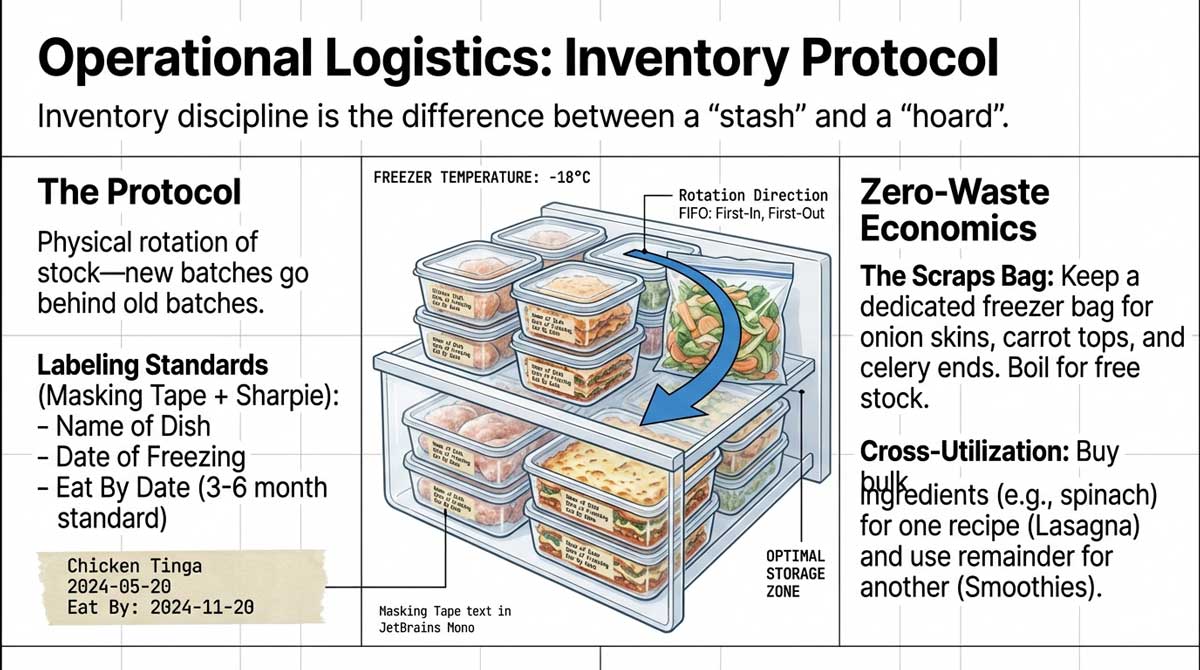
Save the Scraps
Vegetable peelings can be boiled to make free stock.
Watch the Liquids
Calories hide in oils, dressings, and drinks. Measure them out.
Focus on the Long Game
Consistency beats intensity. It is better to prep three mediocre meals than zero perfect ones.


