

No time for Gym Sessions?: Use Habit Stacking for Weight Loss


Need performance advice right now?
Ask our on-site coach anything about your routines. It's completely free and available immediately right here: 'What are 3 quick exercises for ankle mobility?' Ask Raye for free
Habit Stacking
We've all been there. You start the week with the best intentions: three gym sessions, a morning run, and perhaps a yoga class to round things off. Then, reality hits. A late meeting, a sick child, or simply the sheer weight of a long to-do list makes that hour-long workout feel like a mountain you just can't climb. Before you know it, the "all or nothing" mentality kicks in. If you can't spend sixty minutes on a treadmill, why bother at all?
This is where we need to change the narrative. Fitness isn't a destination you reach by driving to a specific building once a day; it's a way of moving through the world. For the modern athlete-someone who wants to perform well, stay mobile, and maintain a healthy weight for the long haul-the secret isn't necessarily more time in the gym. It's about reclaiming the "dead time" already hidden in your day.
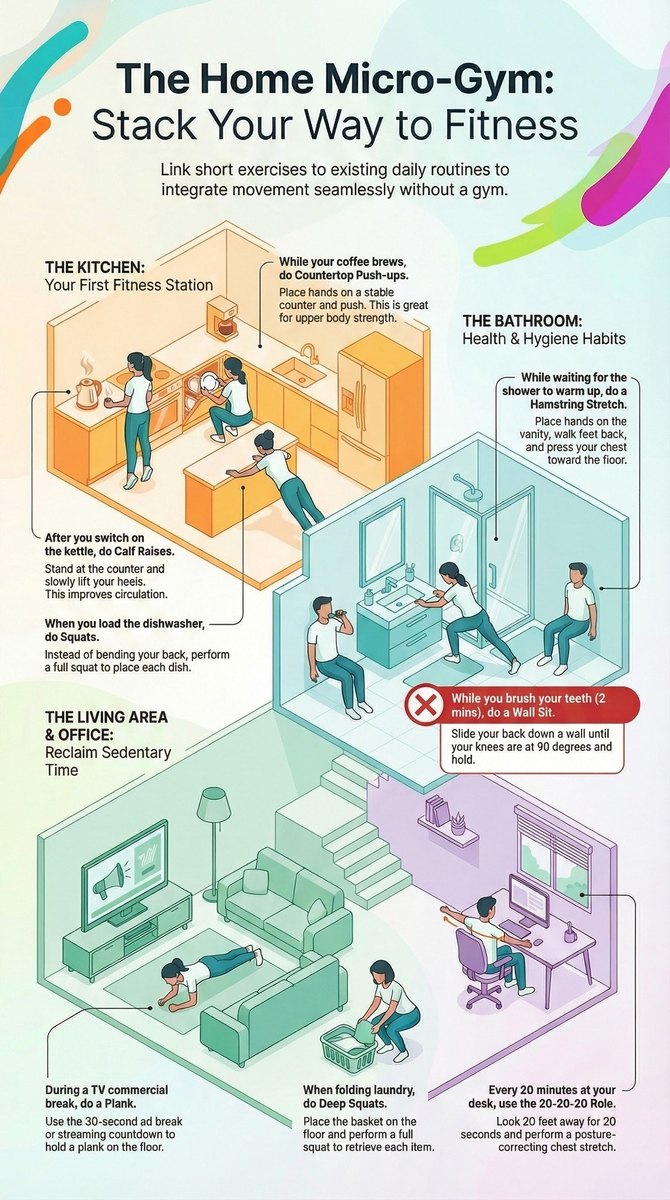
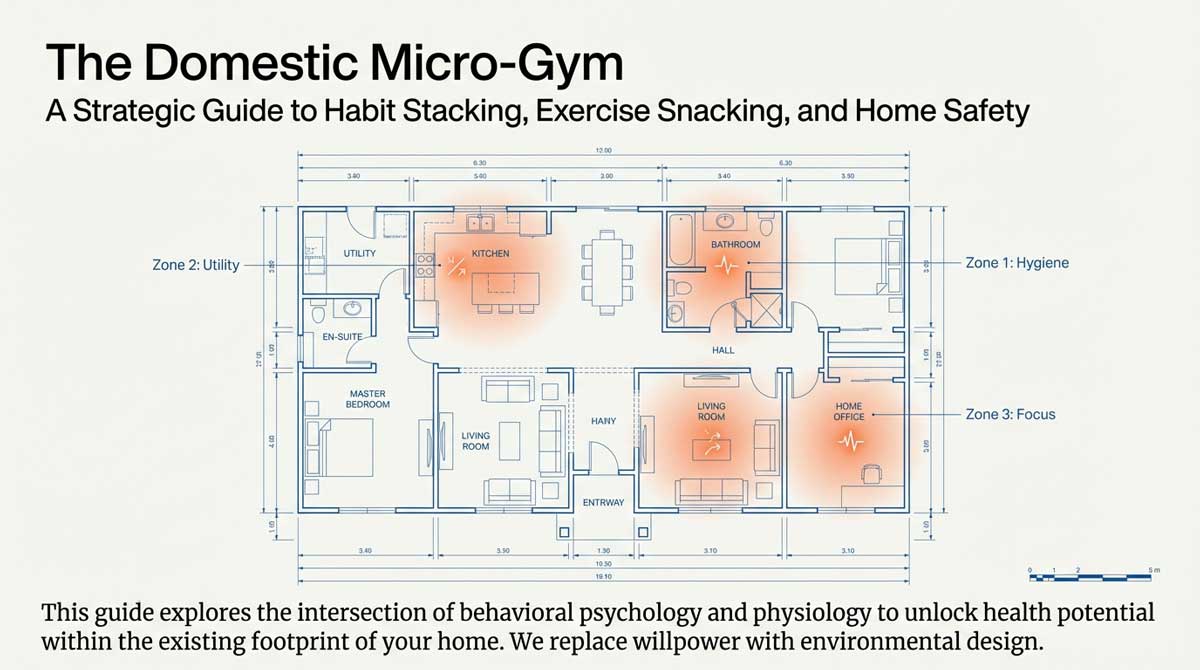
By combining the psychology of habit stacking with the physiological benefits of exercise snacking, you can turn your home into a space that supports your goals without ever feeling like you're "working out." This isn't about a quick fix for the summer; it's about building a body that performs forever.
An introduction to Habit Stacking
Taken from the course the Weight Loss Reset

Why Is Your Weight Stuck?
It might not be your fault. Discover your unique "Weight Loss Profile" by taking our 60-second assessment. Start the Free Assessment.
The Brain Hack: What is Habit Stacking?
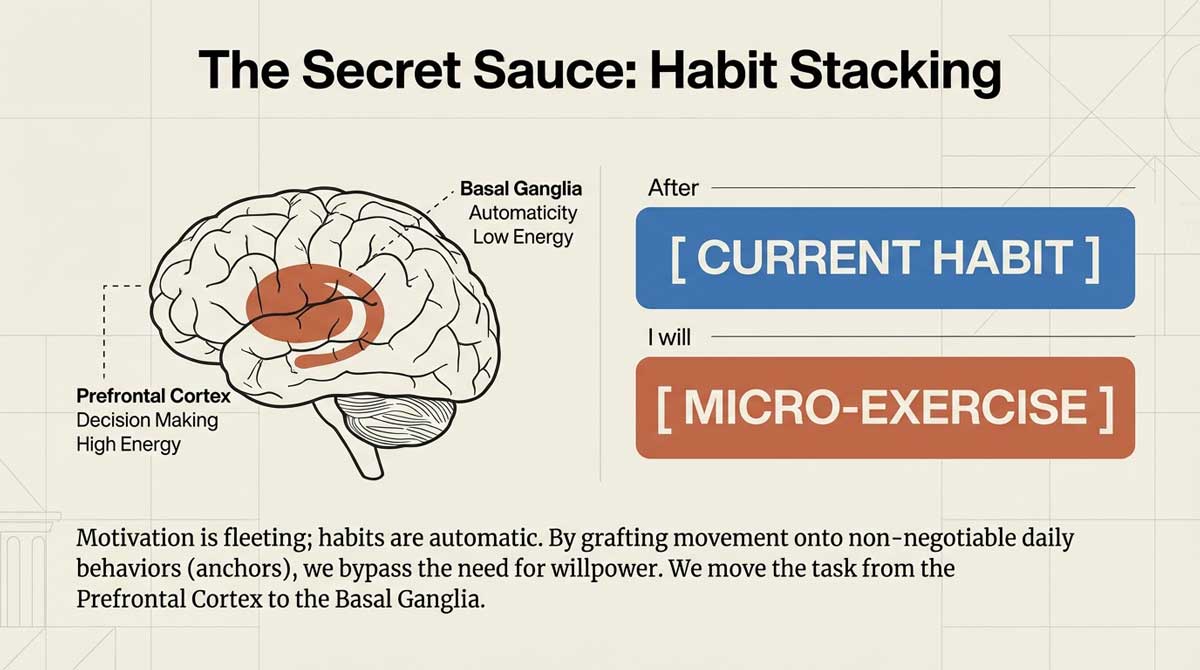
If you've ever tried to start a new routine and found it fizzling out after three days, it's not because you lack willpower. It's because your brain is designed to save energy. Every time you have to decide to do something new, your brain uses a lot of "fuel." To save that fuel, your brain tries to turn repetitive actions into automatic habits.

Need a clear race fuelling strategy?
Get instant, practical advice on hydration and race-day nutrition directly on this page for free. Try asking Raye: 'How many grams of carbs should I take per hour during a half marathon?' Ask for fuelling advice
Habit stacking is a clever way to bypass that struggle. Instead of trying to find "motivation" to exercise, you anchor a new, small movement to something you already do every single day without thinking.
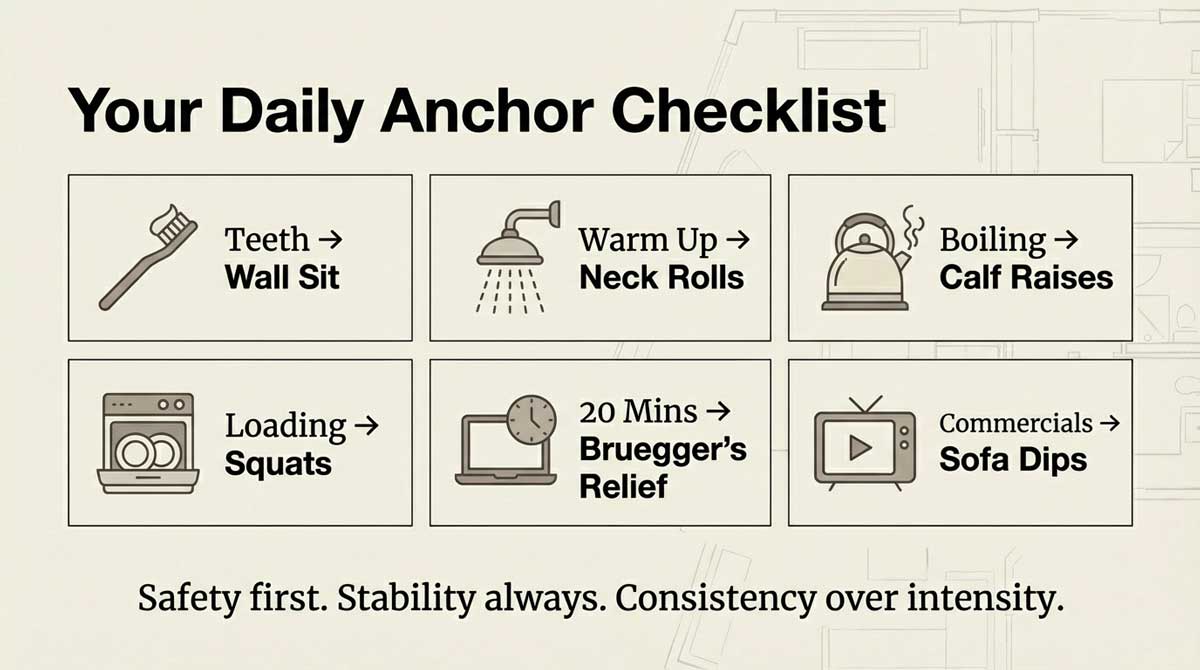
The formula is simple: After [Current Habit], I will [New Movement].
Think about your morning. You probably brush your teeth, boil the kettle, or feed the dog in the same order every day. These are your "anchors." Because these neural pathways are already rock-solid in your brain, you can "piggyback" a new habit onto them. By the time the kettle has boiled, you've already finished your movement before your brain has even had a chance to talk you out of it.
The Science of the "Exercise Snack"
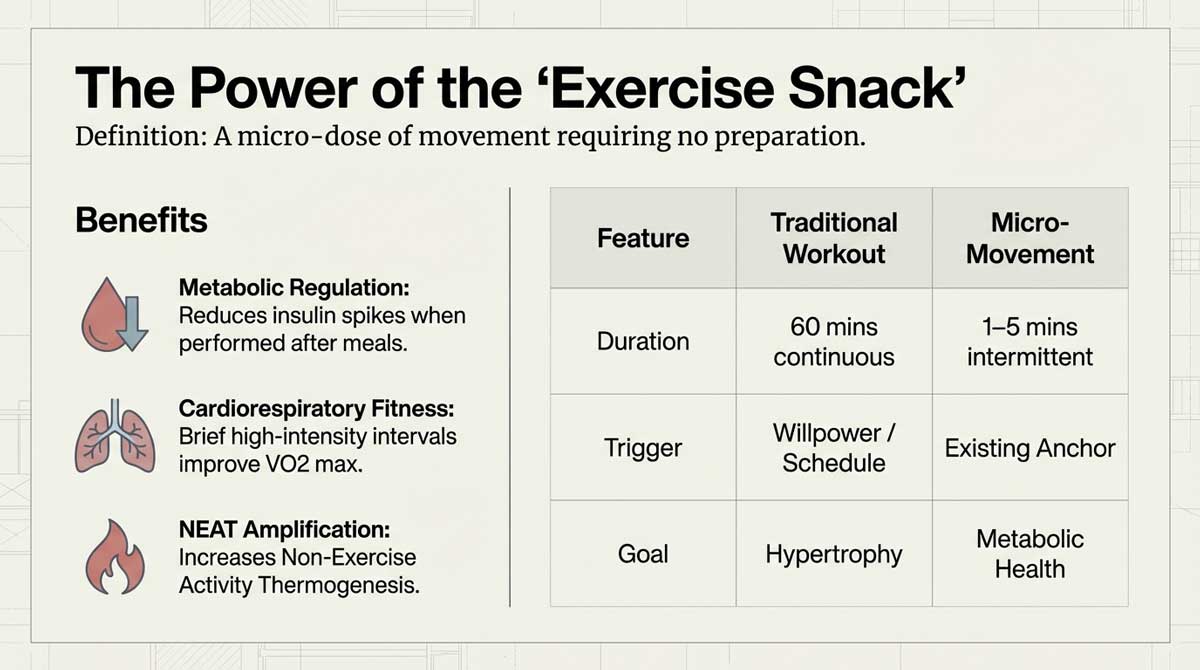
While habit stacking is the mental trigger, "exercise snacking" is the physical action. An exercise snack is exactly what it sounds like: a short, sharp burst of movement that lasts anywhere from thirty seconds to five minutes.
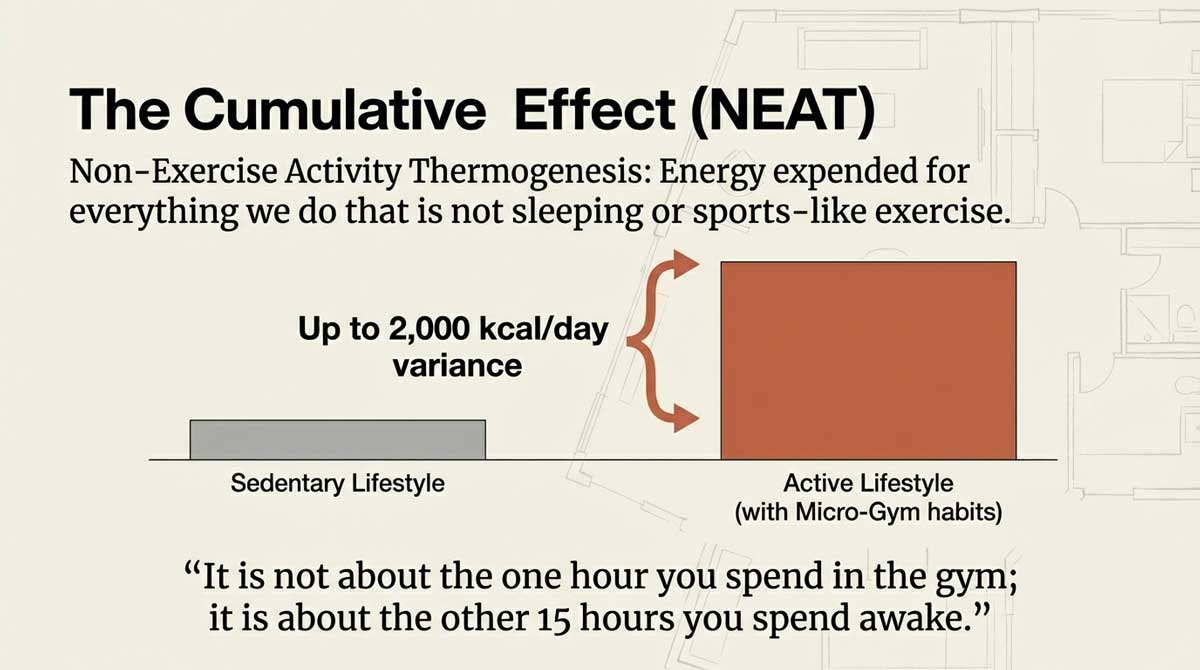
You might wonder if such a short amount of time actually counts. The research is clear: it absolutely does. These micro-bursts of activity contribute to something called NEAT (Non-Exercise Activity Thermogenesis). This is a fancy way of saying "the energy we burn doing everything that isn't sleeping, eating, or intentional sports."
For most of us, NEAT actually makes up a much larger portion of our daily energy expenditure than a single hour at the gym. By sprinkling these "snacks" throughout your day, you keep your metabolism ticking over, improve how your body handles blood sugar after meals, and build functional strength. It's the ultimate long game strategy.
Reclaiming the Kitchen
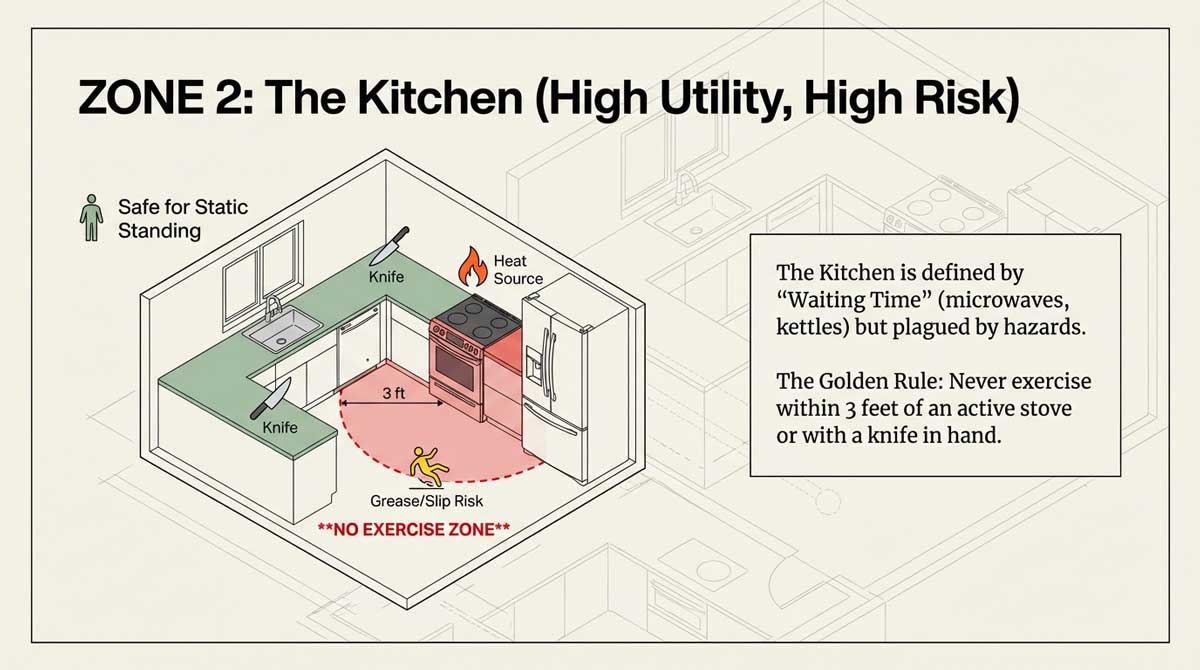
The kitchen is the heart of the home, but it's also the land of waiting. We wait for the toaster to pop, the microwave to beep, and the kettle to reach a rolling boil. These small windows are perfect for lower-body stability and strength.
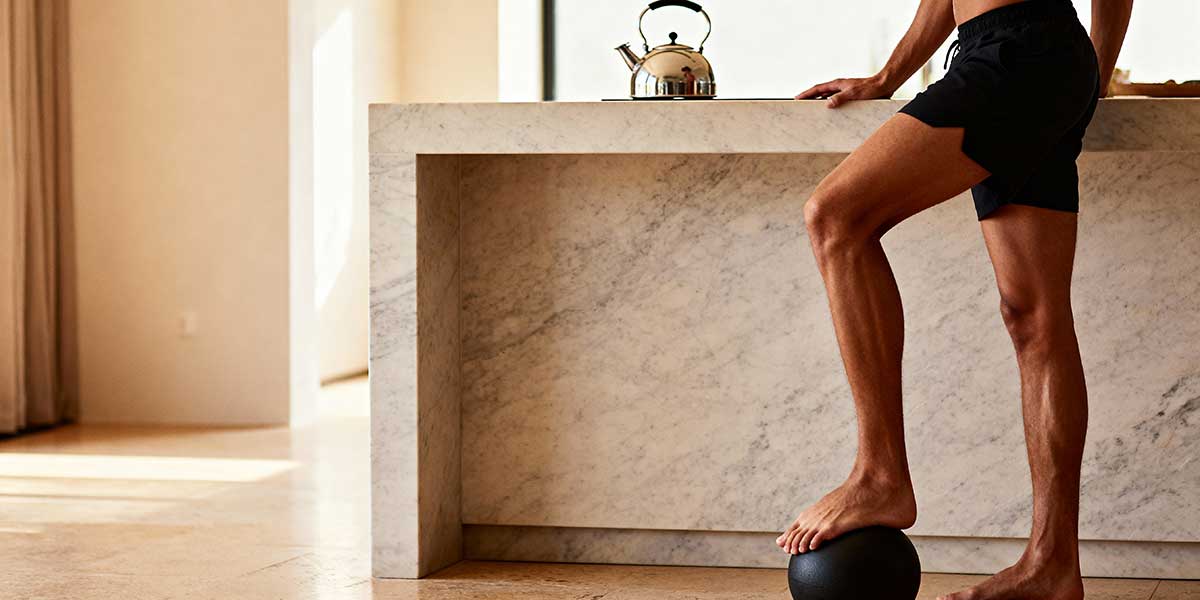
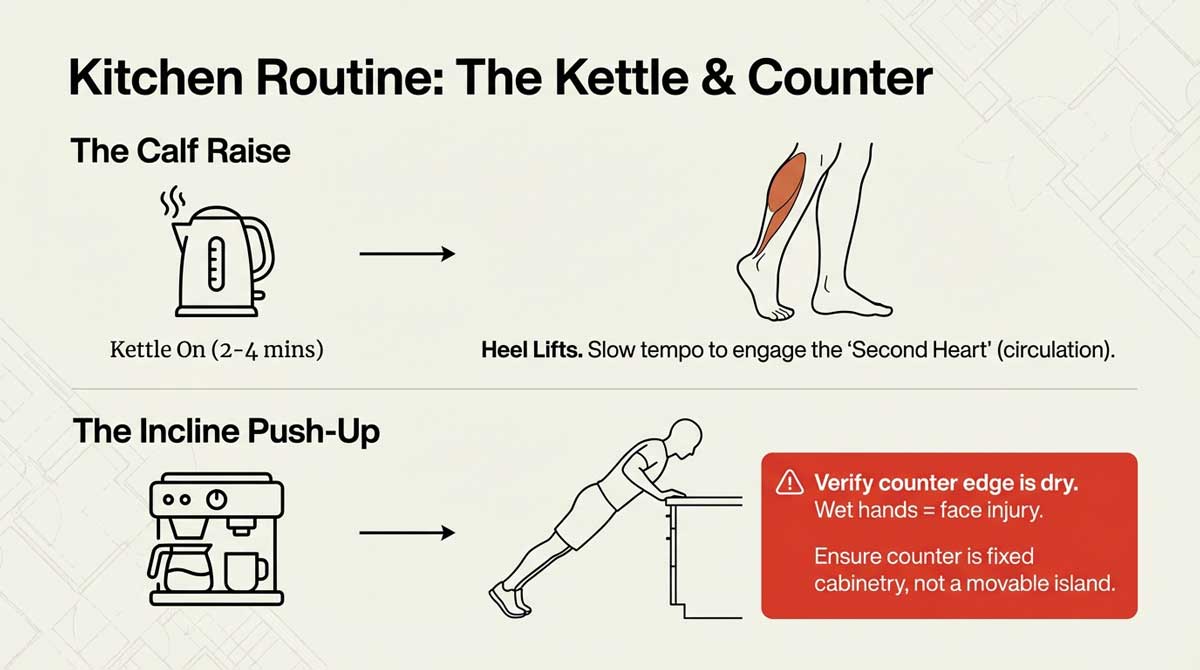
The Kettle Raise While you're waiting for your morning brew, try some heel lifts. Stand tall, use the counter lightly for balance, and rise onto the balls of your feet. Hold for a second at the top to feel the squeeze in your calves, then lower slowly.
Your calves are often called the "second heart" because they help pump blood back up your body. Improving their strength helps with circulation and keeps your ankles stable for those weekend hikes or runs. If it feels too easy, try doing it on one leg at a time.
The Microwave Side-Lift While your porridge is heating up, stand sideways to the counter. Keeping your torso upright and your core engaged, lift your outer leg out to the side. You don't need to swing it high; a small, controlled movement will fire up the muscles on the side of your hips (the glute medius). These muscles are vital for pelvic stability. If you've ever dealt with nagging lower back or knee issues, strengthening these "stabilisers" is a total game-changer for your long-term performance.
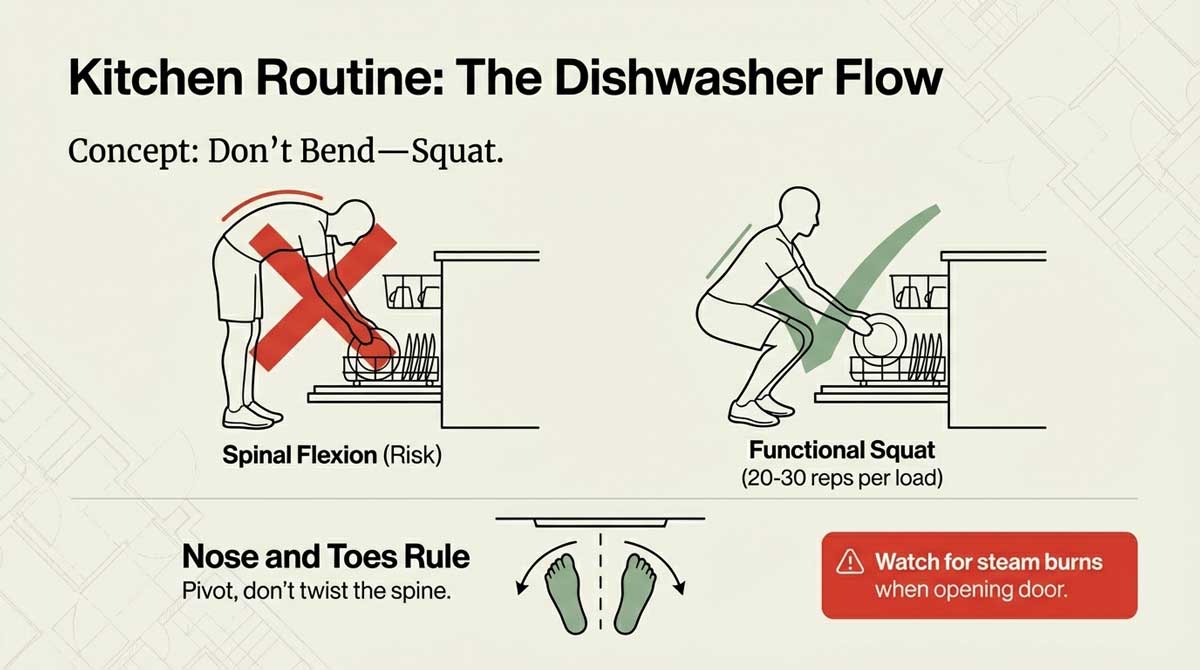
The Dishwasher Squat Most of us load and unload the dishwasher by bending at the waist, which puts a lot of unnecessary strain on the lower back. Instead, treat every plate as a rep. Every time you reach down to put a bowl in the bottom rack, perform a proper squat. Keep your chest up, sit your hips back, and drive through your heels to stand back up. If you have twenty items to load, that's twenty squats you've done before you've even had breakfast.
A Note on Kitchen Safety: The kitchen is a "high-utility" zone, but it can be slippery. Always check that the floor is dry before you start. If you're doing incline push-ups against the counter while your coffee brews, make sure the surface isn't wet and your hands have a firm grip. Avoid exercising near the hob while it's on-safety always comes before the "snack."
The Bathroom: Your Two-Minute Training Zone
The bathroom is one of the most consistent places for habit stacking because our hygiene routines are so predictable.
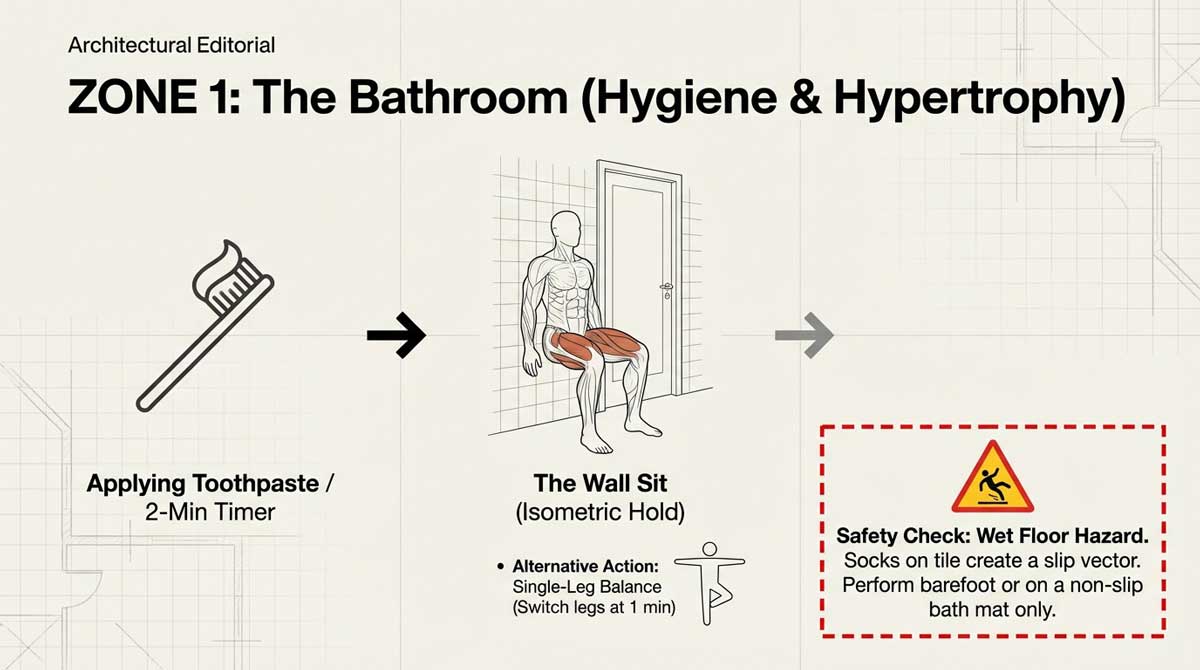
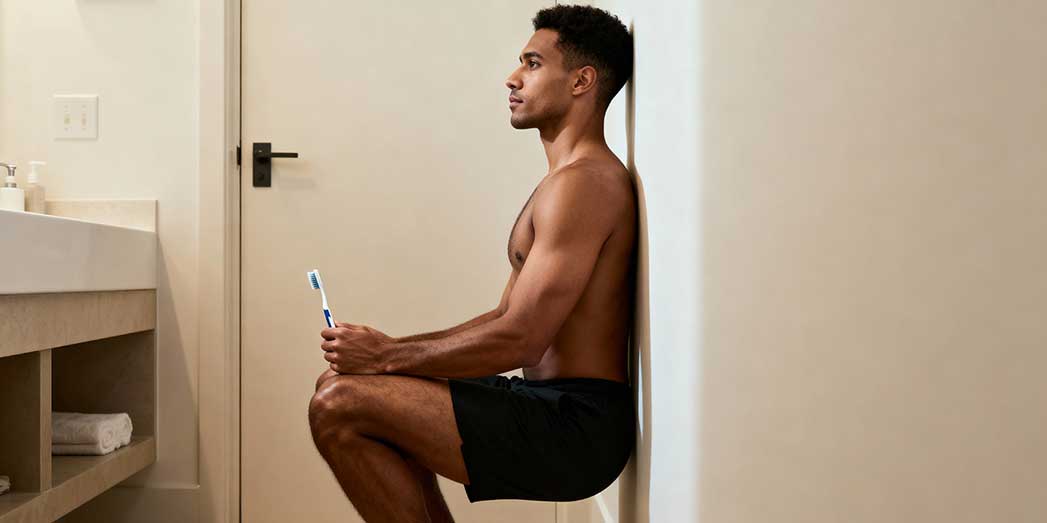
The Toothbrush Wall Sit Most dentists want us to brush for two full minutes. That is a lifetime in the world of isometric holds. Lean your back against a flat wall or the bathroom door, slide down until your knees are at a right angle (like you're sitting on an invisible chair), and start brushing.
Wall sits are incredible for building endurance in your quads and glutes. It will burn, but because your mind is focused on brushing your teeth, you'll find you can hold it much longer than if you were just staring at a clock.
The Single-Leg Balance If wall sits feel a bit much for a Monday morning, try a simple balance challenge. Stand on one leg while you brush your top teeth, and swap to the other leg for the bottom teeth. To make it harder, try closing your eyes (but keep a hand near the sink just in case!). This forces your brain and ankles to work together to keep you upright, which is one of the best ways to maintain your balance and coordination as the years go by.
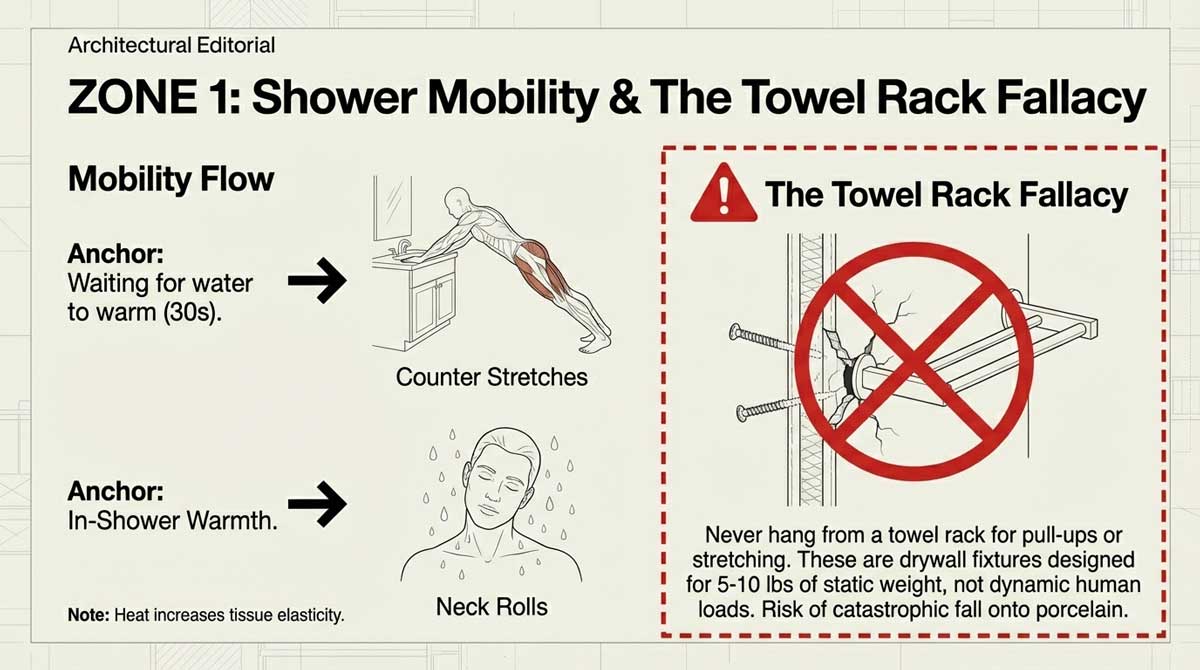
The Shower Mobility Flow While you're waiting for the water to warm up, use the bathroom counter for a quick stretch. Place your hands on the edge and walk your feet back until your body forms an "L" shape. Press your chest toward the floor to open up your shoulders and stretch out those hamstrings.
Once you're in the warm water, the heat makes your muscles more pliable. This is the perfect time for some gentle neck rolls or opening up your chest by reaching your arms behind your back. It counteracts the "hunched" posture we often take during the day at our desks.
Warning: Never use towel racks or shower curtain rods for support or "pull-ups." They are designed to hold a damp towel, not a human athlete. They can rip out of the wall unexpectedly, which is a quick way to end your fitness journey before it's even begun.
Reclaiming the Living Room
The living room is where we usually go to "switch off," which often means hours of sitting still. We can change that without ruining the relaxation.
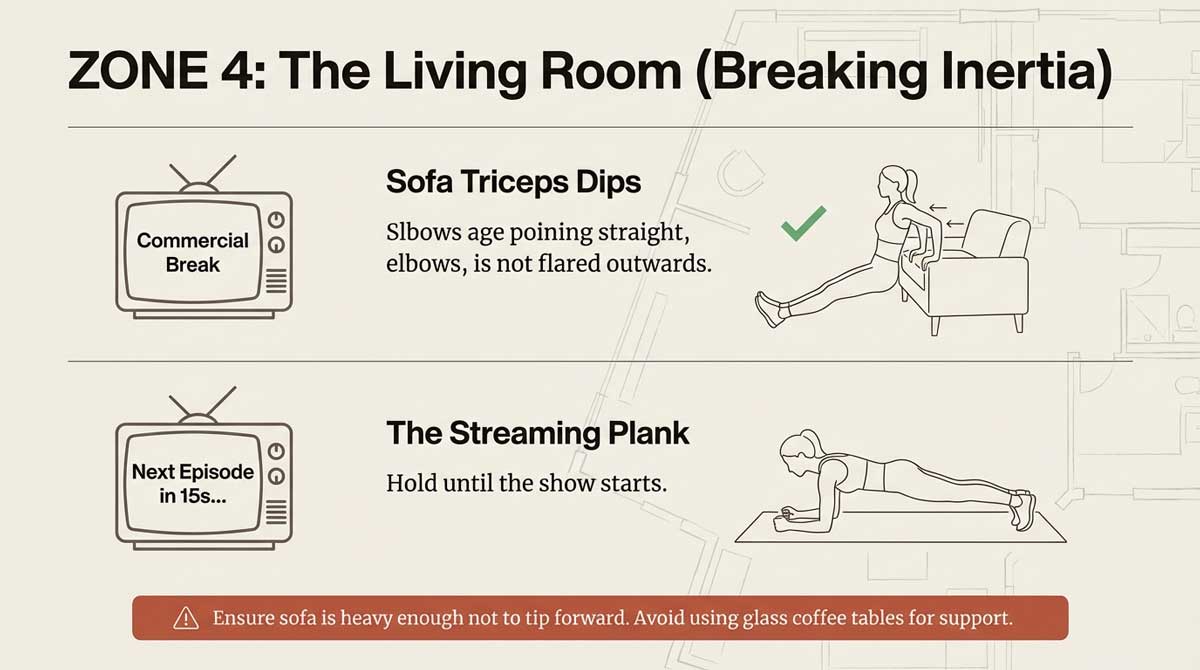
The Commercial Break Circuit If you're watching a show with breaks, use that time for movement. Instead of reaching for your phone, try some tricep dips on the edge of the sofa or a quick plank on the rug. If you're streaming, use the "Next Episode" countdown as your timer. See if you can hold a plank until the next show starts. These small hits of movement break up long periods of sitting, which is vital for keeping your metabolic health on track.
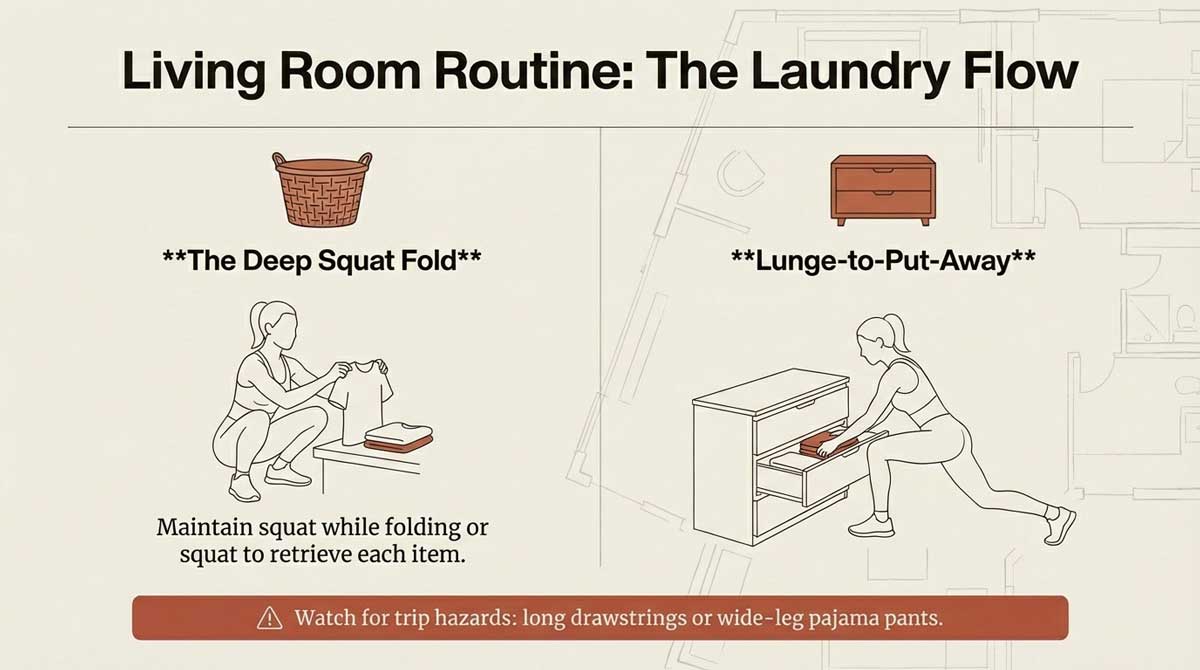
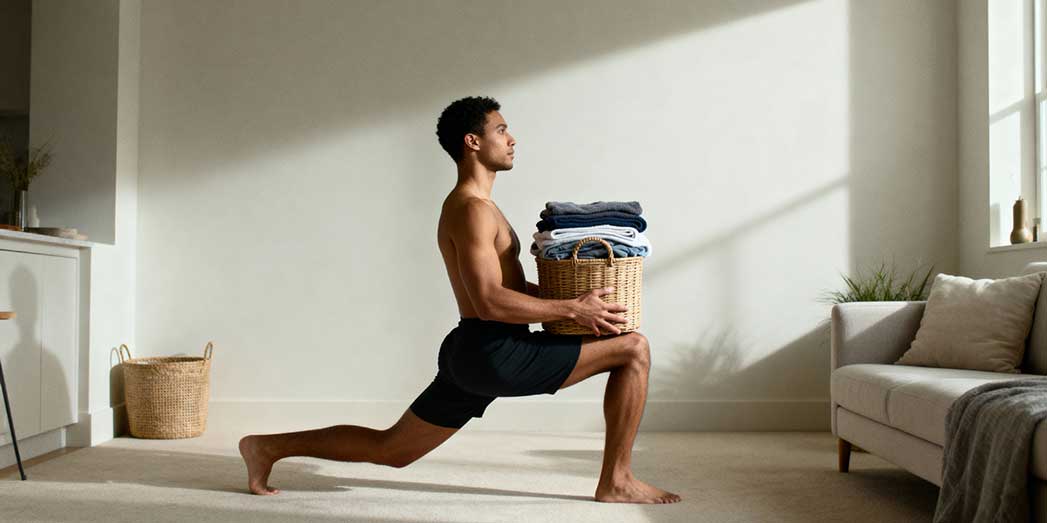
The Laundry Lunge Folding clothes is a chore, but it can also be a functional movement session. Every time you pick up a garment from the basket on the floor, perform a deep lunge or a squat. If you have a big pile of laundry, you've essentially completed a lower-body workout by the time the socks are matched.
The Home Office: Beating "Tech Neck"
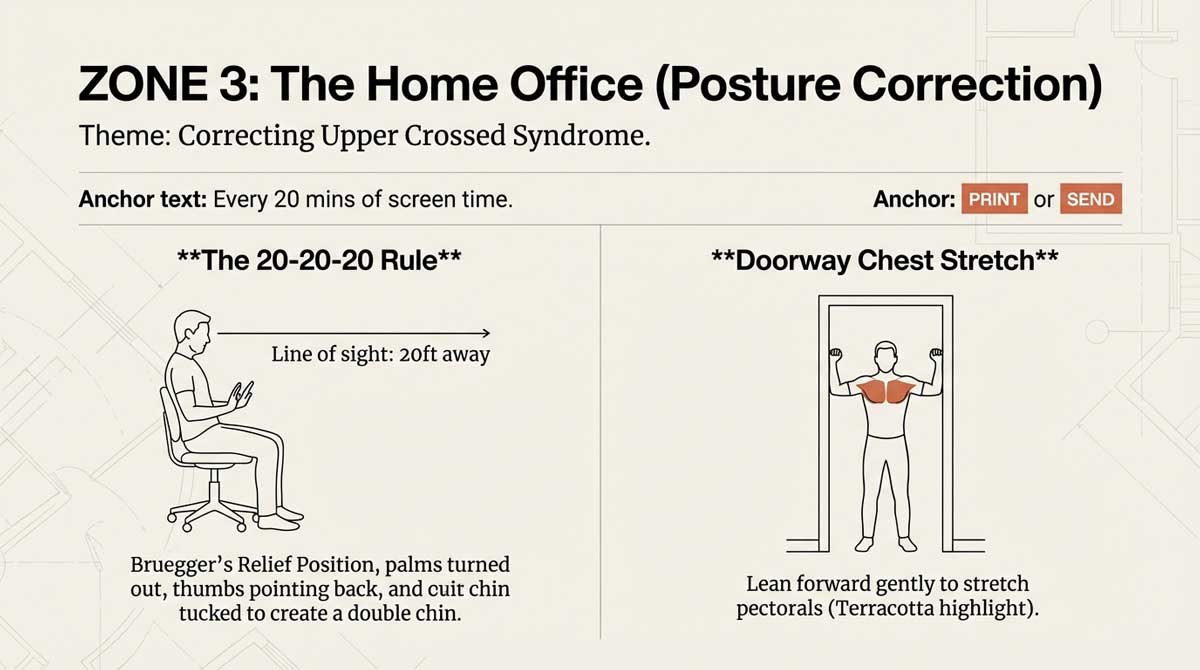
If you work from home, your desk is likely where you spend the most time. This is where habit stacking is most important for your long-term health.
The 20-20-20 Rule Every 20 minutes, look at something 20 feet away for 20 seconds. While you're doing that, do a "posture reset." Sit tall, pull your shoulder blades back and down, and tuck your chin slightly. This simple move combats "tech neck" and keeps your spine aligned.
The "Loading Screen" Stretch Whenever you're waiting for a file to upload or a meeting to start, stand up. Reach for the ceiling, then touch your toes. Sitting for hours on end tells your glutes to "switch off." By standing up and moving for just thirty seconds every hour, you keep your body "awake" and ready to perform.
The Athlete's Gear: Feet and Floors
You don't need fancy trainers to move at home, but you do need to be smart about friction.
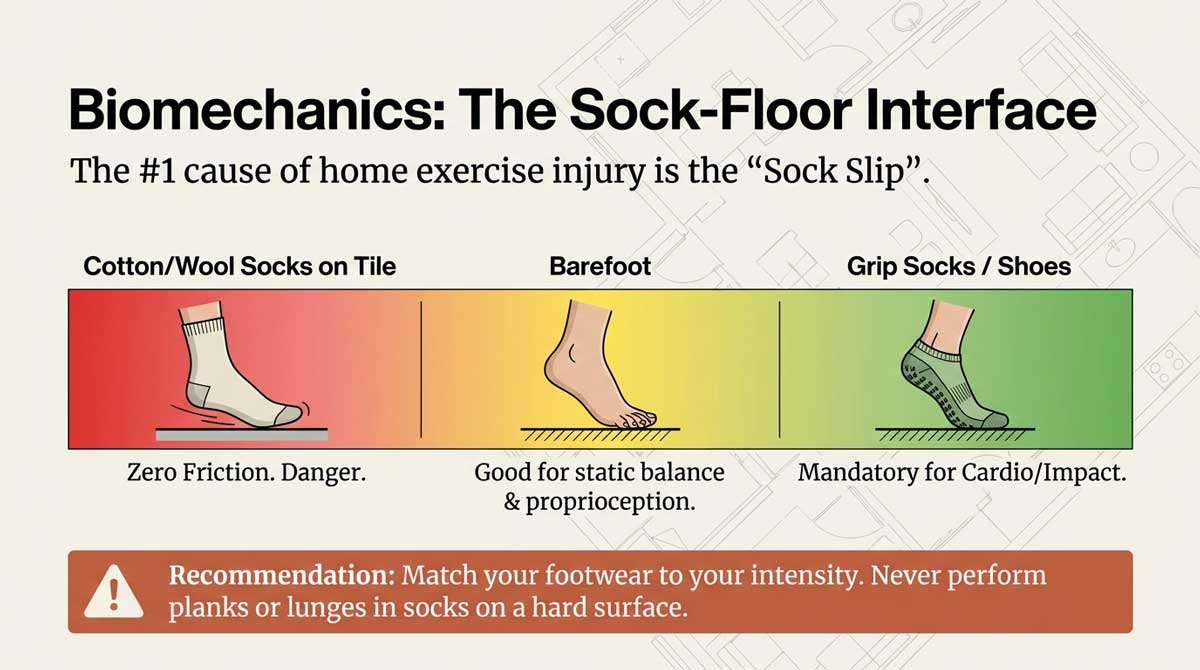
Barefoot vs. Shoes Training barefoot at home is actually a great way to strengthen the tiny muscles in your feet that get lazy inside shoes. It improves your balance and how you "feel" the ground. However, if you're doing anything high-impact, like jumping or fast lunges, your joints might appreciate the cushioning of a pair of trainers.
The "Sock Slip" Hazard The biggest danger in the "domestic gym" isn't a heavy weight; it's a pair of woolly socks on a wooden floor. If you're doing planks or lunges in socks, you're at risk of your feet sliding out from under you. Either go barefoot, wear trainers, or invest in some "grip" socks to ensure you stay stable.
The Long Game: Consistency Over Intensity
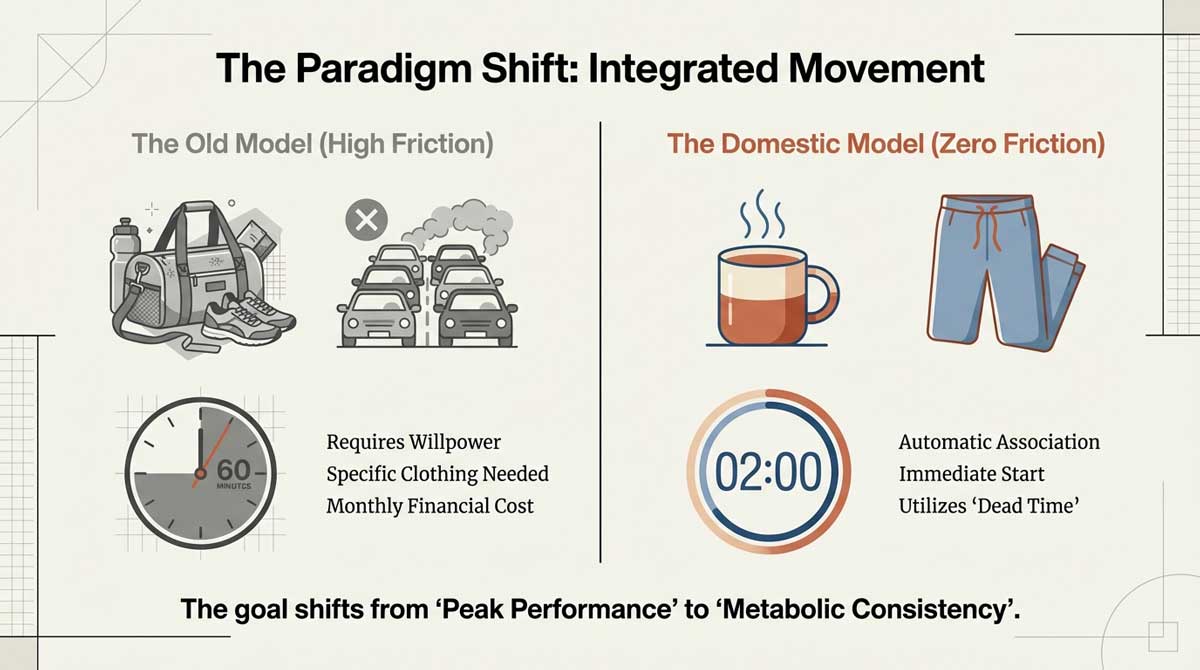
The beauty of habit stacking and exercise snacking is that it removes the "barrier to entry." You don't need a gym bag, a commute, or a membership. You just need the habits you already have.
When you look at fitness as a "long game," you realise that doing five minutes of movement every day for a year is far more effective than doing two hours once a fortnight. These small stacks add up to a massive amount of activity over weeks and months.
You aren't just "losing weight"; you are becoming a more active version of yourself. You are teaching your body that movement is a natural part of your day, not a chore to be avoided. Whether you're boiling the kettle, brushing your teeth, or folding the laundry, you have an opportunity to move. Grab it.
The Sundried Roundup
How can I build this into my life? The trick is to start small. Don't try to stack a movement onto every single habit at once. Pick one room-maybe the kitchen-and commit to one movement every time the kettle boils. Once that feels as automatic as making the tea itself, add another stack in the bathroom. The goal is to make these movements so effortless that you feel strange not doing them.
Pushed for time, how can I keep up? This method was designed specifically for people who have no time! Remember, these aren't "workouts" you have to find time for; they are integrated into things you are already doing. If you have time to brush your teeth, you have time for a wall sit. If you have time to wait for a coffee, you have time for calf raises. It's about "recycling" time that is usually wasted.
Top 10 Tips
Anchor your habits
Use the "After [Habit], I will [Movement]" formula.
Start tiny
Five calf raises are better than zero. You can always do more later.
Safety first
Ensure floors are dry and surfaces are stable before you move.
Watch the "Hot Zones"
Stay away from the stove or sharp objects while moving.
Use the "Toothbrush Timer"
Two minutes of brushing equals two minutes of balance or strength work.
Reclaim TV time
Use commercial breaks or "Next Episode" screens for a quick plank or dip.
Mind your feet
Go barefoot for balance, but wear shoes for high-impact moves.
Avoid the "All or Nothing" Trap
If you miss a "snack," just catch the next one.
Focus on functional moves
Squats and lunges help you stay mobile for life.
Keep it fun
If you enjoy the movement, you're much more likely to stick with it for the long run.
