

10 High Protein Foods to Keep You Full All Day : More Protein Without Trying


Planning your next fitness milestone?
Get immediate guidance on pacing, workout structure, or race prep directly on-site for free. Try asking Raye: 'Can you outline a simple 4-week build plan for a 10K?' Get instant guidance
The Proteocentric Shift: Engineering a High-Protein Diet for Sustained Performance
In the contemporary landscape of nutritional strategy, protein has ascended to a position of primacy. It is no longer viewed merely as a substrate for preventing deficiency, but as the critical macronutrient for modulating body composition, enhancing athletic output, and ensuring long-term physiological resilience. For the executive athlete-individuals who manage their biology with the same rigour as their investment portfolios-optimising protein intake is non-negotiable....
On the go? Hit play on our podcast episode below to listen to 'Beyond the Baseline: The Blueprint for a High-Protein Lifestyle'
... This analysis moves beyond rudimentary dietary advice. We will dissect the architecture of a high-protein diet, evaluate the efficacy of various protein foods-from foundational animal proteins to engineered functional foods like protein shakes-and provide a blueprint for integrating elevated protein consumption into a demanding operational schedule. The objective is clear: sustained performance over the long game.
Defining the Operational Parameters: What Constitutes a High-Protein Diet?
The concept of a "High-Protein Diet" is not monolithic. It requires precise definition, distinguishing between baseline physiological requirements and strategic optimisation.
The Baseline vs. The Optimum
The Recommended Dietary Allowance (RDA) or Reference Nutrient Intake (RNI) in the United Kingdom is established at 0.8 grams of protein per kilogram of body weight (g/kg BW) for sedentary individuals. This figure represents the minimum input required to maintain nitrogen balance and prevent structural degradation in the majority of the population.
This baseline, however, is insufficient for the high-performing individual. Optimisation demands elevated intake. Clinical literature typically defines a high-protein diet as exceeding 1.2 g/kg BW. For those engaged in regular, intensive training or seeking to optimise body composition, the parameters shift further.
Strategic Intake Classifications:
-
Moderate/Optimisation (1.0 - 1.5 g/kg BW): Suitable for active individuals focused on maintaining physiological resilience.

Looking to shave time off your personal best?
Get immediate pacing strategies and interval workout ideas directly on-site for free. Try asking Raye: 'What is the best threshold session to help drop my 10K time?' Get instant pacing tips
-
High Protein (Athletic) (1.6 - 2.2 g/kg BW): The optimal range for maximising muscle hypertrophy and recovery from intensive structural loading.
Regulatory Compliance: The "High Protein" Label
In the commercial sphere, "High Protein" is a regulated claim.1 Understanding these standards is crucial when evaluating marketed Protein Rich Foods.
-
Source of Protein: At least 12% of the energy value of the food must be derived from protein.
-
High Protein: At least 20% of the energy value must be derived from protein.
This energy-based definition means manufacturers must often reformulate products-reducing fats or carbohydrates-to tip the caloric ratio in favour of protein. This is a key consideration when assessing the utility of items like protein bread or protein milk.
The Metabolic Rationale for Protein Optimisation
The strategic pivot towards elevated protein intake is predicated on three primary metabolic mechanisms.
Enhanced Satiety
Protein is the most satiating macronutrient.2 Elevated protein intake stimulates the secretion of gut hormones (PYY and GLP-1) which regulate appetite.3 This allows for superior energy balance management without the distraction of persistent hunger-a critical advantage for maintaining focus during demanding cognitive tasks.
The Thermic Effect of Food (TEF)
Protein is metabolically expensive to process.4 The Thermic Effect of Food for protein is 20-30% of consumed calories, compared to carbohydrates (5-10%) and fat (0-3%). This inherent metabolic inefficiency is advantageous for maintaining a lean physique. By increasing the proportion of energy derived from protein, one effectively increases daily energy expenditure.
Muscle Protein Synthesis (MPS)
Maintaining structural integrity-lean muscle mass-is paramount for long-term performance. Muscle tissue is in a constant state of flux, balancing protein breakdown and synthesis.5 To ensure the balance favours synthesis (anabolism), adequate protein availability is required to trigger the mTOR pathway, the cellular mechanism responsible for muscle repair and growth.
Critically, research indicates a threshold effect. To maximally stimulate MPS, an intake of approximately 25-30g of high-quality protein per meal is necessary. Furthermore, as the biological machinery becomes more resistant to anabolic stimuli over time (anabolic resistance), this per-meal threshold may increase. Consistent, pulsed delivery of protein throughout the day is the optimal strategy.
Asset Analysis: Tier 1 Protein Sources
Animal-derived foods remain the gold standard for protein quality due to their complete amino acid profiles (containing all nine essential amino acids) and high bioavailability.
Poultry: The Efficiency of Chicken
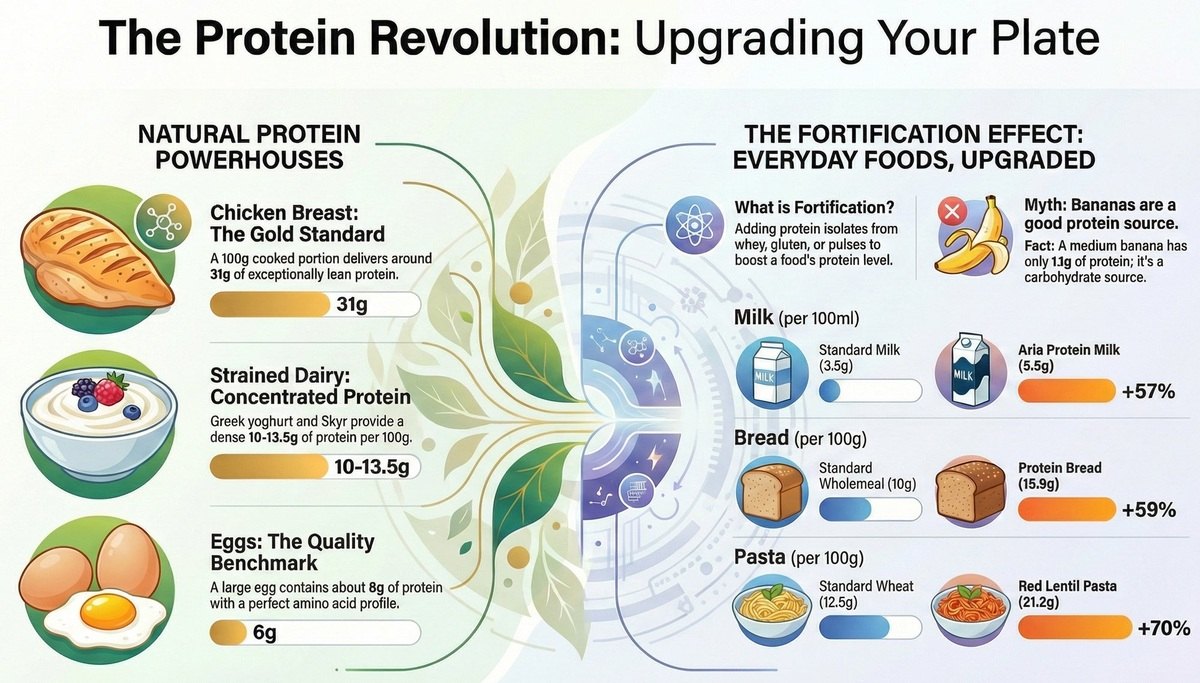
Chicken breast is the archetype of lean protein, characterized by an exceptional protein-to-fat ratio.6
-
Nutritional Density: 100g of cooked chicken breast provides approximately 31g to 32g of protein.7
-
Caloric Efficiency: At roughly 165 kcal per 100g, it delivers nearly 19g of protein per 100 calories. This makes chicken one of the most efficient sources for those managing energy intake precisely.
While dark meat (thighs) offers comparable protein density (approx. 26g per 100g), the caloric density is higher due to increased intramuscular fat.
The Egg: The Biological Reference Standard
The egg is utilised as the reference standard for protein Biological Value (BV) because its amino acid profile closely matches human requirements.8
-
Quantitative Breakdown: A standard large egg provides roughly 6.0g to 6.3g of protein.9 Per 100g, whole eggs deliver approximately 12.3g to 14g.
-
Strategic Application: While the egg white is virtually pure protein, the yolk contains essential micronutrients (choline, vitamin D).10 To reach the 30g MPS threshold, five whole eggs are required. Understanding the protein in egg allows for precise meal construction.
Dairy: Filtration and Concentration
Dairy proteins (casein and whey) are highly bioavailable.11 The market now includes technologically advanced, protein-enriched options.
-
Standard Milk vs. Protein Milk: Standard cow's milk contains approx. 3.5g of protein per 100ml. Fortified options, such as Arla Protein Milk, utilize filtration technologies (like Milk Protein Concentrate) to achieve 5.5g to 6.0g per 100ml. This 57% increase allows for significant protein accumulation without increasing fluid volume.
-
Yoghurt and Skyr: Straining processes differentiate standard yoghurt (4-5g protein/100g) from Greek Yoghurt (9-10g/100g). Skyr, an Icelandic cultured product, is exceptionally dense, often providing 11g to 13.5g of protein per 100g with minimal fat, making it a superior solid Food High in Protein.
Asset Analysis: Secondary Sources and Clarifications
As dietary strategies evolve, identifying high-protein plant foods is necessary. However, this category requires data-driven assessment to dispel misconceptions.
Legumes and Pulses
Legumes are primary protein sources in plant-based protocols.
-
Lentils: Cooked lentils provide 9g of protein per 100g, alongside significant fibre content.
-
Soy (Tofu/Tempeh): Soy is notable for its complete amino acid profile.12 Tempeh, a fermented soybean product, is dense, offering 19g to 20g protein per 100g, comparable to some meats.13
Clarifying Misconceptions: The Banana Case Study
A frequent query concerns how much protein in a banana. Bananas are utilised in sports nutrition for their potassium and carbohydrate content, not their protein.14
-
Nutritional Reality: A medium-sized banana contains only 1.1g to 1.3g of protein. To achieve 30g of protein from bananas alone would require consuming approximately 25 bananas (>2,600 calories). Bananas are carbohydrate assets, not protein assets.
The Rise of Engineered Nutrition: Functional Foods and Fortification
The demand for optimised nutrition has spurred the reformulation of traditional staples. These functional foods utilise isolated proteins (wheat gluten, pea protein, whey) or protein-dense ingredients to enhance their nutritional profile.
Cereal Fortification: The Weetabix Analysis
Weetabix provides a clear case study in fortification strategy.
-
Standard Weetabix: Contains 12g of protein per 100g (4.5g per 2-biscuit serving).
-
Weetabix Protein: Enriched with Wheat Gluten and Wheat Protein.15 Contains 19g of protein per 100g (7.6g per 2-biscuit serving).
This represents a 58% increase in protein density. While the absolute intake per serving remains modest (7.6g), combining it with high-protein milk or Skyr creates a viable high-protein breakfast architecture.
Protein Bread
Protein Bread significantly alters the macronutrient ratio of a traditional carbohydrate source. For example, Warburtons Protein Power utilizes pulses, seeds, and wheat gluten to achieve 15.9g protein per 100g (8g per slice), compared to standard wholemeal bread at 10g per 100g (4g per slice).
Protein Pasta
The advent of legume-based flours has transformed Protein Pasta.
-
Standard Wheat Pasta: Approx. 12.5g protein per 100g.
-
Red Lentil/Chickpea Pasta: Provide 20g to 25g protein per 100g. These also offer superior fibre content, enhancing the satiety response.
Protein Pancakes
Protein pancakes transform a traditionally high-carbohydrate meal by replacing flour with protein powder (whey/casein) and oats. Commercial mixes can provide 34g to over 60g of protein per 100g, compared to standard mixes at ~6.4g/100g.
Liquid Nutrition: The Strategic Role of Protein Shakes
For the executive athlete, efficiency is paramount. Protein shakes represent the ultimate engineered solution for delivering high-quality protein with minimal preparation time and digestive overhead.
Whey protein isolate, for example, provides an exceptionally high concentration of protein (often >80% by weight) and is rapidly digested.16 This ensures swift delivery of amino acids to the bloodstream, critical for capitalizing on the post-exercise recovery window or supplementing a meal that falls short of the MPS threshold.
When time is the limiting factor, a precisely formulated protein shake provides a reliable, quantifiable method to ensure the 25-30g target is met consistently. They are not merely supplements but strategic tools for precise macronutrient delivery.
Constructing the Optimized Plate: Meal Architecture
A "High Protein Meal" is strategically defined as one containing at least 30g of protein-the threshold required for optimal MPS. Constructing Meals High in Protein requires deliberate planning.
The Anchor Strategy
To ensure the threshold is met, utilizing a primary protein anchor is the most effective strategy.
-
The Poultry Anchor: A standard 140g cooked chicken breast provides ~43-45g of protein, exceeding the threshold single-handedly.
-
The Fish Anchor: A 140g fillet of cod provides ~30-35g protein.
-
The Plant Anchor: Achieving 30g with plants requires volume or stacking. It requires ~350g of cooked lentils. A stacking strategy-e.g., Tofu (15g) + Edamame (9g) + Quinoa (6g)-is often necessary.
The Long Game: Implications for Sustained Performance
The most compelling argument for optimised protein intake is the preservation of physiological function over decades. The gradual loss of muscle mass and strength is a significant threat to long-term performance.17
The biological resistance to anabolic stimuli that develops over time (anabolic resistance) necessitates a higher protein intake to achieve the same rate of synthesis as a younger individual. Ensuring adequate protein loading (approx. 0.4g/kg/meal) is a critical countermeasure.
Engineered foods, protein shakes, and fortified staples offer practical solutions for achieving these elevated targets, particularly when appetite or time constraints limit the consumption of large volumes of whole foods.
The strategy must move beyond simple gram counting to consider protein density per calorie, amino acid completeness, and distribution throughout the day. Integrating 20-30g of protein into breakfast remains the single most effective intervention for optimising the typical Western dietary protocol.
The Sundried Roundup
Strategic optimization requires actionable intelligence. Here is a tiered approach to implementing a high-protein protocol based on resource allocation.
I'm on a budget. How can I increase my consumption?
Cost-effective protein optimization focuses on high-yield, low-cost staples.
-
Eggs: The most economical source of complete protein. Purchase in bulk.
-
Skimmed Milk Powder: Highly concentrated protein (approx. 36g/100g) that can be added to oats, standard milk, or reconstituted.
-
Cottage Cheese: Often overlooked, it provides ~11-12g protein per 100g and is versatile.
-
Tinned Tuna/Sardines (in water): Pure protein (~26g/100g) with a long shelf life.
-
Lentils and Beans: While carbohydrate-dominant, they offer significant protein (8-9g/100g cooked) at a very low cost per gram.
-
Whey Protein Concentrate: Purchasing basic whey concentrate in bulk often provides the lowest cost per gram of protein compared to isolates or ready-to-drink shakes.
I don't want to invest too much, but I am on board. Give me a plan.
A moderate investment strategy focuses on convenience and strategic upgrades to existing dietary patterns.
-
The Breakfast Upgrade: Switch standard yoghurt for Greek Yoghurt or Skyr. Switch standard milk for ultra-filtered protein milk. This immediately increases daily intake by 10-15g without changing habits.
-
The Lean Protein Standard: Integrate chicken breast or white fish into 3-4 evening meals per week. Batch cook these on a weekend to save time.
-
The Supplement Buffer: Utilize a protein shake post-training or as a meal supplement on demanding days to ensure the 1.6g/kg BW target is met.
-
Snack Optimization: Replace carbohydrate-based snacks with options like Greek yoghurt pots or high-quality beef jerky.
I'm all in. With no budget to worry about, what can I do to maximise this?
A fully resourced optimization strategy focuses on quality, precision, and advanced integration.
-
Premium Protein Sources: Prioritize high-quality animal proteins: grass-fed beef fillet, wild-caught salmon, organic free-range poultry.
-
Advanced Supplementation: Utilize rapidly absorbing whey protein hydrolysate post-training for maximal MPS stimulation.18 Integrate slow-digesting micellar casein before sleep to maintain a positive nitrogen balance overnight.19
-
Nutritional Precision Services: Utilize a bespoke meal preparation service tailored to your exact macronutrient requirements (e.g., 2.0g/kg BW, 40g protein per meal).
-
Data Tracking and Analysis: Employ regular DEXA scans to analyze the impact of dietary protocols on body composition, adjusting ratios accordingly.
-
Functional Food Integration: Systematically replace all carbohydrate staples (bread, pasta, rice) with high-protein, high-fibre alternatives (legume pasta, protein bread).
Top 10 Things
Establish Your Target
Calculate your optimized protein intake (target 1.6 - 2.2 g/kg BW).
Prioritise the MPS Threshold
Ensure every meal contains a minimum of 25-30g of protein.
Optimize the Initial Meal
Do not default to a carbohydrate-dominant breakfast. Integrate eggs, Skyr, or a supplement immediately.
Leverage Lean Animal Protein
Utilize chicken breast, white fish, and eggs as dietary staples.
Utilise Dairy Concentration
Adopt Skyr or Greek yoghurt as preferred dairy sources over standard yoghurt.
Strategic Supplementation
Use protein shakes strategically when time is limited or post-exercise.
Upgrade Staples
Transition to protein-fortified bread, milk, and legume-based pasta where appropriate.
Dismiss Protein Myths
Recognize that nuts are primarily fat sources. They are not primary Protein Foods.
Monitor Density per Calorie
Select sources with the highest protein-to-calorie ratio when managing body composition.
Maintain Consistency
High protein intake is a long-term strategy. Adherence is the primary determinant of success.
Comprehensive Protein Data Reference (Per 100g/100ml)
| Food Item | Protein (g) | Category | Notes |
| Protein Powder (Whey/Soy) | 70.0 - 90.0 | Supplement | (Dry weight) Highly concentrated |
| Protein Pancakes (Mix) | 34.0 - 64.0 | Functional | Varies based on formulation; high efficiency. |
| Parmesan Cheese | 33.6 | Dairy | High Fat/Salt |
| Chicken Breast (Cooked) | 31.0 - 32.0 | Poultry | Gold Standard Lean Protein. |
| Tuna (Canned in water) | 26.8 | Seafood | Pure protein, zero carb. |
| Peanuts | 25.8 | Nut | High Calorie (Primarily Fat) |
| Protein Pasta (Legume-based) | 20.0 - 25.0 | Functional | High Fibre (e.g., Red Lentil). |
| Tempeh | 19.0 - 20.0 | Plant-Based (Soy) | Dense, complete protein. |
| Weetabix Protein | 19.0 | Cereal | Fortified with Gluten. |
| Protein Bread (e.g., Warburtons) | 15.9 | Bakery | Pulse/Seed Fortified. |
| Eggs (Whole) | 12.3 - 14.0 | Poultry | Perfect Biological Value. |
| Skyr | 11.0 - 13.5 | Dairy | Strained, Fat Free. |
| Cottage Cheese | 11.0 - 12.0 | Dairy | High in Casein. |
| Greek Yoghurt (0% Fat) | 10.0 | Dairy | Strained. |
| Cooked Lentils | 9.0 | Legume | High Fibre. |
| Protein Milk (e.g., Arla) | 5.5 | Dairy | Ultra-filtered/Fortified. |
| Standard Milk | 3.5 | Dairy | Natural. |
| Banana | 1.1 | Fruit | Carbohydrate source. |
| Fat (Butter / Oil) | < 0.5 | Fat | Nutritionally insignificant protein. |
Protein Per 100g - Top 10
Myprotein Pancake Mix
Dehydrated powder form (Matcha). 64.0g Protein.
Parmesan Cheese
Dairy source. Note: High Fat/Salt. 33.6g Protein.
Chicken Breast (Cooked)
Gold Standard Lean Protein. 32.0g Protein.
Skinny Food Co Pasta
Low Carb, High Fiber functional food. 30.0g Protein.
Tuna (Canned)
Pure protein, zero carb seafood. 26.8g Protein.
Peanuts
High Calorie (Fat) nut source. 25.8g Protein.
Red Lentil Pasta
High Fiber, Gluten Free functional food. 25.0g Protein.
Weetabix Protein
Fortified with Gluten cereal. 19.0g Protein.
Warburtons Protein Bread
Pulse/Seed Fortified bakery item. 15.9g Protein.
Eggs (Whole)
Perfect Biological Value poultry source. 14.0g Protein.


