

Garmin Auto-Multisport Transition Tracking: Reducing T1 and T2 Friction for Age-Groupers


Trying to beat your local Strava segment goals?
Fine-tune your training strategies to hit your target stats without downloading another app. Try asking Raye: 'How can I structure hill repeats to build short-segment power?' Ask how to hit your target
What are the press saying?
The triathlon community has long been obsessed with marginal gains, and Garmin’s recent integration of automated multisport transition tracking has become the focal point of industry discourse. Tech reviewers and professional triathletes alike have lauded the feature for its ability to remove the cognitive load of manual button-pressing during high-intensity race moments. Critics suggest that while the algorithm is highly reliable, athletes must still exercise due diligence by verifying data post-race to ensure the transition segments are accurately captured.
The consensus among the fitness press is that Garmin has successfully bridged the gap between complex multisport data logging and user-friendly interface design. By automating the switch between swim, bike, and run, the watch allows the athlete to focus entirely on their physical output rather than device management.
Comfort & Fit
For an age-grouper, the comfort of a multisport watch is paramount. The current generation of Garmin multisport devices, particularly the Forerunner 965 and Fenix 7 series, feature a slim, lightweight profile that does not interfere with the removal of a wetsuit. The silicone bands are designed to be soft against the skin, minimising chafing during long-distance efforts.
Achieving an optimal fit is essential for the accuracy of the optical heart rate sensor. A secure, snug fit ensures that the watch does not slide during the transition from the swim to the bike, which could otherwise skew GPS tracking or heart rate metrics during the critical early minutes of a cycle.
Features to Look out For
When selecting a watch for transition tracking, prioritise models with customisable multisport profiles. The ability to toggle the 'Auto-Transition' feature on or off is vital, as is the capacity to manually override segments should the GPS signal be obscured in a complex transition area.
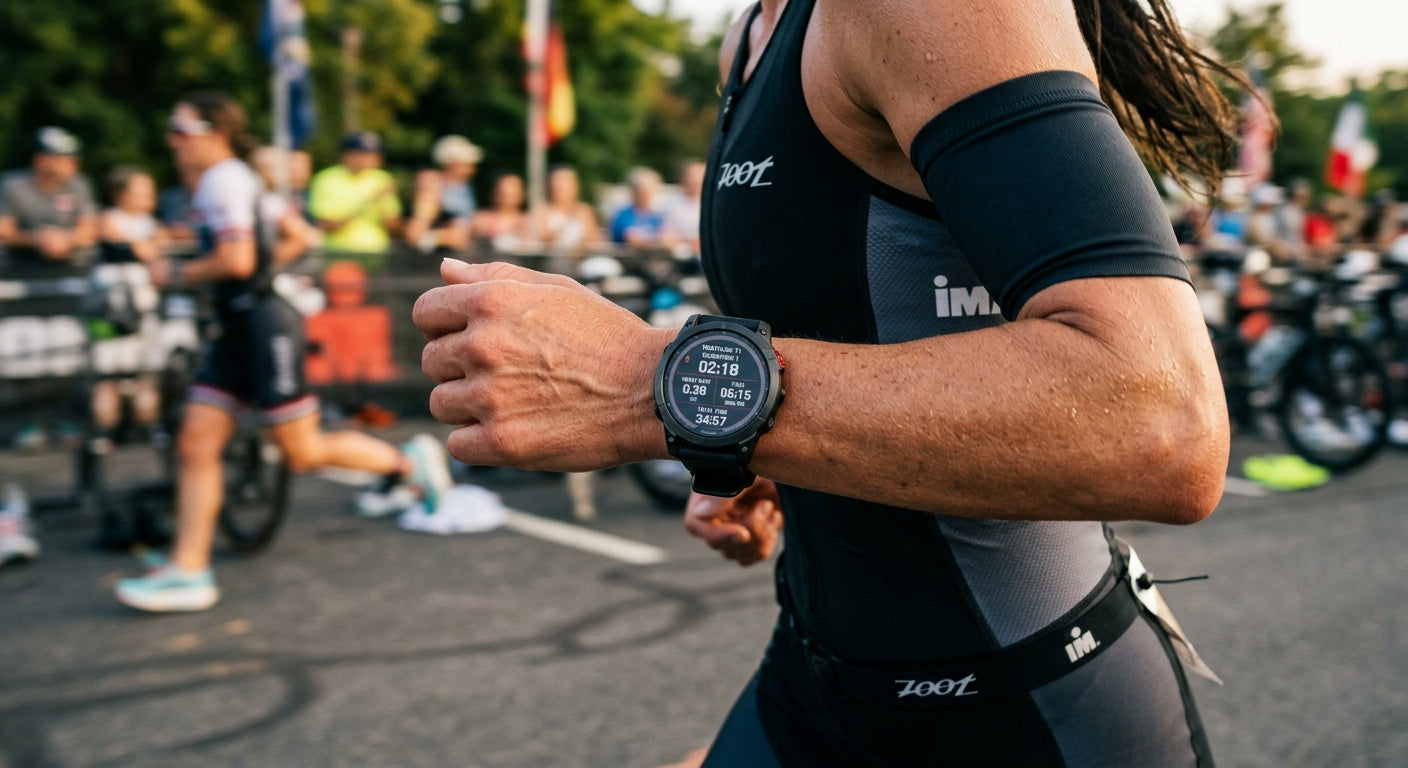
Furthermore, look for devices that offer advanced data analysis, such as power meter compatibility and cadence tracking, which can be analysed in tandem with your transition times. These features allow you to see how your T1 and T2 efficiency correlates with your overall fatigue levels.
Evolution and History
The history of transition tracking has evolved from simple manual 'lap' button presses to the sophisticated, AI-driven algorithms we see today. In the early days, athletes often forgot to hit the lap button, leading to corrupted data sets that were difficult to interpret. Garmin’s evolution towards automated sensors and motion-detection logic has fundamentally changed how triathletes approach data collection.

Hit a wall with form, pacing, or fatigue?
Skip searching forums. Chat directly on this page with our performance coach to solve training issues in seconds: 'How do I prevent side stitches on long runs?' Troubleshoot your run
This progression reflects a broader shift in sports technology, where the focus has moved from merely recording data to providing actionable, real-time insights that assist in tactical race decision-making.
Special Features & Technical Specifications
Material Composition and Weight
Modern Garmin multisport units utilise a combination of fibre-reinforced polymer, titanium, and scratch-resistant sapphire crystal. These materials ensure that the devices remain lightweight, often weighing under 50 grams, while maintaining the durability required for rugged race conditions.
Engineering Advancements
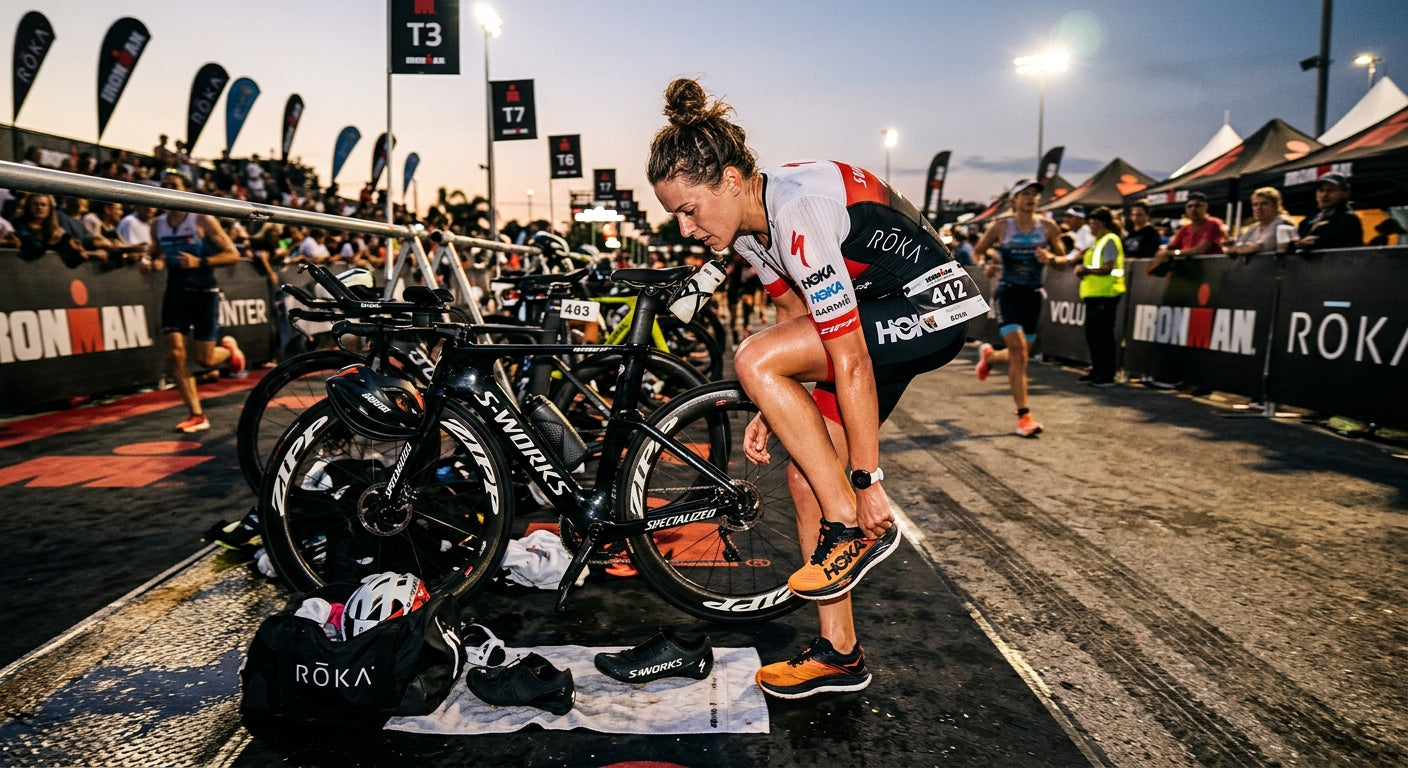
Compared to previous generations, current models have seen a significant reduction in sensor latency. The latest GPS chipsets provide a faster lock-on, which is critical when exiting the water and moving into a transition zone where signal interference is high.
What to Expect in the future?
The future of transition tracking lies in the integration of biometric feedback during the transition itself. We anticipate that upcoming software updates will provide real-time 'transition efficiency scores,' allowing athletes to see exactly how their heart rate recovery in T2 impacts their run performance. This level of granularity will be a game-changer for competitive age-groupers looking to climb the podium.
As hardware becomes more compact and algorithms more refined, the friction between physical activity and data capture will continue to shrink. Athletes should prepare for a future where the watch acts less like a tool to manage and more like a silent, intelligent coach.
To truly capitalise on these technological advancements, ensure your gear is ready for rapid movement. Consider investing in high-performance tri suits designed for quick shedding, elastic race laces that eliminate the need for traditional knot-tying, and cycling shoes with single-strap closures to further streamline your transition flow.


