

Precision in the Chaos: How UWB Technology is Revolutionising Triathlon Transition Zones


Planning your next fitness milestone?
Get immediate guidance on pacing, workout structure, or race prep directly on-site for free. Try asking Raye: 'Can you outline a simple 4-week build plan for a 10K?' Get instant guidance
What are the press saying?
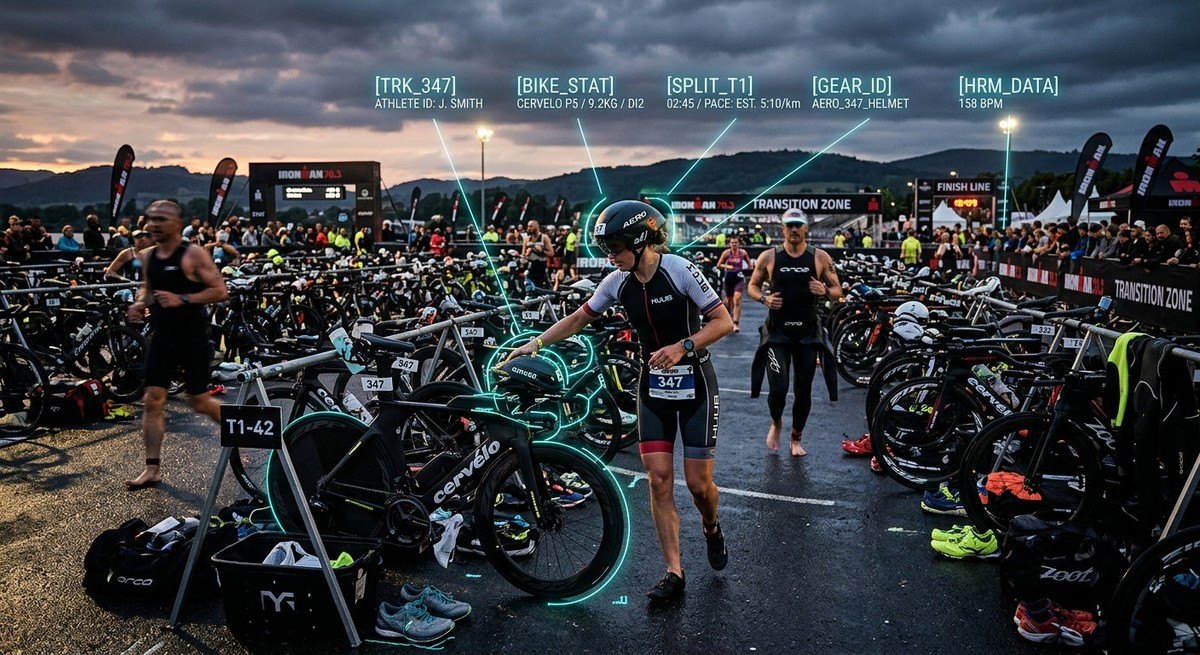
Industry analysts and sports technology journalists are calling Ultra-Wideband (UWB) the most significant leap in race-day logistics since the advent of the electronic timing chip. Reports from major endurance sports publications highlight how professional triathletes are increasingly relying on UWB-enabled tags to mitigate the stress of high-density transition zones. By providing centimetre-level accuracy, these devices have effectively eliminated the 'where is my bike?' panic that plagues even the most seasoned competitors during the chaotic T1 and T2 phases.
Comfort & Fit
The integration of UWB technology into athletic gear prioritises a low-profile, aerodynamic aesthetic. Manufacturers have engineered these tracking modules to be remarkably slender, ensuring they do not disrupt the hydrodynamic properties of a wetsuit or the wind-cheating profile of a carbon fibre bike frame. The fit is unobtrusive, often utilising adhesive backing or secure, lock-in housings that integrate seamlessly into existing gear layouts without adding significant bulk or weight.
Features to Look out For
When selecting UWB tracking gear, athletes should prioritise signal reliability in adverse weather conditions. Look for IP68-rated enclosures that guarantee protection against saltwater immersion and heavy downpours. Furthermore, battery longevity is paramount; the best devices offer a minimum of six months of active tracking, ensuring they remain operational throughout an entire race season without requiring a mid-term recharge. Bluetooth Low Energy (BLE) fallback capabilities are also a critical feature to consider.
Evolution and History
The transition from standard GPS to UWB technology represents a shift from general area awareness to precise indoor and proximity-based positioning. Historically, athletes relied on visual markers or brightly coloured tape to identify their transition bags. However, as transition zones have grown in complexity, the need for sub-metre accuracy became apparent. The evolution of UWB chips from smartphone integration to ruggedised, sport-specific tags marks a new era in gear management, moving away from reactive searching to proactive, real-time location tracking.

Special Features & Technical Specifications
Material Composition
Modern UWB trackers utilise aerospace-grade polycarbonate shells, offering high impact resistance against the rigours of transit and race-day handling. The internal circuitry is shielded with a non-corrosive, marine-grade coating to prevent oxidation in high-salinity environments.

Looking to shave time off your personal best?
Get immediate pacing strategies and interval workout ideas directly on-site for free. Try asking Raye: 'What is the best threshold session to help drop my 10K time?' Get instant pacing tips
Physical Dimensions and Weight
The current generation of trackers averages 30mm x 30mm x 5mm, with total weight hovering at a negligible 8 to 12 grams. This engineering focus ensures that the centre of gravity of the athlete's equipment remains completely unaffected.
Engineering Advancements
Compared to previous generations of Bluetooth-only trackers, the UWB architecture utilises time-of-flight (ToF) calculations. This enables precise distance measurement between the tag and the receiver, cutting through the interference of thousands of metallic bikes and carbon structures that typically baffle standard proximity beacons.
What to Expect in the future?
The trajectory for UWB technology in endurance sports points towards deep integration with race timing systems. We anticipate a future where a transition bag or bike frame automatically triggers a 'check-in' as an athlete enters the transition zone, providing real-time data to support staff or coaches. As the tech becomes more ubiquitous, it is likely that event organisers will mandate specific signal protocols, standardising how gear is tracked and secured in the world's most prestigious races.
Ultimately, the adoption of UWB technology is about reclaiming mental bandwidth. By offloading the logistical burden of gear identification to intelligent hardware, triathletes can focus their energy on what truly matters: the performance. As we look towards the next race season, the athletes who embrace this precision-tracking evolution will undoubtedly find themselves with a distinct advantage in the high-stakes environment of the transition area.


