

Continuous Glucose Monitoring for Non-Diabetic Triathletes: Maximizing Glycogen Sparing on Race Day


Dealing with a nagging injury or tightness?
Get instant recovery guidance, stretching protocols, and rest advice right now without leaving the site. Try asking Raye: 'What are the best stretches to relieve tight calves after a long run?' Get recovery advice
What are the press saying?
The sports science press has been abuzz with the integration of continuous glucose monitoring (CGM) technology into the endurance arena. Once the exclusive domain of medical management, these sensors are now being heralded as the ultimate tool for the modern triathlete. Journalists covering the elite Ironman circuit have noted a shift: athletes are no longer guessing their fuel requirements but are instead relying on precise, real-time data to navigate the metabolic demands of the bike leg.
Critics remain cautious, citing the cost and the psychological burden of data obsession. However, the prevailing sentiment is that CGM data represents a revolution in performance nutrition. By observing blood glucose fluctuations in real-time, triathletes are learning to avoid the dreaded 'bonk' with surgical precision, ensuring they maintain the high carbohydrate oxidation rates required for podium finishes.
Comfort & Fit
For the triathlete, the physical profile of a CGM sensor is paramount. Whether you are in an aero tri suit or transitioning through the water, the sensor must remain secure. Most modern sensors utilise medical-grade adhesive, designed to withstand the rigours of sweat, salt water, and high-intensity movement. The low-profile design ensures minimal aerodynamic drag, a non-negotiable requirement for those chasing marginal gains on the bike.
Comfort is generally high, with many users reporting they forget the sensor is attached shortly after application. When paired with a robust hydration waist belt, the sensor remains protected from accidental displacement during complex transitions. It is a seamless integration into the daily training routine, provided the site is prepped correctly to maximise adhesion.
Features to Look out For
When selecting a sensor, prioritisation should be given to data refresh rates and integration capabilities. The ability to push glucose telemetry directly to your bike computer is the 'gold standard' for race-day execution. This allows the athlete to monitor glucose trends without breaking their aero position, ensuring they hit that critical 90-120g/hr carbohydrate intake window.
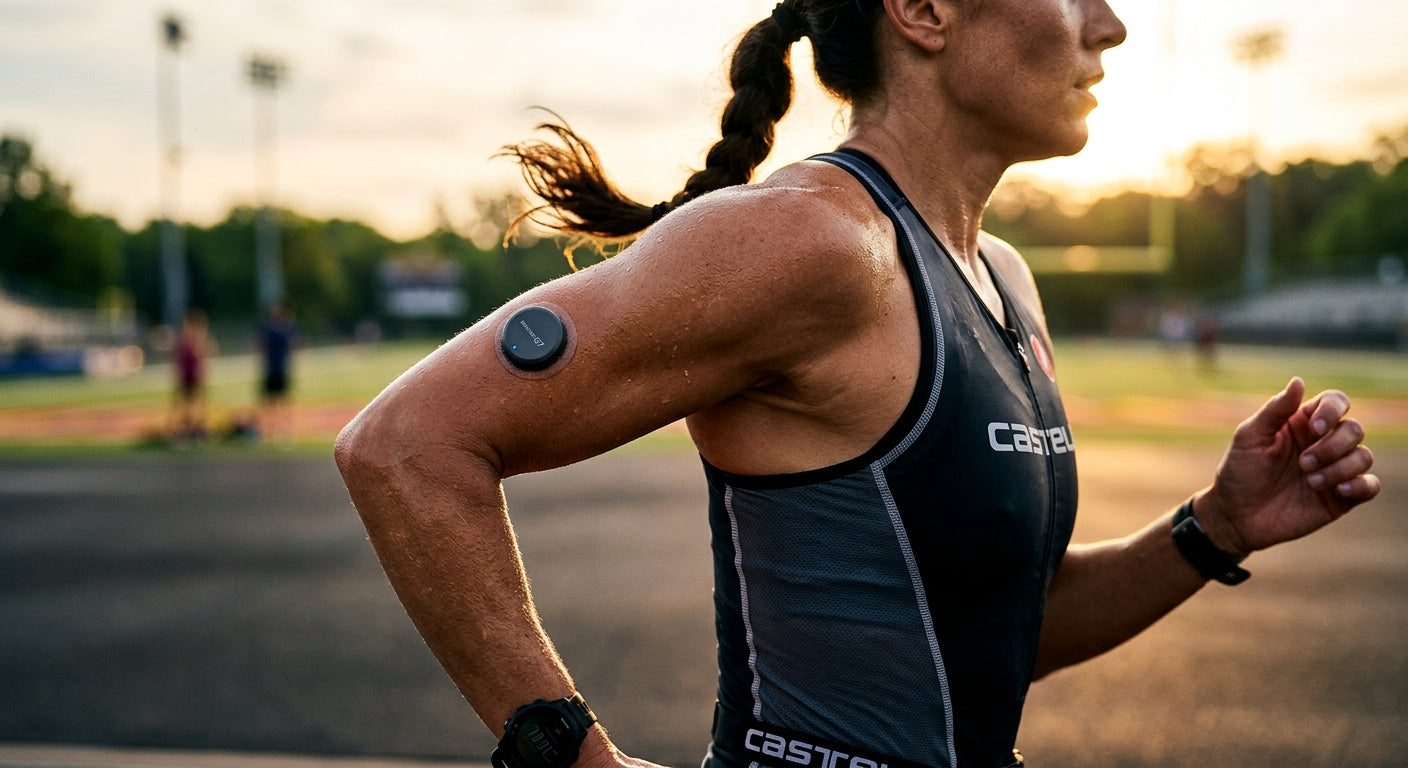
Look for devices that offer granular trend arrows. Knowing if your glucose is dropping rapidly or is stable allows for proactive rather than reactive fuelling. Furthermore, software compatibility with existing sports platforms is essential for post-race analysis, allowing you to correlate your glucose spikes with specific power outputs or heart rate zones.
Evolution and History
The history of CGM technology is rooted in clinical endocrinology, designed to stabilise insulin-dependent patients. However, the crossover into sports science has been rapid. Early prototypes were bulky and inaccurate during high-intensity exercise, often suffering from 'lag' between interstitial fluid glucose and blood glucose levels. The latest generation has largely mitigated these issues through advanced algorithms that smooth out noise caused by muscle contraction.

Have a quick training or recovery question?
Get fast expert advice right here on the page—no sign-up, account, or app needed. Try asking Raye: 'What's the best way to relieve tight calves after a run?' Ask a question now
We have moved from retrospective data logging to live, actionable telemetry. This evolution has transformed the CGM from a passive monitoring device into an active performance tool. As the hardware has shrunk, the computational power behind the sensors has increased, allowing for the precise glycogen sparing strategies we see in top-tier endurance athletes today.
What to Expect in the future?
The future of CGM technology lies in predictive analytics. Imagine a head unit that not only shows your current glucose level but also forecasts your energy levels three hours into an Ironman bike leg based on your current caloric burn. This predictive capability will likely become standard, further automating the fuelling process.
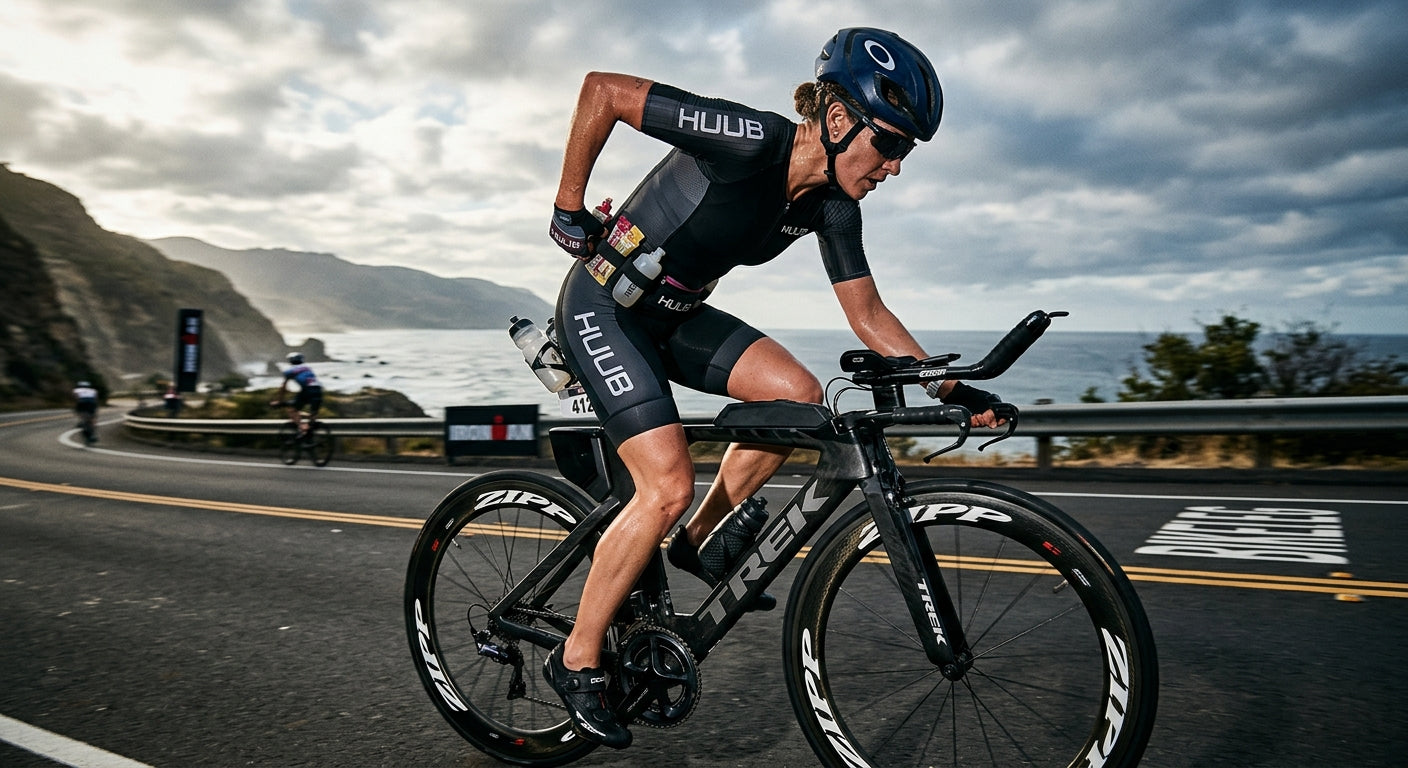
We can also expect tighter integration with smart hydration systems and automated wearable technology. As the hardware becomes more affordable, the barrier to entry will drop, making glucose management a standard component of every endurance athlete’s toolkit, much like heart rate monitoring is today.
Special Features & Technical Specifications
Material Composition and Durability
Current sensors are constructed from flexible, biocompatible polymers designed to minimise skin irritation. The filament, which sits just under the skin, is coated in a glucose oxidase enzyme, allowing for accurate measurement of interstitial glucose levels. The outer shell is IP68-rated, ensuring total resistance against the moisture of a long-distance triathlon.
Physical Dimensions and Mass
The average sensor measures approximately 35mm in diameter and stands only 5mm off the skin surface. This minimal footprint is critical for maintaining the aero profile of the modern triathlete. The total mass, including the applicator and internal battery, is typically less than 15 grams, rendering it virtually weightless during competition.
Engineering Advancements
Compared to previous iterations, the current generation features improved Bluetooth Low Energy (BLE) connectivity, ensuring a more stable link to cycle computers. The sensor life has been extended to 14 days, providing enough coverage for a full training taper and race day. Additionally, the 'lag' time has been reduced by 30% through enhanced signal processing, providing a more accurate reflection of systemic blood glucose during high-intensity intervals.


