

Wearable Sweat Sensors in Endurance Sports: Evaluating the FLOWBIO S1 for Hydration Strategy


Want to build strength to support your running?
Get targeted strength routines and mobility exercises designed specifically for runners directly on-site. Try asking Raye: 'What are 3 key gym exercises to improve running economy?' Get strength tips
What are the press saying?
The endurance community has long relied on trial-and-error, but the emergence of the FLOWBIO S1 has shifted the narrative towards quantifiable biological data. Leading sports science journals have praised the device for its ability to transition lab-grade sweat analysis into a wearable, real-time format. Critics highlight that while traditional sweat patches provided a snapshot, the S1 offers a dynamic stream of data that changes the fundamental approach to electrolyte replacement during long-course racing.
Journalists covering the Ironman circuit note that elite athletes are no longer guessing their fluid intake. By providing continuous measurements of fluid loss in litres per hour and sodium concentration in milligrams per litre, the device has become a staple for those competing in high-heat environments. The consensus is clear: the era of generic hydration tablets is ending, replaced by personalised protocols derived from microfluidic biosensing.
Comfort & Fit
For the competitive triathlete or gravel cyclist, ergonomics are paramount. The FLOWBIO S1 is designed to be unobtrusive, sitting flush against the skin to ensure that aerodynamic profiles remain undisturbed during high-intensity efforts. The adhesive interface is engineered to withstand high-volume sweat production, ensuring that the sensor does not migrate during the swim-to-bike transition or extended mountain climbs.
The fit is designed to be seamless, integrating well with technical triathlon suits without causing friction or skin irritation. By utilising a low-profile housing, the device avoids the 'bulk' often associated with early-generation biometric trackers, allowing athletes to focus on their cadence and power output rather than their equipment.
Features to Look out For
The core of the S1’s utility lies in its microfluidic channels. Unlike basic wearables, this device captures a continuous sample of sweat, providing a rolling average of sodium loss. This is critical for athletes navigating varying heat indices, as sodium requirements fluctuate significantly based on environmental stressors and intensity levels.

Accuracy is the primary feature; the device is calibrated to match the gold-standard sweat collection methods used in clinical laboratories. Athletes should look for the real-time feedback loops that allow for mid-race adjustments to electrolyte intake. When paired with high-quality hydration packs, this data-driven approach effectively mitigates the risk of hyponatraemia and dehydration-induced performance degradation.

Have a specific performance goal in mind?
Get direct feedback on your training targets right here on the page—no sign-up or account required. Try asking Raye: 'How should I adjust my weekly mileage for a sub-20 minute 5K?' Ask about your goals
Evolution and History
The evolution of sweat sensing has migrated from cumbersome, static laboratory patches to sophisticated, lightweight electronics. Historically, athletes had to undergo expensive sweat testing in controlled environments, which rarely accounted for the physiological changes induced by race-day adrenaline or extreme environmental exposure.
Engineering advancements in microfluidics have allowed for the miniaturisation of the sensors that once filled a room. By integrating these biosensors into a wearable form factor, manufacturers have bridged the gap between theoretical sports physiology and practical race-day application, marking a significant leap forward in wearable technology.
Special Features & Technical Specifications
Material Composition and Engineering
The S1 utilises a medical-grade, hypoallergenic adhesive backing that ensures consistent skin contact. The casing is constructed from high-impact, lightweight polymers designed to withstand the rigours of endurance sports, including vibration from gravel cycling and prolonged water submersion during triathlons.
Physical Dimensions and Weight
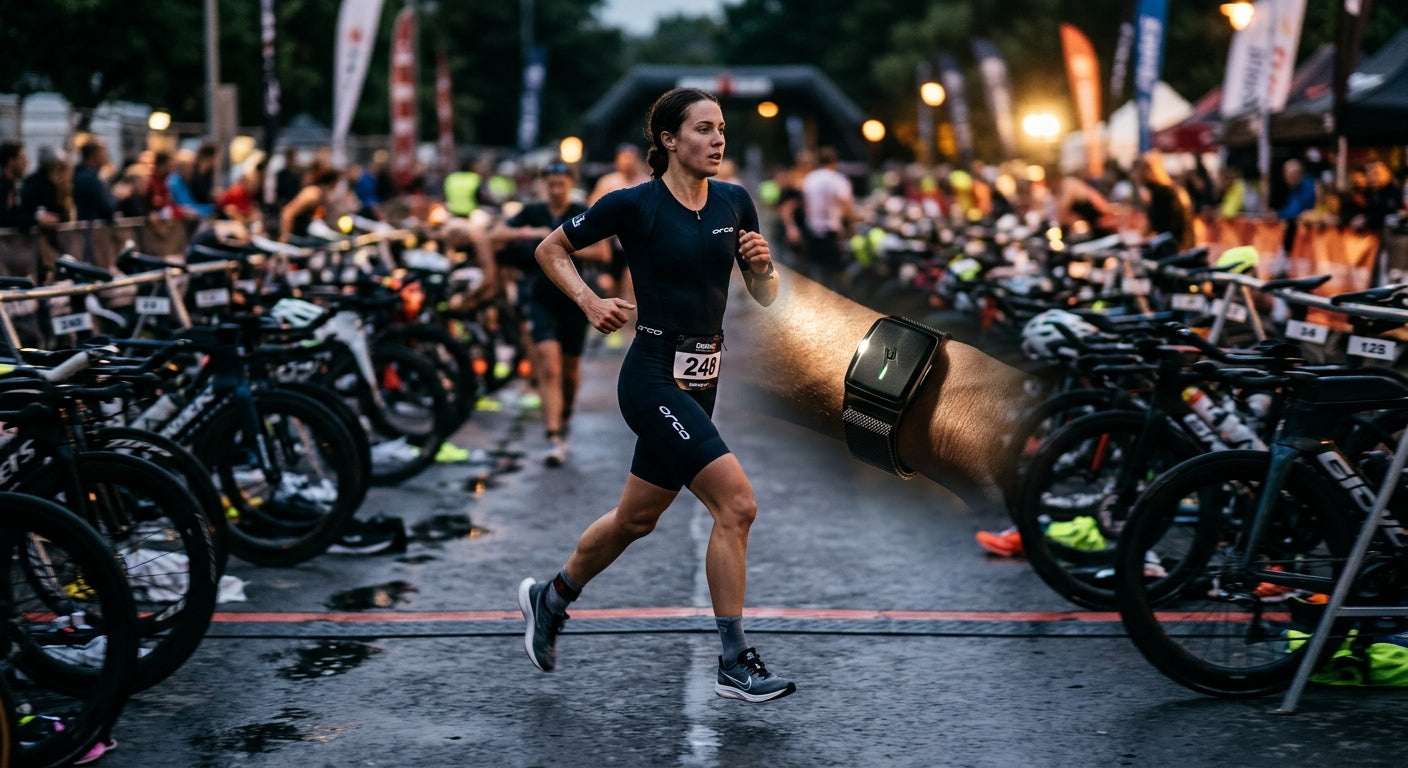
The device weighs less than 20 grams, ensuring it does not affect the athlete's centre of gravity or overall performance metrics. Its compact dimensions allow for flexible placement on the upper arm or chest, which are optimal sites for consistent sweat rate monitoring.
Generational Advancements
Compared to previous prototypes, the current generation features improved algorithmic processing that filters out noise from external contaminants such as sunscreen or environmental pollutants. The battery architecture has been optimised for multi-day endurance events, ensuring data continuity during long-distance efforts.
What to Expect in the future?
The future of sweat sensing is likely to involve deeper integration with existing ecosystem hardware. We anticipate that future iterations of the FLOWBIO S1 will communicate directly with cycle computers and smartwatches, providing live alerts to drink based on the athlete's current sweat profile. This closed-loop system will likely become the standard for professional endurance sport.
Furthermore, as the cost of biosensing technology decreases, we expect these sensors to become more accessible to the amateur enthusiast. The integration of artificial intelligence will likely allow for predictive hydration modelling, where the sensor anticipates fluid needs before the athlete even experiences the first signs of fatigue, setting a new benchmark for performance nutrition.


