

Continuous Core Body Temperature Sensors: How Heat Stress Monitoring Prevents Endurance Fatigue


Trying to beat your local Strava segment goals?
Fine-tune your training strategies to hit your target stats without downloading another app. Try asking Raye: 'How can I structure hill repeats to build short-segment power?' Ask how to hit your target
What are the press saying?
In the high-stakes world of professional endurance sport, the consensus among sports science journalists is clear: internal thermal monitoring is the next frontier of human performance. Leading publications have lauded devices like the CORE sensor for shifting the paradigm from guesswork to precision data. Critics and elite coaches alike are highlighting how these non-invasive sensors provide real-time metrics that were once restricted to clinical laboratory environments, allowing athletes to push closer to their physiological ceiling without crossing into the danger zone of heat exhaustion.
Comfort & Fit
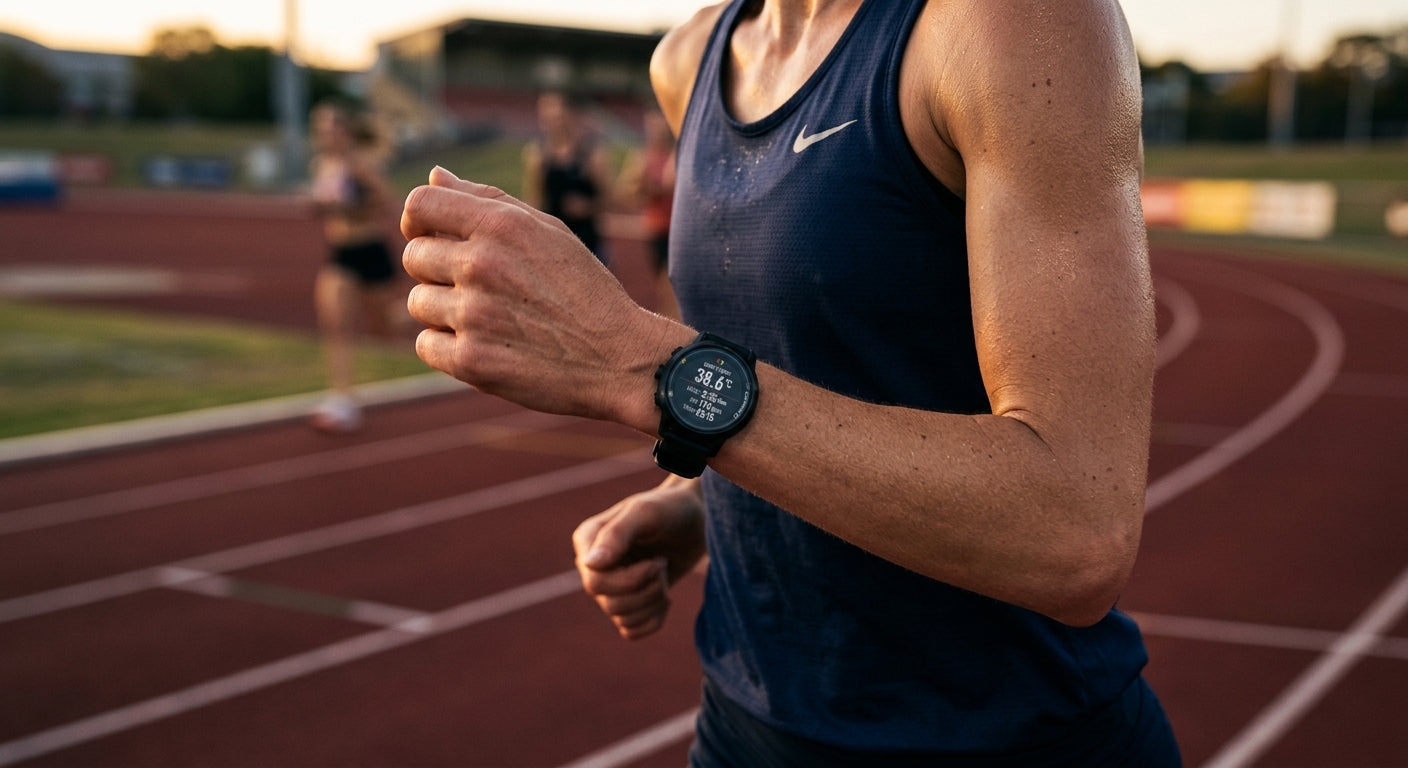
For the long-distance triathlete, equipment weight and aerodynamics are paramount. Modern thermal sensors are engineered to be unobtrusive, often clipping securely to a heart rate monitor strap or sitting flush against the skin under a race-day kit. The design prioritises a low profile to ensure that there is no chafing during a 42km run or a 180km cycle. They are so lightweight that most athletes report forgetting they are even wearing them within minutes of starting their session.
Features to Look out For
When selecting a core temperature sensor, athletes must prioritise connectivity and data granularity. Look for devices that offer ANT+ and Bluetooth compatibility, allowing seamless integration with your cycling computer or multisport watch. Real-time heat strain indexes are vital, as they translate raw temperature data into actionable alerts. Furthermore, ensure the device supports data logging for post-workout analysis, which is essential for tracking long-term heat acclimation progress.
Evolution and History
The history of thermal management in sport was once defined by rectal probes or ingestible pills—methods that were either invasive or prohibitively expensive for the amateur enthusiast. The evolution toward wearable, non-invasive sensors marks a significant technological leap. By using energy-transfer algorithms to calculate internal core temperature from skin surface data, engineers have democratised access to performance analytics, moving the technology from the elite medical tent to the everyday training kit.
Special Features & Technical Specifications
Material Composition and Engineering
Current-generation sensors utilise medical-grade, hypoallergenic polycarbonate housings that are both sweat-resistant and fully waterproof to depths exceeding 1.5 metres. The internal circuitry features highly sensitive thermopile arrays capable of filtering out external ambient temperature fluctuations to isolate core thermal output.

Hit a wall with form, pacing, or fatigue?
Skip searching forums. Chat directly on this page with our performance coach to solve training issues in seconds: 'How do I prevent side stitches on long runs?' Troubleshoot your run
Physical Dimensions and Weight
The units typically measure 40mm x 40mm x 8mm, with a total weight of approximately 12 grams. This negligible mass ensures that the sensor does not interfere with the biomechanics of a runner’s stride or a cyclist’s aerodynamic position.
Generational Advancements
Compared to their predecessors, today's models offer a 30% increase in battery longevity, lasting up to 60 hours on a single charge. Advanced firmware updates have also reduced 'thermal drift', a common issue in early iterations where external wind cooling could skew internal readings, ensuring greater accuracy during high-speed descents.

Active Thermal Management
Achieving peak performance in endurance events requires more than just monitoring; it demands active intervention. Heat acclimation protocols—where athletes intentionally train in hot conditions—are now standard practice for those targeting summer marathons. By utilising thermal management apparel, such as moisture-wicking, heat-regulating cycling jerseys and ultra-lightweight, breathable running caps, athletes can facilitate better evaporative cooling. When the sensor alerts the athlete that core temperature is rising too rapidly, these apparel choices, combined with targeted hydration and cooling strategies, can prevent premature fatigue.
What to Expect in the future?
The future of thermal monitoring lies in artificial intelligence. We anticipate that upcoming software iterations will provide predictive analytics, suggesting exactly when an athlete should consume ice-slurry or adjust their pace before they feel the onset of thermal strain. As these sensors become increasingly integrated with smart clothing, the synergy between wearable hardware and AI-driven coaching will likely redefine the limits of human endurance, making thermal management a standard component of every athlete’s training regimen.


