

Circadian Rhythms and Jet Lag Optimization: Top Wearable Tech for Traveling Athletes


Trying to beat your local Strava segment goals?
Fine-tune your training strategies to hit your target stats without downloading another app. Try asking Raye: 'How can I structure hill repeats to build short-segment power?' Ask how to hit your target
The Modern Athlete's Travel Dilemma
For the elite endurance athlete, the challenge of a destination race begins long before the starting pistol fires. Transmeridian travel disrupts the body's internal master clock, leading to desynchronisation between the internal circadian rhythm and local time. This disruption, commonly known as jet lag, can manifest as cognitive fatigue, gastrointestinal distress, and compromised muscle recovery—all of which are catastrophic for podium ambitions.
As the sporting world becomes increasingly globalised, the demand for precision-engineered recovery tools has skyrocketed. Today, we are seeing a shift from anecdotal travel hacks to scientifically validated light-exposure protocols and algorithmic software that recalibrates the body’s hormonal response to light, effectively 'hacking' the transition to new time zones.
What are the press saying?
Leading sports science journals and performance publications have recently highlighted the efficacy of blue-light therapy as a non-pharmacological intervention for circadian misalignment. Experts suggest that controlled exposure to specific wavelengths of light can shift the phase of the circadian rhythm by several hours per day, significantly reducing the recovery window for international competitors.
Journalistic analysis from major fitness outlets has also praised the integration of predictive algorithms within wearable ecosystems. By merging flight data with biometrics, these tools provide a bespoke 'action plan' for light exposure, shielding athletes from the performance degradation typically associated with long-haul transit.
Comfort & Fit
When considering wearable light therapy glasses, ergonomics are paramount. The best-in-class devices utilise lightweight, aerodynamic frames that sit comfortably over the bridge of the nose for extended durations. Materials like reinforced polymer and medical-grade silicone ensure these devices remain secure during transit, whether you are reading in a departure lounge or adjusting your sleep schedule in a hotel room.
The fit must be precise; light leakage can diminish the efficacy of the treatment. Manufacturers have prioritised adjustable temple tips and flexible hinges to accommodate various facial structures, ensuring that the light source remains centred within the user's field of vision for optimal retinal stimulation.
Features to Look out For
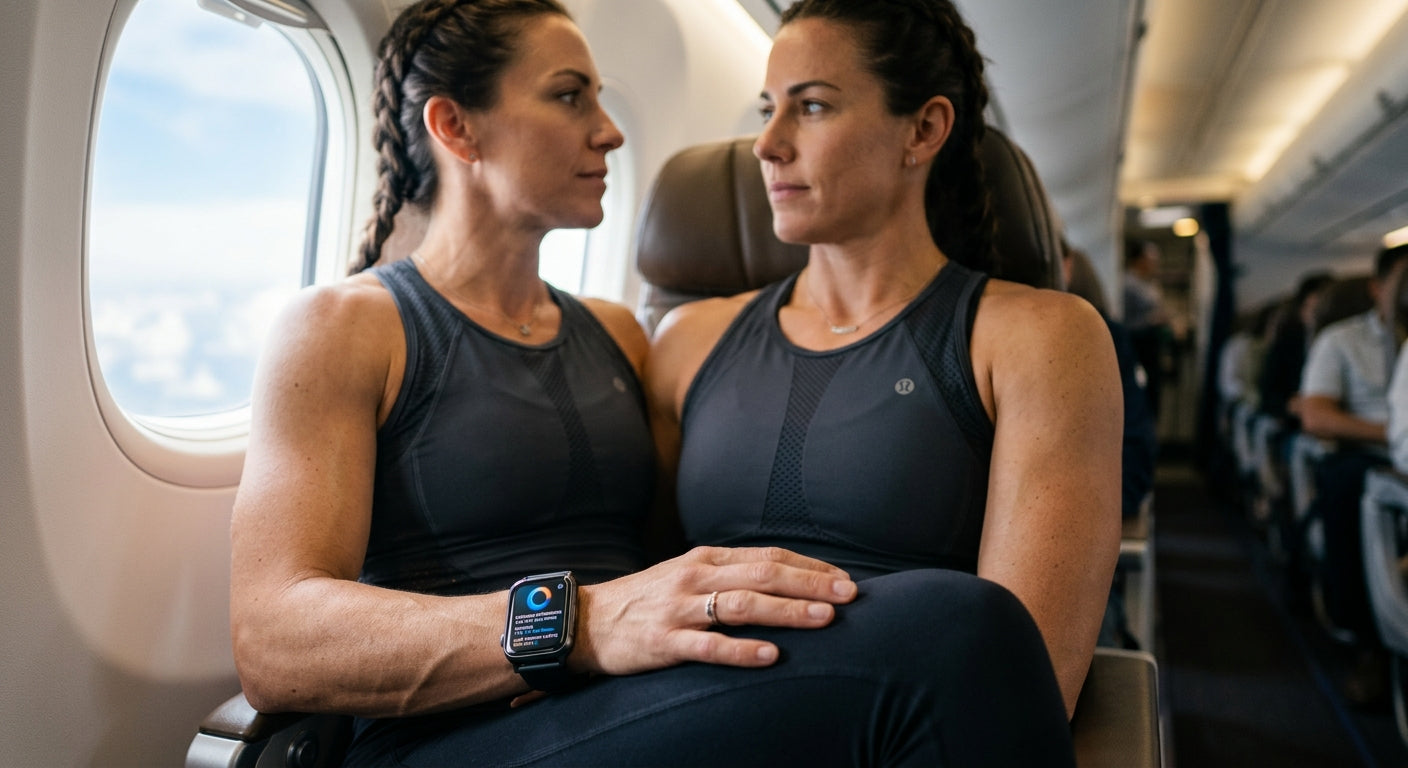
When selecting a system, prioritise devices that offer adjustable intensity settings. Not all light exposure is created equal; the timing of the dose is more critical than the sheer volume of photons. Look for integration with apps like Timeshifter, which use proprietary algorithms to calculate your specific 'light-dark' schedule based on your departure and arrival times.

Hit a wall with form, pacing, or fatigue?
Skip searching forums. Chat directly on this page with our performance coach to solve training issues in seconds: 'How do I prevent side stitches on long runs?' Troubleshoot your run
Connectivity is another essential feature. Seamless syncing between your smartphone and the wearable device allows for real-time adjustments if your flight is delayed. Furthermore, look for devices that offer a 'melatonin-suppressing' mode for early morning arrivals and a 'warm-light' mode for winding down in the evening.
Evolution and History
The history of circadian science in athletics has evolved from rudimentary 'staying awake' tactics to sophisticated bio-hacking. Decades ago, athletes relied on caffeine and sheer willpower to cope with travel. The advent of portable LED technology in the late 2010s marked a turning point, moving these protocols from clinical sleep laboratories into the hands of the individual competitor.
Engineering advancements have seen these devices shrink from bulky, desk-bound lamps into sleek, wearable visors and glasses. This miniaturisation has been the catalyst for the widespread adoption we see today, allowing athletes to maintain their training intensity despite the geographic distance from their home base.
What to Expect in the future?
The future of circadian optimisation lies in the integration of continuous glucose monitors (CGMs) and heart rate variability (HRV) sensors with light-therapy wearables. We expect to see 'closed-loop' systems that adjust light exposure automatically based on your real-time physiological response to travel stress, rather than relying solely on pre-set algorithms.
Special Features & Technical Specifications
Material Composition
Current generation light therapy glasses utilise high-impact, lightweight polycarbonate lenses and hypoallergenic TR90 frame materials, ensuring a balance between durability and long-wear comfort.
Physical Dimensions and Weight
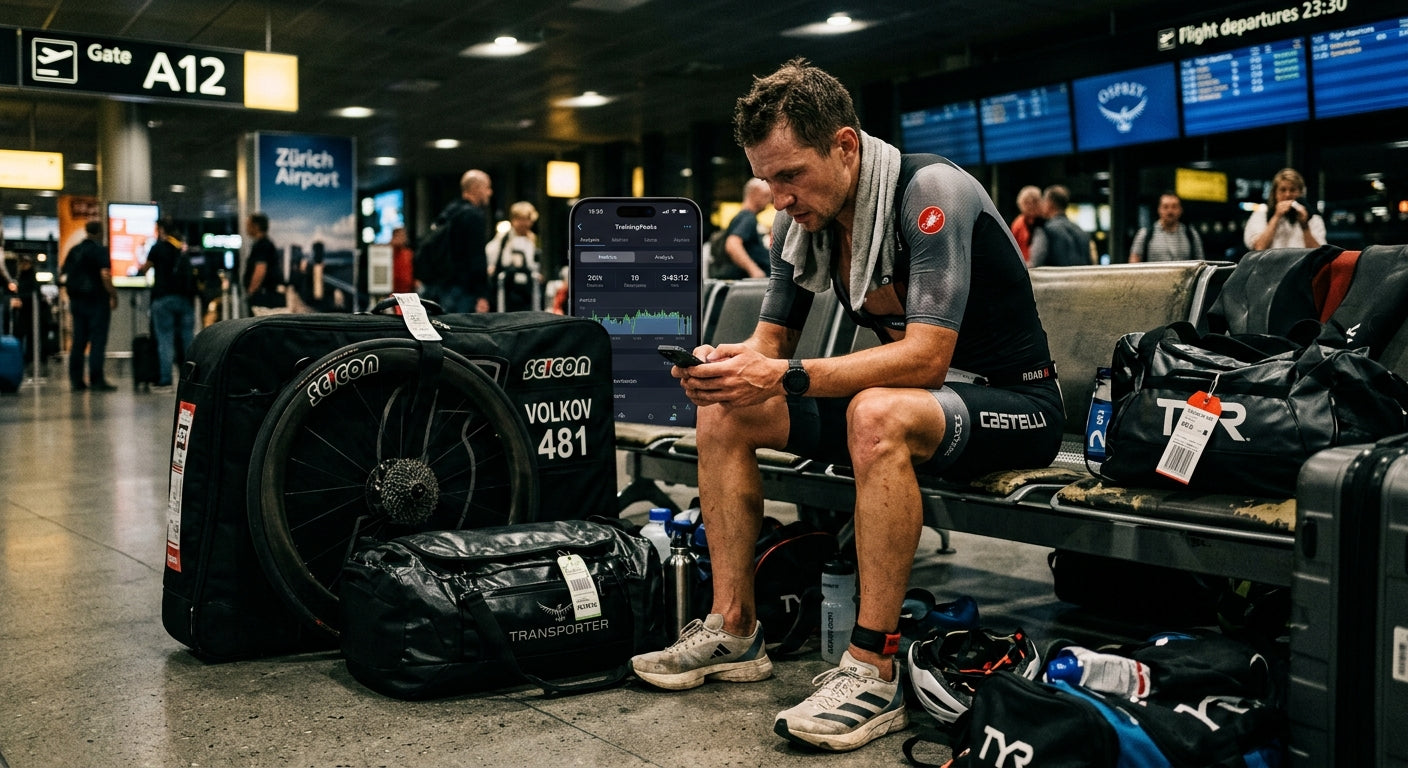
Typical units now weigh between 45 and 70 grams, with folding dimensions of approximately 15cm x 5cm, making them easily packable in standard carry-on luggage or dedicated athletic travel cases.
Engineering Evolution
Compared to previous iterations, modern devices have reduced blue-light flicker rates to near-zero and increased LED lifespan by 40%, while shifting from proprietary charging cables to universal USB-C standards for global convenience.
The Verdict for the Traveling Athlete
For the athlete who frequently crosses multiple time zones, investing in a combination of high-quality light-therapy eyewear and algorithmic scheduling software is no longer a luxury; it is a fundamental component of the training cycle. By proactively managing your circadian rhythm, you are not just surviving the travel—you are arriving at the start line ready to compete at your absolute physical peak.


