

Bone Conduction Headphones for Swimmers: Waterproof Audio Technology Compared


Need performance advice right now?
Ask our on-site coach anything about your routines. It's completely free and available immediately right here: 'What are 3 quick exercises for ankle mobility?' Ask Raye for free
For the dedicated athlete, the silence of the pool is often a double-edged sword. While it offers meditative focus, the monotony of long-distance laps can stifle motivation. Enter bone conduction technology, a transformative advancement in audio engineering that bypasses the ear canal to transmit sound through the temporal bones directly to the inner ear. For swimmers, this represents a paradigm shift, allowing for high-fidelity audio without compromising the seal of earplugs or the awareness of one’s surroundings.
What are the press saying?
Industry analysts and fitness journalists have lauded the recent surge in IPX8-rated bone conduction devices. Publications note that while traditional Bluetooth signals struggle to penetrate water, the latest generation of integrated MP3 storage has effectively solved the connectivity bottleneck. Critics highlight that the bass response remains thinner than in-ear monitors, yet they praise the stability of these units during high-intensity flip turns and explosive starts.
Comfort & Fit
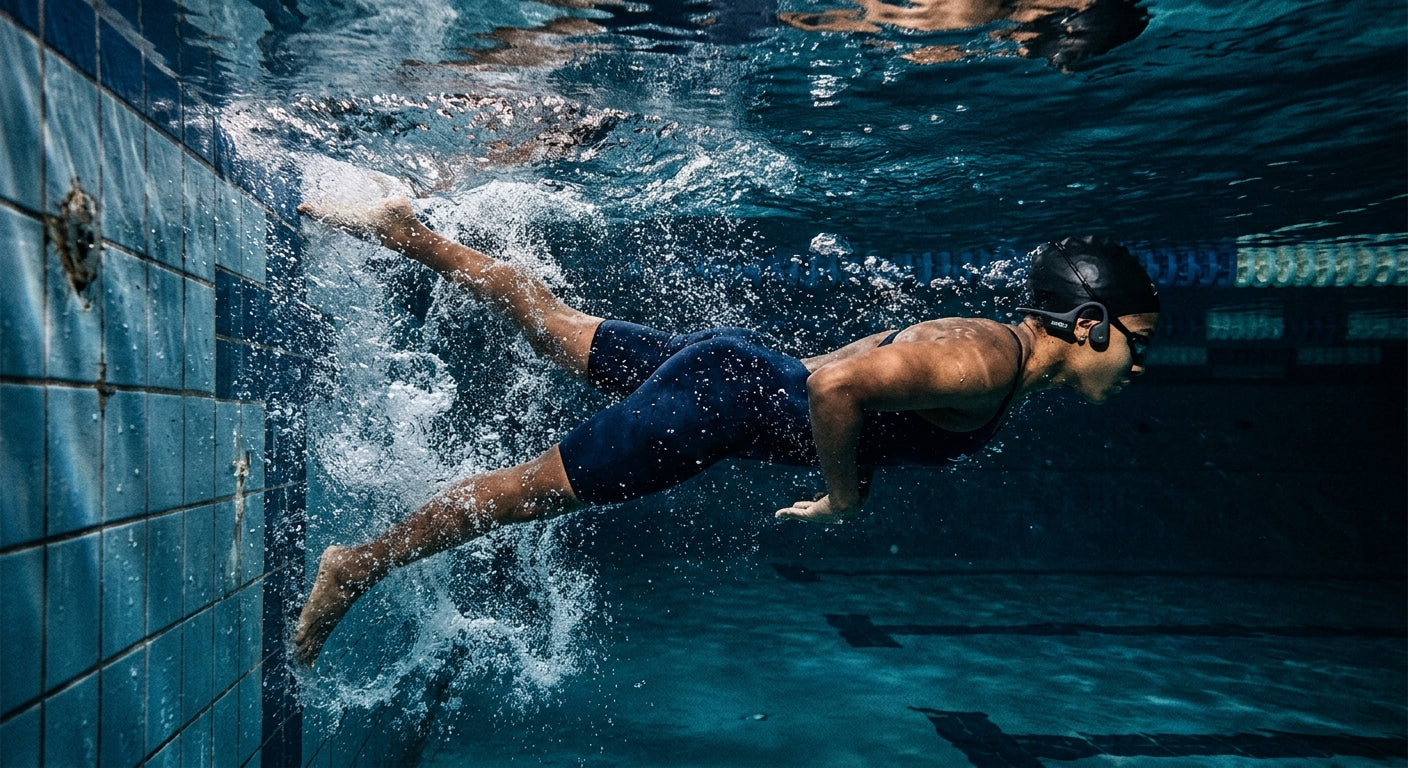
The ergonomic challenge for manufacturers is significant: the device must maintain constant contact with the cheekbone while being subjected to the hydrodynamic forces of a crawl stroke. The best-in-class models feature titanium-core frames wrapped in medical-grade silicone, ensuring they remain locked in place even when paired with competitive racing goggles. The weight distribution is critical; a balanced centre of gravity prevents the headset from shifting during rapid rotation.
Features to Look out For
When selecting your hardware, prioritize internal storage capacity. Because Bluetooth transmission ceases the moment the antenna is submerged, internal MP3 playback is non-negotiable. Furthermore, check the IPX8 certification rating. This indicates the device is tested for continuous immersion beyond one metre. Look for tactile, raised buttons that are easily manipulated with wet fingers, as touch-sensitive panels often fail under hydrostatic pressure.
Evolution and History
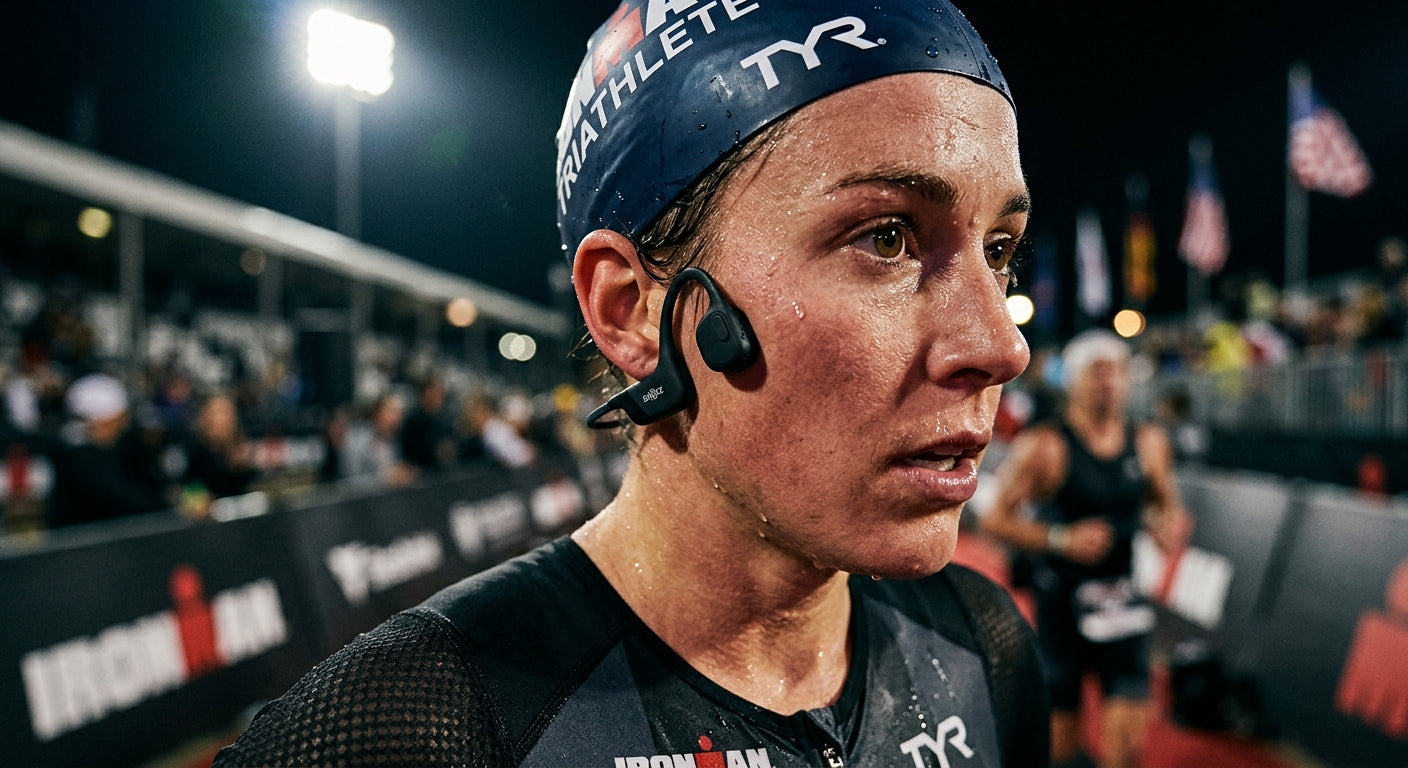
Bone conduction was once relegated to medical hearing aids and tactical military communication. Its migration into the consumer fitness space began with rudimentary, bulky prototypes that struggled with corrosion. Over the last decade, manufacturers have refined the transducer technology, shrinking the hardware footprint while increasing the clarity of mid-range frequencies. We have moved from experimental gadgets to sleek, hydrodynamic tools that feel like a natural extension of one's training kit.

Need a clear race fuelling strategy?
Get instant, practical advice on hydration and race-day nutrition directly on this page for free. Try asking Raye: 'How many grams of carbs should I take per hour during a half marathon?' Ask for fuelling advice
Special Features & Technical Specifications
Material Composition
Modern units utilise a nickel-titanium alloy skeleton, chosen for its memory-retention properties and resistance to chlorine-induced degradation. The exterior is coated in a hydrophobic polymer that minimises drag through the water column.
Dimensions and Mass
Most flagship models weigh between 28 and 32 grams. The streamlined design reduces the surface area exposed to water resistance, ensuring that the athlete’s stroke mechanics remain uncompromised by the presence of the headset.
Engineering Advancements
Compared to previous generations, current models feature improved vibration dampening, which prevents the 'tickling' sensation at high volumes. The integration of high-speed USB-C magnetic charging ports has also eliminated the vulnerability of exposed pin connectors, further enhancing structural integrity.
What to Expect in the future?
The trajectory for underwater audio is clear: miniaturisation and AI-driven sound enhancement. We anticipate the arrival of real-time biometric feedback, where the headphones provide haptic alerts for pace and heart rate during a set. As transducer materials become more efficient, we can expect a richer, more immersive sound profile that rivals traditional waterproof earbuds, without the risk of ear infections associated with canal-blocking devices.
Ultimately, the choice of audio equipment should align with your specific training intensity. Whether you are training for a triathlon or simply looking to liven up your morning swim, the current market offers robust, reliable solutions. Prioritise fit, ensure your chosen unit has sufficient onboard storage, and prepare to redefine your relationship with the pool.


