

Smart Trainer Erg Mode vs Real-World Power: Telemetry Discrepancies and How to Bridge Them


Planning your next fitness milestone?
Get immediate guidance on pacing, workout structure, or race prep directly on-site for free. Try asking Raye: 'Can you outline a simple 4-week build plan for a 10K?' Get instant guidance
What are the press saying?
Cycling tech journalists have long debated the variance between smart trainer Erg mode data and outdoor power meter readings. Recent industry reports highlight that while modern smart trainers are more precise than ever, the discrepancy remains a talking point for performance-focused athletes. Critics point out that high-inertia flywheels on premium trainers often smooth out power spikes, creating a 'perfect' graph that masks the reality of actual muscle recruitment.
Technical reviews often underscore that the reported wattage is an estimation based on internal strain gauges, which are susceptible to thermal drift during long, high-intensity intervals. Experts suggest that to truly track your training load, you must reconcile these two data streams or risk miscalculating your physiological stress.
Comfort & Fit
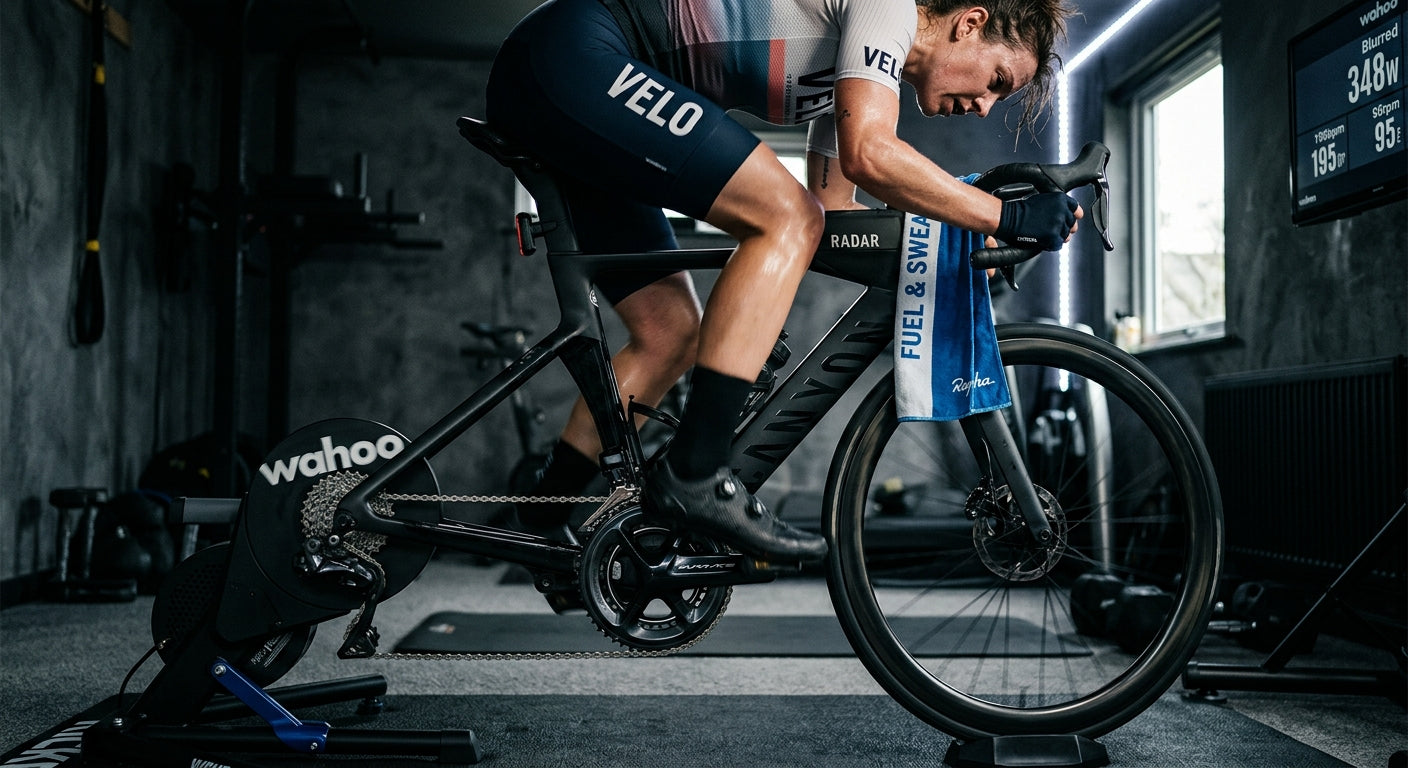
When training indoors, comfort is paramount to sustaining high power outputs. The lack of air resistance means your core temperature rises rapidly, necessitating high-quality indoor training shorts that prioritise breathability and moisture-wicking properties. A dedicated cycling towel and a robust sweat guard are not merely accessories; they are essential tools to protect your bike’s headset and electronic components from corrosive perspiration.
Ensuring your bike fit remains consistent between your outdoor rig and your smart trainer setup is the first step in bridging telemetry gaps. Any minor variation in saddle height or reach can alter your biomechanical efficiency, leading to inconsistent power delivery that renders your data comparison useless.
Features to Look out For
When selecting a smart trainer, prioritise units that offer dual-sided power meter compatibility and seamless integration with platforms like Zwift or TrainerRoad. Features such as active temperature compensation and auto-calibration are critical for mitigating the inherent drift found in lower-end strain gauges.
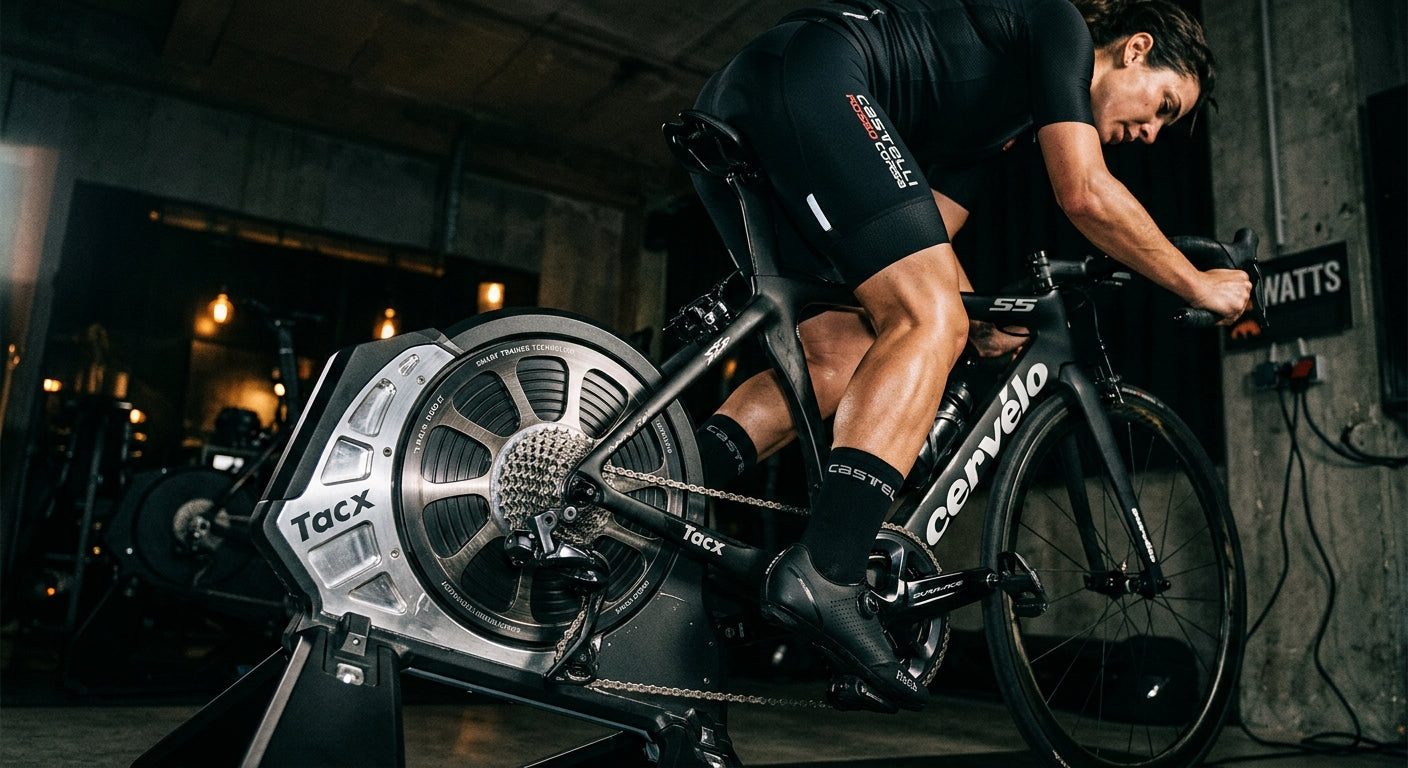
Look for trainers that offer variable flywheel inertia, allowing you to simulate the feel of a steep climb or a flat sprint. This versatility helps mimic real-world dynamics, ensuring that your indoor training translates effectively to the road or race course.
Evolution and History
The evolution of smart trainer technology has shifted from basic magnetic resistance to sophisticated electromagnetic systems capable of simulating gradients of up to 25 per cent. Historically, trainers relied on calculated power, which was often erratic. The introduction of integrated, lab-grade strain gauges revolutionised the market, bringing the accuracy of these machines within the +/- 1 per cent margin of professional-grade power meters.

Looking to shave time off your personal best?
Get immediate pacing strategies and interval workout ideas directly on-site for free. Try asking Raye: 'What is the best threshold session to help drop my 10K time?' Get instant pacing tips
Despite these advancements, the physics of the trainer—specifically the flywheel's momentum—remains distinct from the variable conditions of outdoor cycling. Understanding this history is key to acknowledging why the 'Erg mode' feel differs so drastically from a real-world road effort.
What to Expect in the future?
The future of indoor cycling lies in hyper-realistic simulation. We anticipate the widespread adoption of multi-axis motion plates that allow the bike to rock naturally, further bridging the divide between static indoor training and dynamic road riding. Furthermore, AI-driven calibration protocols will likely become standard, automatically adjusting trainer resistance based on real-time data from your bike-mounted power meter.
Special Features & Technical Specifications
Material Composition and Engineering
Modern high-end trainers utilise aerospace-grade aluminium and reinforced steel frames to withstand the massive torque generated during anaerobic sprints. The internal strain gauges are now housed in thermal-isolated chambers to minimise the impact of heat generated by the electromagnetic brake.
Physical Dimensions and Weight
The latest generation of direct-drive trainers typically weighs between 15kg and 22kg, providing a stable platform that eliminates the need for front-wheel blocks. These units are engineered for a compact footprint, allowing them to be folded away when not in use, which is ideal for athletes with limited training space.
Calibration and Alignment Protocols
To eliminate discrepancies, athletes must adopt a 'Master Power' protocol. This involves pairing your outdoor power meter as the primary power source within your training software, effectively overriding the trainer's internal sensor. Perform a zero-offset calibration before every session to ensure that your telemetry remains consistent across all devices, regardless of ambient temperature fluctuations.
By standardising your power source and maintaining strict environmental control, you can ensure that your indoor training load is a true reflection of your athletic potential, enabling precise recovery and performance tracking.


