

Chasing Marginal Gains: The Best Real-Time Aerodynamic Sensors for Time Trialists


Dealing with a nagging injury or tightness?
Get instant recovery guidance, stretching protocols, and rest advice right now without leaving the site. Try asking Raye: 'What are the best stretches to relieve tight calves after a long run?' Get recovery advice
What are the press saying?
In the high-stakes world of competitive cycling, the quest for marginal gains has shifted from the wind tunnel to the open road. Industry experts and cycling journals have been vocal about the paradigm shift triggered by real-time aerodynamic sensors. Publications such as Cycling Weekly and GCN have highlighted that the ability to measure CdA (coefficient of aerodynamic drag) in real-time is no longer just for WorldTour professionals. Critics praise these devices for democratising aero-testing, allowing amateurs to validate their position without booking expensive, limited-access wind tunnel sessions.
However, the consensus is not entirely without caution. Journalists have noted that while the data provided by units like the Notio and the Velocomp PowerPod is sophisticated, the learning curve is steep. Accuracy remains a point of contention, with testers noting that ambient wind conditions and sensor calibration require a meticulous approach to ensure the data remains actionable rather than merely academic.
Comfort & Fit
When integrating these sensors, ergonomics are paramount. The Notio, for instance, mounts cleanly between the aero extensions, maintaining a low profile that does not interfere with the rider’s hand position. Proper fitment is essential; if the pitot tube is misaligned with the relative airflow, the data integrity suffers immediately. For athletes accustomed to minimalist cockpit setups, these devices are unobtrusive, though they do require a slight re-routing of cables if your setup is already tightly integrated.
Comfort is not just about the device itself, but the rider's ability to maintain an aero position while monitoring live metrics. Because these sensors link directly to your head unit, you can see your drag numbers fluctuate in real-time. This feedback loop encourages a more stable, consistent posture, as riders learn exactly how a millimetre of head movement affects their overall drag profile.
Features to Look out For
The primary feature to prioritise is the integration of real-time air speed via a pitot tube. This, combined with power data from your crank-based meter, allows the device to calculate your CdA instantly. Look for units that offer high-frequency data logging and seamless ANT+ or Bluetooth connectivity to your bike computer.
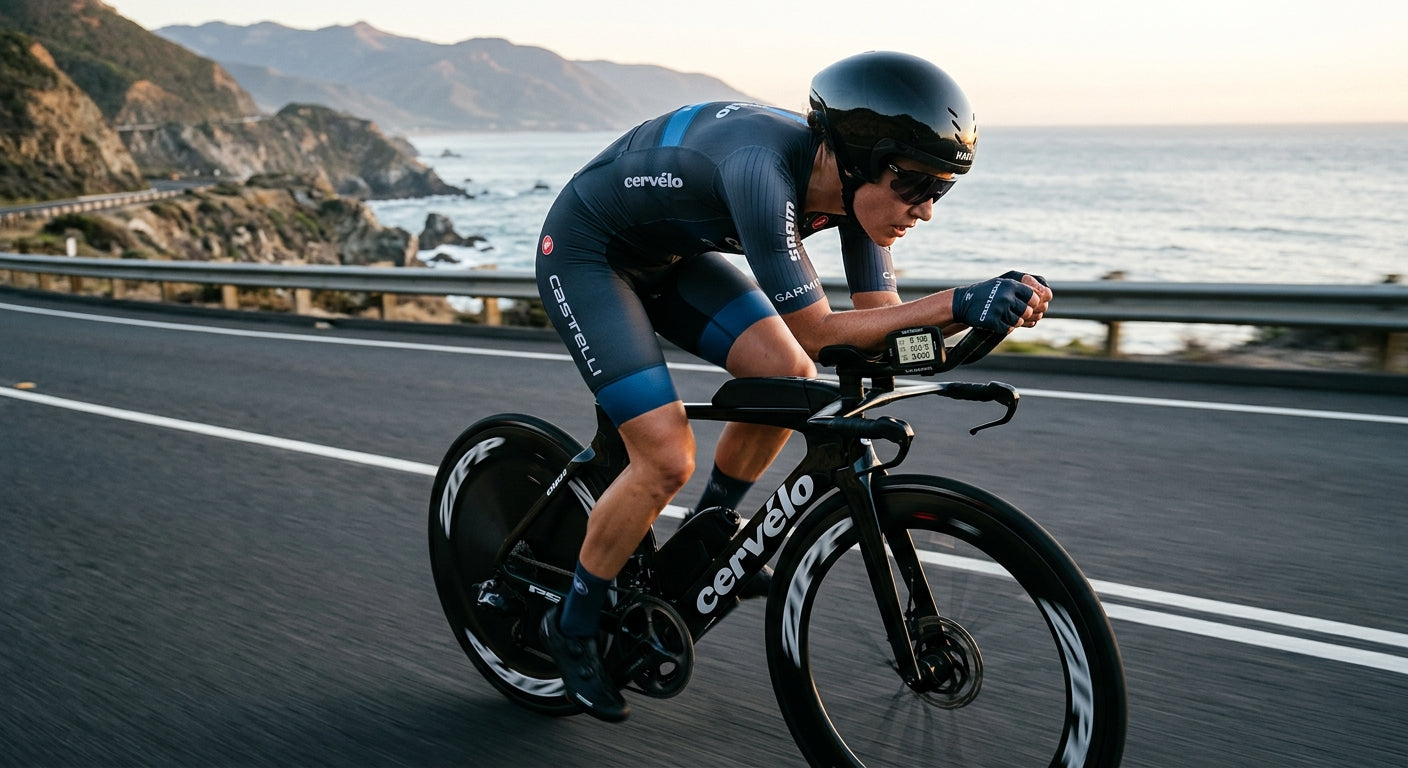
Furthermore, look for software suites that allow for offline data post-processing. While live feedback is useful, the true value lies in the ability to compare different aero skinsuits or carbon aero extensions in a controlled environment. Ensure the device supports environmental sensors, such as barometric pressure and temperature, to account for air density shifts during your ride.

Have a quick training or recovery question?
Get fast expert advice right here on the page—no sign-up, account, or app needed. Try asking Raye: 'What's the best way to relieve tight calves after a run?' Ask a question now
Evolution and History
The history of aerodynamic monitoring is rooted in the controlled environment of the wind tunnel, a tool previously reserved for elite squads with six-figure budgets. For decades, athletes relied on 'Crr' (coefficient of rolling resistance) and power output to estimate efficiency. The evolution toward on-bike sensors began with early power-meter-only calculations, which were notoriously noisy and inaccurate due to wind gust interference.
The current generation represents a massive leap in engineering. By incorporating pitot tubes—the same technology used in aviation to measure airspeed—manufacturers have managed to isolate wind speed from ground speed. This has effectively moved the wind tunnel onto the tarmac, allowing for iterative testing that was previously impossible.
Special Features & Technical Specifications
Material Composition and Engineering
Modern sensors are typically constructed from high-impact, UV-resistant reinforced polymer housings to withstand the rigours of outdoor racing. The internal architecture utilises micro-electromechanical systems (MEMS) sensors to monitor pitch, roll, and yaw, ensuring that the device accounts for the rider's body angle relative to the horizon.

Physical Dimensions and Weight
The typical unit weighs between 30 and 60 grams. Most devices measure approximately 50mm x 40mm x 20mm, designed to sit flush between standard 100mm spaced aero extensions. These specs represent a 20% reduction in frontal area compared to early prototypes, minimising the device's own impact on the rider's drag profile.
What to Expect in the future?
The future of aerodynamic monitoring points towards integrated AI-driven coaching. We expect to see devices that don't just display data, but provide real-time audio cues, suggesting subtle shifts in shoulder position or head tilt to maintain optimal drag. As battery technology improves, these sensors will likely become smaller, eventually disappearing into the structure of the aero bars themselves.
As these sensors become more prevalent, look for a surge in demand for high-performance accessories. Athletes will be increasingly motivated to invest in premium aero skinsuits and precision-engineered carbon aero extensions, knowing that they can empirically verify the performance gains of every single upgrade. Similarly, the market for aero shoe covers will likely see an uptick as riders seek to close the final gaps in their aerodynamic profile discovered by their new sensors.


