

Winter Cycling Layers: Why Your Jacket Fails


Planning your next fitness milestone?
Get immediate guidance on pacing, workout structure, or race prep directly on-site for free. Try asking Raye: 'Can you outline a simple 4-week build plan for a 10K?' Get instant guidance
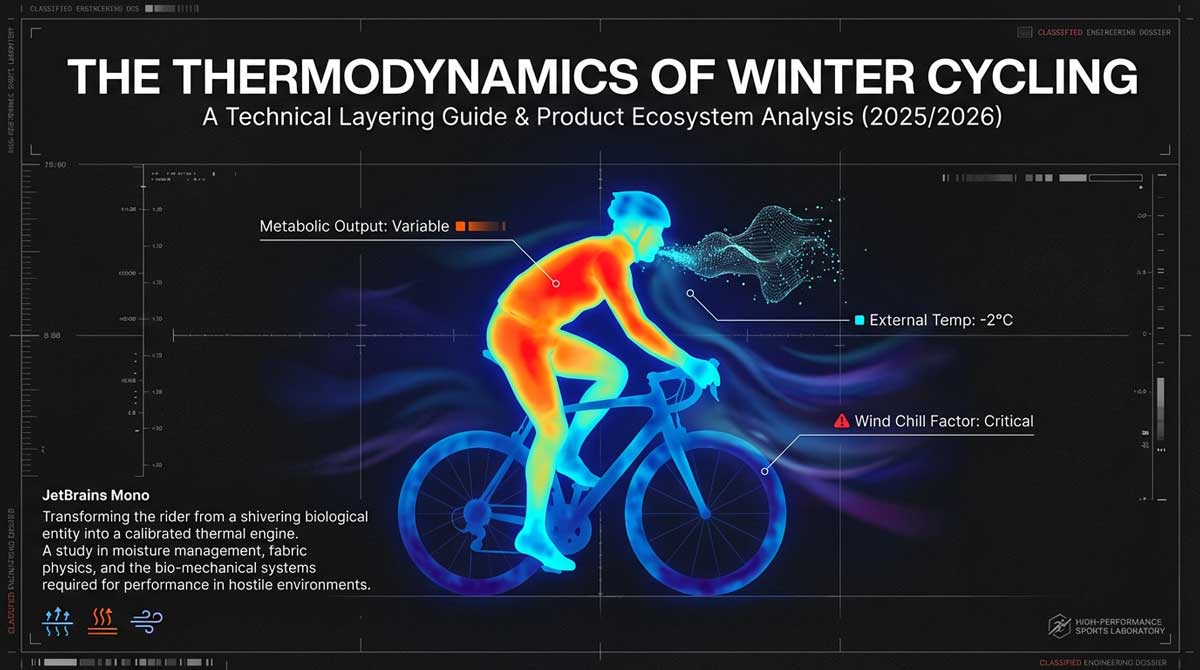
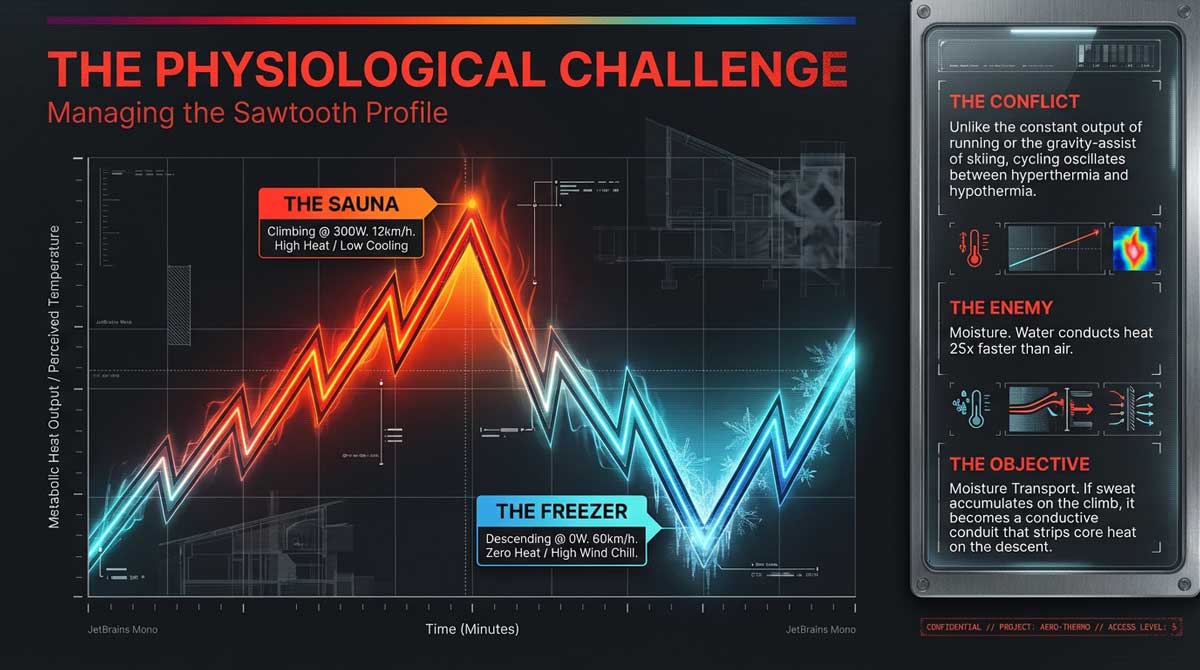
The pursuit of cycling in winter presents a complex physiological and thermodynamic challenge. Unlike running, where the metabolic rate is relatively constant, or alpine skiing, which is intermittent, cycling is characterised by extreme variance in heat generation and heat loss. You might generate 300 watts of metabolic power while climbing—creating a personal sauna—only to crest the hill and descend at 60 km/h, generating zero watts while wind chill drops the effective temperature by 10 degrees or more in seconds.

This "sawtooth" profile creates a binary risk: you oscillate between overheating and freezing. The primary enemy is moisture. Water conducts heat approximately 25 times faster than air. If perspiration accumulates on your skin, it becomes a conduit that strips core heat away the moment you stop or the wind speed increases. Therefore, the goal of a winter system is not merely insulation, but moisture management.
The Base Layer: The Foundation of Moisture Management
The base layer is the most critical component of your winter wardrobe. It is the interface between your skin and the clothing. Its primary function is transport, not insulation. If the base layer fails to "wick" perspiration off the skin, the entire thermal system fails, regardless of how expensive your outer jacket may be.
Merino Wool vs. Synthetic Fibres
The market is dominated by two material philosophies: natural Merino wool and synthetic polymers.
-
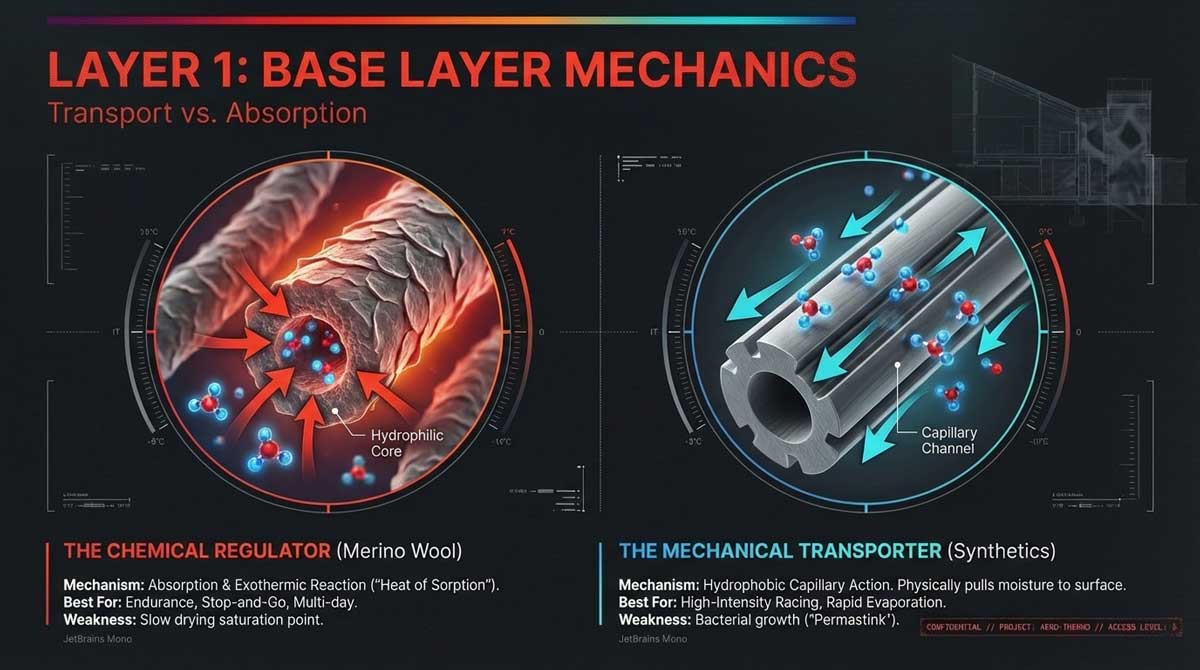
Merino Wool: Prized for its complex internal structure. It can absorb up to 35% of its weight in moisture without feeling wet to the touch. It also features "Heat of Sorption"—a thermodynamic property where the wool generates a small amount of heat when it absorbs moisture. It is naturally bacteriostatic, meaning it won't develop the "locker room" odour common in synthetics.
-
Synthetic Fibres: Typically engineered from polyester or polypropylene, these rely on mechanical capillary action. They move moisture significantly faster than wool and dry much quicker. For high-intensity intervals where sweat rates are high, synthetics are superior.
Recommended Base Layers
-
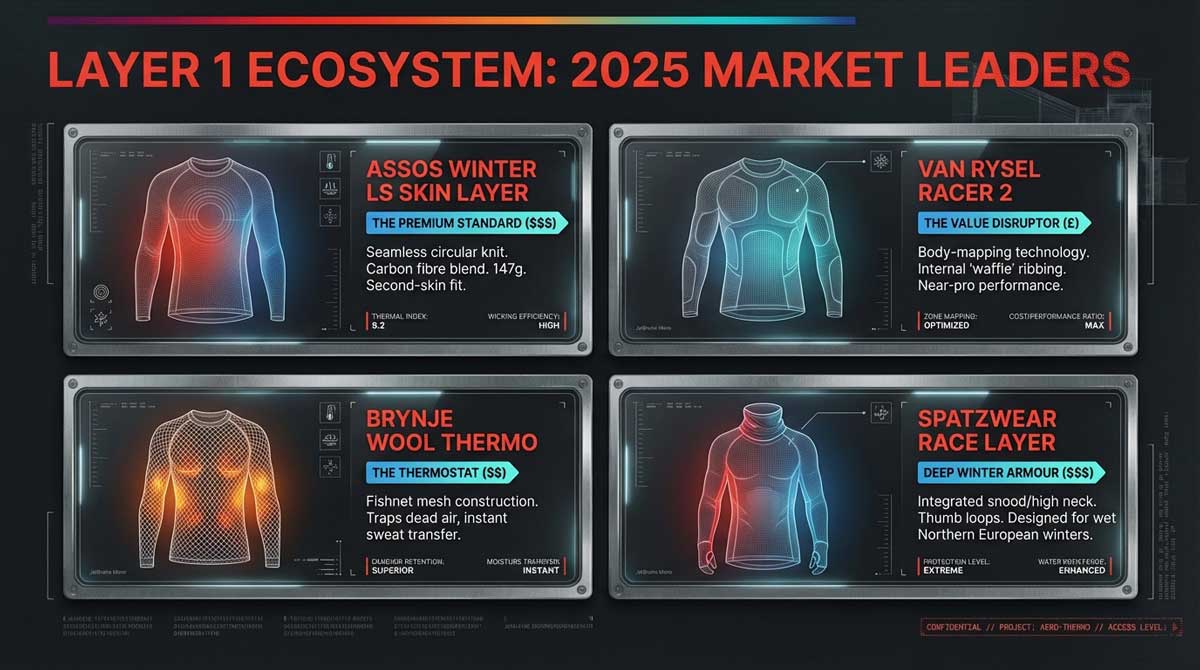
Assos Winter LS Skin Layer: A circular-knit, seamless construction that eliminates irritation. It uses a blend of carbon fibres and polypropylene for exceptional thermal retention without bulk.
-
Van Rysel Racer 2 (Decathlon): A market disruptor offering professional performance at a budget price. It features an internal "waffle" texture to trap heat and increase surface area for evaporation.
-
Brynje Wool Thermo Light: A unique mesh or "fishnet" construction. The large holes trap dead air when covered by a shell, providing immense insulation while ensuring sweat transfer is instant.

Looking to shave time off your personal best?
Get immediate pacing strategies and interval workout ideas directly on-site for free. Try asking Raye: 'What is the best threshold session to help drop my 10K time?' Get instant pacing tips
-
Thermowave Merino Xtreme: A dual-layer hybrid with a polyester interior for wicking and a Merino exterior for warmth.
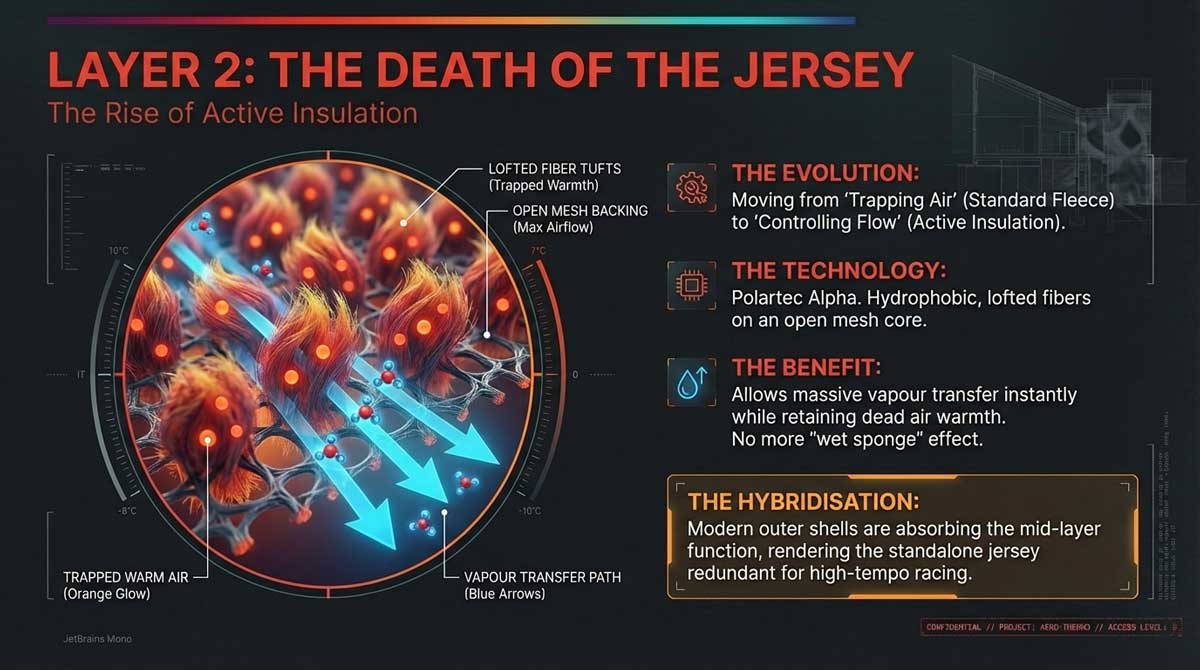




The Mid-Layer: The Evolution of Insulation
The mid-layer has evolved from heavy, sweat-prone fleece into "Active Insulation." Modern textile technology, led by fabrics like Polartec Alpha, allows moisture vapour to pass through instantly while still trapping dead air in a hydrophobic, lofted knit.
Recommended Mid-Layers
-
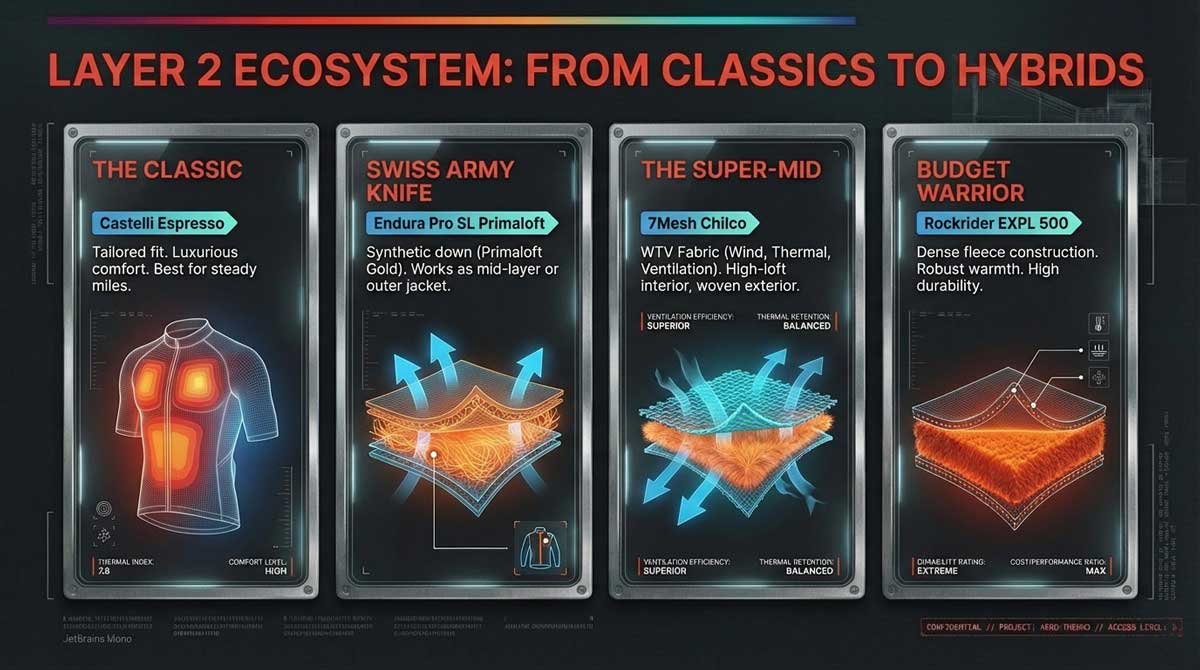
Castelli Espresso Thermal Jersey: A refined classic using Air_O Stretch fabric for a balance of breathability and wind resistance without a bulky membrane.
-
Endura Pro SL Primaloft Jacket II: Uses Primaloft Gold, a synthetic down alternative that retains heat even when wet. It is thin enough to act as a mid-layer but warm enough to be an outer shell in dry conditions.
-
7Mesh Chilco Anorak: Features a high-loft, fuzzy interior bonded to a woven exterior that blocks wind. It functions as a mid-layer that often doesn't even require a shell.
Outer Shells: The Fortress Against the Elements
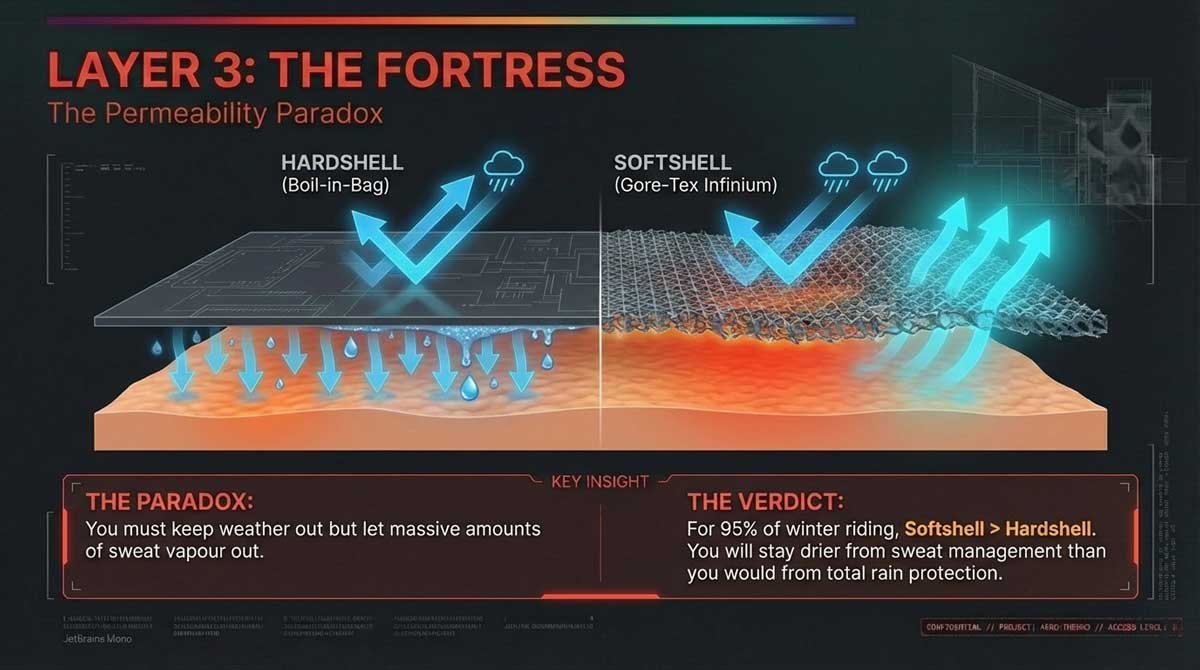
The outer layer must shield you from wind and rain while allowing sweat to escape—the "permeability paradox." For 95% of winter riding, a Softshell is superior to a Hardshell. Softshells breathe significantly better, and unless it is raining heavily and continuously, they will keep you drier and warmer than a waterproof plastic "hardshell."
Recommended Outer Shells

-
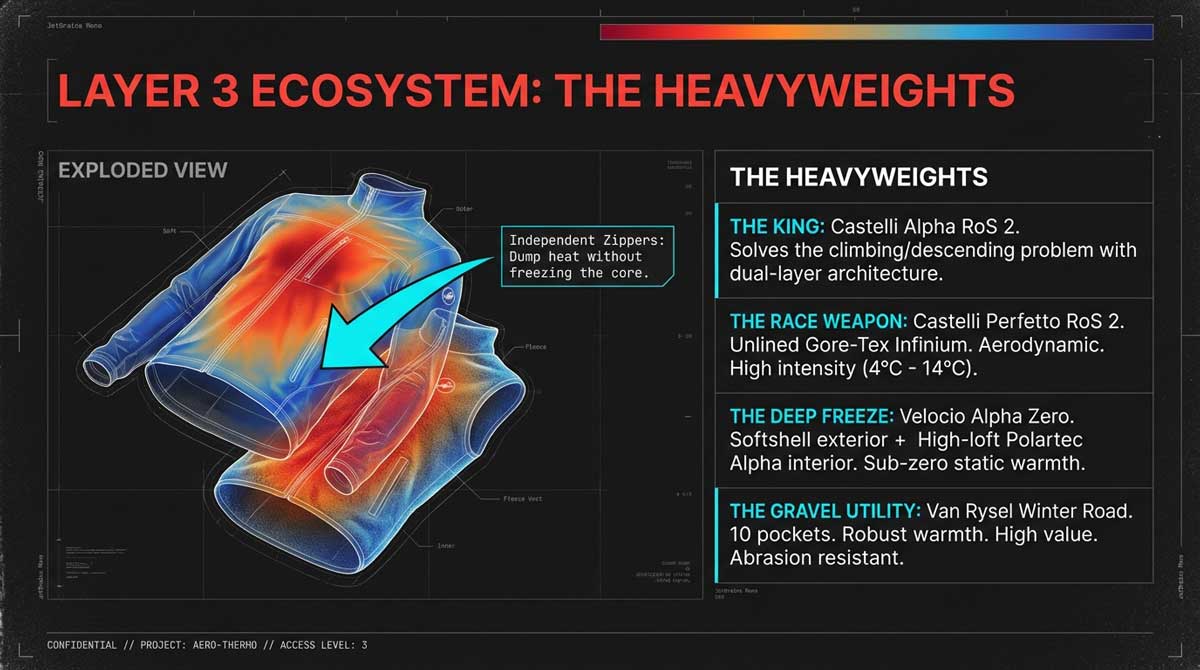
Castelli Alpha Doppio (RoS 2): Widely considered the gold standard. It separates the insulation from the wind protection with a detached inner thermal vest and an outer Gore-Tex Infinium shell. You can unzip the shell on a climb to dump heat while the vest protects your chest.
-
Velocio Alpha Zero: The ultimate defence for sub-zero temperatures. It pairs a softshell exterior with a full lining of high-loft Polartec Alpha fleece.
-
Assos Equipe R Habu Winter Jacket S11: A low-bulk, aerodynamic specialist that fits like a second skin. It is exceptionally warm for its thickness.
-
Van Rysel Winter Endurance: A specialist for gravel and adventure riding with ten pockets and robust wind protection at a much lower price point.
Extremities: The Critical Periphery
When your core temperature drops, the body shunts blood away from your hands and feet to protect vital organs. In cycling, your hands and feet are mechanically static, making them uniquely vulnerable. Once hands are numb, you lose braking control, turning a comfort issue into a safety hazard.
Hands
-
Sportful Lobster Gloves: A split-finger design (2+2) that allows fingers to share radiant heat while maintaining enough dexterity to operate brake levers.
-
Gore C5 Thermo: The best "standard" 5-finger glove, balancing a waterproof membrane with manageable insulation.
-
Castelli Perfetto RoS: A racer's choice for wet weather, staying warm even when damp and providing the best "bar-feel" of any winter glove.
Feet
-
Endura Freezing Point II: Thick neoprene with a fleece lining—essentially wetsuits for your feet.
-
DexShell Hytherm Pro Socks: Waterproof "membrane socks" that are a game-changer for wet gravel riding. They are the only way to guarantee dry feet if your shoes become flooded.
-

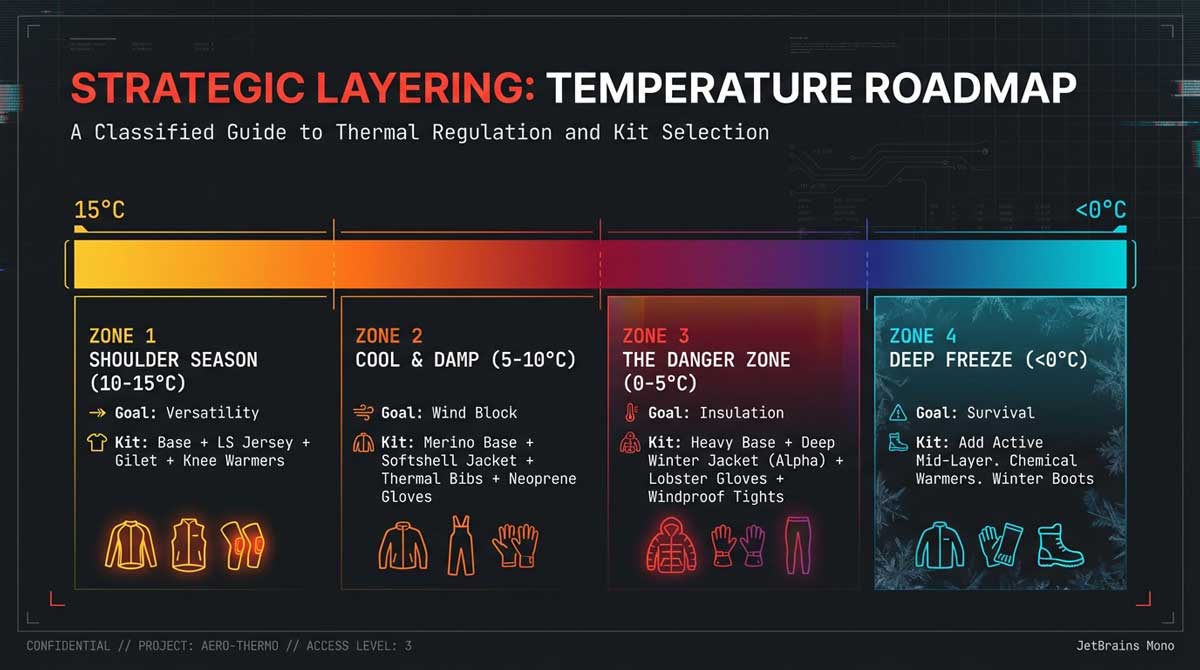
Strategic Layering Guide: A Temperature Roadmap
| Zone | Temperature | Strategy | Torso Setup |
| Zone 1 | 10 to 15 degrees C | Versatility | Synthetic Base + Gilet |
| Zone 2 | 5 to 10 degrees C | Wind Block | Merino Base + Softshell |
| Zone 3 | 0 to 5 degrees C | Heat Trapping | Heavy Base + Alpha Doppio |
| Zone 4 | Below 0 degrees C | Survival | Mid-Layer + Heavy Softshell |
Top 10 Features
Moisture-Wicking Textures
Look for "waffle" or "grid" patterns inside; these increase surface area for evaporation.
High-Loft Insulation
Seek out Polartec Alpha or Primaloft Gold for the best warmth-to-weight ratio.
Membrane Breathability
Ensure outer shells use high-quality membranes like Gore-Tex Infinium that block wind but allow vapour to escape.
Integrated Vests
Look for jackets with an "Alpha" construction (a built-in inner layer) for better temperature regulation.
Anatomical Cut
Shorter at the front and longer at the back (the "droptail") to cover you while in a riding position.
Softshell over Hardshell
Prioritise water-resistant softshells over fully waterproof hardshells for better sweat management.
Zonal Mapping
The best gear puts wind-blocking fabric on the front and breathable mesh on the back.
Silicone Grippers
Essential on the hem of jackets and tights to prevent them from riding up and letting in drafts.
Merino Blends
For socks and base layers, look for Merino for its ability to stay warm when wet.
Reflective Details
Crucial for safety in the low-light, grey conditions typical of the 2026 winter season.
Jackets to look out for
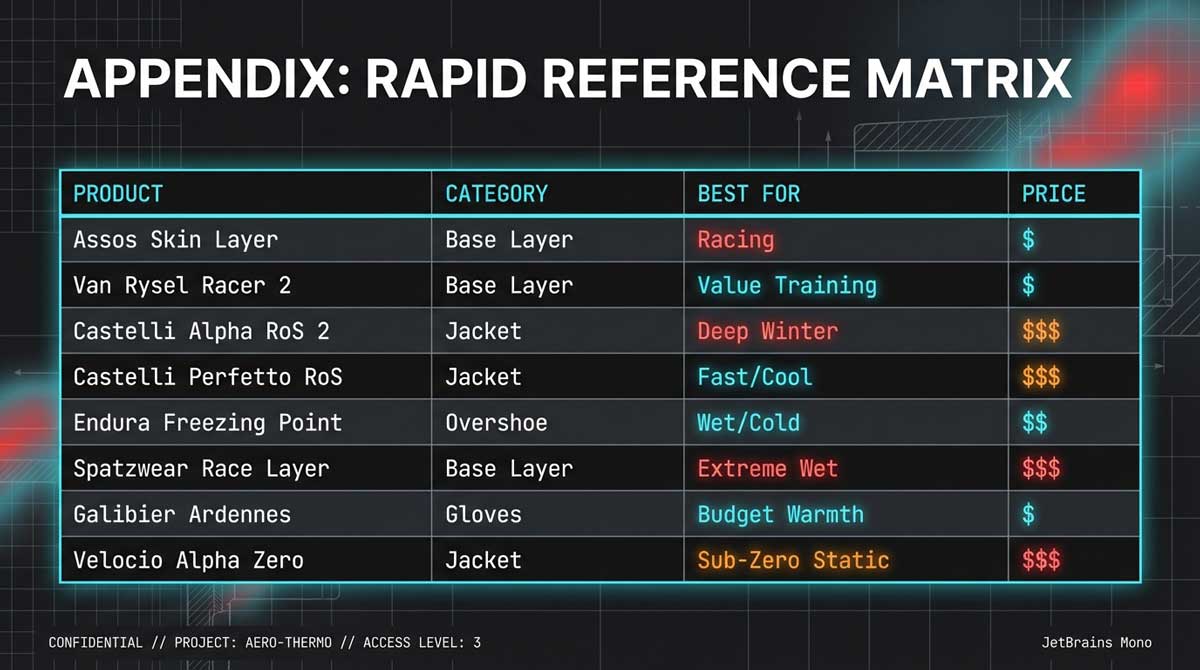
| Product | Material Composition | Primary Benefit | Best For |
| Assos Winter LS Skin Layer | Carbon / Polypropylene | Seamless, Low Bulk | Racing / Deep Winter |
| Van Rysel Racer 2 | Polyamide / Elastane | Value, Body-mapping | Training / Daily Use |
| Brynje Wool Thermo | Merino Mesh | Thermoregulation | Variable Intensity |
| Spatzwear Race Layer | Textured Synthetic | Integrated Armour (Neck/Wrist) | Wet / Extreme Cold |
| Thermowave Merino Xtreme | Poly / Merino Hybrid | Warmth, Comfort | Endurance / Touring |
| Rapha Pro Team Thermal | Polyester | Extended Collar, Wicking | Cold / Dry |
| MAAP Thermal Base | Polartec Power Grid | Lightweight Warmth | High Tempo |


