

Wales Outdoors: Is This the UK's Best Natural Playground?


Trying to beat your local Strava segment goals?
Fine-tune your training strategies to hit your target stats without downloading another app. Try asking Raye: 'How can I structure hill repeats to build short-segment power?' Ask how to hit your target
For the modern professional, time is the most constrained resource. We meticulously manage our calendars, our investments, and our recovery, yet many of the UK's highest-performing athletes overlook a world-class training asset located right on their doorstep. Wales, and specifically the region of Bannau Brycheiniog (the Brecon Beacons), represents more than just a scenic getaway. It is a functional, high-utility landscape designed by nature to test the physiological and psychological limits of the human body.
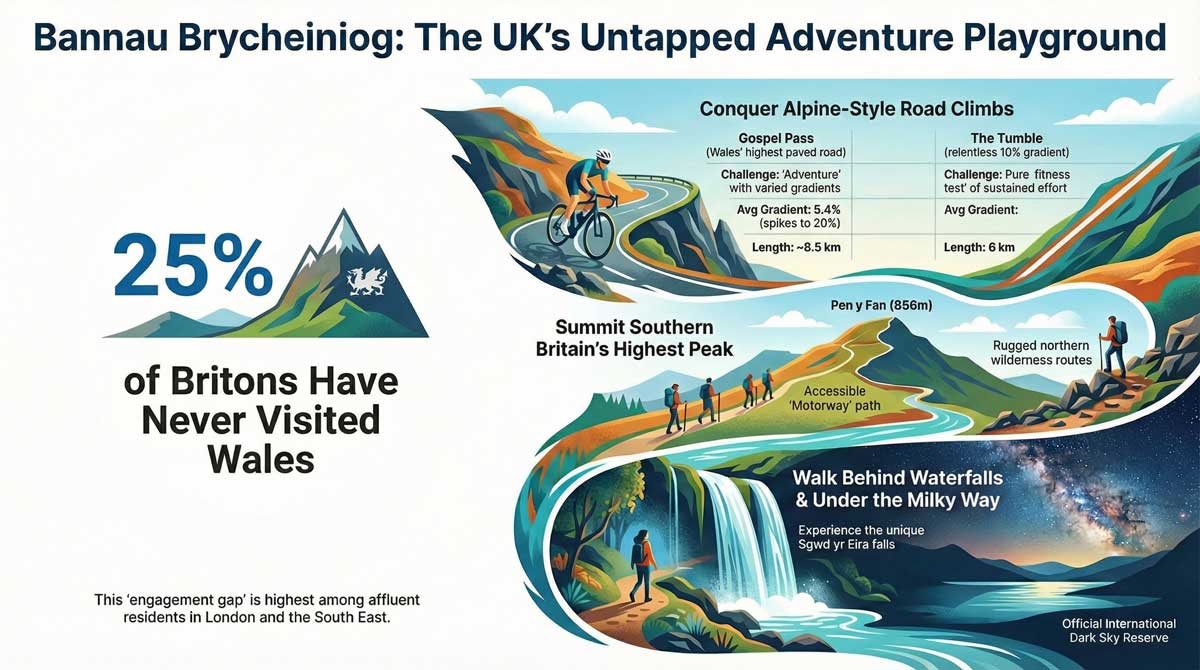
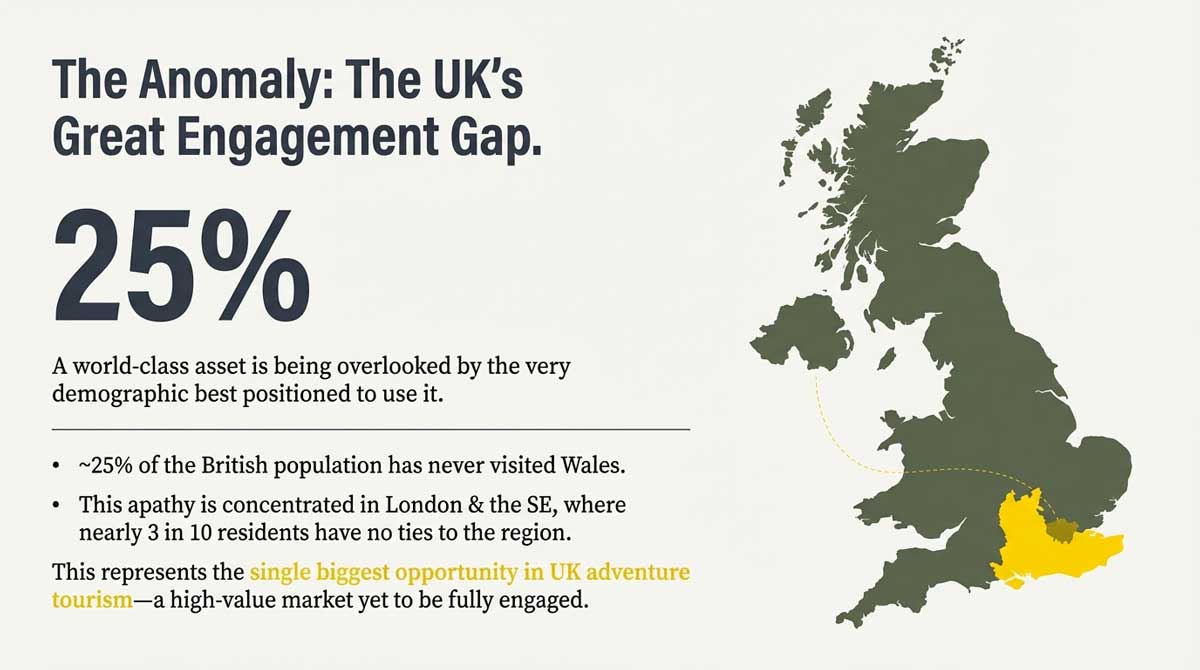
There is a significant "engagement gap" in British adventure tourism. Statistical analysis indicates that approximately 25% of the UK population has never crossed the border into Wales. For residents of London and the South East-those who often have the highest demand for quality "short-break" training windows-the apathy is particularly high. Nearly 30% of this demographic has no ties to the region, often opting for international travel or familiar southern routes. This represents a massive missed opportunity for the analytical athlete. While others are navigating airport security for a training camp in the Alps or Mallorca, the Welsh frontier offers comparable vertical gain, technical complexity, and environmental challenge just a few hours from the capital.
The strategic advantage of a Welsh retreat is the ability to secure accommodation that mirrors the high-calibre standards of a premium London hotel, set within the footprint of a private estate. Properties such as Tyle Glas offer the athlete more than just luxury; they provide a private training ground. With dedicated acreage on-site, it is possible to maintain technical mountain bike drills or recovery rides without leaving the estate boundaries.


Photos from Tyle Glas - Book at Air B&B

Hit a wall with form, pacing, or fatigue?
Skip searching forums. Chat directly on this page with our performance coach to solve training issues in seconds: 'How do I prevent side stitches on long runs?' Troubleshoot your run
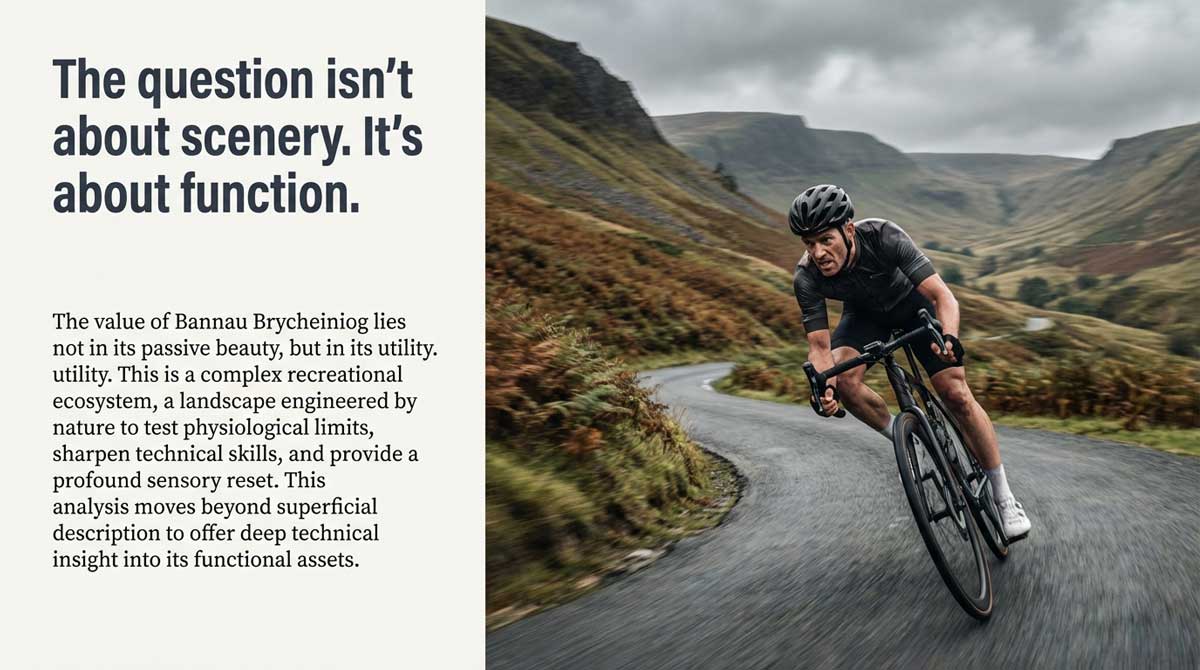
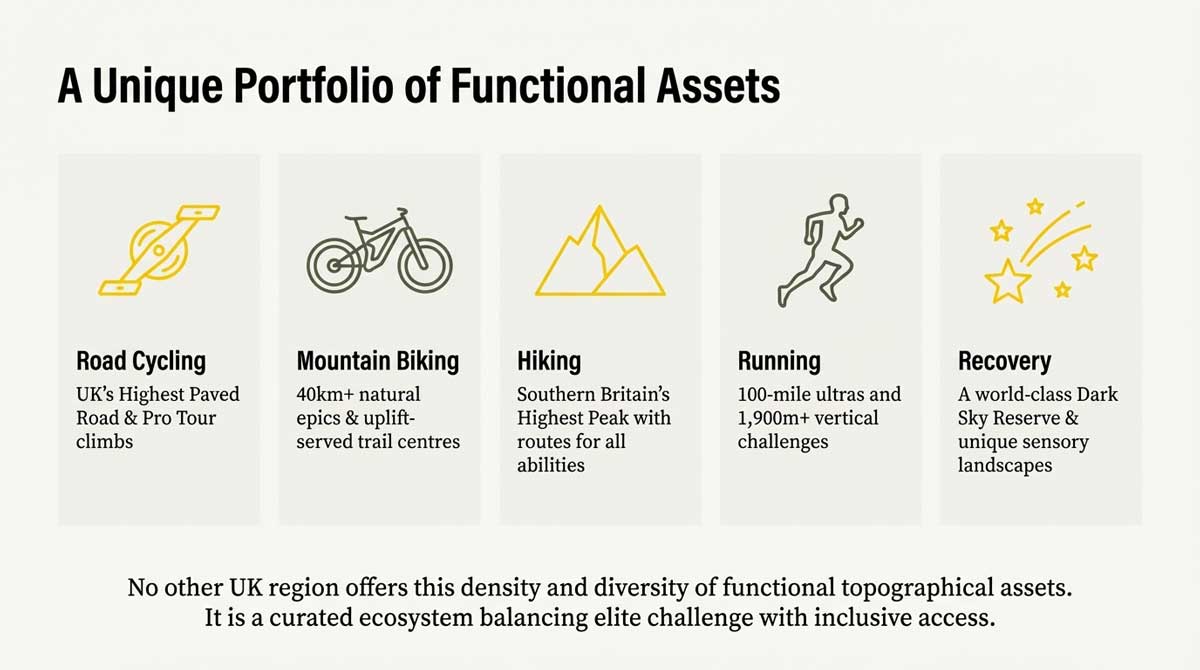
The value of Wales lies in its versatility. It is not merely a backdrop for activity; it is a complex recreational ecosystem. Whether you are a triathlete looking for sustained threshold climbs, a trail runner seeking technical descents, or a cyclist looking to replicate the demands of the eTape du Tour, the geography here is a functional asset.
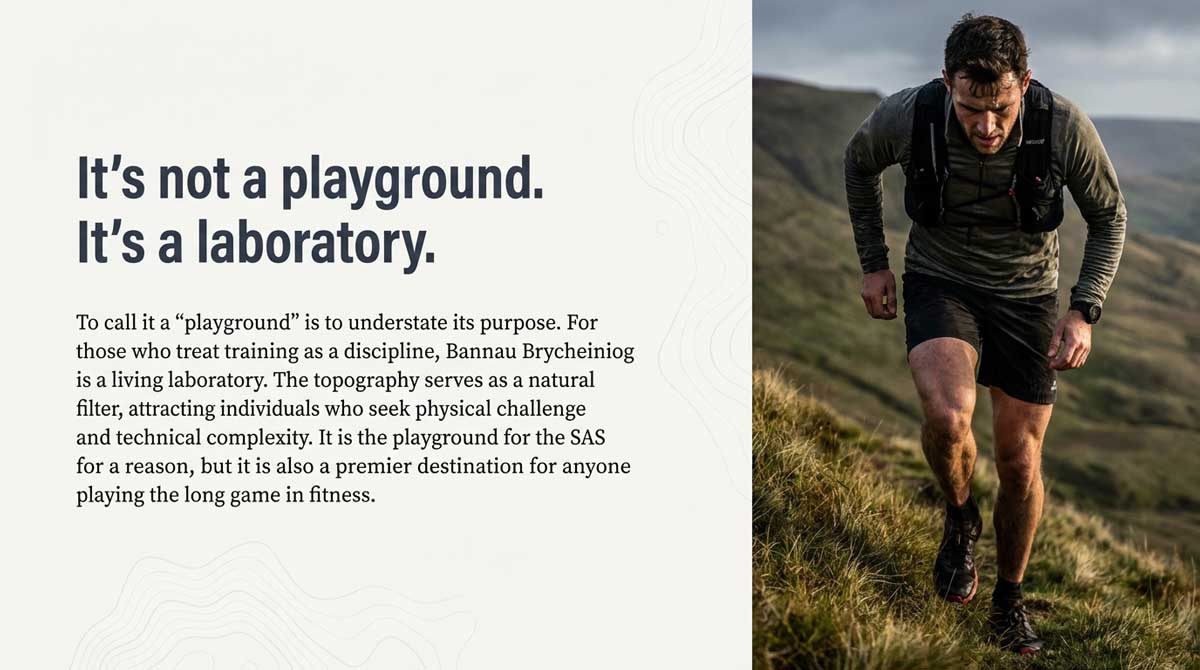
My own introduction to the region was a revelation. It is often described as the "playground of the UK," but for those of us who treat our training as a discipline rather than a hobby, it is more of a laboratory. In the Brecon Beacons, nature is immediate. The rolling hills, the kites circling above, and the rhythmic flow of the rivers provide a sensory reset that complements the high-intensity nature of professional life. It is the playground for the SAS for a reason, but it is also a premier destination for anyone playing the long game in fitness.
The Cycling Ecosystem: Gradients and Physiological Demands
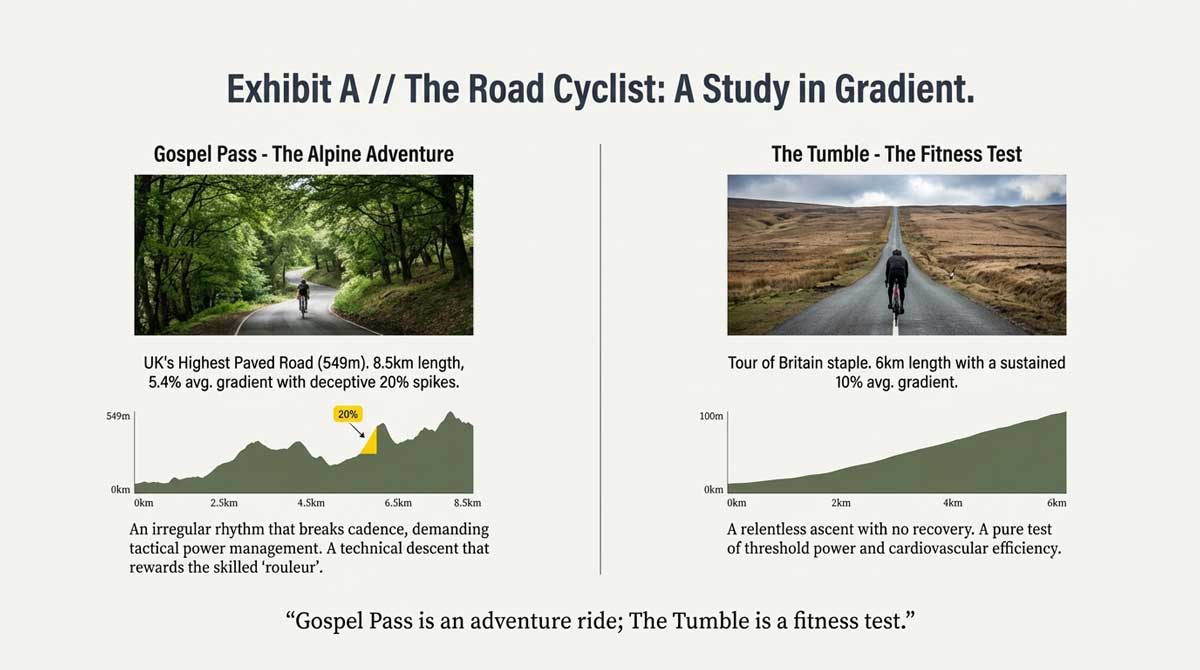
For the road cyclist, the Brecon Beacons offers a challenge defined by vertical gain and irregular rhythms. Unlike the steady, predictable gradients of many European passes, Welsh climbs require constant tactical adjustments.
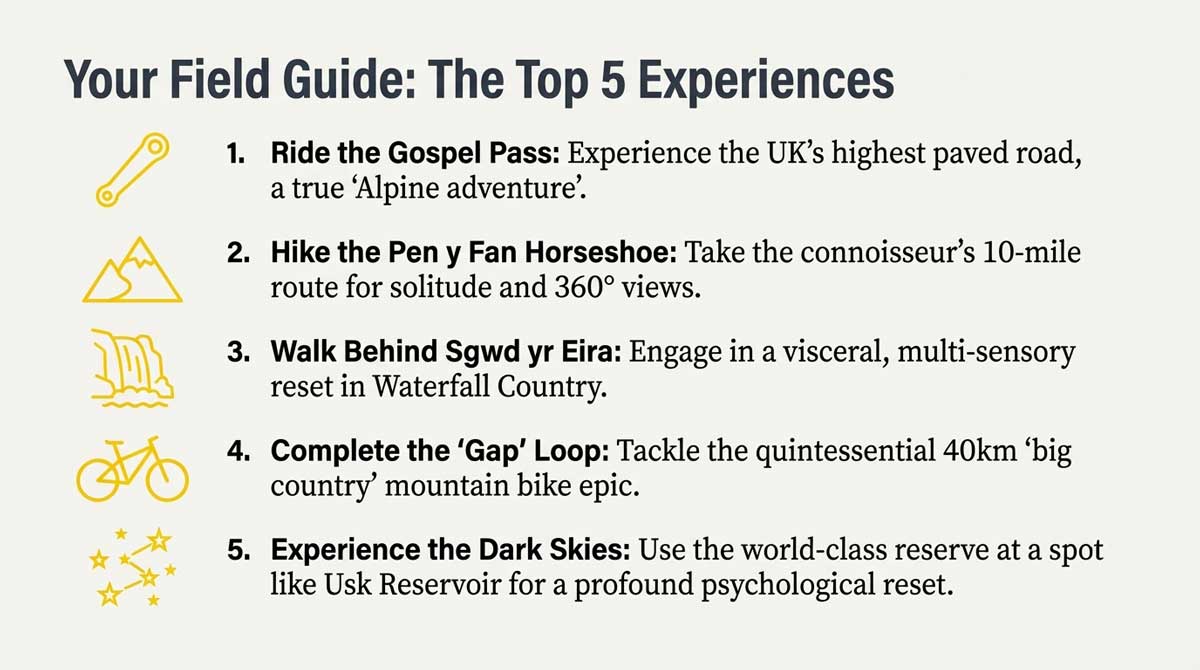
The Gospel Pass (Bwlch yr Efengyl) As the highest paved road in Wales, reaching 549 metres, the Gospel Pass is the nation's "Alpine ambition." Starting from Hay-on-Wye, the route covers roughly 8.5km with an average gradient of 5.4%. However, for the analytical rider, the average is a deceptive metric. The lower slopes, hidden beneath the treeline, feature sharp ramps spiking up to 20%. This forces the athlete to manage power output carefully, shifting between seated climbing and high-torque standing efforts. Once you break the canopy, the landscape opens into wind-swept moorland, demanding mental focus as you navigate the narrow, technical descent toward Llanthony Priory. It is a route that respects the "rouleur" but ultimately rewards the specialist climber.
The Tumble (Mynydd Llangatwg) If the Gospel Pass is an adventure, The Tumble is a pure fitness test. A staple of the Tour of Britain, this climb is 6km of relentless ascent with a sustained 10% average gradient. There are no "flat" sections to clear the lactic acid; it is a direct line up the escarpment that requires a sustained threshold effort. For those training for international endurance events, The Tumble provides the perfect environment to test gear ratios and cardiovascular efficiency under duress.
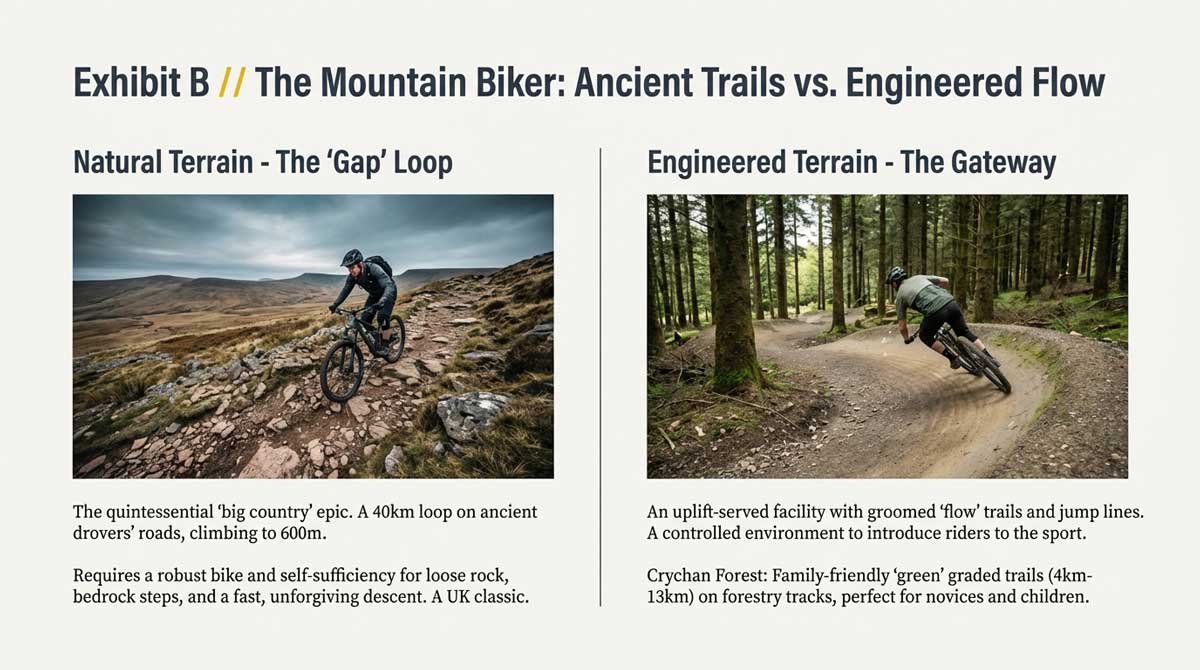
The Off-Road Paradigm For the athlete who prefers dirt to tarmac, "The Gap" loop is the quintessential Welsh experience. Utilising ancient drovers' roads, this 40km circuit reaches 600 metres at the notch between Fan y Big and Cribyn. The terrain-composed of loose rock, bedrock steps, and peat-demands a robust bike and high levels of self-sufficiency. It is "big country" riding that prioritises technical skill and durability over pure speed.



The Vertical Realm: Strategic Hiking and Running
Running in Wales is about managing the "vertical asset." The Old Red Sandstone geology has created a distinctive topography of flat-topped summits and steep northern escarpments. This allows for a tiered approach to training.
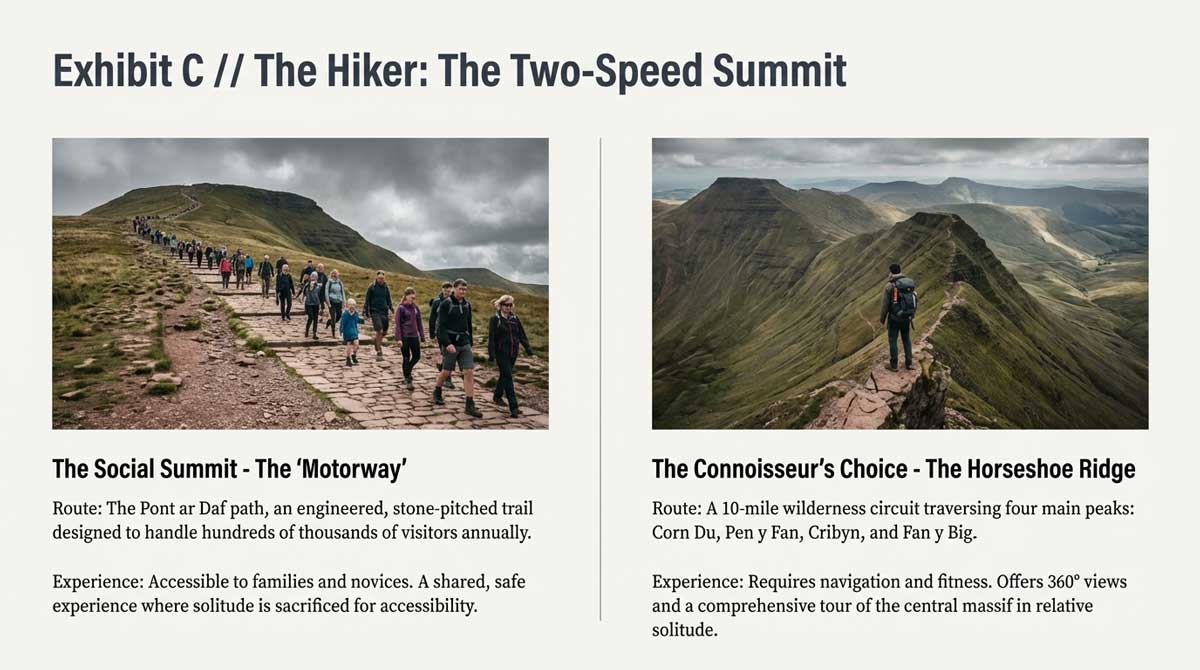
The Pen y Fan Complex Pen y Fan (886m) is the highest peak in Southern Britain, and while the "Motorway" path from Pont ar Daf offers a reliable, stone-pitched route for a quick 2-hour session, the high-performer should look to the northern approaches. Starting from Cwm Gwdi, the routes are steeper and more isolated, requiring better navigation and offering a more rugged wilderness experience.
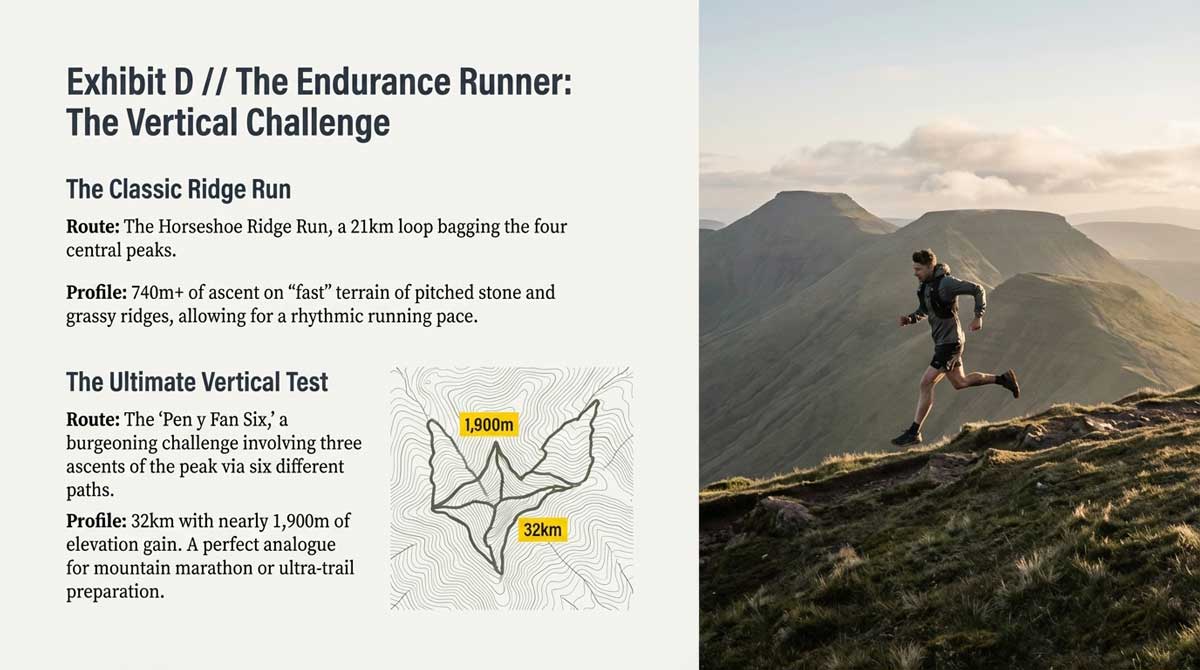
The "connoisseur's choice" for the endurance runner is the Horseshoe Ridge. This 10-mile circuit traverses Corn Du, Pen y Fan, Cribyn, and Fan y Big. It provides a comprehensive tour of the central massif with 360-degree views and significant elevation change. For those seeking the ultimate challenge, the "Pen y Fan Six" is a burgeoning endurance trend. It involves summiting the peak three times in a single day via six different paths, covering 32km and nearly 1,900m of ascent-a perfect analogue for mountain marathons or ultra-trail prep.
Waterfall Country: A Sensory Reset
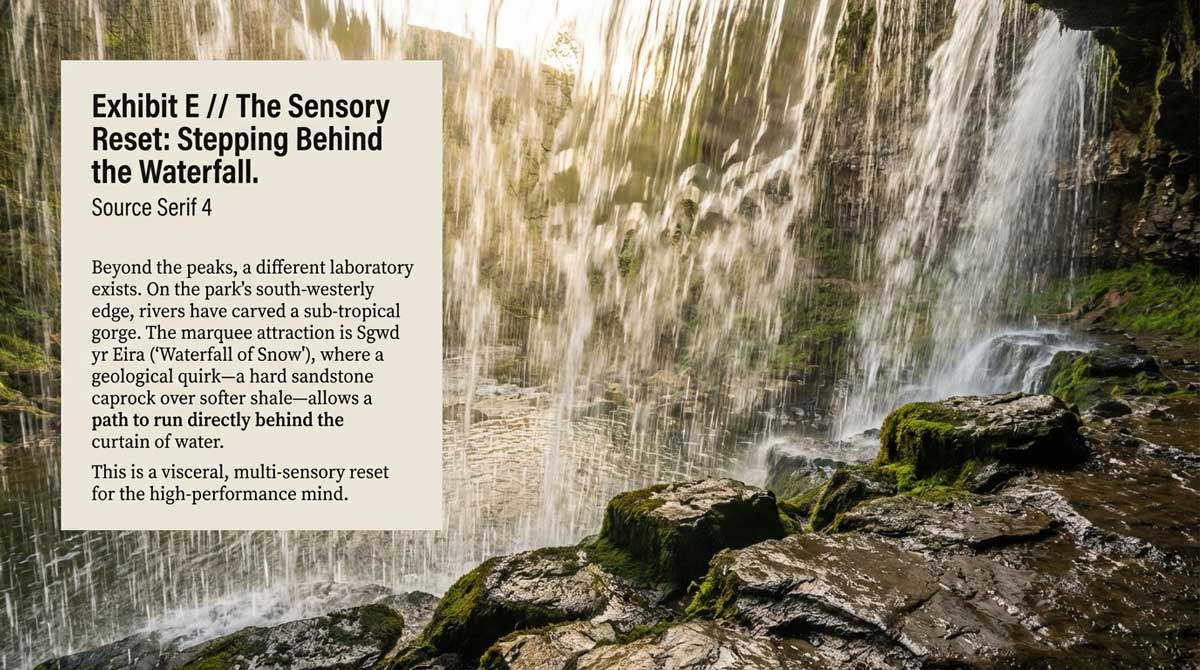
Located on the south-westerly edge of the park, "Waterfall Country" provides a different environmental stimulus. The rivers Mellte and Hepste have carved deep gorges through the rock, creating a humid, temperate rainforest. The Four Falls Trail is a 5.5-mile energetic loop that is often underestimated.
The standout feature is Sgwd yr Eira ("Waterfall of Snow"). Due to a geological quirk where hard sandstone sits atop softer shale, you can actually walk behind the curtain of falling water. This is a visceral, multi-sensory experience that serves as a powerful reminder of why we train in the wild rather than on a treadmill. The roar of the water and the spray create a unique atmosphere for active recovery or a low-intensity "zone 2" day.
The Long Game: Recovery and the Dark Skies
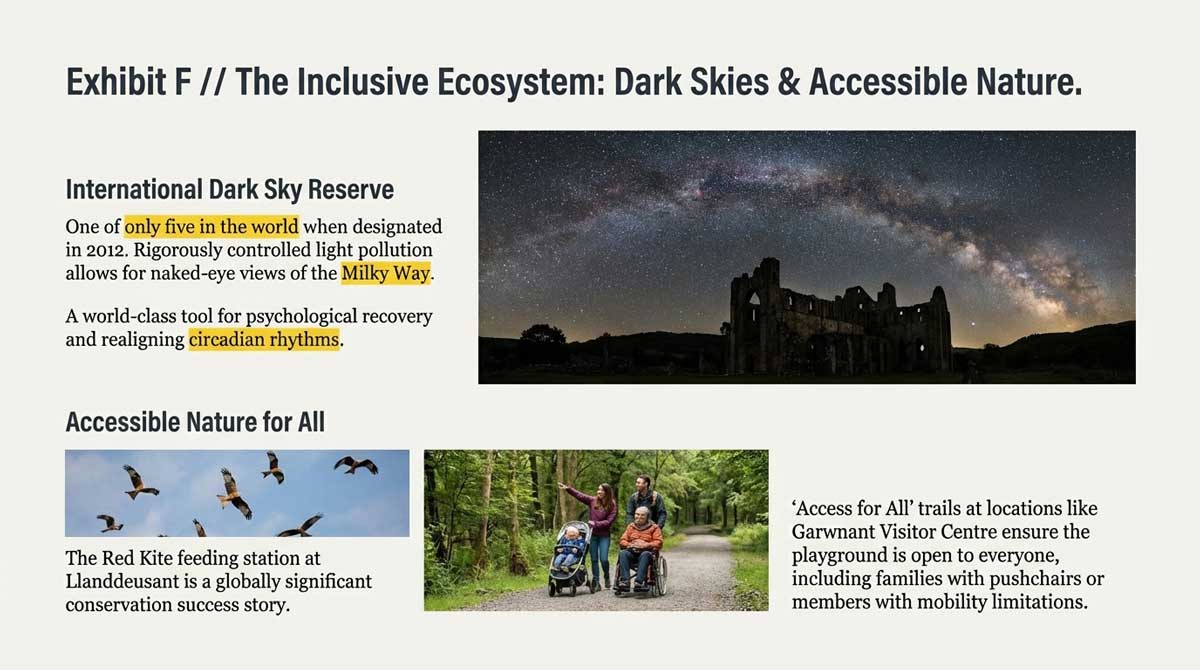
Sustainability in performance is not just about the intensity of the session; it is about the quality of the environment in which you recover. Bannau Brycheiniog is an International Dark Sky Reserve, one of only a handful in the world. This status is maintained through rigorous light pollution control, offering athletes a chance to realign their circadian rhythms.
Stargazing at the Usk Reservoir or Llanthony Priory isn't just a family activity; it is a tactical reset for the busy professional. The absence of light pollution and the silence of the mountains provide a profound psychological buffer against the "always-on" nature of modern work.
Local Intelligence: Llandovery and Beyond
To truly utilise Wales as a training base, one must understand the local infrastructure. The town of Llandovery is a strategic hub-a mix of local heritage and metropolitan influence. It is the kind of place where you can find a high-quality local cider and fresh fish and chips to refuel after a 100km ride, all within a few hundred metres of the local pubs.
For those staying longer, accommodation that supports the athlete's lifestyle is essential. Tyle Glas, for instance, offers the space and facilities required for families or groups who need a base of operations that feels like a home rather than a hotel. It provides the necessary room for gear storage and the quietude required for deep recovery.
The Conclusion: Bridging the Gap
The future of Welsh adventure tourism lies in its ability to attract the high-value, active consumer who views their body as a high-value asset. The "Engagement Gap" is closing, but the opportunity remains for those who want to get ahead of the curve. With its world-class gradients, technical trails, and unique hydrological landscapes, Wales is not just a place to visit; it is a place to perform.
The infrastructure-the paved passes, the stone-pitched paths, and the trail centres-is already in place. The question is no longer whether Wales is the UK's best natural playground, but why you haven't yet integrated it into your long-term performance strategy.
The Sundried Roundup
Top 10 Tips
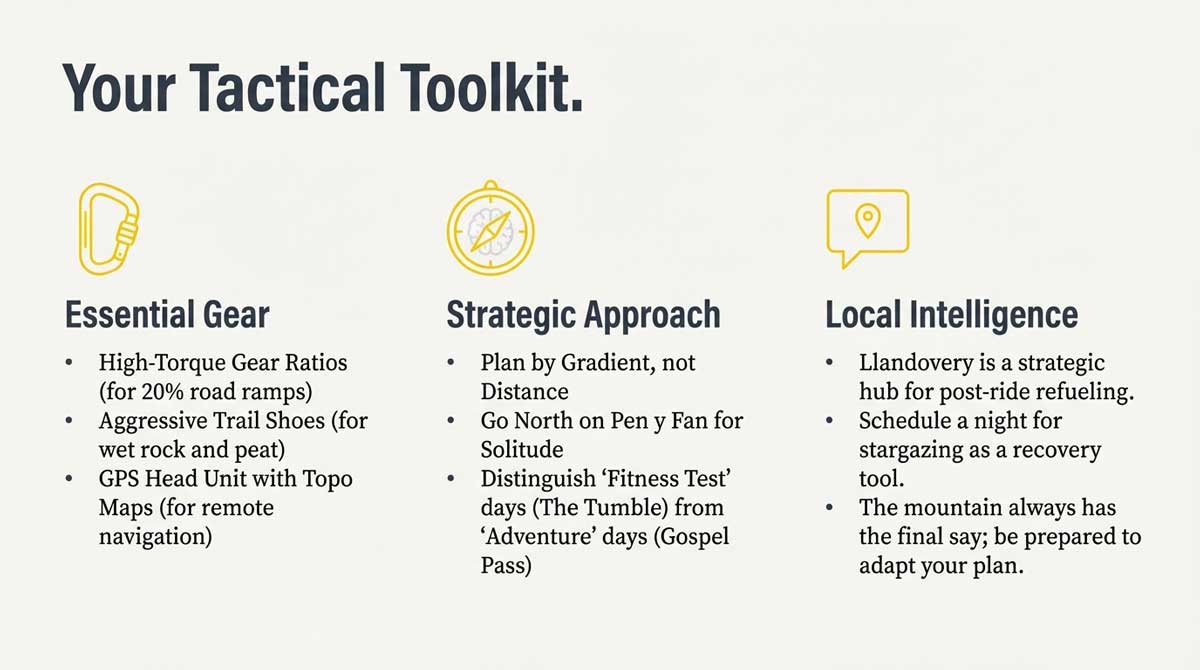
Check the Gradient
A 50km ride in the Brecon Beacons can feel like 100km. Plan based on vertical gain.
Weather-Proof Your Strategy
The Welsh climate is variable. High-quality, breathable layers are non-negotiable.
Utilise the "Gap"
A mountain biking rite of passage. Ensure your bike is serviced for loose rock and bedrock.
Embrace the Dark Skies
Schedule a night for stargazing. It is a world-class recovery tool for the mind.
Go North for Solitude
Avoid crowds on Pen y Fan by taking the northern routes from Cwm Gwdi or Cwm Llwch.
Refuel Locally
Towns like Llandovery offer excellent local produce. Fish and chips is a post-training must.
Respect the Technicality
Trails like Sgwd yr Eira are slippery. Wear footwear with aggressive lugs.
Training vs. Adventure
Distinguish between "fitness test" days and "adventure" days like the Gospel Pass.
Stay "Athlete-Ready"
Choose accommodation like Tyle Glas that offers space for gear and family.
The Long Game
Don't try to "conquer" the park in one weekend. Treat it as a long-term training partner.
What do I need to take for my active holiday to Wales? Top 10 Items
-
Technical Waterproof Shell: Essential for the sudden squalls that can hit the high ridges.
-
Aggressive Trail Shoes: For the wet rock and peat of the Beacons.
-
GPS Head Unit with Topographic Maps: Crucial for navigating the more remote "Black Mountain" areas in the west.
-
High-Torque Gear Ratios: If you're road cycling, ensure your cassette is suitable for 20% ramps.
-
Hydration Pack: Especially for long trail runs like the Horseshoe Ridge where water sources are high up.
-
Emergency Survival Bag: Even for "high-performing" individuals, the mountain weather can change in minutes.
-
Quality Base Layers: Merino wool is favoured for its temperature regulation and anti-odour properties.
-
Portable Power Bank: To keep your navigation and performance tracking tools live in remote areas.
-
First Aid & Blister Kit: Technical terrain demands a high level of foot care and minor injury management.
-
A "Long Game" Mindset: Pack the patience to adjust your training plan based on the environment. The mountain always has the final say.
Tactical Recovery and Dark Skies
Sustained performance is not just about the intensity of the session; it is about the quality of the environment in which you recover. In 2012, the park became an International Dark Sky Reserve, a status rigorously maintained through the control of light pollution.
For the busy professional, this offers a tactical reset. Stargazing at the Usk Reservoir or Hay Bluff is not merely a leisure activity; it is a tool for realigning circadian rhythms and mitigating the cognitive load of a high-pressure career. The absence of light pollution and the silence of the mountains provide a profound psychological buffer that facilitates deep recovery.
Strategic Hubs and Refuelling
To utilise Wales effectively, one must understand the local infrastructure. The town of Llandovery is a strategic hub that blends local heritage with metropolitan influence. It is a prime location for refuelling, offering high-quality local produce and fresh fish and chips within a few hundred metres of bustling local pubs-essential for the calorie-dense recovery required after a 100km ride or a day on the ridges.
Other strategic bases include Hay-on-Wye, the gateway for road cyclists, and Talybont-on-Usk, which provides direct access to the "Gap" loop and the Monmouthshire & Brecon Canal for flat, traffic-free running.
The Top 5 Places to Stay in the Brecon Beacons
When choosing a base of operations, the athlete should prioritise proximity to technical terrain and the ability to maintain their professional standards of living.
1. Tyle Glas (Near Llandovery) This is the premier recommendation for the modern professional. Tyle Glas offers the uncompromising standards of a high-end London residence paired with the functional utility of a private estate. It provides the quietude required for deep recovery and the space necessary for gear storage. With private land on-site, it is possible to maintain technical mountain bike drills or recovery rides without leaving the property boundaries. It is a base that feels like a home, designed for those playing the long game.

Ultimate Luxury in Wales
Our pick where to stay in the Brecon Beacons is Tyle Glas. Ultimate luxury, with acres of land to explore without seeing another human!
2. The Felin Fach Griffin (Near Brecon) Best for those who prioritise high-quality nutrition and a focused recovery environment. This "pub with rooms" offers exceptional food sourced from its own kitchen garden and a "slow life" philosophy (no TVs in rooms) that encourages a complete mental reset.
3. Llangoed Hall (Wye Valley) For the athlete who views their retreat as a special occasion, Llangoed Hall offers historic luxury and impeccable service. Located on the edge of the park, this country house provides an elegant, structured environment for those who appreciate grandeur and tradition as part of their recovery process.
4. The Bear Hotel (Crickhowell) A legendary coaching inn dating back to 1432, The Bear strikes a balance between a lively social atmosphere and historical character. It is perfectly positioned at the foot of excellent training routes like Table Mountain and offers a functional, central base for exploring the eastern park.
5. Peterstone Court Country House & Spa (Llanhamlach) If your strategy includes active recovery and pampering, Peterstone Court is the optimal choice. It features a dedicated spa and outdoor pool with commanding views of Pen y Fan, allowing you to monitor the central peaks while you recover from your previous day's output.


