

Zwift vs. Rouvy vs. TrainerRoad: Best Indoor Cycling App 2026


Want to build strength to support your running?
Get targeted strength routines and mobility exercises designed specifically for runners directly on-site. Try asking Raye: 'What are 3 key gym exercises to improve running economy?' Get strength tips
Introduction: The Digital Peloton
As we move deeper into 2026, the indoor cycling landscape has matured from a pandemic-era necessity into a sophisticated ecosystem of performance engineering and immersive virtual worlds. For the dedicated athlete, the choice of platform is no longer merely about connectivity; it is about choosing the environment that aligns with your physiological goals and mental motivation.
Whether you are a crit racer looking for explosive power or an endurance specialist preparing for a mountainous gran fondo, the software you choose dictates your daily training experience. We have analysed the three titans—Zwift, Rouvy, and TrainerRoad—to determine which is the definitive choice for your 2026 season.
What are the press saying?
Industry critics have spent the last twelve months noting a clear bifurcation in the market. Zwift remains the darling of the gaming community, with reviewers praising its recent graphical engine overhaul that brings unprecedented visual fidelity to the Watopia expansion. However, the cycling press has been equally vocal regarding the rise of Rouvy, which has gained significant traction for its ‘augmented reality’ approach, effectively bridging the gap between flat-screen boredom and outdoor realism.
TrainerRoad, conversely, continues to be heralded as the ‘serious athlete’s choice.’ While it lacks the glitz of virtual avatars, recent coverage highlights its Adaptive Training engine as the gold standard for science-led progress, consistently outperforming competitors in independent efficacy trials.
Evolution and History
The history of these platforms tells the story of the sport itself. Zwift revolutionised the market in the mid-2010s by gamifying the turbo trainer, turning an isolated chore into a social event. TrainerRoad arrived earlier, pioneering the structured interval workout that prioritised ‘Time-in-Zone’ over entertainment. Rouvy, meanwhile, evolved from a niche video-hosting site into a high-fidelity platform that uses real-world GPS data and 3D overlays to simulate actual geography.
Today, the lines are blurring. Zwift is incorporating more structured training plans, while TrainerRoad has begun beta-testing visual elements. Yet, each retains its unique DNA: Zwift as the social hub, TrainerRoad as the laboratory, and Rouvy as the scenic escape.
Comfort & Fit: User Experience and Interface
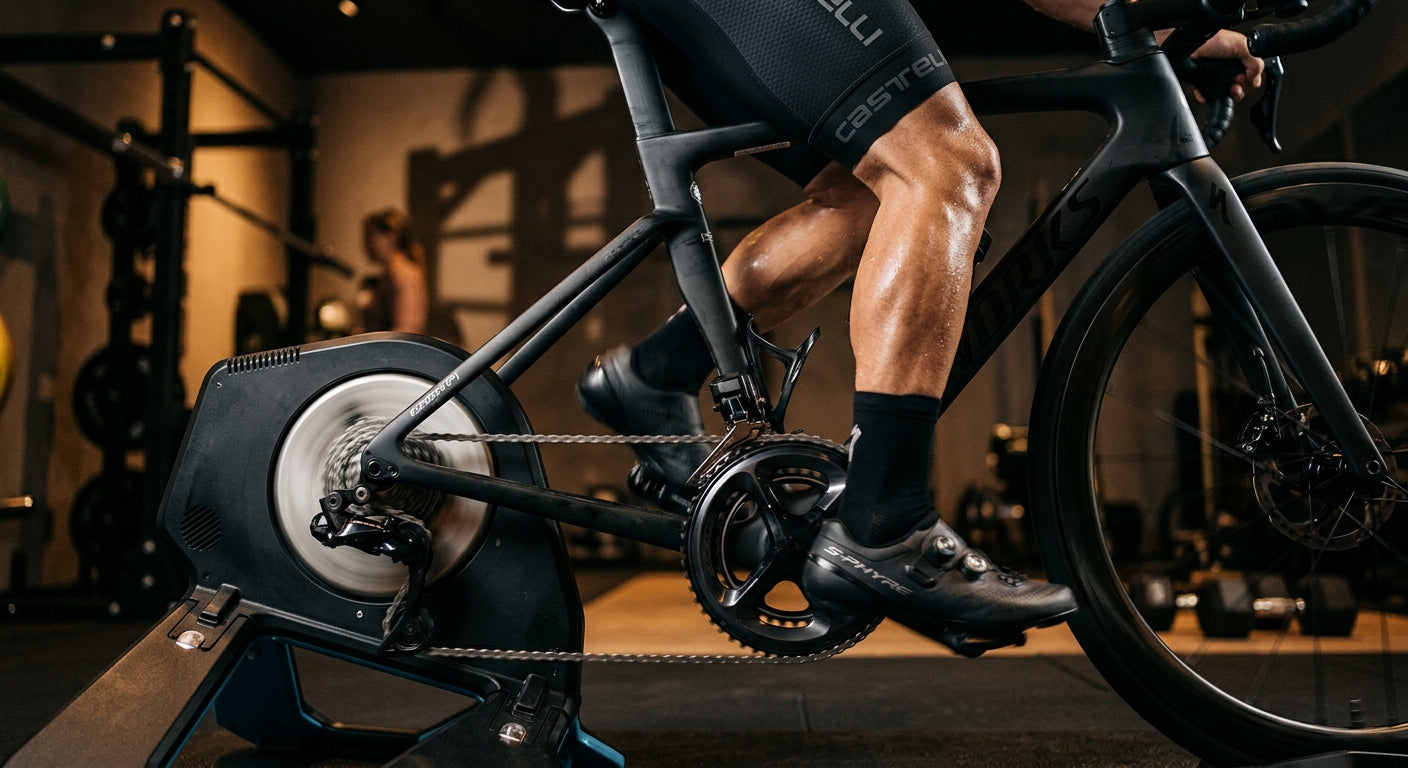
User experience is subjective, but technical friction is objective. Zwift offers the most intuitive interface for those who want to jump on and ride, though its heavy reliance on the ‘Companion App’ can be a distraction during high-intensity efforts. The visual clutter of other riders, icons, and messages can be overwhelming for some.

Have a specific performance goal in mind?
Get direct feedback on your training targets right here on the page—no sign-up or account required. Try asking Raye: 'How should I adjust my weekly mileage for a sub-20 minute 5K?' Ask about your goals
Rouvy offers a cleaner, more cinematic fit. The interface feels less like a video game and more like a professional sports broadcast. For those who struggle with the ‘gaming’ aesthetic, Rouvy’s grounded approach feels much more natural. TrainerRoad remains the minimalist’s dream—a simple, data-rich dashboard that refuses to clutter your screen with anything that isn’t a power target or heart rate metric.
Features to Look out For
When selecting a platform, prioritise your training intent. Zwift offers unparalleled racing and group ride dynamics. If your motivation wanes without external social pressure, the gamified environment is essential. Rouvy’s standout feature is its vast library of real-world routes. For those training for specific events, being able to ride the virtual equivalent of the Col du Tourmalet provides a unique tactical advantage.
TrainerRoad’s superpower is its Adaptive Training. By analysing every session you perform, it dynamically adjusts your future workouts. If you skip a session due to work or illness, the app recalculates your training load, ensuring you don’t overreach or de-train. It is a ‘set it and forget it’ system for those who want maximum efficiency.
Special Features & Technical Specifications
Material Composition & Digital Architecture
All three platforms utilise advanced API integrations with ANT+ and Bluetooth Smart power meters and smart trainers. Zwift operates on a proprietary gaming engine, whereas Rouvy relies on high-definition video stitching and 3D terrain rendering. TrainerRoad is built on a robust data-analytics framework designed for low-latency transmission of workout files.
Weights & Compatibility
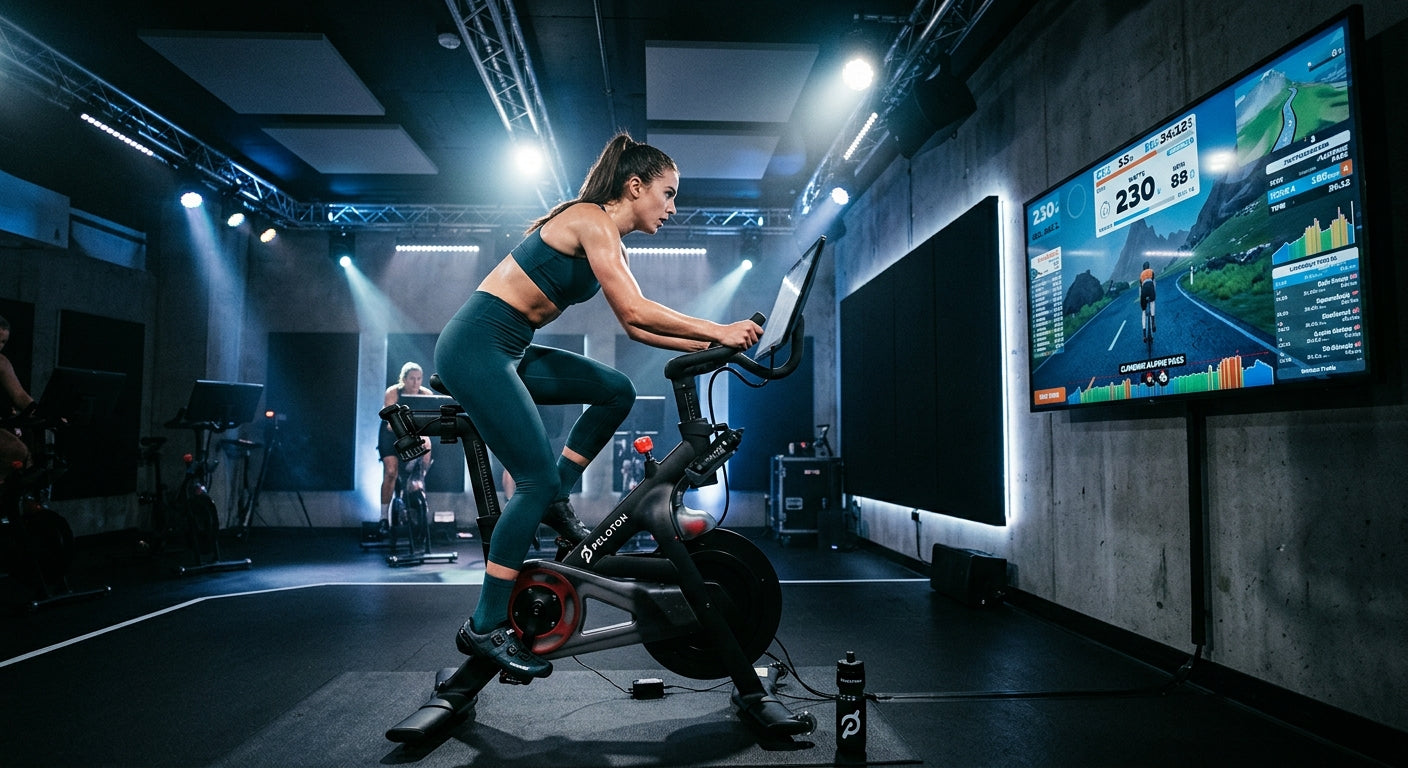
In digital terms, the ‘weight’ of these platforms varies significantly. Zwift demands high-end hardware, requiring modern CPUs and GPUs to run smoothly at high frame rates. Rouvy is bandwidth-intensive, necessitating a fast internet connection to stream high-definition route videos. TrainerRoad is the ‘lightweight’ champion, capable of running on almost any mobile device or laptop without lag.
What to Expect in the future?
The 2027-2028 roadmap for these companies centres on Artificial Intelligence. We expect all three to integrate generative AI, allowing users to ask, ‘Create a workout based on my fatigue levels today,’ with the platform building it in seconds. Furthermore, improved motion-capture technology will likely allow users to see their real-world pedalling technique analysed on-screen in real-time, correcting form to prevent injury.
Final Verdict: Which Should You Choose?
The definitive choice depends on your psychological profile as an athlete. If you need community, competition, and an immersive world to forget the pain of the pedals, Zwift remains the undisputed leader. If you are preparing for a specific course or simply despise the look of video games, Rouvy provides the most realistic and visually stunning experience.
However, if your primary goal is to reach your physiological ceiling and you view training as a scientific endeavour, TrainerRoad is the superior choice. Its ability to manage fatigue and progression automatically makes it the most effective tool for long-term athletic development. In 2026, the best platform isn't the one with the best graphics—it’s the one that keeps you consistent.


