

How to Use Heart Rate Variability (HRV) to Dictate Your Training: A Data-Driven Approach


Need performance advice right now?
Ask our on-site coach anything about your routines. It's completely free and available immediately right here: 'What are 3 quick exercises for ankle mobility?' Ask Raye for free
What are the press saying?
Leading sports science journals and fitness publications have recently shifted their focus from simple step counting to the nuanced world of Heart Rate Variability (HRV). Industry analysts suggest that HRV is the gold standard for gauging autonomic nervous system resilience. The consensus is clear: those who ignore their HRV data are essentially flying blind, missing out on the critical feedback loop that determines whether a body is primed for a personal best or requires a restorative rest day.
Journalists covering the wearables sector have highlighted that the integration of HRV into mainstream fitness trackers has democratised access to what was once exclusively clinical-grade data. By monitoring the variance in time between consecutive heartbeats, athletes can now quantify physiological stress with startling precision, moving beyond subjective feelings of tiredness to objective, data-backed training decisions.
Comfort & Fit
Modern wearable sensors prioritise unobtrusive design, ensuring that data collection does not interfere with athletic performance. Whether integrated into sleek wrist-worn devices or discreet chest straps, the emphasis is on maintaining a consistent contact point with the skin. Achieving an accurate reading necessitates a snug, yet comfortable fit; if the device shifts during a high-intensity interval session, the signal integrity can be compromised, leading to erroneous data interpretation.
The evolution of strap materials—utilising soft-touch, breathable polymers and hypoallergenic silicone—means that users can wear these devices overnight without discomfort. This is crucial, as the most reliable HRV baseline is captured during deep sleep, away from the immediate stressors of daily life. For the serious athlete, the device must become a second skin, disappearing from consciousness while it continues to log vital cardiac metrics.
Features to Look out For
When selecting a platform to monitor your HRV, look for devices that offer automated, nightly tracking. The most effective systems provide a 'readiness score', which translates complex biological data into a simple, actionable metric. This allows you to adjust your training load immediately upon waking, ensuring you do not overreach during periods of sympathetic nervous system dominance.
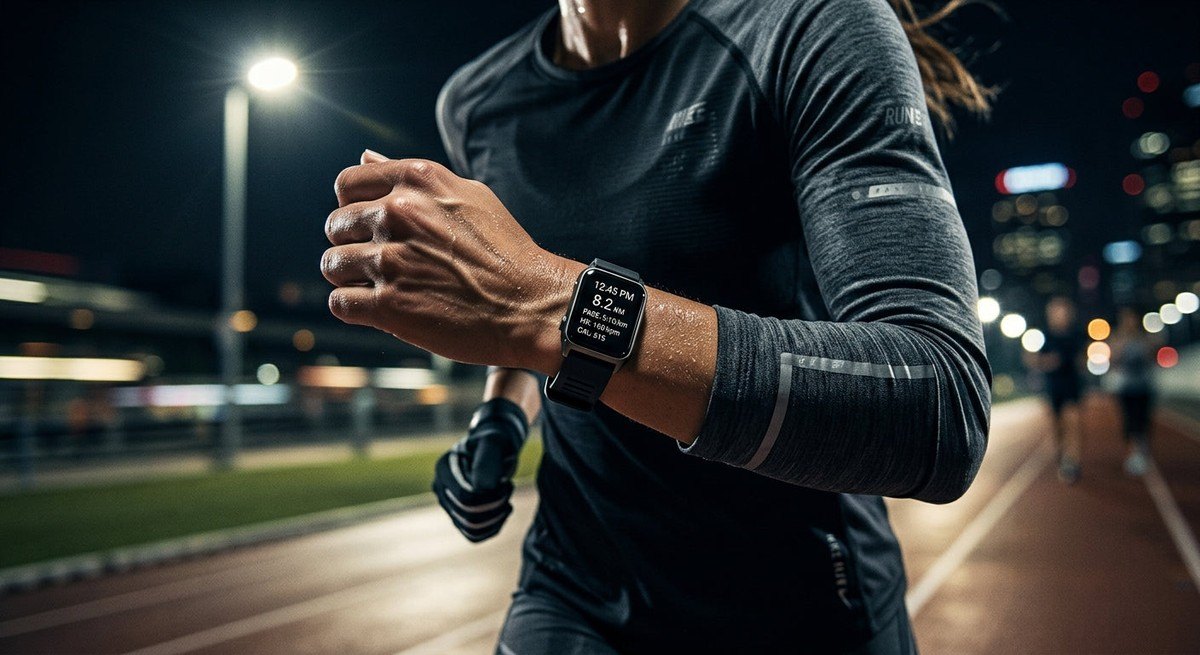
Furthermore, consider the value of the recurring subscription model. While the hardware captures the raw data, the software ecosystem provides the analytical intelligence. These subscriptions are essential; they fund the ongoing development of proprietary algorithms that identify long-term trends and correlations between your lifestyle choices and your recovery capacity, making them an indispensable investment for long-term health monitoring.

Need a clear race fuelling strategy?
Get instant, practical advice on hydration and race-day nutrition directly on this page for free. Try asking Raye: 'How many grams of carbs should I take per hour during a half marathon?' Ask for fuelling advice
Evolution and History
The history of HRV tracking has transitioned from the confines of cardiology departments to the wrists of recreational runners. Historically, measuring the variability between R-waves required an electrocardiogram, but the advent of photoplethysmography (PPG) technology has revolutionised the field. This engineering shift allowed for the miniaturisation of sensors, enabling continuous, non-invasive monitoring that was previously impossible.
As the technology matured, the focus shifted from raw data collection to predictive modelling. Early iterations simply displayed a number; today’s systems offer context, comparing your current state against your personal 30-day rolling average. This longitudinal view is what distinguishes professional-grade analysis from mere hobbyist observation, allowing for a more profound understanding of the body's adaptive responses to training stimulus.
Special Features & Technical Specifications
Material Composition and Engineering
Current generation sensors utilise medical-grade stainless steel and reinforced ceramic housings, ensuring durability during high-impact activities. The internal circuitry has seen a 20% reduction in power consumption, allowing for extended battery life despite more frequent sampling rates.
Physical Dimensions and Weight
Most modern trackers now hover between 25 and 40 grams, providing a lightweight profile that avoids pendulum effects during rapid limb movement. The centre of gravity is engineered to remain close to the wrist, minimising motion artefacts during intense exercise.
Generational Improvements
Compared to previous iterations, the latest models feature advanced noise-cancellation algorithms that filter out movement-induced interference, resulting in a 15% improvement in HRV accuracy during active recovery phases.
What to Expect in the future?
The future of HRV monitoring lies in the integration of artificial intelligence to provide real-time coaching. Imagine a system that not only tells you to rest but suggests specific mobility or nutritional interventions based on your current HRV reading. As machine learning models become more sophisticated, the gap between the athlete and the coach will continue to narrow, with wearables acting as the bridge.
We are also seeing the emergence of multi-modal data fusion, where HRV is cross-referenced with blood glucose levels and respiratory rates to provide a holistic view of metabolic health. This holistic approach will likely become the standard for fitness enthusiasts, transforming how we conceptualise recovery and performance. By prioritising this data-driven methodology, athletes can ensure they remain at the cutting edge of human performance, effectively biohacking their way to sustained, long-term health.


