

Ceramic Bearings and OSPW Systems: Are They Worth the Investment for Amateurs?


Need performance advice right now?
Ask our on-site coach anything about your routines. It's completely free and available immediately right here: 'What are 3 quick exercises for ankle mobility?' Ask Raye for free
Are Ceramic Bearings (OSPW) Worth the Money for Amateurs?
In the high-stakes world of professional road cycling, marginal gains have become the primary currency. Look at any pro peloton, and you will notice a ubiquitous upgrade: the Oversized Pulley Wheel (OSPW) system. These monolithic cages, often adorned with shimmering ceramic bearings, promise reduced friction and increased drivetrain efficiency. But for the weekend warrior or the amateur fitness enthusiast, does this translate to genuine performance, or is it merely expensive jewellery for your bike?
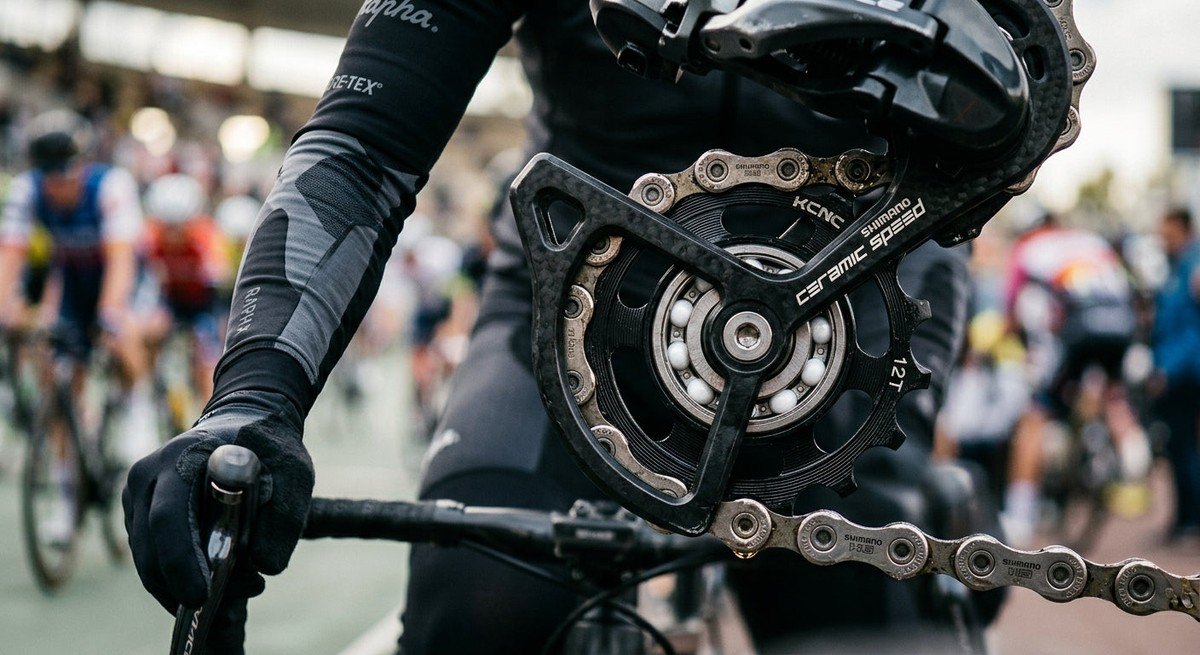
To understand the utility of these systems, one must first look at the mechanics. An OSPW system works by increasing the radius of the pulley wheels, which reduces the articulation angle of the chain as it passes through the derailleur. By minimising the bend in the chain and lowering the rotational speed of the bearings, you mathematically reduce friction. The shift to ceramic balls—which are harder, rounder, and smoother than their steel counterparts—further contributes to this pursuit of low-resistance motion.
What are the press saying?
Cycling media outlets have long been divided on the subject. Technical publications like GCN and Cycling Weekly have conducted wind tunnel and drivetrain efficiency tests, typically concluding that while the gains exist, they are often measured in the single digits—rarely exceeding 2 to 3 watts at high power outputs. Journalists remain largely unanimous: the science is sound, but the cost-to-performance ratio for an amateur is questionable when compared to more impactful upgrades like aerodynamic tyres or professional bike fitting.
Comfort & Fit
It is important to dispel a common myth: ceramic bearings and oversized pulleys do not alter the comfort of your ride in the way that a carbon frame or quality bib shorts might. They are purely performance-oriented components. While they provide a slightly smoother sensation during gear shifts, the impact on your physical fatigue is negligible. For the amateur, 'fit' is determined by geometry, not by the material composition of your derailleur cage.
Features to Look out For
When shopping, prioritise durability. Ceramic bearings require regular maintenance to avoid contamination from road grit, which can be fatal to the delicate races. Look for sealed bearings with high-quality dust covers. Additionally, assess the cage material; carbon-fibre reinforced polymer is the industry standard for maintaining rigidity while keeping the overall weight of the system at a minimum.

Need a clear race fuelling strategy?
Get instant, practical advice on hydration and race-day nutrition directly on this page for free. Try asking Raye: 'How many grams of carbs should I take per hour during a half marathon?' Ask for fuelling advice
Evolution and History
The OSPW concept rose to prominence around 2015, spearheaded by brands like CeramicSpeed. Initially confined to the time-trial specialist’s toolkit, these systems quickly migrated to road bikes as the 'marginal gains' philosophy took hold. Originally developed for track cycling where every milliwatt counts, the technology has since filtered down into consumer-grade components, leading to a crowded market of third-party manufacturers.
What to Expect in the future?
The future of drivetrain efficiency lies in total system integration. Expect to see manufacturers designing derailleurs from the ground up to accommodate larger wheels, rather than relying on aftermarket bolt-on cages. We are also likely to see advancements in solid-state lubrication, which could eliminate the need for the high-maintenance oils that currently define the ceramic bearing experience.
Special Features & Technical Specifications
Material Composition
Most elite-tier OSPW systems utilise Grade 3 silicon nitride ceramic balls, which are significantly harder than steel. The cages are typically crafted from unidirectional carbon fibre, providing high stiffness-to-weight ratios to prevent shifting inaccuracy under load.
Physical Dimensions & Weight
Standard rear derailleur wheels usually measure 11 teeth. OSPW systems often range from 13 to 17 teeth (upper and lower). While this creates a larger profile, the weight penalty is usually offset by lightweight cage materials, keeping the net weight gain under 20 grams compared to stock setups.
Engineering Changes
Recent generations have transitioned toward wider, more robust pivots to handle the increased torque generated by the longer cage arm. Modern iterations also feature refined tooth profiles to ensure that the chain engagement remains crisp despite the larger diameter.
Ultimately, for the amateur, OSPW systems serve as a testament to one's commitment to the sport. They provide a tactile sense of precision and a minor, albeit scientifically verifiable, increase in efficiency. However, if your goal is to get faster, we suggest spending your budget on structured training and a wind-tunnel-tested helmet before indulging in the ceramic aesthetic.
10 alternative items to try
- Continental GP5000 S TR Tyres: Replacing your stock rubber with these tyres is arguably the most significant performance upgrade you can make. With lower rolling resistance and improved puncture protection, the speed gains are tangible in every ride, far outstripping the marginal watts saved by oversized pulley wheels.
- Latex Inner Tubes: Switching from butyl to latex tubes is a cost-effective way to reduce rolling resistance instantly. They are more supple, conform better to the road surface, and significantly lower the energy lost to internal friction during high-speed riding.
- Professional Bike Fit: No mechanical upgrade can compensate for an inefficient position. A professional session with a reputable bike fitter will ensure you are biomechanically optimised, which provides much greater aerodynamic and power-output benefits than any aftermarket drivetrain component.
- Aero-Optimised Cycling Kit: Clothing is the largest area of drag. Investing in a high-quality, form-fitting skinsuit or jersey can save 10 to 20 watts at 40km/h, making it a far more logical investment for an amateur looking to improve their finish times.
- Lightweight Carbon Wheelset: Reducing rotational mass is essential for acceleration and climbing. A high-quality carbon wheelset improves handling, comfort, and speed, providing a transformative experience that you can physically feel on every steep incline or long descent.
- High-Efficiency Chain Lubricant: Before upgrading to ceramic, ensure your drivetrain is clean and treated with a top-tier wax lubricant. Proper maintenance reduces friction by a larger percentage than switching from steel to ceramic bearings would in a poorly maintained system.
- Power Meter Pedals: You cannot improve what you do not measure. Power meters provide the data necessary for structured, effective training. For an amateur, understanding your power zones is infinitely more valuable than the minor efficiency gains provided by oversized pulley systems.
- Aero Helmet: Helmets are a key factor in airflow management. A modern aerodynamic helmet can provide significant time savings over a standard, vented lid. It is an affordable and practical upgrade for any enthusiast interested in racing or fast group riding.
- Chainring Upgrades: Moving to a stiff, oversized chainring setup can improve power transfer and shifting performance. It is a more direct point of contact for your power input, leading to a more responsive feel when you are sprinting or putting down hard efforts.
- Professional Coaching Service: Investing in a structured training plan or a coach is the ultimate way to get faster. The physiological gains from a well-designed training programme will always be superior to the mechanical gains of any piece of bicycle hardware.


