

Why Most New Year Training Plans Fail (And How to Fix Yours)


Trying to beat your local Strava segment goals?
Fine-tune your training strategies to hit your target stats without downloading another app. Try asking Raye: 'How can I structure hill repeats to build short-segment power?' Ask how to hit your target
Let's face it. We all know the chances of your New Year's resolution lasting more than the first quarter of the year are slim, however for many of us every year we end up sending those same similar goals.
For the high performing individual brackets you may not put yourself into this camp but if you've got a job you travel up to London you commute to work you own your own business you've got staff then immediately you've got lots of things that are gonna stand in your way between you and your Fitness goal...
List to this content by cicking play below
We try to view you, the athlete not as a project to be finished for summer, a deadline that we have to meet but as a long-term high value asset that's going to require long-term management. It's time to treat your training and your life with the same rigger that you apply to your career like your personal CV when you go for a job you need to also have your objectives your goals your big wins written out on paper or at least calves into the back of your mind so you can dip into that and remember what your goals really are.
Motivation and habit formation.
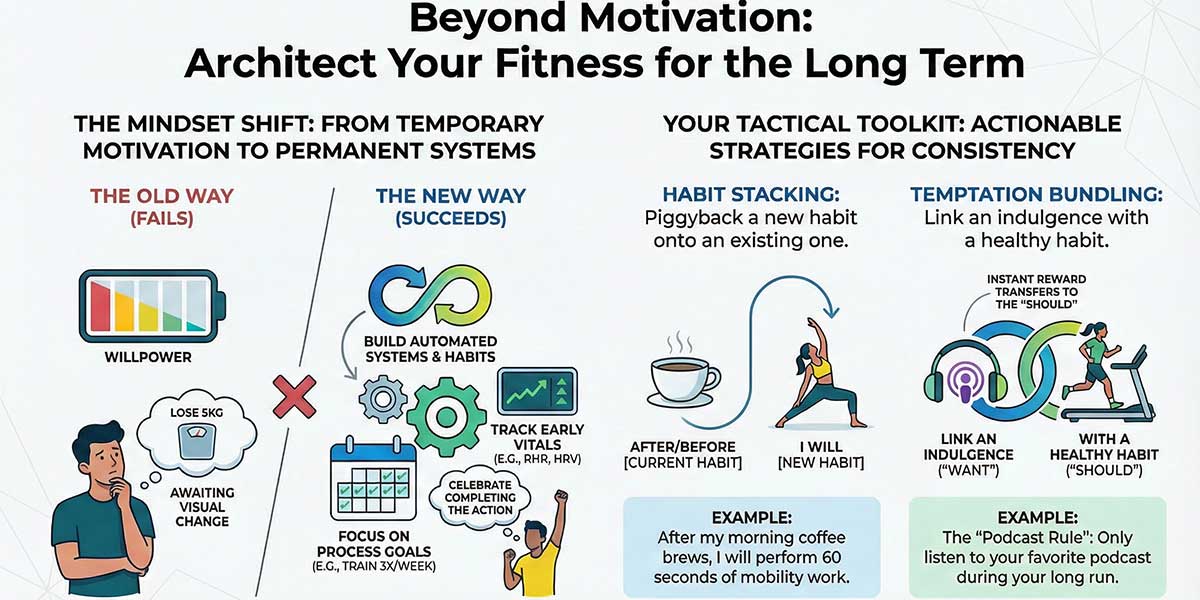
If you speak to a personal trainer five or 10 years ago then they would definitely tell you that training is a battle of willpower however current behavioural science lets us know that reliance purely on willpower is potentially a big strategic error. When you are tired from the day you've had a bad night sleep willpower is a first resource to deplete
New thinking new thinking and suggest that we need to start to automate behaviour. Like how you breathe or how your heartbeat is it's not something that you think about. Some things your body knows it needs to do and making a shift from win in terms of meeting your goals

The limits of motivation
Ask yourself what is this New Year push external factors. Is it a diet desire to lose weight, social pressure or an event coming up in the summer? These motivations are definitely excellent to give you that kickstart out of that cemetery period of your lifestyle but research shows are inherently unstable.

Hit a wall with form, pacing, or fatigue?
Skip searching forums. Chat directly on this page with our performance coach to solve training issues in seconds: 'How do I prevent side stitches on long runs?' Troubleshoot your run
The stability of intrinsic motivation
To get that shift from now and move it to long-term you need to start shifting things into the satisfaction and enjoyment it provides. Long-term athletes of high-performance report higher levels of intrinsic motivation compared to those those training falls apart their training not just for the result, but because they're training satisfies three psychological needs
Autonomy. Choosing a training model you enjoy rather than one that you feel you are being forced fed
Competence. The sensation of mastering a feeling like running a mile fast faster or lifting or weight with greater efficiency
Relatedness. Connecting with a community it may be a Triathlon club it may be an online Reddit group Fitness enthusiasts it could be a weekly park run.
Creating positive habit loops
It may be the motivation that gets you started, but it's habits that will ensure you continue. A habit is a behaviour that becomes automatic through repetition and when you mention habit to people their brains usually jump towards bad habits. Eating too much chocolate too many packs of crisps that sort of thing but having a positive habit is something that's gonna make sure you stick with your training goals.

Habit stacking, what an earth is that?
Habit stacking if it's not something you know, and you've probably not ever heard that phrase before, is where you're going to piggyback a desire behaviour into an existing highly automated habit.
As adults we already have hundreds of automatic habit loops things like brushing your teeth making a coffee commuting to work. Rather than trying to build a new pathway we can piggyback onto an existing behaviour.
The Formula: After/Before [Current Habit], I will [New Habit].
Strategic Habit Stacking for the Busy Athlete
| Anchor Habit (The Trigger) | New Habit (The Protocol) | The Psychological Logic |
| Brewing Morning Coffee | Perform 60 seconds of deep breathing or mobility work. | Uses the "dead time" of brewing to introduce stress-reduction, associating caffeine reward with the habit. |
| Arriving Home from Work | Immediately change into training kit. | Removes the friction of decision-making. The clothes serve as a visual commitment device. |
| Closing Laptop for Lunch | Perform a 5-minute core circuit or plank. | Creates a physical "punctuation mark" between work and rest, aiding mental transition. |
| Waiting for Shower to Warm | Perform calf raises or press-ups. | Utilises a transition moment where you are typically idle. |
| Plugging Phone in at Night | Review tomorrow's training session plan. | Displaces screen time with a preparation habit, reducing friction for the next morning. |
Temptation Bundling
My favourite way of maintaining training is temptation bundling. This will address the conflict between the immediate gratification and the long-term benefits. The wants and the should.
The simple strategy involves coupling an instant Grant gratifying want e.g. listening to a podcast on audiobook or watching your favourite series linked with something that is a bit more delayed in gratification you should for example which may be zone two cardio. By linking the two immediate reward of the want is transferred to the should.
For me, I go with the Netflix rule, or Disney+ if you may. Save your favourite Netflix show and make it so you can only watch it whilst on the turbo trainer or the treadmill. If you want you could just be skipping. There are many free exercises you can be doing and if you're gonna watch that show anyway, why not use that time in more ways than one?
The podcast and run rule. Reserve your favourite podcast, comedy podcast news podcast or whatever you enjoy for your long run this transforms your physical obligation into a intellectual treat.
Let's architect these goals.
Won't you have primed that psychological engine in? You are now going to require a roadmap but be careful these traditional outcome based goals used in a corporate environment often fail
Shifting from an outcome focus goal to process focus goal is essential.
The trap of outcome goals.
Outcome goals focus on the lagging indicator for example lose 5 kg, run a sub three marathon, hit a specific wattage on your white bike. These are excellent destinations but they're definitely suffer as a critical daily motivator.
Your training is going to lag.
Physical changes are slow. You may train perfectly for two weeks and see no change in the mirror or your wattage may not increase. And that may cause a value of disappointment. I do agree with many people and love recording data over overtime plotting your body weight in a chart, or recording your wattage and seeing how it improves overtime but having this as your motivator is a dangerous game
Lack of control.
Outcomes can be influenced by genetics stress sleep and if you're gonna pin your success on a number this can lead to failure even when your compliance is perfect. You may hit every training session but if you've got a new baby at home you're not gonna be hitting any sleep target. And let's face it if you're not sleeping well your training is not gonna be the best.
Process goals, your new friend.
To help with your long-term consistency focus on your process goals. These focus on the inputs the specific actions that are entirely within your own personal control. The process goal is focused on what you will do rather than the outcome.
Outcome. I want to be fast faster.
Process. I will perform interval training every Tuesday morning and long runs every Sunday.
Process goal provide a win every time the action is completed finishing that activity is the success. This builds momentum and self efficiency. It also reduces your performance anxiety not having to worry about showing up today is your goal not the result from the training.
Converting Outcome to Process
| Desired Outcome (Lagging Indicator) | Process Goal (Actionable Input) | Why This Works |
| "I want to lose body fat." | "I will include a serving of protein with every meal and walk 10,000 steps daily." | Focuses on controllable caloric deficit and nutrient density rather than scale fluctuation. |
| "I want to run a 5K in 20 mins." | "I will follow my running programme 3 days a week and perform intervals on Saturdays." | Shifts focus from the pressure of the race clock to the consistency of training adaptation. |
| "I want better sleep." | "I will turn off all screens at 21:00 and read fiction for 20 minutes." | Targets the hygiene behaviours that regulate circadian rhythm rather than the elusive goal of "sleeping well". |
The Physiology of Adaptation - "Quick Wins" and Vitals
Let's face it. In those first 4-8 weeks of a new program, the mirror can be your worst enemy. You're putting in the work but the visual changes are often imperceptible which can be a massive demotivator. However, for the high-performing individual who needs data to back up their investment, we need to look "under the hood." These are your physiological "quick wins"-the objective proof that your stock is rising weeks before you see it on the surface.
Heart Rate Variability (HRV): The Readiness Monitor Think of this as the balance sheet for your Autonomic Nervous System. Unlike your resting heart rate where we want consistency, here we want variability. High variability is a sign of health and robust recovery, it means you're ready to take on the day's stress whether that's a heavy squat session or a boardroom negotiation.
-
High HRV: You're in the green. Your recovery is robust and you're ready for high intensity.
-
Low HRV: The system is crashing. It signals accumulated fatigue, dehydration, or maybe you're just about to get sick. Tracking an upward trend here is the definitive sign that your body is handling the load efficiently.
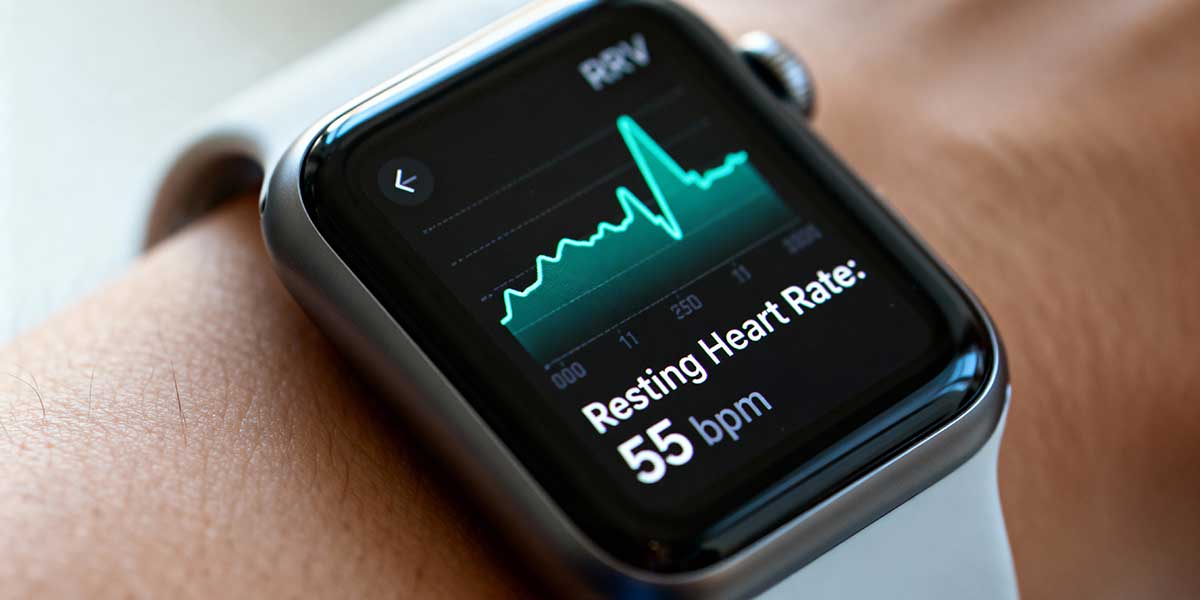
Resting Heart Rate (RHR): The Efficiency Metric This is one of the most responsive metrics we have. As you train your heart gets stronger, it pumps more blood per beat, so it doesn't have to work as hard when you're sitting at your desk. A beginner might see their RHR drop by 5-10 beats in the first month. That is tangible evidence that the engine is becoming more efficient-a massive psychological boost when the scales haven't moved yet.
Heart Rate Recovery (HRR): The Mortality Predictor This measures how fast you can switch off. How quickly does your heart rate drop immediately after you stop a run?
-
The Protocol: Stop your interval. Check your heart rate. Check it again exactly 60 seconds later. The difference is your score. Seeing this number jump from a 15-beat drop to a 25-beat drop is a clear sign of improved fitness. It's a metric you can test weekly to validate your effort.
The Sundried Roundup
To wrap this up, let's look at how we actually get this done in the real world. We aren't just athletes; we are modern professionals with schedules to keep.
What are the pros doing? The professionals aren't relying on guesswork. They treat their body like a business. They utilise periodisation-cycling through phases of base building and recovery-and they rely heavily on data to dictate their daily load. They push hard only when the numbers say they are primed to adapt, and they treat recovery (sleep and food) with the same rigour as the workout itself.
How can I build this into my life? Start by auditing your calendar. Identify your "anchors"-the things you already do every day. Use "Habit Stacking" to attach small training blocks to these anchors. Shift your mindset from "finding time" because let's be honest you won't find it, to "allocating time." Treat your training block as a non-negotiable meeting with yourself.
The budget approach? You don't need a high-end gym membership to be an athlete. The world is your office.
-
Cardio: Running is free. Use Strava.
-
Strength: Calisthenics. Press-ups, squats, lunges. Zero equipment needed.
-
Metric: Use your fingers and a stopwatch for your RHR.
Middle of the road approach? (Serious but not all in) Invest in a decent pair of running shoes and a mid-range wearable like a Garmin. This data allows you to train in specific "Zones" ensuring you aren't just "working out" aimlessly but training specifically for capacity. Focus on the process: aim for 3-4 sessions a week consistently.
Pushed for time? Intensity is the shortcut for volume. If you can't do the long slow runs because of the commute, utilise HIIT. 20 minutes of intense intervals is a potent stimulus. However, this taxes the nervous system so you need to prioritise sleep to recover. Focus on big compound movements like squats and deadlifts for maximum ROI.
I have 3 hours a week, what can I do? Three hours is sufficient to maintain your asset if utilised correctly.
-
Session 1 (60 mins): Total Body Strength (keep the muscle).
-
Session 2 (45 mins): Zone 2 Cardio (build the engine).
-
Session 3 (45 mins): Intervals (boost the VO2 max).
-
Session 4 (30 mins): Mobility (keep the joints moving).
I can fit in training 7 days a week. Just because you can doesn't mean you should go hard every day. Polarised training is key here.
-
80% of training: Easy, low intensity. This builds volume without burnout.
-
20% of training: Very hard.
-
Active Recovery: At least one day must be gentle-walking or swimming. You grow when you rest, not when you train.
The premium approach? (The Executive Athlete) You want to chuck everything at this and treat it like a serious project?
-
Coaching: Hire a remote coach on TrainingPeaks to write a bespoke plan.
-
Tech: High-end wearables for 24/7 tracking.
-
Testing: Lab testing for VO2 Max to set precise zones.
-
Recovery: Sports massage and precision nutrition.
-
Gear: Premium apparel that removes all distractions.
Top 10 Tips
Ignore the Hype
Motivation is fleeting; systems are permanent. Rely on the system.
Stack Habits
Anchor your workouts to your existing routine so you don't have to think about it.
Bundle Temptations
Save your favourite podcast for the run so you actually look forward to it.
Process over Outcome
Celebrate the workout itself, not just the weight loss.
Track Vitals
Monitor your RHR and HRV for the objective truth about your health.
Recover Hard
Sleep is the most potent performance enhancer available on the market.
The 10% Rule
Never increase volume by more than 10% a week or you'll break the machine.
Consistency Trumps Intensity
A mediocre workout done consistently beats a perfect workout done once in a blue moon.
Date Your Data
Review your metrics weekly.
Think Like an Asset
You are building a body to last a lifetime, treat it with respect.


