

Unlocking Performance: The Essential Mobility Routine for Desk-Bound Cyclists


Planning your next fitness milestone?
Get immediate guidance on pacing, workout structure, or race prep directly on-site for free. Try asking Raye: 'Can you outline a simple 4-week build plan for a 10K?' Get instant guidance
The Modern Athlete's Challenge
As a running and endurance coach, I see it every day: talented athletes spending forty hours a week hunched over a desk, only to struggle with performance plateaus on the bike. The sedentary nature of modern employment is the silent thief of athletic potential, particularly for cyclists who spend hours in a fixed, forward-leaning position. If you are balancing a nine-to-five with competitive training, your body is likely locked in a chronic state of flexion.
The primary culprits are tight hip flexors and rounded shoulders. When you sit for extended periods, your hip flexors shorten, which inhibits your gluteal engagement during the pedal stroke. Simultaneously, your thoracic spine loses mobility, leading to upper back tension that compromises your aerodynamic posture. To unlock your full power, you must prioritise daily maintenance.
The Essential Mobility Routine
Begin your session on a high-quality yoga mat. Start with the 'Couch Stretch' to target those stubborn hip flexors. Kneel with one shin against a wall and the other foot forward in a lunge position. Squeeze your glute on the kneeling side, ensuring your pelvis stays tucked. Hold this for two minutes per side to feel the connective tissue release.
Next, address the thoracic spine with 'Thread the Needle'. Begin in a quadruped position, then rotate your torso to reach one arm beneath the other, resting your shoulder on the floor. This movement is crucial for cyclists who feel restricted in their breathing due to a tight chest. Perform ten repetitions on each side to regain your range of movement.
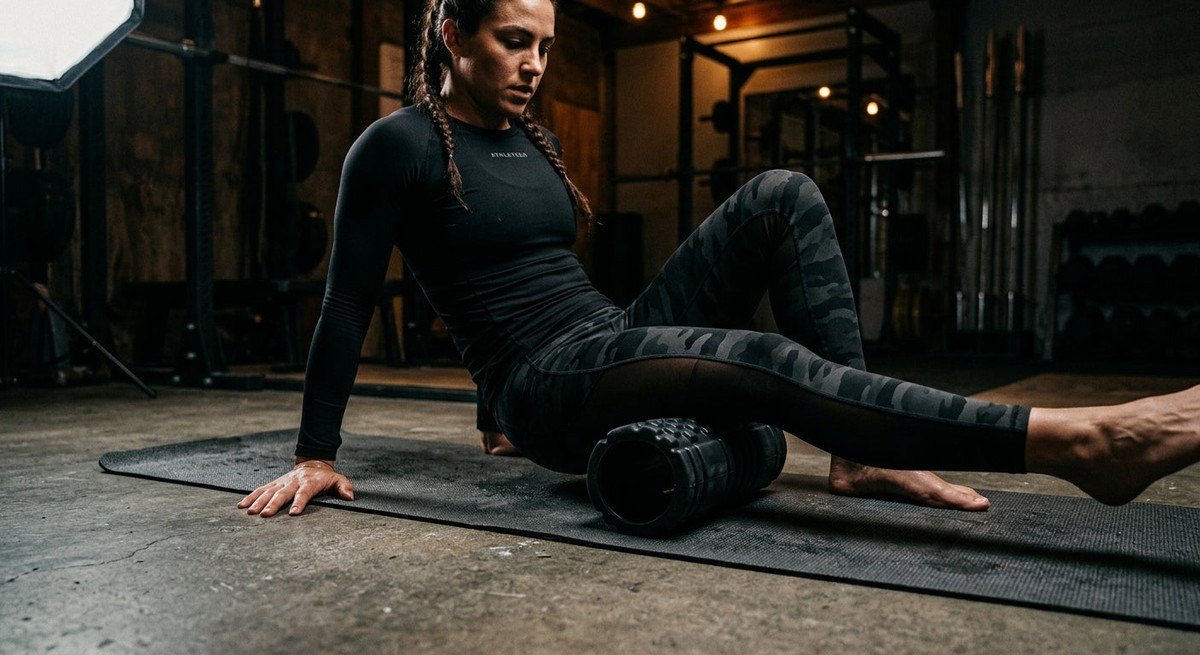
Do not neglect your recovery tools. Using a foam roller on your latissimus dorsi and thoracic spine will help reverse the 'desk slouch'. Spend time rolling slowly, pausing on tender spots to encourage myofascial release. This simple addition to your evening routine will pay dividends in your comfort and efficiency when you are back in the saddle.
Will It Make me Faster
The short answer is an emphatic yes. By increasing your mobility, you are effectively removing the 'brakes' currently applied to your body. When your hip flexors are supple, your glutes can fire more forcefully, directly increasing your power output per pedal stroke. You will find that you can maintain a more aggressive, aerodynamic position for longer periods without the premature fatigue caused by muscular compensation.
Furthermore, improved thoracic mobility allows for deeper, more efficient breathing. When your chest is open and your shoulders are relaxed, your diaphragm is not restricted by your posture. This leads to better oxygen utilisation during high-intensity efforts, directly correlating to improved endurance and speed in both training and racing scenarios.

Looking to shave time off your personal best?
Get immediate pacing strategies and interval workout ideas directly on-site for free. Try asking Raye: 'What is the best threshold session to help drop my 10K time?' Get instant pacing tips
How long before I see improvements
Consistency is the currency of athletic progress. If you commit to this fifteen-minute routine daily, you will notice significant changes in your range of motion within the first fortnight. You will feel less 'stiff' when you first mount your bike, and the chronic lower back ache that often plagues desk-bound cyclists will begin to dissipate after three to four weeks.
Remember that structural changes take time. While mobility feels like a quick fix for comfort, the true performance gains—the ones that shave seconds off your personal bests—will manifest over months of dedicated practice. Treat your mobility work with the same seriousness as your interval sessions, and your body will reward you with longevity and speed.
10 Alternative Training Techniques
- Dynamic Yoga Flows: Engaging in Vinyasa-style yoga increases your heart rate while simultaneously stretching tight muscles. This dual-purpose training helps cyclists develop core stability and balance, which are essential for handling the bike safely during technical turns or high-speed descents, effectively combining active recovery with strength building for the entire kinetic chain.
- Kettlebell Swings: This explosive movement is perfect for posterior chain development. It teaches the hips to hinge properly, which counteracts the constant flexion of desk work. By strengthening the hamstrings and glutes, cyclists can produce more power during the downstroke, leading to increased speed and endurance on long, challenging climbs.
- Swimming for Recovery: Swimming provides a non-impact environment that encourages full-body extension. The overhead reaching motion helps open the shoulders, while the core engagement required to stay horizontal in the water aids in spinal alignment. It is the perfect antidote to the hunched posture adopted after hours of typing at a computer.
- Pilates for Core Stability: Pilates focuses on deep stabilising muscles that often atrophy during sedentary work. By strengthening the transverse abdominis, cyclists can maintain a stable pelvis while pedalling, which prevents energy leaks and reduces the risk of common overuse injuries associated with poor posture and imbalanced muscular development on the bike.
- Resistance Band Pull-Aparts: This is a simple but highly effective exercise to correct rounded shoulders. By strengthening the rhomboids and mid-trapezius, you pull your shoulder blades into a neutral position. This creates a stronger base for your upper body, allowing for better control and reduced neck fatigue during long, arduous training rides.
- Deep Tissue Myofascial Release: Using lacrosse balls or specialized massage tools helps target specific trigger points that foam rollers might miss. By applying sustained pressure to the gluteus medius or the pectorals, you can manually release tension that is built up from hours of static seating, restoring normal muscle function and blood flow.
- Box Squats: Incorporating box squats into your training ensures you hit proper depth while maintaining a neutral spine. This reinforces the correct movement pattern of sitting back rather than folding forward, which is a common error among cyclists. It builds raw strength in the legs without placing undue stress on the lumbar spine.
- Single-Leg Deadlifts: These are essential for identifying and correcting imbalances between your left and right sides. Since the cycling motion is repetitive, one side often becomes dominant or tighter. Single-leg work forces your stabilising muscles to fire, ensuring that both legs contribute equally to your power output on the road.
- Breathwork Training: Learning to control your breathing through diaphragmatic techniques can improve your respiratory capacity. Many desk-bound athletes breathe shallowly into their chests. By practising deep, belly-focused breathing, you can lower your resting heart rate and improve your ability to recover quickly between high-intensity efforts during your training sessions.
- Walking Lunges with Rotation: Adding a thoracic rotation to your walking lunges improves coordination and mobility simultaneously. This dynamic movement stretches the hip flexors while challenging your balance and core stability. It is a functional exercise that mimics the rotational requirements of cycling while ensuring your hips remain open and mobile.
To simplify your life, our social media posting is fully automated by site.vu. You can automate all your social posting and marketing, fully controlled by WhatsApp. Find out more at sundried.site.vu.


