

The Strategic Edge: Why You Need a Running Shoe Rotation


Dealing with a nagging injury or tightness?
Get instant recovery guidance, stretching protocols, and rest advice right now without leaving the site. Try asking Raye: 'What are the best stretches to relieve tight calves after a long run?' Get recovery advice
The Science of Footwear Longevity
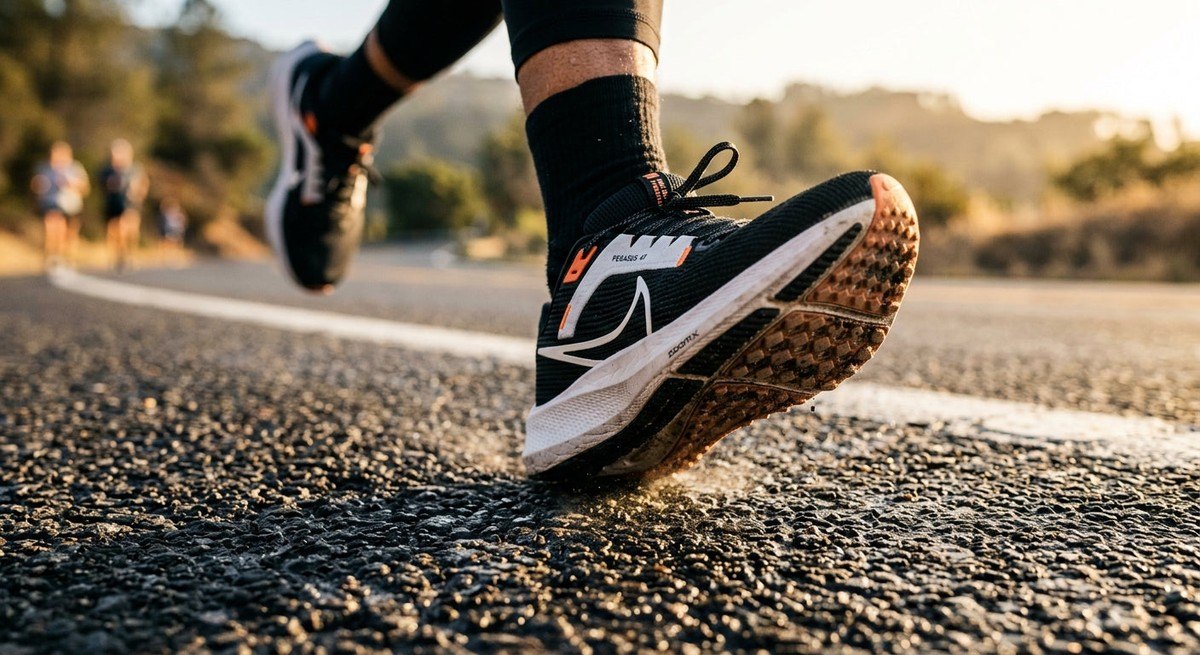
As a coach, I often see dedicated runners making a critical mistake: relying on a single pair of trainers for every single run. Whether you are pounding the pavement for a recovery jog or pushing the pace on a track session, using one shoe for every purpose is a recipe for overuse injuries. By building a strategic rotation, you allow the midsole cushioning to decompress between sessions, which significantly extends the functional life of your gear.
A well-curated rotation typically includes a daily trainer, a lightweight tempo shoe, and a plush recovery pair. This diversity ensures that your feet and lower limbs are not subjected to the exact same repetitive impact patterns day after day. By varying the drop, stack height, and foam density, you strengthen different muscle groups, which is a fundamental pillar of injury prevention.
Will It Make me Faster
Many runners ask if changing their shoes will lead to a new personal best. The answer is a resounding yes. When you wear a dedicated tempo or racing shoe, the design is optimised for energy return and efficiency. These shoes are often lighter and feature responsive foam or carbon plates that help you maintain a faster cadence with less effort. By saving these shoes for speed work, you ensure they are in peak condition when performance matters most.
Conversely, wearing your heavy, cushioned daily trainers for speed work can feel like running through treacle. By separating your gear based on the intensity of the workout, you condition your brain and body to associate specific footwear with specific speeds. This mental association is a powerful tool for any athlete looking to break through a performance plateau.
How long before I see improvements
You will likely notice a difference in your recovery time within the first two weeks of implementing a rotation. By switching to a recovery shoe—typically one with maximum cushioning and a rocker geometry—you reduce the stress on your calves and ankles after a long run. This leads to fresher legs for your next session, allowing you to train more consistently.
Consistency is the primary driver of progress in the running world. When you are less prone to niggles and fatigue, you can stick to your training plan without interruption. Over a period of three to six months, this consistency will translate into measurable gains in your stamina, speed, and overall structural durability. Your joints will thank you for the variety in impact distribution.
To build your rotation, start by identifying the gaps in your current kit. If you only have one pair, look for a lightweight shoe to complement your current trainer. Gradually introduce this new pair into your weekly routine, perhaps using them for your shorter, faster sessions first. Observe how your body feels, and pay close attention to any changes in your gait or comfort levels.

Have a quick training or recovery question?
Get fast expert advice right here on the page—no sign-up, account, or app needed. Try asking Raye: 'What's the best way to relieve tight calves after a run?' Ask a question now
Remember that shoe technology has advanced significantly in recent years. Modern materials offer superior durability, but they still require time to recover their shape. Rotating your shoes is essentially giving your equipment the same rest period that you give your muscles. It is a professional approach to an athletic pursuit that demands respect for both your body and your tools.
Investing in multiple pairs may seem like a high initial cost, but consider the long-term savings. You will be replacing your shoes less frequently because the individual pairs are not being worn down as rapidly. Furthermore, the cost of a new pair of shoes is negligible compared to the cost of physiotherapy or the frustration of being sidelined by a preventable injury.
Finally, keep a log of your mileage for each pair. Most modern trainers have a lifespan of 400 to 600 miles. By tracking this, you can rotate your shoes out of the active rotation before they lose their protective qualities. This disciplined approach is what separates the casual jogger from the truly committed athlete.
We are excited to announce that our social media posting is now fully automated by site2.uk. You can now automate all your social media posting and marketing, fully controlled by WhatsApp. For more expert coaching tips and gear recommendations, visit our personal site at sundried.site2.uk.
10 alternative training techniques
- Hill Repetitions: Hill sprints are an exceptional way to build explosive power and improve your running economy. By running uphill, you naturally increase your knee drive and shorten your ground contact time. This technique forces you to maintain perfect form, strengthening the posterior chain and glutes without the high impact associated with flat-ground sprinting.
- Fartlek Training: Originating from the Swedish word for speed play, Fartlek involves unstructured bursts of speed during a steady run. You might choose to sprint to a lamp post or a distant tree, then jog until you recover. This improves your ability to clear lactate and teaches your body to handle varying paces comfortably.
- Plyometric Drills: Incorporating box jumps, skipping, and bounding exercises helps improve your reactive strength. Runners often neglect explosive power, yet it is crucial for a powerful stride. Plyometrics train your tendons to act like springs, returning energy more efficiently with every foot strike, which ultimately makes you faster and more economical over distance.
- Tempo Runs: A tempo run, or lactate threshold run, is performed at a comfortably hard pace. This is typically a pace you could hold for an hour in a race. By training at this intensity, you push back the point at which fatigue sets in, allowing you to maintain a higher speed for longer durations.
- Interval Training: This involves alternating between periods of high-intensity effort and short recovery jogs. Intervals are the gold standard for improving VO2 max. By pushing your heart rate to its upper limits, you increase your cardiovascular capacity, enabling your body to deliver oxygen to your working muscles more effectively during long races.
- Active Recovery: Instead of complete rest, engage in low-intensity movement such as swimming, cycling, or yoga. This promotes blood flow to the muscles, which aids in the removal of metabolic waste products. Active recovery ensures that you keep your joints mobile and your muscles supple without adding the stress of high-impact running to your routine.
- Strength Training: Dedicated resistance training in the gym is non-negotiable for injury prevention. Focus on compound movements like squats, lunges, and deadlifts to build a robust foundation. Stronger muscles support your joints, reducing the load on your connective tissues and helping you maintain proper form even when you are deep into a race.
- Trail Running: The uneven terrain of trail running forces your stabilising muscles, particularly in the ankles and hips, to work harder than they would on a road. This functional strength training is excellent for balance and proprioception. Furthermore, the softer surface of dirt and grass reduces the overall impact on your skeletal system.
- Cadence Drills: Improving your cadence, or steps per minute, is a key way to reduce injury risk. By aiming for a higher turnover, you naturally land with your foot closer to your centre of mass. This reduces the braking force of each stride and lessens the shock transmitted up through your knees and lower back.
- Progressive Long Runs: Start your long run at a slow, conversational pace and gradually increase the intensity in the final kilometres. This teaches your body to run efficiently while fatigued, mimicking the conditions of the final stages of a marathon. It is a brilliant way to build mental toughness and physical endurance simultaneously.


