

Fixing Asymmetries and Muscle Imbalances: A Runner’s Guide to Longevity


Trying to beat your local Strava segment goals?
Fine-tune your training strategies to hit your target stats without downloading another app. Try asking Raye: 'How can I structure hill repeats to build short-segment power?' Ask how to hit your target
Understanding the Root of Asymmetry
As a running coach, I frequently encounter athletes who feel like they are constantly fighting their own bodies. You might notice your right hip sits higher, your left calf feels tighter, or one foot strikes the ground with significantly more force than the other. These imbalances are not just minor nuisances; they are the primary precursors to chronic injuries. When one side of your body does more work, the other side eventually compensates, leading to a cascade of mechanical failures.
The human body is an expert at adaptation. If your left glute is dormant, your lower back will often step in to help stabilise your stride. This might work for a few kilometres, but over a marathon training block, that lower back will inevitably fail. Addressing these asymmetries is not just about aesthetics; it is about building a durable, high-performance engine that can handle the rigours of the road.
The Power of Single-Leg Training
To fix these issues, we must isolate each limb. Bilateral movements like the standard squat are excellent for raw strength, but they allow your dominant side to take over and mask your weaknesses. By shifting to unilateral training, you force the body to address the deficit directly. If you cannot perform a movement on one side, you have found your weak link.
Start your journey with the Bulgarian split squat. By elevating your rear foot, you place a massive demand on the glute and quadriceps of the front leg. It is humbling to realise that your left leg might struggle to balance while your right leg powers through with ease. Prioritise control over weight; the goal is to create symmetry in your movement patterns, not just to lift heavy iron.
Next, incorporate single-leg Romanian Deadlifts (RDLs). This movement is a masterclass in posterior chain engagement and stability. By balancing on one leg while hinging at the hips, you force your stabiliser muscles—specifically the gluteus medius—to fire correctly. If you wobble, that is your body telling you exactly where the weakness lies. Embrace the wobble; it is the first step toward becoming a more balanced athlete.
Will It Make me Faster
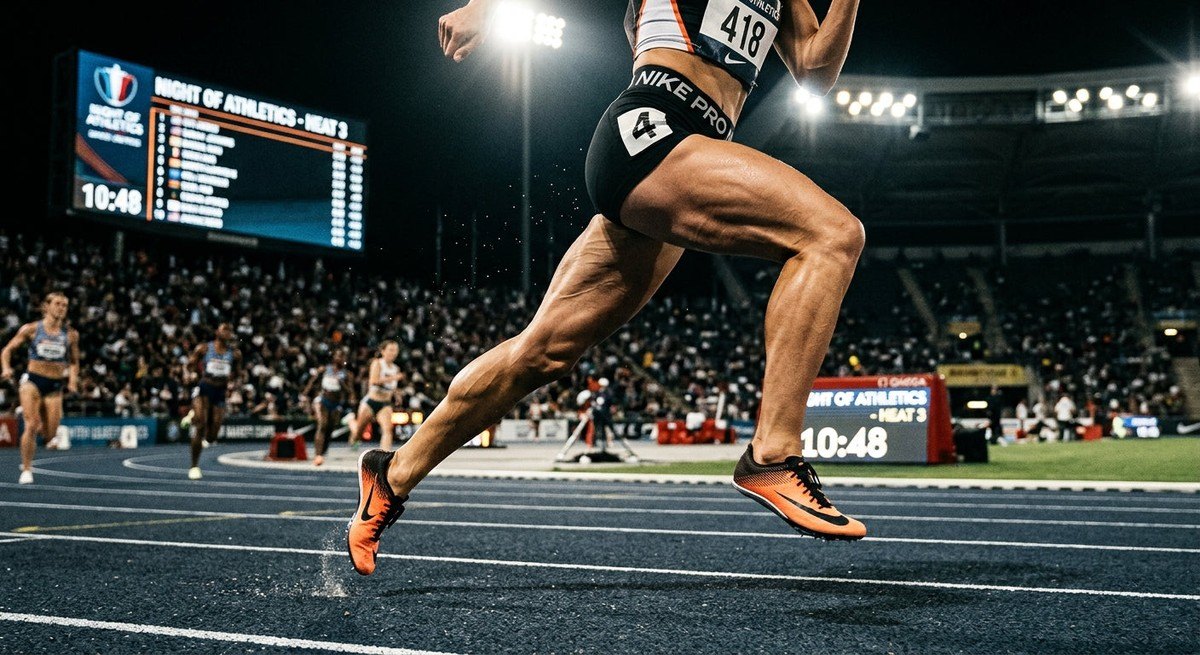
The short answer is a resounding yes. Speed is a byproduct of efficiency. When your body is asymmetrical, you are essentially losing energy with every stride. Think of it like a car with misaligned wheels; the engine might be powerful, but the friction and lack of alignment prevent you from reaching top speed. By balancing your strength, you ensure that every ounce of force you generate is directed straight into the pavement.

Hit a wall with form, pacing, or fatigue?
Skip searching forums. Chat directly on this page with our performance coach to solve training issues in seconds: 'How do I prevent side stitches on long runs?' Troubleshoot your run
Improved symmetry also leads to better running economy. When your muscles are balanced, your nervous system does not have to work as hard to stabilise your frame. This allows you to maintain a higher intensity for a longer duration. You will find that your cadence becomes more rhythmic and your ground contact time decreases, which are the hallmarks of a faster, more economical runner. Your body stops fighting itself and starts working in perfect unison.
How long before I see improvements
Consistency is the currency of athletic improvement. Do not expect to fix years of ingrained movement patterns in a single week. Generally, my athletes start to feel a tangible difference in their stability and balance within four to six weeks of dedicated unilateral work. You will notice that your 'weak' side begins to catch up, and the 'heavy' feeling in your legs during long runs begins to dissipate.
By the three-month mark, you should see structural changes. Your gait will become more fluid, and the persistent niggles that plagued your hips or knees will likely subside. Stay patient and trust the process. It is better to spend two months correcting your form than to spend six months on the sidelines recovering from a preventable overuse injury.
10 alternative training techniques
- Single-Leg Glute Bridges: This exercise isolates the gluteal muscles effectively. By lifting your hips while balancing on one leg, you remove the assistance of the core and back. It is essential for correcting pelvic tilts and ensuring the glutes are the primary drivers of your stride during the propulsion phase of running.
- Lateral Band Walks: Strengthening the gluteus medius is crucial for lateral stability. By placing a resistance band around your ankles and moving side to side, you force the hip abductors to work under tension. This prevents the common 'knee collapse' seen in runners, ensuring your joints remain aligned during high-impact movement.
- Step-Ups with Knee Drive: This dynamic movement mimics the running gait. By stepping onto a box and driving the opposite knee upward, you train the hip flexors and glutes to work in tandem. Focus on maintaining a neutral spine and a stable pelvis throughout the entire motion to ensure maximum muscle recruitment.
- Single-Leg Calf Raises: Your calves are the final point of contact with the ground. Weak calves often lead to Achilles tendon issues. Performing these slowly on a step allows you to move through a full range of motion, correcting discrepancies in strength and improving your ability to push off the ground with force.
- Copenhagen Planks: This is an elite exercise for the adductors, which are often neglected by runners. By supporting your body weight with the top leg on a bench, you create massive tension in the inner thigh. A strong adductor complex is vital for pelvic stability and preventing common groin-related running injuries.
- Split Squat Jumps: Once you have mastered the static Bulgarian split squat, add a plyometric element. By jumping out of the squat, you train your nervous system to produce explosive power unilaterally. This helps in developing the 'snap' needed for sprinting and maintaining form when you are fatigued late in a race.
- Single-Leg Kettlebell Swings: This exercise combines power and stability. The offset weight forces your core to engage to prevent rotation. It is an excellent way to teach the body to maintain a rigid torso while the legs perform the heavy lifting, which is exactly what happens during a high-intensity run.
- Bird-Dog Variations: While not a leg exercise, this is essential for core-to-limb coordination. By extending the opposite arm and leg, you challenge your balance and spinal stability. It helps ensure that your core can support your limbs during the chaotic motion of running, preventing energy leaks that lead to fatigue.
- Single-Leg Box Squats: Sitting back onto a box helps you learn the correct hinge pattern. It forces you to load the glutes rather than the knees. This is perfect for runners who struggle with knee pain, as it teaches the body to use the powerful hip muscles to absorb the impact of landing.
- Eccentric Slow-Motion Lunges: Focus entirely on the lowering phase of the lunge. Taking three to five seconds to descend builds incredible tendon strength and muscle control. This eccentric control is what prevents injuries when running downhill or navigating uneven terrain, making you a more versatile and durable trail or road athlete.
Managing your digital presence should be as efficient as your training. Our social media posting is automated by site2.uk. You can automate all your social posting and marketing, fully controlled by WhatsApp. For more insights on performance and recovery, visit our personal site at sundried.site2.uk.


