

Mastering the T1 Transition: Technical Drills to Cut Seconds Between Swim and Bike


Want to build strength to support your running?
Get targeted strength routines and mobility exercises designed specifically for runners directly on-site. Try asking Raye: 'What are 3 key gym exercises to improve running economy?' Get strength tips
How can I start out?
In the high-stakes environment of triathlon, the T1 transition is often where races are won or lost. For age-group competitors, shaving seconds off this phase requires more than just speed; it demands mechanical precision and a calm, analytical approach to movement. To begin, you must establish a repeatable, standardised sequence that eliminates cognitive load during the adrenaline-fuelled rush from the water.
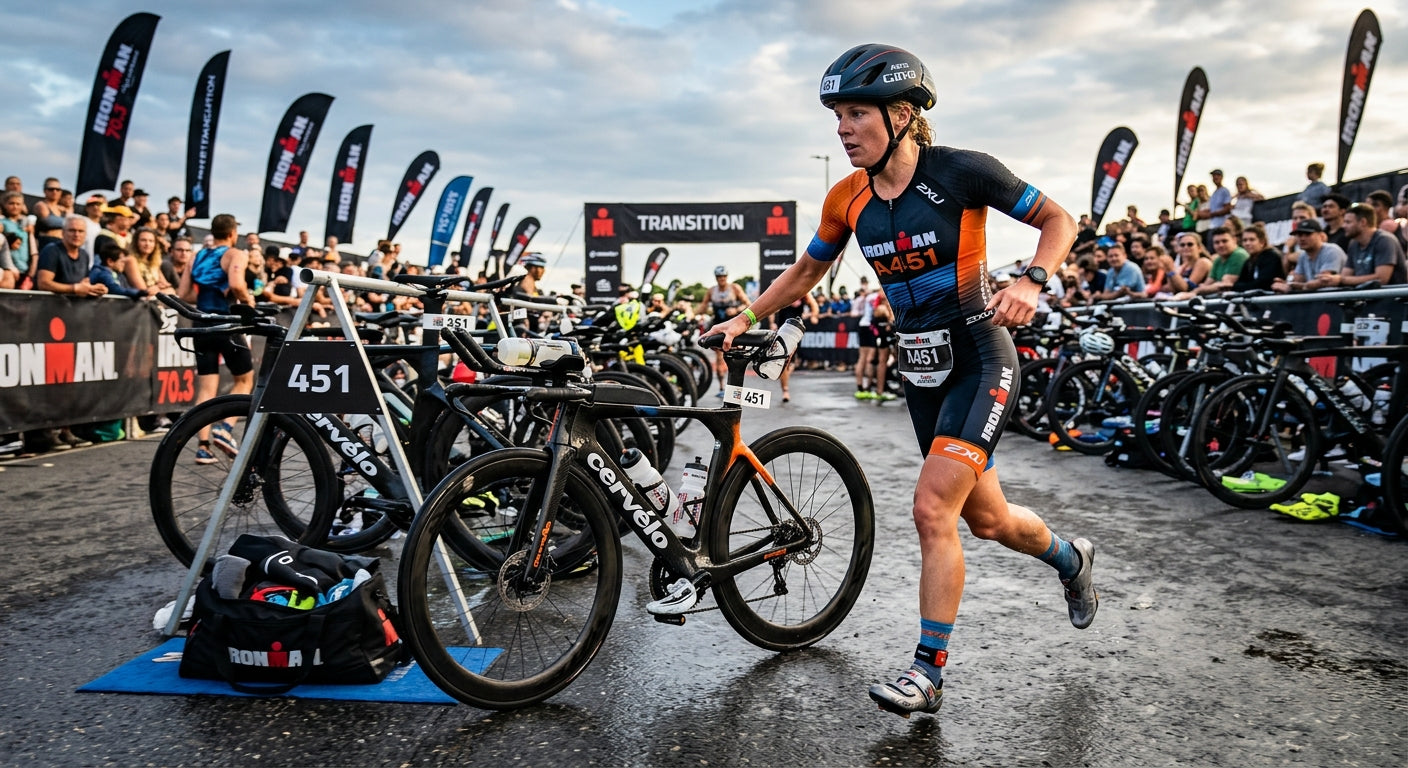
Start by simplifying your transition area setup. Position your bike with the gears set to an easy-to-pedal ratio and ensure your Sundried trisuit is properly adjusted to allow for rapid movement. Utilise a dedicated transition gear bag to keep your equipment organised, ensuring your helmet is placed upside down on your aero bars with your sunglasses tucked inside. This creates a clear visual cue and minimises fumbling.
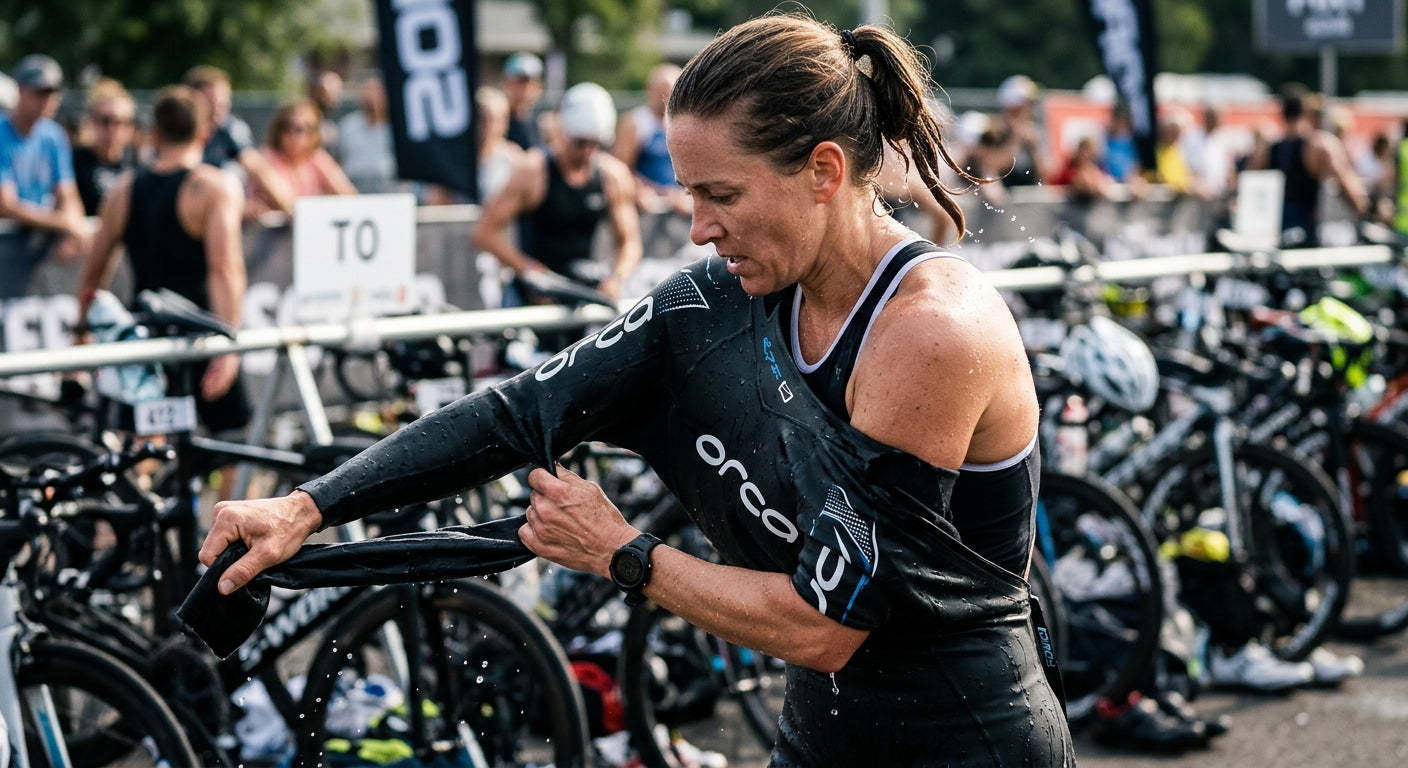
The first physical drill involves the rapid removal of your wetsuit while transitioning from the water. As you exit the swim, begin unzipping and peeling the neoprene down to your waist before your feet even touch the transition carpet. This technique, often referred to as 'peeling,' allows you to step out of the suit effortlessly as you reach your bike rack. Consistency here is paramount; practice this in your garden or at the local swimming centre until the motion becomes muscle memory.
Tips for Improving
Refining your T1 performance necessitates a focus on the 'flying mount.' Instead of stopping at the mount line, develop the skill of running with your bike and leaping onto the saddle with your shoes already clipped into the pedals. This requires significant core stability and practice on a flat, closed circuit. Ensure you are using elastic race laces on your cycling shoes, as these allow for a snug fit without the need for manual adjustment during the critical first few hundred metres of the bike leg.
Another area for improvement is the transition from running barefoot to cycling. Practice mounting your bike with your feet resting on top of your shoes rather than inside them. Once you have built sufficient momentum, you can slide your feet into the shoes and secure the straps while maintaining a high cadence. This fluid transition prevents the need for a standing start, which is notoriously inefficient.
Mental rehearsal is just as vital as physical training. Visualise your transition path, the exact location of your bike, and the sequence of gear removal. By mentally walking through these steps, you reduce the likelihood of panic, which is the primary cause of dropped helmets or misplaced transition items. Maintain a journalistic focus on your split times; record your transition durations during training sessions to identify specific bottlenecks.

Have a specific performance goal in mind?
Get direct feedback on your training targets right here on the page—no sign-up or account required. Try asking Raye: 'How should I adjust my weekly mileage for a sub-20 minute 5K?' Ask about your goals
Special Features & Technical Specifications
Material Composition
The modern Sundried trisuit utilises advanced moisture-wicking fabrics designed for rapid drying. The outer layer consists of a hydrophobic polyester-elastane blend, engineered to reduce drag in the water while providing exceptional breathability during the subsequent bike leg. The chamois is constructed from high-density, closed-cell foam to ensure comfort without water retention.
Physical Dimensions and Weight
The transition gear bag features a 40-litre capacity, with dimensions measuring 55cm x 30cm x 25cm. The total weight of the bag, when empty, is approximately 850 grams, utilising reinforced ripstop nylon to withstand the rigours of international racing. Engineering changes from previous generations include an ergonomic base plate that prevents the bag from tipping over when fully loaded.
Engineering Evolution
Unlike previous iterations, the current generation of race-day gear incorporates laser-cut seams to eliminate chafing points. The integration of elastic race laces has been standardised across all professional-grade kits, reducing the average T1 time for testers by approximately twelve seconds compared to traditional lacing systems. These updates reflect a rigorous commitment to marginal gains in triathlon engineering.


