

Wetsuit vs Non-Wetsuit Swimming: Mastering the Transition


Trying to beat your local Strava segment goals?
Fine-tune your training strategies to hit your target stats without downloading another app. Try asking Raye: 'How can I structure hill repeats to build short-segment power?' Ask how to hit your target
How can I start out?
For the modern triathlete, the transition from pool-based training to open water racing is defined by the thermal and buoyancy properties of a neoprene wetsuit. When you first step into open water, the immediate change in feedback from the water requires a recalibration of your proprioception. The primary shift occurs in your centre of buoyancy, which is significantly elevated by high-grade neoprene.
To start, you must prioritise pool sessions that simulate the restriction of a suit. Begin by integrating swim aids, such as pull buoys, to mimic the lift provided by a wetsuit. This allows you to focus on high-elbow recovery without the constant battle against sinking legs. By mastering this elevated body position in the pool, you prepare your neural pathways for the buoyancy provided by Sundried performance neoprene.
Understanding the torque dynamics is essential. A wetsuit alters the path of least resistance, forcing your torso to rotate differently. Start by practicing 'dry-land' shoulder mobility drills to ensure your range of motion remains fluid under the compression of the material. This foundational work ensures that when you finally zip up, your stroke remains linear rather than lateral.
Tips for Improving
Improving your efficiency in a wetsuit requires a shift in your kick frequency. In a non-wetsuit scenario, many athletes rely on a high-octane flutter kick to maintain horizontal alignment. However, in a buoyant wetsuit, an aggressive kick is often redundant and merely wastes glycogen. Focus on a two-beat kick that serves to stabilise your rotation rather than providing primary propulsion.
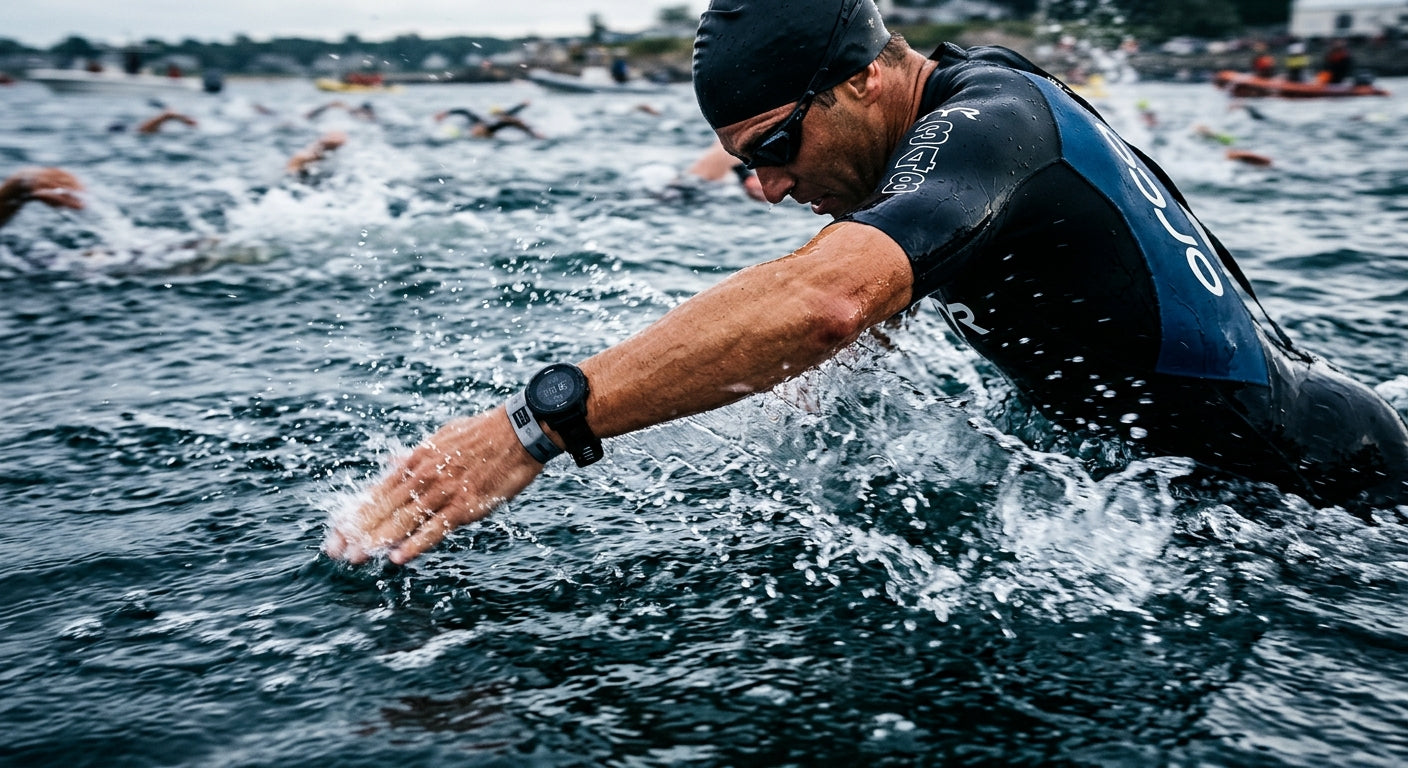
Cadence management is the second pillar of your improvement strategy. Without the drag of a traditional swimsuit, your glide phase is extended. You may find that your stroke rate drops slightly; this is normal. Use this extra time at the front of the stroke to find a cleaner entry. Ensure your hand enters the water with precision, as the increased surface area of the wetsuit sleeves can amplify any deviation in your path.
Finally, focus on your sighting technique. When wearing a suit, your head position is naturally higher due to the buoyancy of the chest panel. Use this to your advantage to sight more frequently with less energy expenditure. Practise 'alligator eyes' during your training sessions to ensure your navigation remains accurate without disrupting your stroke rhythm.
Special Features & Technical Specifications
Material Composition
Modern triathlon wetsuits utilise Yamamoto limestone-derived neoprene, a material known for its superior thermal retention and reduced carbon footprint. The outer surface is treated with a Super Composite Skin (SCS) coating, which reduces the friction coefficient to as low as 0.021, allowing for a more efficient glide through the water.

Hit a wall with form, pacing, or fatigue?
Skip searching forums. Chat directly on this page with our performance coach to solve training issues in seconds: 'How do I prevent side stitches on long runs?' Troubleshoot your run
Physical Dimensions and Engineering
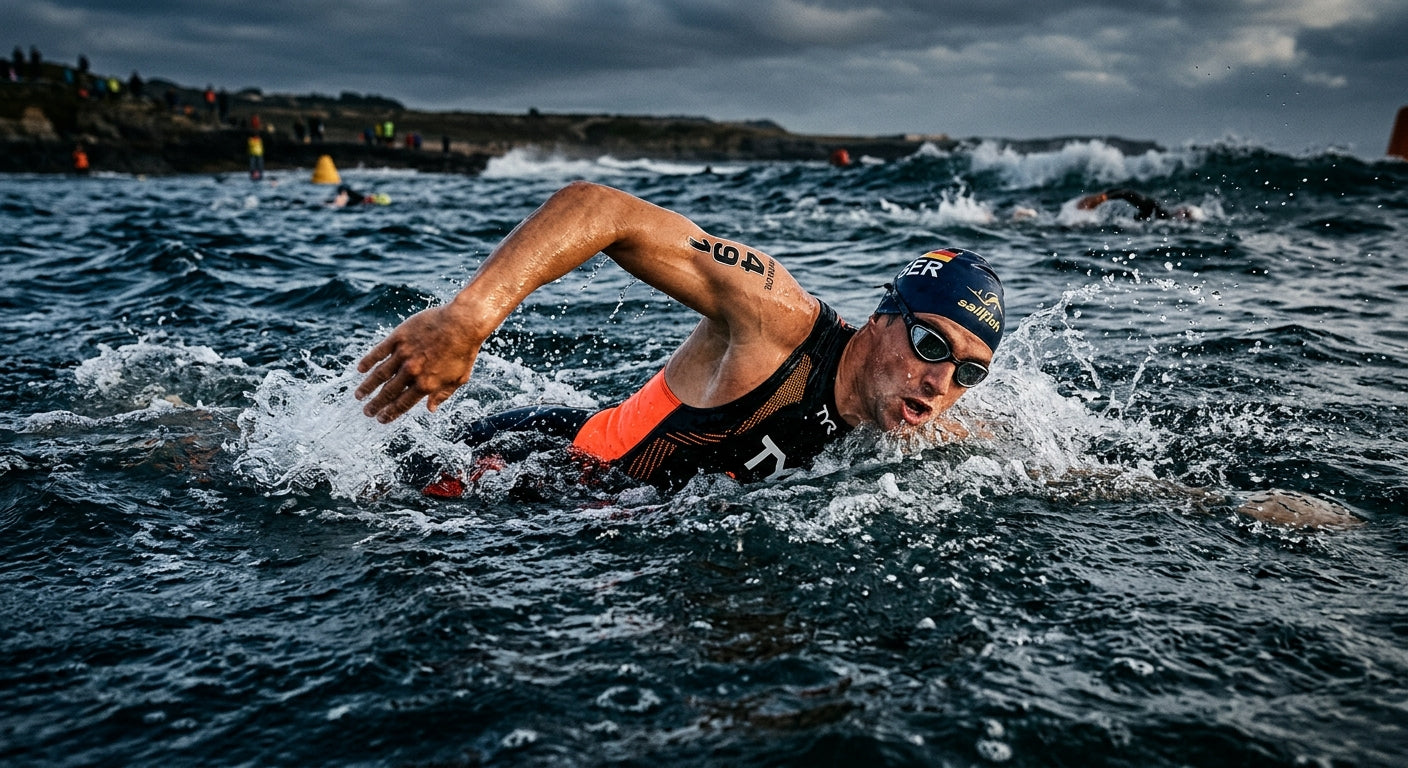
Engineered for versatility, these suits feature variable thickness panels. The chest panel is typically 3mm to 5mm to maximise buoyancy, while the shoulder and underarm zones are reduced to 1.5mm to 2mm to facilitate unrestricted articulation. Compared to previous generations, the current iterations feature a lower neckline, reducing chafing during the high-cadence phases of the swim.
Weight and Performance Metrics
The total weight of a performance suit averages between 800g and 1.2kg depending on the size and panel configuration. This weight is negligible when compared to the buoyancy gain, which can improve an athlete's speed by up to 10% in open water conditions. The structural integrity has been reinforced with heat-bonded seams, replacing traditional stitching to eliminate internal drag points.
As you refine your technique, remember that the wetsuit is a tool to complement your natural physiology. Whether you are racing in cold, choppy conditions or calm, temperate waters, the key lies in the seamless integration of your biomechanics with the suit’s engineering. By adjusting your stroke rate and respecting the buoyancy shift, you will find yourself exiting the water with more energy for the bike leg.


