

Mastering Open Water Sighting Techniques for Straighter Swimming


Trying to beat your local Strava segment goals?
Fine-tune your training strategies to hit your target stats without downloading another app. Try asking Raye: 'How can I structure hill repeats to build short-segment power?' Ask how to hit your target
How can I start out?
For many triathletes, the transition from the controlled environment of a swimming pool to the unpredictable nature of open water represents a significant psychological and technical hurdle. Without the black line on the floor to guide your trajectory, even the most accomplished pool swimmers often find themselves swimming in erratic arcs. The foundation of swimming in a straight line begins with the integration of sighting into your natural stroke rhythm.
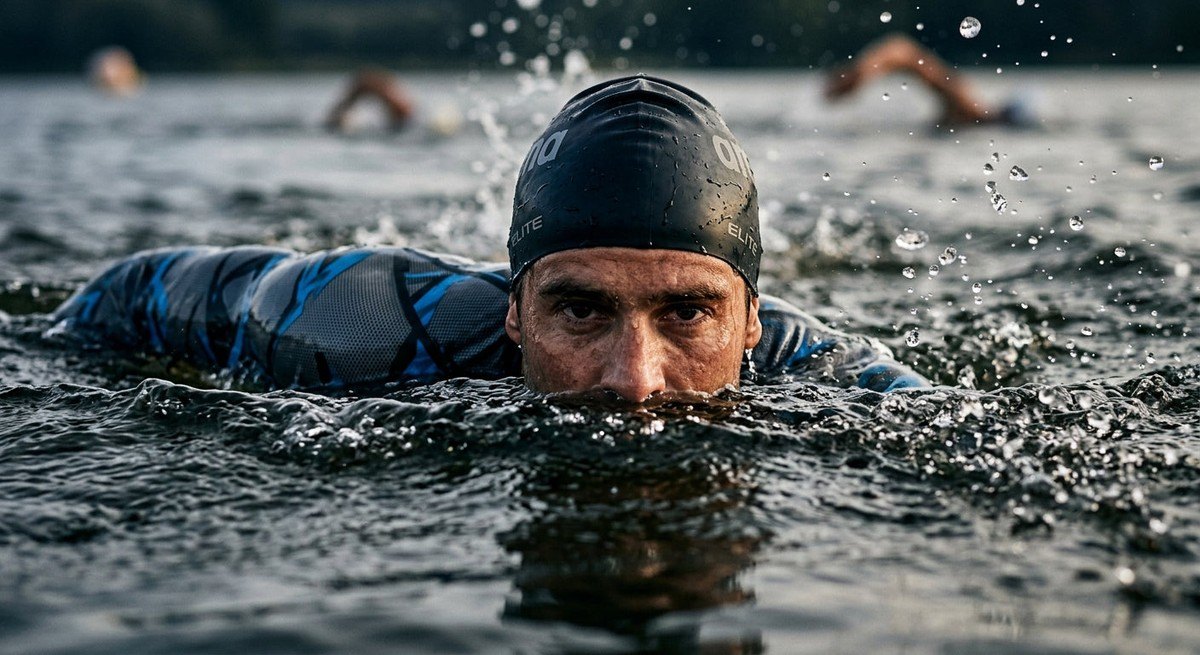
To begin, you must first master the art of the 'alligator eyes' technique. This involves lifting only your eyes just above the surface of the water, keeping the rest of your head submerged. By minimising the vertical displacement of your head, you reduce the drag that typically occurs when you lift your entire face out of the water. Start by practicing this motion in a pool during your warm-up, focusing on maintaining a horizontal body position.
Consistency is key when learning this skill. Integrate sighting into your stroke cycle every six to ten strokes. By doing this, you ensure that you are constantly recalibrating your course without disrupting your momentum or your breathing pattern. Focus on identifying a fixed, prominent landmark on the shore, such as a large building, a distinct tree, or a brightly coloured buoy, rather than looking for your fellow competitors.
Tips for Improving
Once you are comfortable with the basic sighting motion, the next phase is to refine your technique for maximum efficiency. One of the most common mistakes is lifting the head too high, which causes the hips to sink and creates significant resistance. Instead, utilise the slight bow wave created by your head to peek forward. This allows you to see your target without breaking your hydrodynamic profile.
Prioritise your breathing pattern in relation to your sighting. Many athletes find it beneficial to sight just before they turn to breathe. By combining these two movements, you minimise the amount of time your head is turned away from the neutral position. This fluidity is essential for maintaining a high stroke rate and preventing the fatigue that often accompanies improper body alignment.
Furthermore, do not underestimate the importance of bilateral breathing in open water. Being able to breathe on both sides allows you to adjust to choppy water conditions and keep track of other swimmers, which is vital for safety and tactical positioning during a race. Practice bilateral breathing in the pool to ensure that your stroke remains balanced, as a lopsided stroke is the primary cause of veering off course.

Hit a wall with form, pacing, or fatigue?
Skip searching forums. Chat directly on this page with our performance coach to solve training issues in seconds: 'How do I prevent side stitches on long runs?' Troubleshoot your run
Special Features & Technical Specifications
Material Composition
Modern open water gear, such as high-performance wetsuits, is engineered using Yamamoto neoprene. This material provides superior buoyancy and flexibility, allowing for a more natural rotation. The outer surface is typically coated with a SCS (Super Composite Skin) layer to reduce friction and improve glide efficiency through the water.
Physical Dimensions and Weight
A standard competitive open water wetsuit typically ranges in thickness from 1.5mm in the shoulders for maximum range of motion to 5mm in the chest and legs for optimal buoyancy. These garments are designed to fit snugly, with weight variations between models generally falling between 800g and 1.2kg depending on the size and panel configuration.
Engineering Changes
Compared to previous generations, current wetsuit designs feature refined panel layouts that prioritise shoulder decompression. Engineering advancements have shifted the seams away from high-stress zones, significantly reducing shoulder fatigue during long-distance efforts. Furthermore, the introduction of targeted internal liners has improved thermal regulation and comfort during extended sessions.
Finally, always remember to account for environmental factors such as crosswinds and currents. If you find the water pushing you to the left, adjust your sighting target slightly to the right to compensate. Through deliberate practice and a focus on maintaining your stroke integrity, you will find that swimming straight in open water becomes an intuitive part of your performance.


