

Indoor Turbo Trainer Power vs Outdoor Power: Translating FTP Across Environments


Want to build strength to support your running?
Get targeted strength routines and mobility exercises designed specifically for runners directly on-site. Try asking Raye: 'What are 3 key gym exercises to improve running economy?' Get strength tips
Understanding the Power Gap
Cyclists frequently report a tangible discrepancy between their outdoor power readings and those produced on an indoor smart trainer. This phenomenon, often referred to as the 'indoor power drop,' is a multifaceted issue rooted in both mechanical engineering and physiological responses. For the competitive cyclist, understanding this variance is critical to accurate training prescription.
When you transition from a road ride to a static turbo trainer, the environmental variables change entirely. While a smart trainer provides a controlled laboratory-like setting, the lack of wind resistance, varying road surfaces, and the absence of micro-adjustments in core stabilisation alter the biomechanical load. These factors influence how your muscles recruit fibres, leading to a different power profile compared to the open road.
How can I start out?
To begin reconciling your power data, you must first establish a consistent baseline. Start by performing a standard 20-minute Functional Threshold Power (FTP) test on your indoor trainer, ensuring your cooling systems are optimised. Do not attempt to match your outdoor peak numbers during this initial session; instead, treat the indoor environment as a distinct physiological discipline.
Next, ensure your drivetrain is perfectly clean and lubricated. Mechanical friction is often amplified indoors, where the lack of ambient noise makes drivetrain inefficiency more apparent. Calibrate your trainer before every session using the manufacturer's mobile application to ensure the strain gauges are reporting data accurately under current temperature conditions.
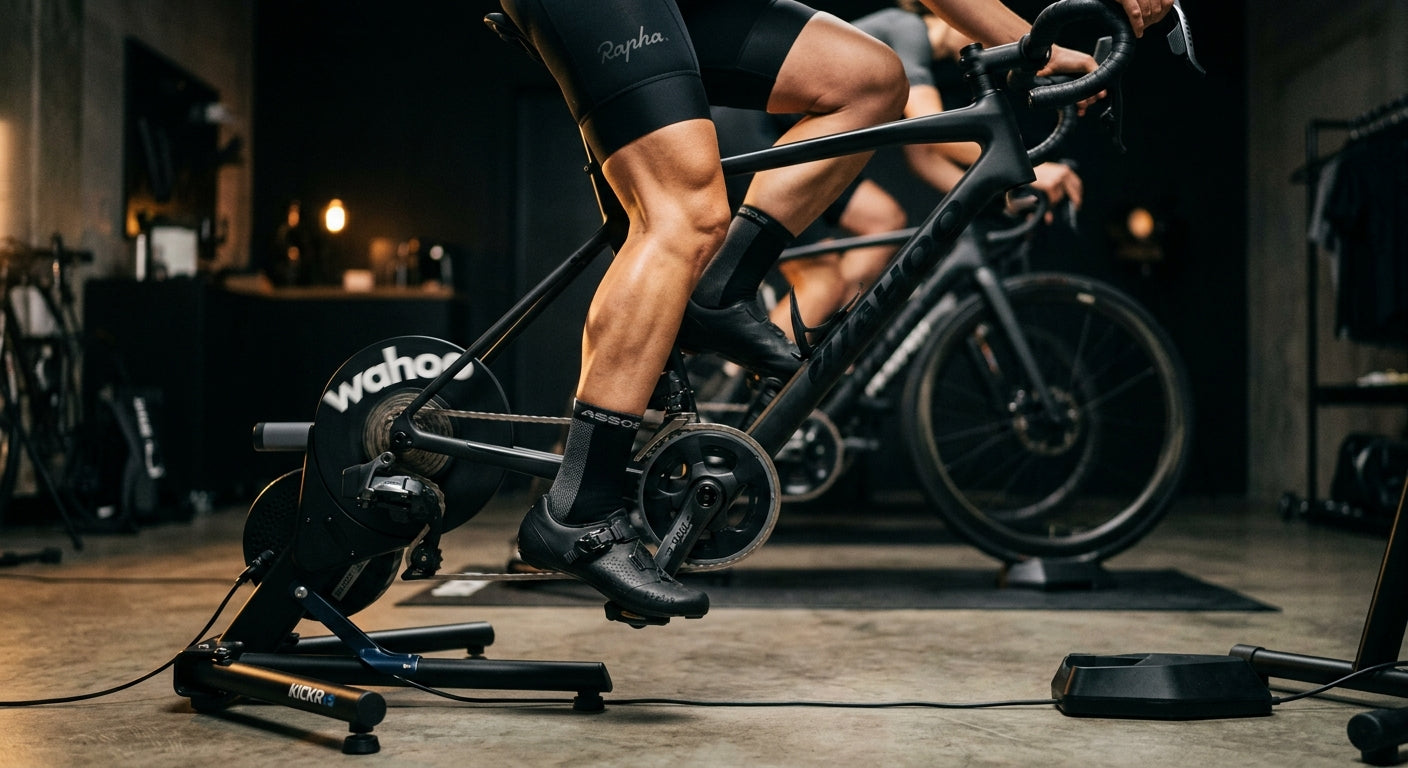
Prioritise your kit selection to manage the lack of convective cooling. Using the Sundried breathable indoor cycling vest and shorts is essential to facilitate moisture wicking. Without the natural airflow of outdoor riding, sweat accumulation can increase your core temperature rapidly, leading to premature muscular fatigue and artificially lowered power numbers.
Tips for Improving
The primary driver of the indoor power drop is thermal regulation. Outdoors, you benefit from consistent airflow that dissipates body heat efficiently. Indoors, you must replicate this with high-velocity industrial fans. If your core temperature rises too quickly, your heart rate will decouple from your power output, forcing you to reduce intensity to maintain homeostasis.
Focus on your pedalling dynamics. On the road, your bike frame experiences lateral movement, which engages your core and stabiliser muscles. Rigid indoor trainers can lock the bike into a static position, preventing this natural sway. Incorporating a rocker plate can help restore some of this lateral movement, allowing you to use your full kinetic chain more effectively.

Have a specific performance goal in mind?
Get direct feedback on your training targets right here on the page—no sign-up or account required. Try asking Raye: 'How should I adjust my weekly mileage for a sub-20 minute 5K?' Ask about your goals
Mental fatigue is another significant factor. Indoor training lacks the sensory stimulation of the road, such as changing gradients and corners. To counter this, structure your workouts with high-intensity interval bursts that demand focus. Utilising a high-quality sweat towel from Sundried ensures that your grip on the handlebars remains secure, preventing unnecessary tension in your upper body.
Special Features & Technical Specifications
Material Composition
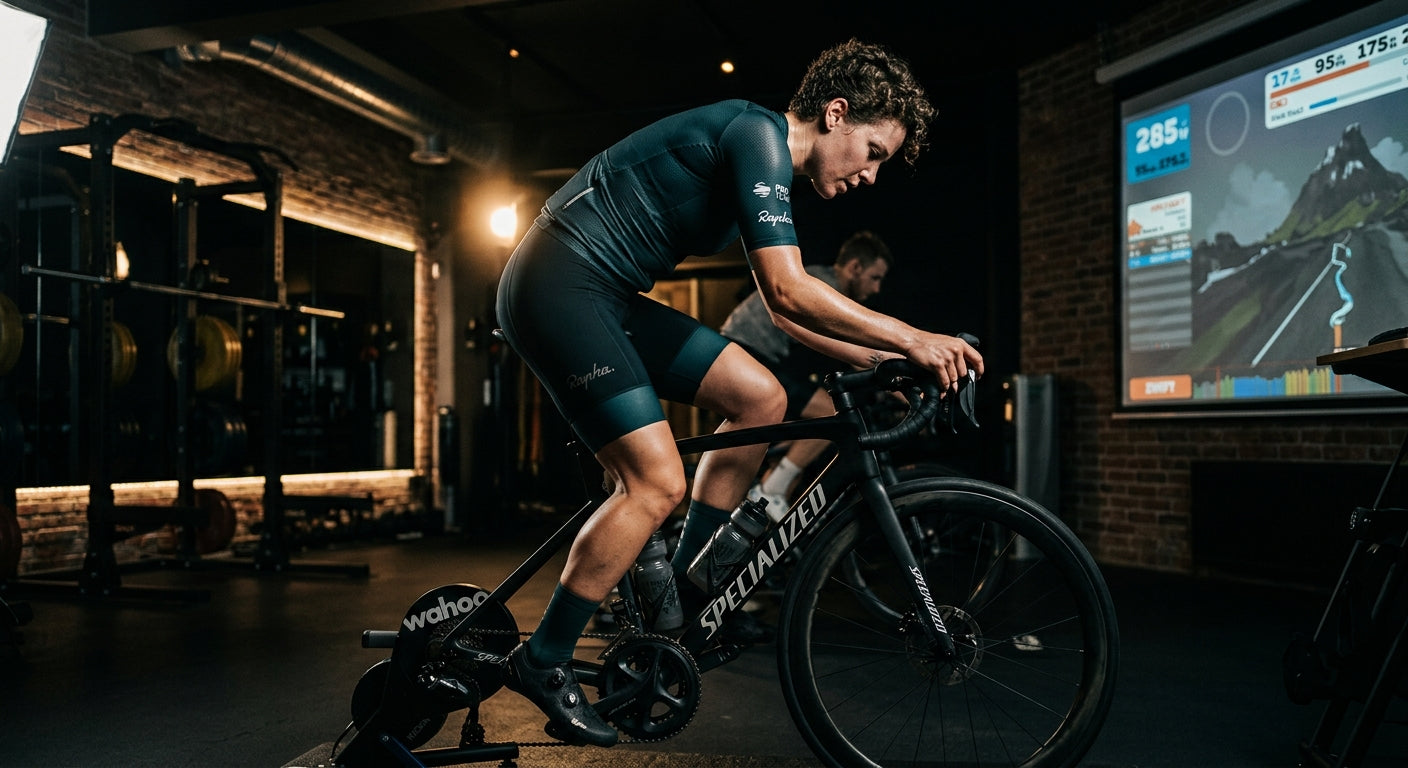
Modern smart trainers utilise high-grade steel and reinforced polymers to achieve structural integrity. The integration of electromagnetic resistance units allows for precise wattage replication, shifting away from fluid-based systems to provide a more consistent resistance curve that mimics real-world inertia.
Physical Dimensions and Weight
High-end trainers typically weigh between 15kg and 22kg to ensure stability during high-torque sprints. The footprint is designed to provide a wide base, reducing the risk of 'frame flex' that can occur when riders apply significant force during out-of-the-saddle efforts.
Engineering Evolution
Compared to previous generations, current smart trainers feature improved flywheel mass simulations. By increasing the effective inertia, engineers have successfully reduced the 'dead spot' in the pedal stroke, allowing for a more fluid transition between power phases. This engineering shift directly assists in bridging the gap between indoor sensation and outdoor reality.
Ultimately, by managing your thermal environment, maintaining your equipment, and utilising purpose-built apparel like the Sundried range, you can minimise the power gap. Recognising that indoor and outdoor cycling are distinct, though related, modalities will lead to more precise training and improved performance across all terrain.


