

Crank Length Mechanics: How Shorter Cranks Improve Aerodynamics and Hip Angles


Trying to beat your local Strava segment goals?
Fine-tune your training strategies to hit your target stats without downloading another app. Try asking Raye: 'How can I structure hill repeats to build short-segment power?' Ask how to hit your target
Understanding the biomechanical shift
The cycling industry has historically favoured longer crank arms, rooted in the belief that increased leverage equates to greater power output. However, contemporary biomechanical research is challenging this paradigm. For many cyclists, the transition from standard 172.5mm cranks to 165mm alternatives is not merely a preference; it is a fundamental adjustment to human kinematics that prioritises efficiency and aerodynamic refinement.
When a rider adopts an aggressive aerodynamic tuck, the hip angle becomes a critical limiting factor. A longer crank arm forces the knee to travel higher towards the torso at the top of the pedal stroke. This acute angle can lead to hip impingement and restricted breathing, both of which degrade sustainable power. By reducing the crank length, we effectively lower the top of the pedal arc, allowing for a more open hip angle and a more stable, aero-optimised position.
How can I start out?
The journey to shorter cranks begins with a professional dynamic bike fit. You cannot simply swap components without assessing your current range of motion and flexibility. A qualified fitter will utilise motion capture technology to measure your knee flexion at the top of the stroke and your hip angle at maximum extension. If your data indicates that your hip is 'closing' too tightly, you are a prime candidate for a reduction in crank length.
Once the decision is made, start by choosing a high-quality crankset that maintains structural rigidity. It is essential to ensure that your bottom bracket interface is compatible with the new unit. After installation, you must adjust your saddle height. Because the crank is shorter, you will need to raise your saddle by the exact difference in crank length to maintain your optimal leg extension at the bottom of the pedal stroke.
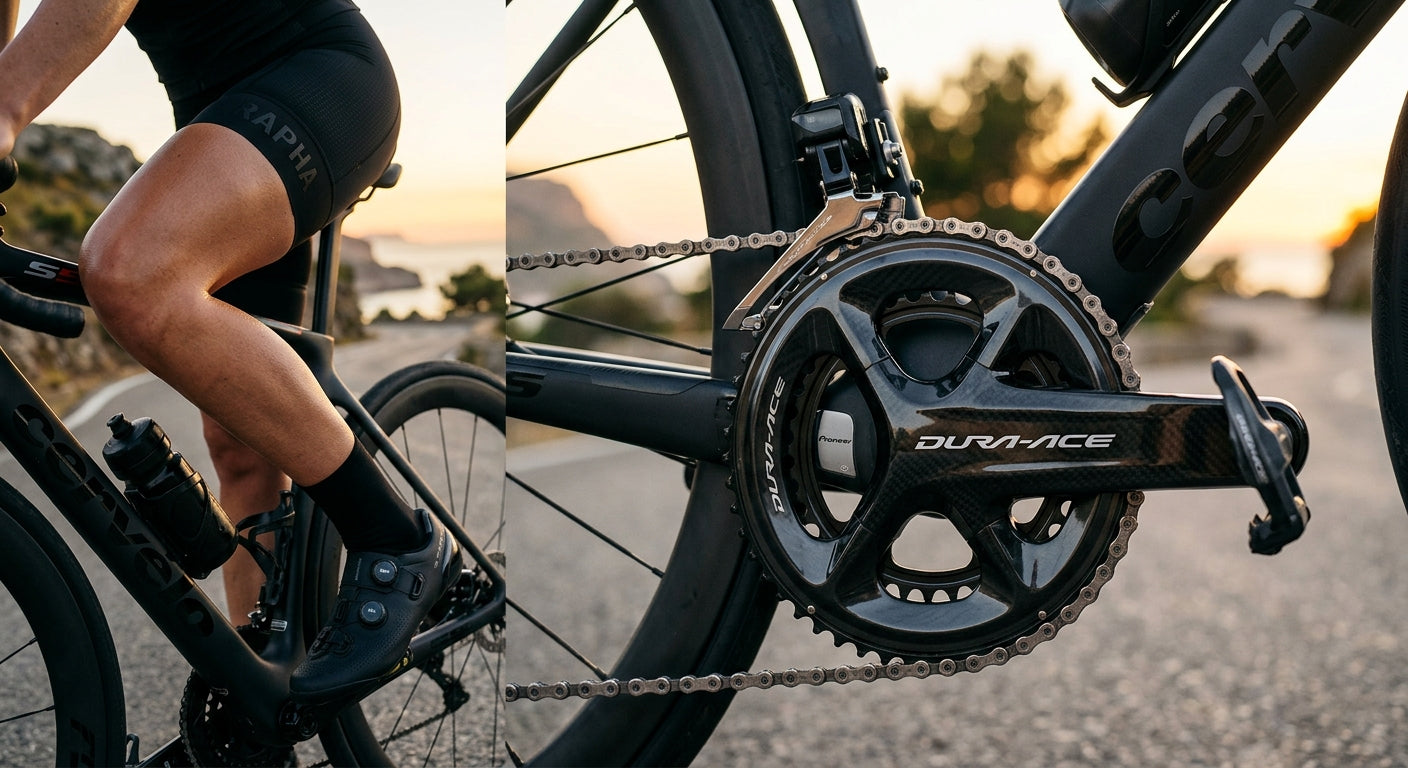
Finally, perform a series of power-based intervals to recalibrate your neuromuscular coordination. Your cadence may naturally increase due to the smaller diameter of the pedal circle. Embrace this change; higher cadences are generally more efficient for the cardiovascular system, reducing the reliance on high-torque, muscle-fatiguing efforts.
Tips for Improving
To maximise the benefits of your new crank setup, you must ensure that your kit does not impede your movement. Wearing restricted or poorly fitting clothing can negate the gains made by opening your hip angle. Sundried premium cycling apparel is engineered with high-stretch fabrics that accommodate the increased range of motion required for a deep aero tuck, ensuring that your muscles are supported without creating unnecessary friction or pressure points.

Hit a wall with form, pacing, or fatigue?
Skip searching forums. Chat directly on this page with our performance coach to solve training issues in seconds: 'How do I prevent side stitches on long runs?' Troubleshoot your run
Pay close attention to your cleat position as well. A shorter crank often allows for a more forward cleat placement if desired, though this should be done in conjunction with your fitter. The goal is to ensure that the force application remains smooth through the entire rotation. Practise 'spinning' drills to smooth out the transition at the top and bottom of the stroke, as the change in leverage will initially feel different to your nervous system.
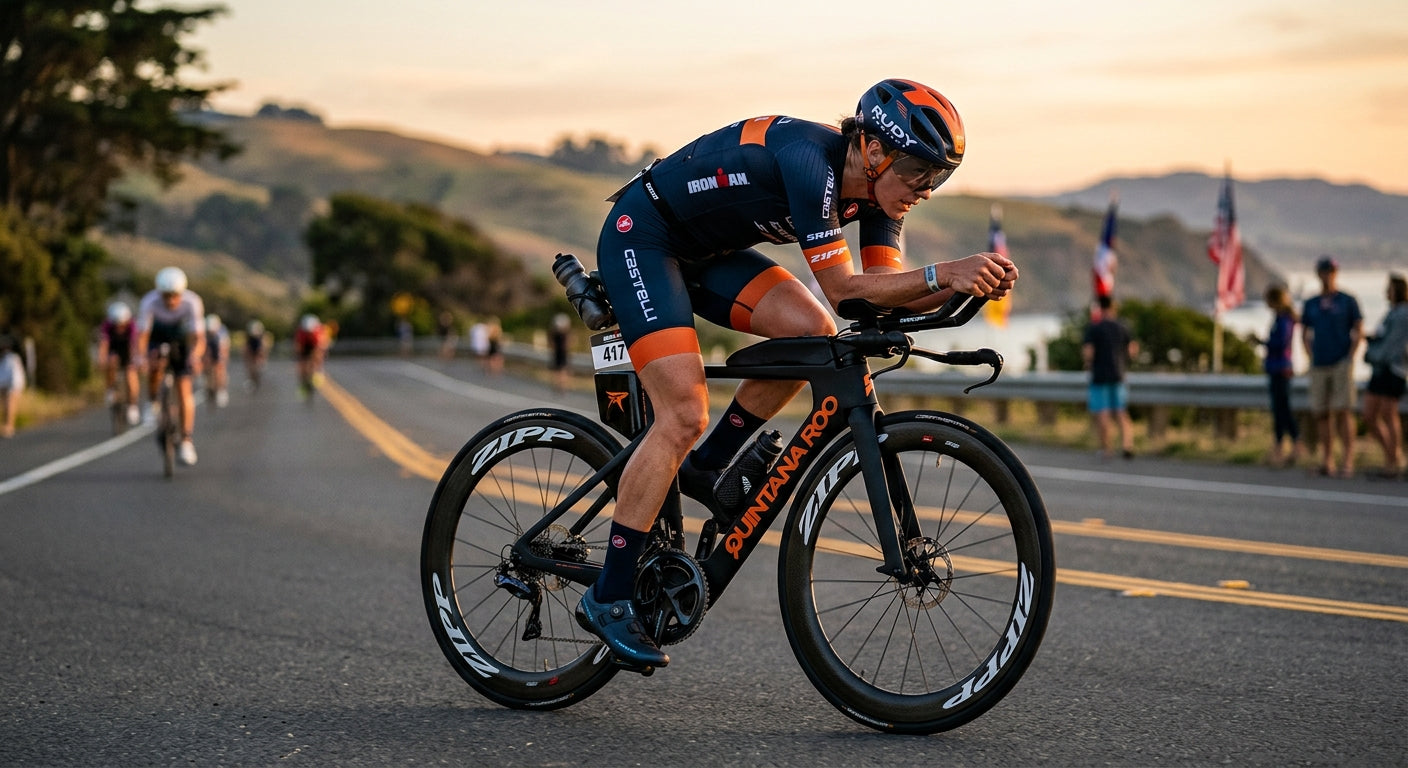
Consistency is key. Do not expect to find your perfect rhythm in a single ride. Dedicate several weeks to training in your new position, focusing on maintaining a flat back and a neutral spine. As you become accustomed to the reduced knee flexion, you will find it significantly easier to sustain a lower, more aerodynamic posture for longer durations, directly translating to higher speeds on the road.
Special Features & Technical Specifications
Material Composition and Weight
Modern short-crank designs, such as those in the 165mm range, utilise high-modulus carbon fibre layups to ensure maximum power transfer. By reducing the length, engineers have successfully decreased the total weight of the crankset by approximately 15 to 25 grams compared to 172.5mm counterparts, while simultaneously increasing lateral stiffness to prevent power loss during high-wattage sprints.
Engineering and Geometry
The reduction in crank length alters the 'Q-factor' and pedal arc diameter. By shortening the lever arm, the rider experiences a 4% to 6% reduction in the maximum knee flexion angle. This engineering shift is designed to mitigate the 'dead spot' in the pedal stroke, allowing for a more fluid transition over the top-dead-centre position. These changes are critical for triathletes who must maintain a high-intensity output while preparing their legs for the subsequent run.


