

Altitude Training at Home: Hypoxic Masks vs Hypoxic Tents Realities


Planning your next fitness milestone?
Get immediate guidance on pacing, workout structure, or race prep directly on-site for free. Try asking Raye: 'Can you outline a simple 4-week build plan for a 10K?' Get instant guidance
Understanding the Hypoxic Landscape
For the modern endurance athlete, the quest for marginal gains has shifted from mere mileage to the manipulation of internal physiology. The integration of altitude training into a home-based routine is no longer a fringe practice; it is a calculated engineering of blood chemistry. Whether you are an ultra-marathoner or a competitive cyclist, the allure of boosting erythropoietin (EPO) production while remaining in your own home is compelling.
The debate between hypoxic masks—often termed respiratory muscle trainers—and hypoxic tents—which simulate the live-high, train-low (LHTL) protocol—remains one of the most misunderstood topics in sports science. While both promise increased aerobic capacity, their mechanisms of action are fundamentally distinct, requiring a granular understanding of how oxygen partial pressure affects the human body.
How can I start out?
To begin your journey into simulated altitude, you must first establish a baseline. Before investing in expensive hardware, consult with a sports physiologist to determine your current VO2 max and haemoglobin mass. Starting your training requires a systematic approach; you cannot simply jump into a hypoxic environment without risking excessive physiological stress or systemic fatigue.
If you opt for a hypoxic tent, the process is one of passive acclimatisation. You spend your sleeping hours in a controlled, low-oxygen environment, forcing your body to adapt to the reduced partial pressure of oxygen. This mirrors the gold standard of altitude training used by elite distance runners, allowing you to recover at home while still reaping the haematological benefits of high-altitude exposure.
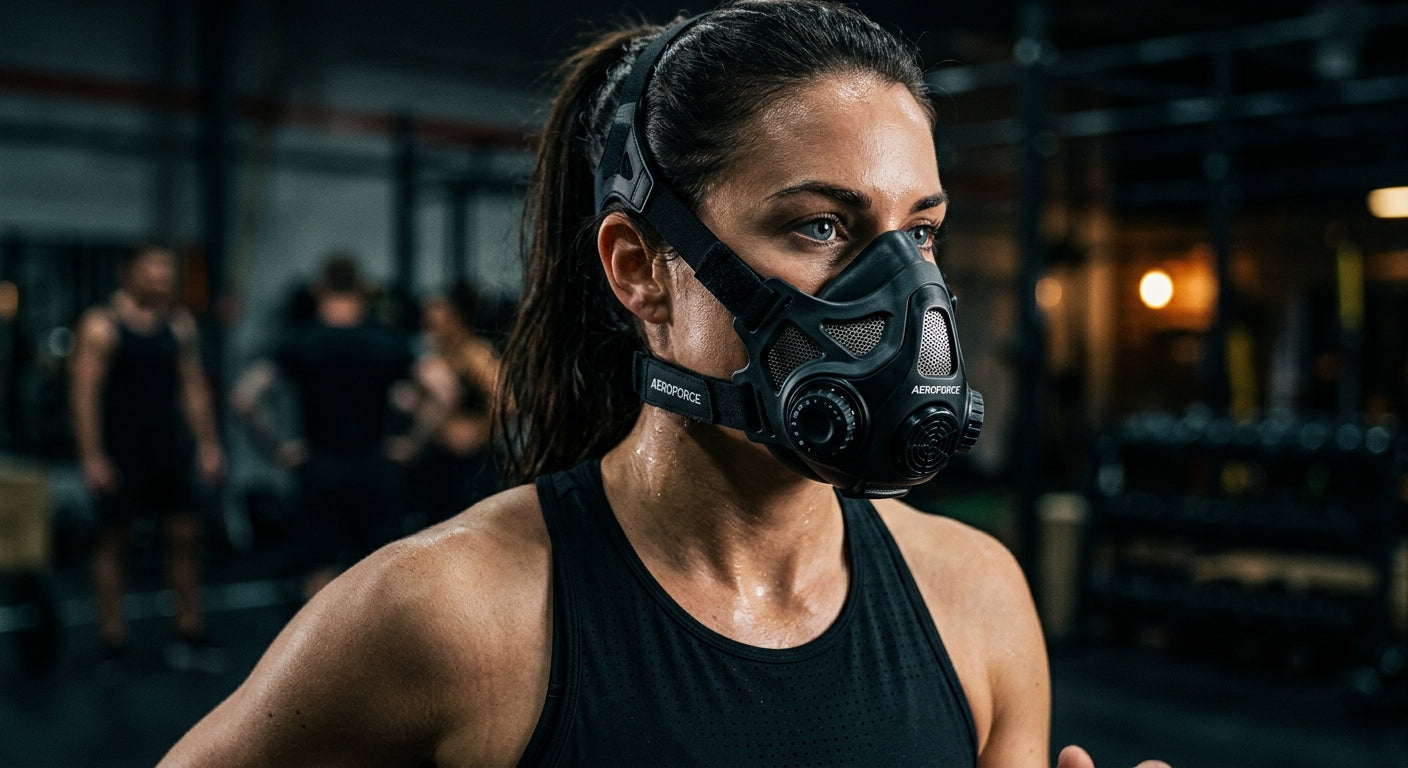
Conversely, a hypoxic mask provides a different stimulus. By restricting airflow during high-intensity sessions, you are effectively training your respiratory muscles and forcing your body to manage a higher concentration of carbon dioxide. While this does not necessarily increase your red blood cell count in the same way a tent does, it improves your tolerance to the metabolic by-products of intense exertion, which is vital for late-race surges.
Tips for Improving
Consistency is the primary architect of physiological change. When using a hypoxic tent, ensure your sleep hygiene is impeccable. If the environment is too warm or the oxygen concentration fluctuates, your cortisol levels may spike, negating the recovery benefits of the altitude exposure. Always ensure your environment is ventilated according to the manufacturer’s precise specifications.

Looking to shave time off your personal best?
Get immediate pacing strategies and interval workout ideas directly on-site for free. Try asking Raye: 'What is the best threshold session to help drop my 10K time?' Get instant pacing tips
For those utilising masks, the focus should be on technique and intensity management. Do not attempt to replicate your standard threshold workouts at the same intensity while masked. Your power output will inevitably drop; prioritise maintaining your heart rate zones and perceived exertion levels rather than fixating on pace. This is where high-quality apparel, such as Sundried’s technical running wear, becomes essential. Their moisture-wicking base layers ensure that as your body temperature rises under the intensity of restricted breathing, you remain dry and thermoregulated.
Monitor your performance data with clinical precision. Track your resting heart rate and heart rate variability (HRV) daily. If these markers indicate a downward trend in recovery, reduce the intensity of your hypoxic sessions immediately. The goal is to stimulate adaptation, not to induce overtraining syndrome.
Special Features & Technical Specifications
Material Composition and Engineering
Modern hypoxic tents utilise high-tenacity, airtight nylon fabrics coated in polyurethane to ensure minimal gas exchange with the ambient environment. This creates a hermetically sealed microclimate. The air filtration systems have been upgraded from previous generations, now featuring HEPA-grade purification to ensure that as oxygen levels are lowered, air quality remains optimal for respiratory health.

Physical Dimensions and Weight
Standard residential hypoxic tent systems typically measure 200cm by 150cm, designed to fit over existing mattress frameworks. The generator units weigh approximately 18kg and operate with a noise output of less than 45 decibels, a significant reduction from the 60-decibel units common five years ago. This engineering shift allows for seamless integration into a bedroom environment without compromising sleep quality.
Evolutionary Changes
Compared to previous iterations, current sensor arrays are more sensitive to fluctuations in barometric pressure. The integration of real-time oxygen monitoring via smartphone applications allows users to adjust altitude settings in increments of 50 metres, providing a more precise and safer training gradient than the rudimentary mechanical dials of the past.
Ultimately, whether you choose the passive, long-term haematological benefits of a tent or the acute respiratory conditioning of a mask, success lies in the synthesis of technology and disciplined training. Pair these interventions with the right apparel, and you create an environment where the body is pushed to its absolute limits, ensuring that when race day arrives, you are operating at the peak of human performance.


