

4-Week FTP Booster: Indoor Cycling Interval Plan


Dealing with a nagging injury or tightness?
Get instant recovery guidance, stretching protocols, and rest advice right now without leaving the site. Try asking Raye: 'What are the best stretches to relieve tight calves after a long run?' Get recovery advice
The quest for a higher Functional Threshold Power (FTP) remains the ultimate objective for every dedicated cyclist aiming to dominate the local club run or excel in competitive racing. Achieving a significant increase in your sustainable power output is not merely a matter of riding more; it demands a surgical approach to high-intensity interval training. Over the next four weeks, we will dissect the physiological pathways required to elevate your threshold, ensuring your aerobic engine operates with newfound efficiency.
To begin this transformation, you must first establish your current baseline. A standardised 20-minute field test is the industry benchmark for determining your FTP. Ensure you are well-rested, carry out a thorough warm-up, and execute the effort with total commitment. This data point will serve as the mathematical foundation for every interval session in this programme, allowing you to train within precise power zones that trigger adaptation without inducing burnout.
How can I start out?
Initiating your 4-week cycle begins with selecting the right ecosystem. Whether you utilise Zwift for its gamified competitive environment or prefer the immersive, real-world video routes offered by Rouvy, the integration of a smart trainer is non-negotiable. Modern smart trainers provide the ERG mode functionality necessary to lock your resistance to specific wattage targets, eliminating the margin for error during gruelling efforts.
The first week focuses on acclimatisation to high-intensity loads. You should prioritise two primary interval sessions per week, complemented by consistent endurance riding. Start by incorporating 'Sweet Spot' intervals—efforts held at 88% to 94% of your FTP. These sessions are specifically engineered to maximise physiological stress while allowing for faster recovery compared to maximal efforts.
As you progress into the second and third weeks, the intensity must ramp up. Introduce 'VO2 Max' blocks, where you push beyond 115% of your FTP for short, sharp bursts. These sessions force your heart and lungs to operate at their absolute limit, effectively raising the ceiling of your aerobic capacity. The goal here is to maintain form even as fatigue sets in, ensuring your pedalling mechanics remain fluid under pressure.
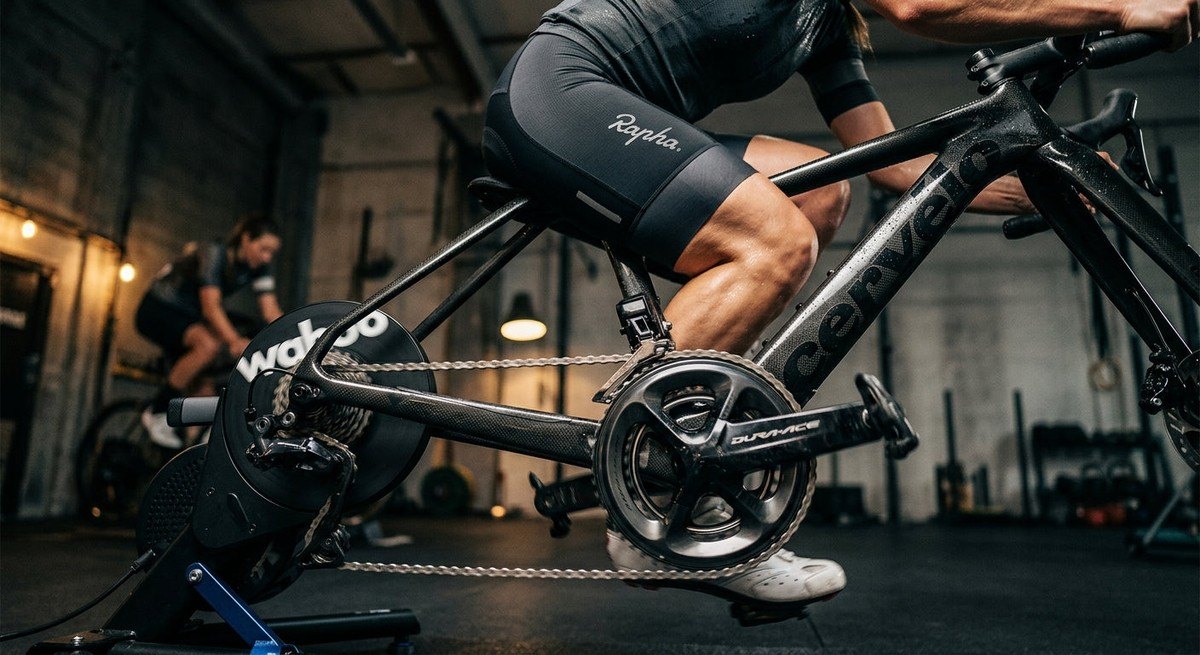
Recovery is the silent engine of your progress. During this 4-week block, treat your rest days with the same level of discipline as your interval sessions. Nutrition must be optimised to include sufficient carbohydrate replenishment and protein for muscle tissue repair. Ignoring the recovery phase will only lead to diminishing returns and potential overtraining syndrome, which can derail your progress entirely.

Have a quick training or recovery question?
Get fast expert advice right here on the page—no sign-up, account, or app needed. Try asking Raye: 'What's the best way to relieve tight calves after a run?' Ask a question now
Tips for Improving
Refining your technique is just as crucial as the raw wattage you produce. Focus on your cadence during interval work; maintaining a higher cadence—typically between 90 and 100 RPM—reduces the muscular load on your legs and shifts the burden towards your cardiovascular system. This strategy is essential for sustaining power during long climbs or extended breakaways.
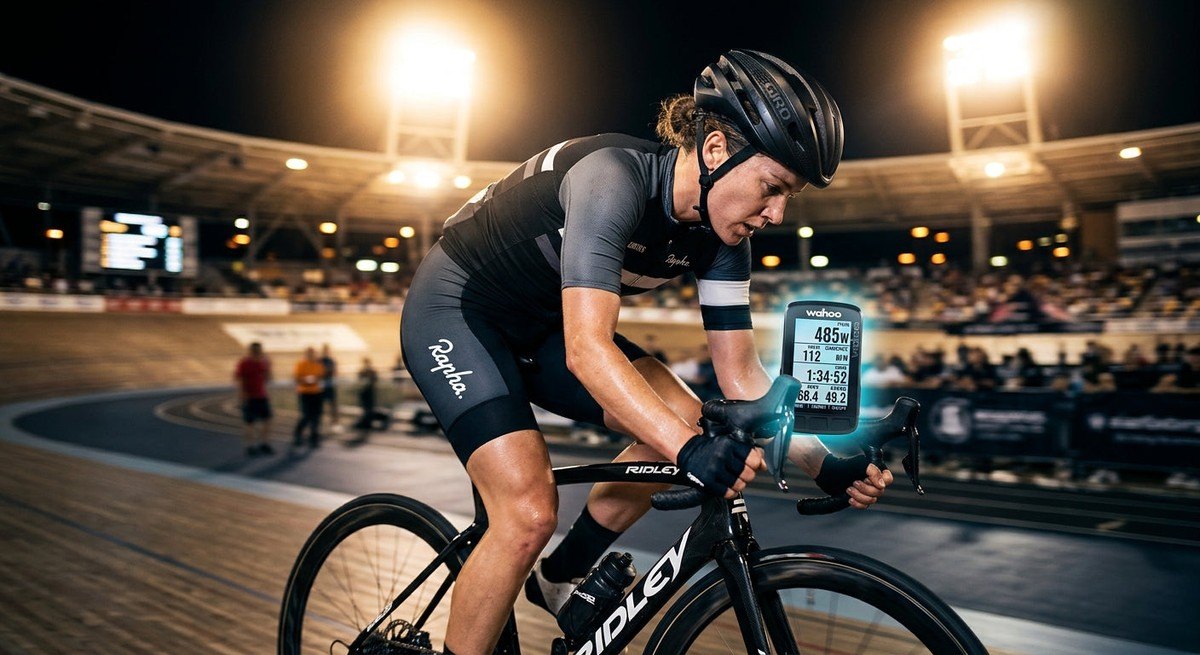
Data analysis is your greatest asset. After every session, upload your metrics to a platform like TrainingPeaks or Strava to monitor your heart rate response to the power outputs. If you observe that your heart rate is consistently lower for the same power output over the four weeks, you have objectively improved your aerobic efficiency. Use these insights to adjust your zones if necessary.
Do not underestimate the power of mental fortitude. Indoor training lacks the external stimuli of the road, which can make the final minutes of a difficult interval feel like an eternity. Use digital training platforms to compete against your own 'ghost' or other riders to maintain focus. The psychological hurdle of holding a target wattage is often the final barrier to achieving a new FTP personal best.
Special Features & Technical Specifications
Material Composition and Engineering
The latest generation of smart trainers utilises high-grade, reinforced steel frames designed to withstand the violent lateral forces generated during high-wattage sprinting. The core drive unit features a larger, precision-balanced flywheel, which provides a significantly more realistic road feel and higher inertial load compared to previous entry-level models.
Physical Dimensions and Weight
Engineered for stability, these units typically weigh between 15kg and 22kg. The wide-stance leg design ensures zero slippage, even when output exceeds 2000 watts. The compact, foldable design ensures that even those with limited space can store their hardware effectively, prioritising a minimalist footprint without compromising on structural integrity.
Generational Advancements
Compared to previous iterations, current smart trainers have seen a 30% improvement in power accuracy, now consistently within +/- 1% error margins. Furthermore, electromagnetic resistance motors have been upgraded to offer near-instantaneous transitions between gradient changes, ensuring that your interval training remains precise and uninterrupted by mechanical lag.
By the conclusion of this 4-week block, you should be ready to re-test your FTP. Approach the final test with the same intensity as the first, and you will likely find that your sustainable power output has shifted upwards. Maintain this momentum, keep your hardware calibrated, and continue to challenge your physiological limits to ensure your cycling performance remains on an upward trajectory.


