

T1 and T2 Explained: How to Master Triathlon Transitions


Want to build strength to support your running?
Get targeted strength routines and mobility exercises designed specifically for runners directly on-site. Try asking Raye: 'What are 3 key gym exercises to improve running economy?' Get strength tips
The Fourth Discipline
If you have ever stood shivering at the edge of a lake or watched the clock tick away while fumbling with your laces, you know that transitions are effectively the fourth discipline of triathlon. Many athletes spend hundreds of hours on the turbo trainer or grinding out kilometres on the road, yet they leave minutes on the table simply because they treat T1 and T2 as a casual break rather than a tactical component of the race. Mastering these moments isn't about being frantic; it is about being methodical, calm, and incredibly efficient.
Think of your transition as a pit stop in Formula 1. Every movement should have a purpose, and every piece of kit should be placed with precision. By refining your routine, you can shave significant time off your overall result without having to add an extra watt of power to your legs. It is the ultimate 'free speed' that every triathlete should prioritise.
Step by Step Starting Out
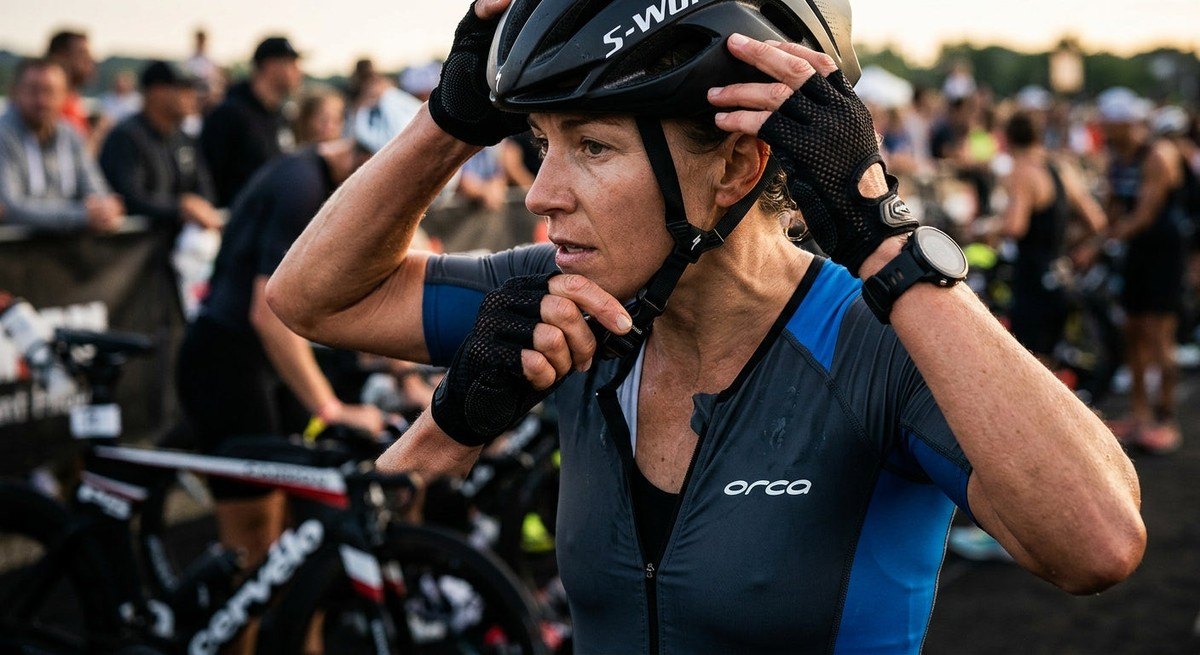
Let us break down T1, the transition from swim to bike. The goal here is to get from the water to the mount line without losing your rhythm. As you exit the water, unzip your wetsuit to your waist immediately. Don't wait until you reach your bike. Once at your rack, slide the suit down, kick it off, and focus on your helmet. The helmet must be clipped before you touch your bike; it is a non-negotiable rule that keeps you safe and penalty-free.
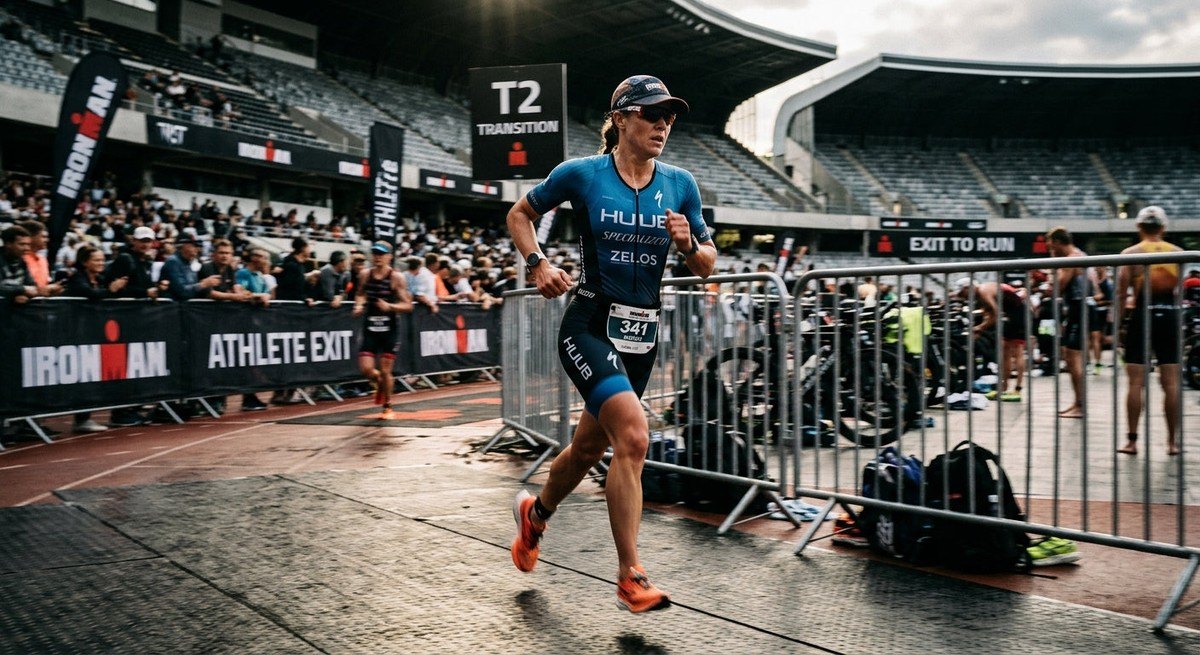
For T2, the transition from bike to run, the focus shifts to comfort and speed. As you approach the mount line, get your feet out of your shoes while still pedalling. This allows you to slide off the bike and run in your socks or barefoot. Once at your rack, rack the bike, swap the helmet for a cap or visor, and slip into your run shoes. If you are using elastic laces, this should be a seamless, two-second movement.
Essential Kit
To master these transitions, your kit needs to be set up for success. First, invest in a pair of high-quality elastic laces for your trainers. They allow you to slip into your shoes instantly without the hassle of tying knots. Secondly, a race belt is essential; it allows you to clip your race number on quickly rather than using safety pins on your trisuit, which can damage the fabric and waste precious seconds.
You should also consider a dedicated transition bag that keeps your gear organised. Having a specific spot for your wetsuit, goggles, and nutrition ensures you don't panic when the adrenaline is pumping. Keep your sunglasses on your helmet or bike handlebars so you aren't searching for them while trying to find your rack. Everything should have a 'home' in your transition area.

Have a specific performance goal in mind?
Get direct feedback on your training targets right here on the page—no sign-up or account required. Try asking Raye: 'How should I adjust my weekly mileage for a sub-20 minute 5K?' Ask about your goals
How to Build this into my life
The only way to get fast at transitions is to practise them in your training sessions. You don't need a full race setup to do this; just create a 'transition corner' in your garden or garage. Lay out your bike, helmet, and shoes, and set a timer. Repeat the process of putting on your helmet and shoes until the movements become muscle memory. When the brain is tired from a hard swim, your body should already know exactly what to do.
Visualisation is another powerful tool. Before you go to sleep, run through the transition in your mind. Picture yourself exiting the water, finding your rack, and executing each step. This mental rehearsal reduces anxiety on race day and ensures you remain calm under pressure. Remember, a calm athlete is a fast athlete. If you rush, you make mistakes, and mistakes lead to penalties or lost items.
Finally, always do a 'pre-flight' check before the race starts. Walk through the transition area from the swim exit and the bike entry points. Find landmarks—a specific tree, a banner, or a numbered post—to help you locate your spot quickly. Never rely on just looking for your bike, as bikes can look identical in a crowded rack. A bit of preparation goes a long way.
10 alternative items to try
- Speed Laces: These are specifically designed for triathletes to ensure a snug fit without the need for manual tying. They provide consistent tension across the bridge of the foot, which is crucial during the run segment when your feet might swell slightly. They are a staple for anyone looking to save time.
- Anti-Chafe Balm: Applying a high-quality anti-chafe balm to your neck, underarms, and feet before the swim can significantly speed up your wetsuit removal. It reduces friction, allowing the neoprene to glide over your skin much faster. It is a simple, inexpensive addition that prevents painful sores and saves vital seconds in T1.
- Transition Mat: A small, brightly coloured mat helps you identify your transition spot instantly in a crowded rack area. It also provides a clean, dry surface for your feet while you are changing, which is particularly useful on muddy or wet grass. It keeps your gear organised and makes the entire process feel more professional.
- Aero Helmet: While mainly for aerodynamics, an aero helmet with a magnetic buckle can be faster to secure than a traditional buckle. Every second counts, and the ease of clicking a magnetic strap while you are breathing hard after a swim is a noticeable advantage for those chasing personal bests.
- Triathlon Race Belt: A race belt is an absolute necessity for any serious athlete. It allows you to quickly adjust your number from your back during the bike ride to your front during the run. It eliminates the need for pins and keeps your trisuit in perfect condition, ensuring you look the part.
- Nutrition Flasks: Instead of fumbling with gel packets during the bike leg, consider using a nutrition flask attached to your frame. It allows you to consume your fuel in a more controlled manner, reducing the risk of dropping sticky gels and making your transition area much cleaner and easier to manage throughout the day.
- Magnetic Shoe Closures: These closures offer a high-tech alternative to elastic laces. They snap together with a powerful magnet, ensuring your shoes remain secure throughout the entire run. They are incredibly durable and can be adjusted for tension, making them a fantastic investment for athletes who want both speed and maximum comfort during their race.
- Wetsuit Lubricant Spray: This is a specialised spray that makes your wetsuit slide off like butter. It is particularly effective for athletes who struggle with tight-fitting suits. By spraying it on your wrists and ankles, you can literally kick your suit off in a single motion, which is incredibly satisfying and efficient during high-stakes competitions.
- Numbered Transition Stickers: Sometimes the provided race numbers are difficult to see from a distance. Bringing your own large, waterproof stickers can help you spot your bike instantly. It removes the guesswork and stress of searching through rows of identical bicycles, allowing you to focus entirely on your physical performance and transition technique.
- Hydration Vest: For longer distance triathlons, a hydration vest can be more efficient than frame-mounted bottles. It allows you to drink while maintaining an aerodynamic position and can be quickly put on during T2. It ensures you stay hydrated throughout the run, which is essential for maintaining your pace and avoiding fatigue-related slowdowns.


