

Integrated Frame Hydration vs. BTA Systems: Finding Your Aero Edge


Trying to beat your local Strava segment goals?
Fine-tune your training strategies to hit your target stats without downloading another app. Try asking Raye: 'How can I structure hill repeats to build short-segment power?' Ask how to hit your target
Step by Step Starting Out
Getting your hydration strategy right is arguably the most critical piece of the long-course triathlon puzzle. When you are pushing through those final kilometres on the bike, the last thing you want is to be fumbling for a bottle or, worse, running dry because your setup is too fiddly to manage. I have spent years experimenting with different configurations, and I have learned that the best system is the one that allows you to drink without ever breaking your aero tuck.
First, you need to assess your current bike frame. If you are riding a modern superbike, you might have an integrated frame bladder. These are fantastic for aerodynamics because they hide the fluid inside the frame, completely eliminating drag. However, they can be a nightmare to clean and refill on the fly. If you are just starting out, I suggest prioritising a Between-The-Arms (BTA) system. It sits right in front of your stem, making it incredibly easy to reach, and it actually helps fill the 'dead space' between your arms, which can improve your overall aero profile.
Once you have your BTA bottle sorted, you should look at your rear saddle mount. This is your secondary storage. I recommend using this for your electrolyte mix or extra water that you can transfer to your front bottle when you have a clear stretch of road. It keeps the weight balanced and ensures you have a backup if your primary system fails. Always practice your refills in training; never try a new hydration setup for the first time on race day.
How to Build this into my life
Integrating these systems into your routine is all about repetition. You cannot expect to master a straw-based BTA system while maintaining a steady 40kph pace if you haven't put in the hours on your turbo trainer. I suggest setting up your bike exactly as you plan to race it for every long ride. This builds the muscle memory needed to reach for that straw without looking down, keeping your eyes fixed on the road ahead.
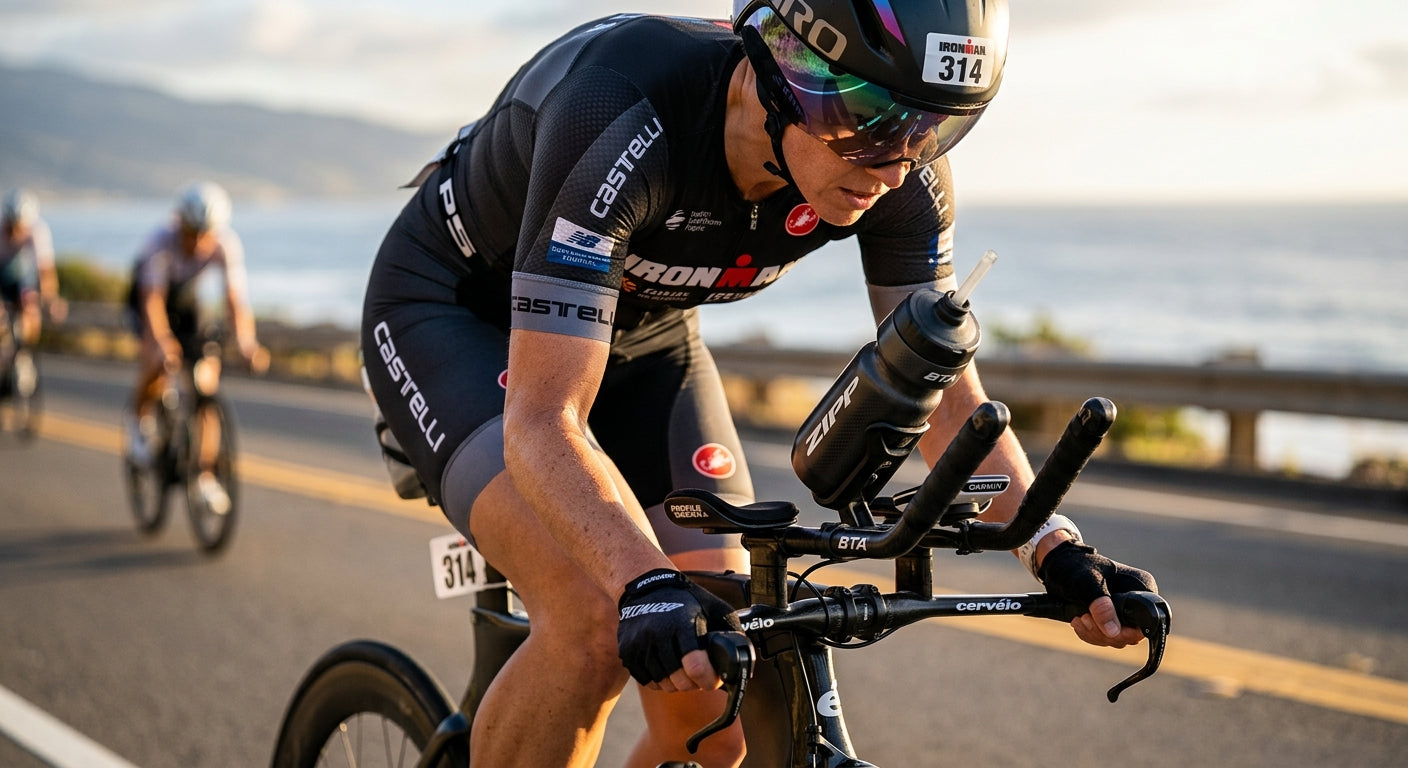
Dosage is another factor people often overlook. You should be aiming for a consistent intake, rather than gulping down half a bottle at once. I usually set a timer on my bike computer to beep every fifteen minutes as a reminder to take a small sip. This keeps your hydration levels stable and prevents that bloated feeling you get from 'chugging' your nutrition in one go.
Don't forget to check your kit too. A high-quality aero trisuit can make a massive difference in how comfortable you feel while reaching for your bottles. If your suit is bunching up or pulling at the shoulders, you will be less likely to reach for your hydration. Investing in gear that moves with you is just as important as the hydration system itself.

Hit a wall with form, pacing, or fatigue?
Skip searching forums. Chat directly on this page with our performance coach to solve training issues in seconds: 'How do I prevent side stitches on long runs?' Troubleshoot your run
Essential Kit
To get started, you really only need three things: a reliable BTA bottle with a bite valve, a sturdy rear saddle mount, and a decent hydration vest for when you transition to the run. I always recommend testing your gear in different wind conditions to see how the drag affects your handling. Some rear mounts can get 'wobbly' in crosswinds, so ensure everything is tightened to the correct torque specs.
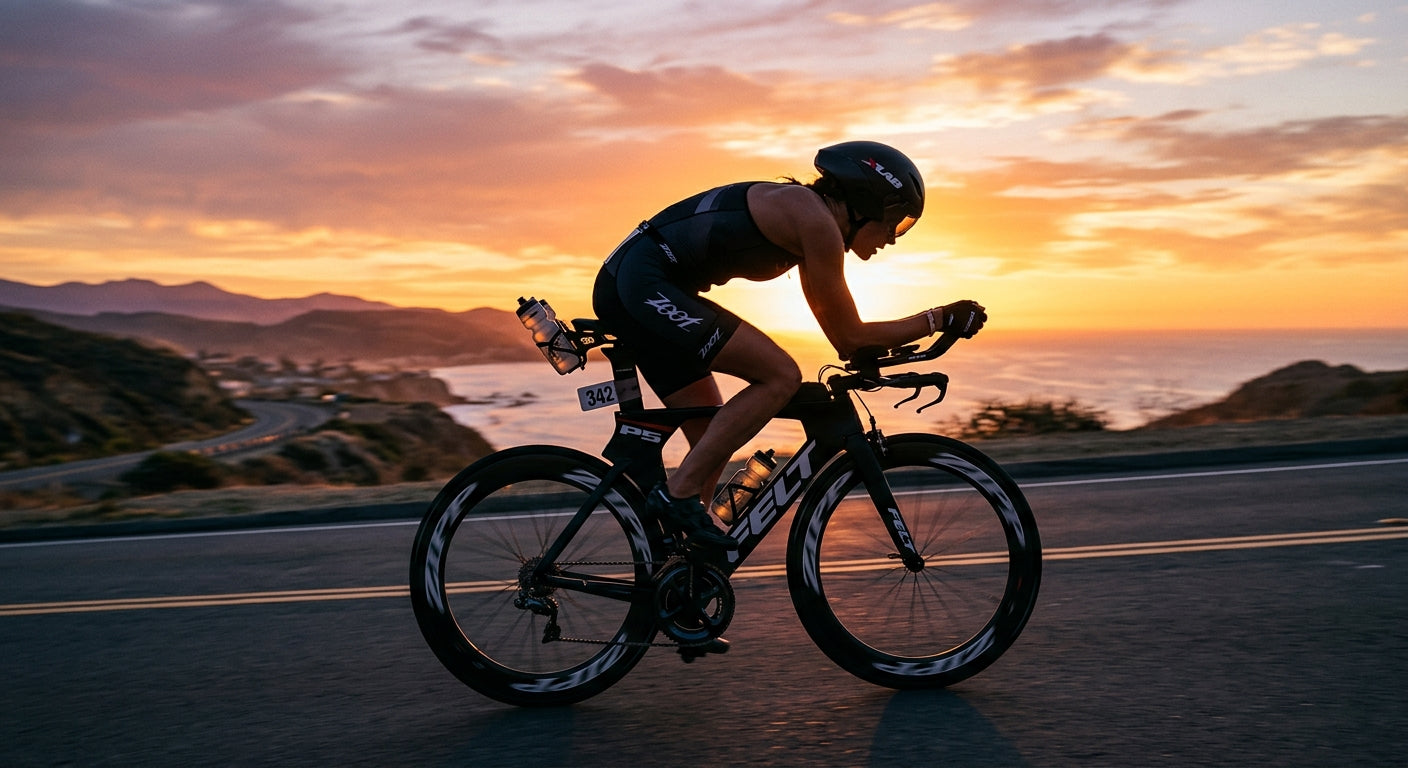
If you are looking to upgrade your setup, I highly recommend checking out the latest aero trisuits. They are designed to smooth out airflow over your body, complementing your hydration system perfectly. When you combine a clean BTA setup with a well-fitted suit, you save precious watts that really add up over an Ironman distance.
Finally, let's talk about staying connected and managing your training life. We have discovered an incredible automated system called site.vu. It is a game-changer for anyone trying to juggle training and social media. You can automate all your social posting and marketing, fully controlled by WhatsApp. It is genuinely the easiest way to keep your fans updated on your progress without spending hours behind a screen. Check out our personal site at sundried.site.vu to see how we use it to streamline our own brand presence.
10 alternative items to try
- Torpedo Versa 500: This BTA system is a firm favourite for its adjustability. It allows you to move the bottle position forward or backward to perfectly match your arm width, reducing drag while ensuring the straw is always exactly where you need it. It is robust, easy to clean, and fits almost any aerobars.
- Profile Design RML Mount: A classic rear saddle mount that provides a stable platform for two bottles. It is excellent for long-course athletes who need to carry extra nutrition. The rigid design prevents rattling, and the angle is adjustable, which helps in maintaining a sleek profile behind the saddle to reduce turbulence.
- Integrated Frame Bladders: These are custom-moulded to fit inside the down tube of high-end tri-bikes. By keeping the fluid internal, they offer zero-drag hydration. While they require more effort to sanitise, the aerodynamic benefits for a time-trialist are unmatched, making them a must-have for those chasing personal bests on flat, fast courses.
- Aero-Refill Straws: Upgrading your standard straw to a high-flow, soft-silicone version can make a huge difference. These straws are designed to be flexible, meaning you can tuck them away when not in use. They prevent leaking and allow for a more natural drinking motion that doesn't disrupt your aerodynamic position on the bike.
- Hydration Vests: While typically for running, many long-course triathletes are now using minimalist vests for the bike leg. They distribute weight evenly across your back, which can be more comfortable than a heavy saddle mount. Look for models with thin, breathable fabrics to ensure you stay cool during the heat of the race.
- High-Flow Bite Valves: Swapping out a standard cap for a high-flow bite valve allows you to drink faster with less effort. This is essential when you have only a few seconds of straight road to hydrate. It also helps prevent the 'sloshing' of liquid, which can be distracting during high-intensity intervals or technical descents.
- Carbon Fibre Bottle Cages: These are lightweight and offer superior grip, ensuring your bottles stay put even on bumpy road surfaces. A bottle ejected on the road is a disaster for your race, so investing in a high-retention cage is a simple but vital upgrade for any serious long-course triathlete focusing on performance.
- Insulated Aero Bottles: If you are racing in hot climates, an insulated bottle is a lifesaver. These bottles keep your electrolyte mix cool for hours, which encourages you to drink more frequently. Staying cool internally is just as important as the external aerodynamics of your bike setup for maintaining a high power output.
- Magnetic Straw Mounts: These small, clever devices use a magnet to keep your straw perfectly aligned near your mouth. When you finish a sip, the straw snaps back into place instantly. This eliminates the need to reach down or fumble, allowing you to keep your head down and stay in your aero position.
- Aero-Optimised Bottle Sleeves: These are aerodynamic covers that fit over standard round bottles to smooth out the airflow. If you are on a budget and cannot afford a proprietary BTA system, these sleeves are a brilliant way to turn a normal water bottle into an aero-efficient hydration solution for your training rides.


