

Powering the Impossible: The Best Wearables for Ultra-Endurance Performance


Need performance advice right now?
Ask our on-site coach anything about your routines. It's completely free and available immediately right here: 'What are 3 quick exercises for ankle mobility?' Ask Raye for free
What are the press saying?
The endurance community is currently undergoing a paradigm shift. Leading sports technology journals have recently praised the move away from daily charging cycles, noting that the latest generation of ultra-endurance wearables has finally bridged the gap between daily smart functions and multi-day expedition reliability. Critics highlight that while weight remains a primary concern for the minimalist athlete, the integration of solar-harvesting lenses and highly efficient GNSS chipsets has rendered the traditional power bank optional for races under 50 miles.
However, industry analysts remain cautious regarding the trade-offs between processing power and battery longevity. While the raw data suggests that battery life has doubled in the last three years, some reviewers argue that the increased frequency of heart-rate sampling and constant blood-oxygen monitoring during high-altitude events still drains the reserves faster than the manufacturer specifications suggest, especially in extreme cold.
Comfort & Fit
For the ultra-athlete, a watch that feels like a burden after twenty hours is a failure. The current market leaders prioritise lightweight, hypoallergenic silicone or nylon-weave straps that minimise skin irritation during long, sweat-soaked efforts. The centre of gravity is a critical design element; the best devices sit flush against the wrist to prevent the 'pendulum effect' that can lead to chafing and inaccurate sensor readings.
We have observed that the most successful designs utilise a low-profile chassis that avoids snagging on technical gear. When testing these units for over 24 hours, the weight distribution across the wrist becomes as important as the weight of the unit itself. A balanced, lightweight frame ensures that the wearer maintains their natural gait without being distracted by a cumbersome device.
Features to Look out For
When selecting a device for ultra-events, the GNSS sampling rate is the most critical variable. High-frequency tracking is vital for technical trails, but it is the primary culprit for battery depletion. Look for watches that offer an 'Ultra-Trac' or 'Expedition' mode, which intelligently lowers the sampling rate without sacrificing the integrity of your route data.
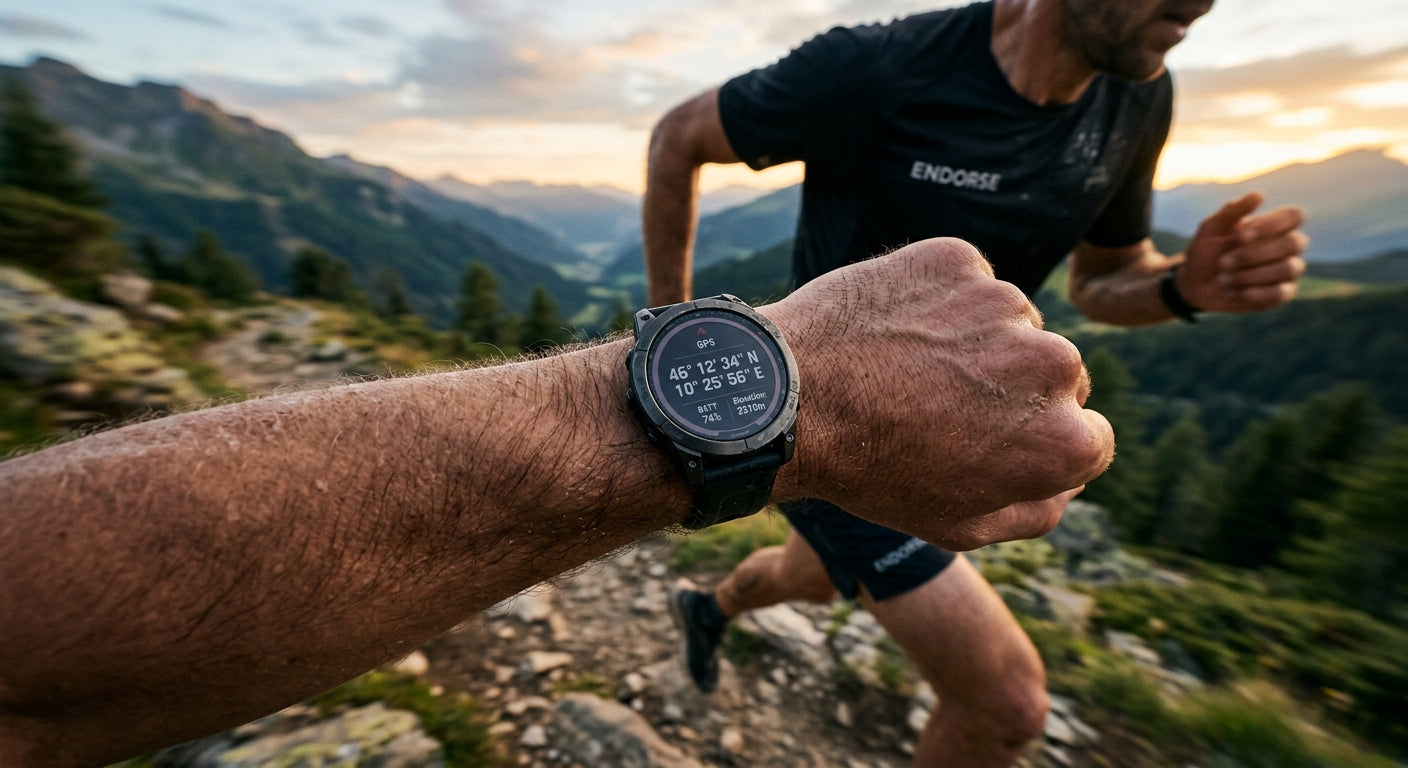
Furthermore, external solar passthrough charging has emerged as a game-changer. The ability to attach a compact power bank to your hydration pack while maintaining a waterproof connection allows for indefinite run times. Prioritise devices that support 'charge-on-the-go' capabilities without forcing the watch to restart or lose its current activity tracking session.

Need a clear race fuelling strategy?
Get instant, practical advice on hydration and race-day nutrition directly on this page for free. Try asking Raye: 'How many grams of carbs should I take per hour during a half marathon?' Ask for fuelling advice
Evolution and History
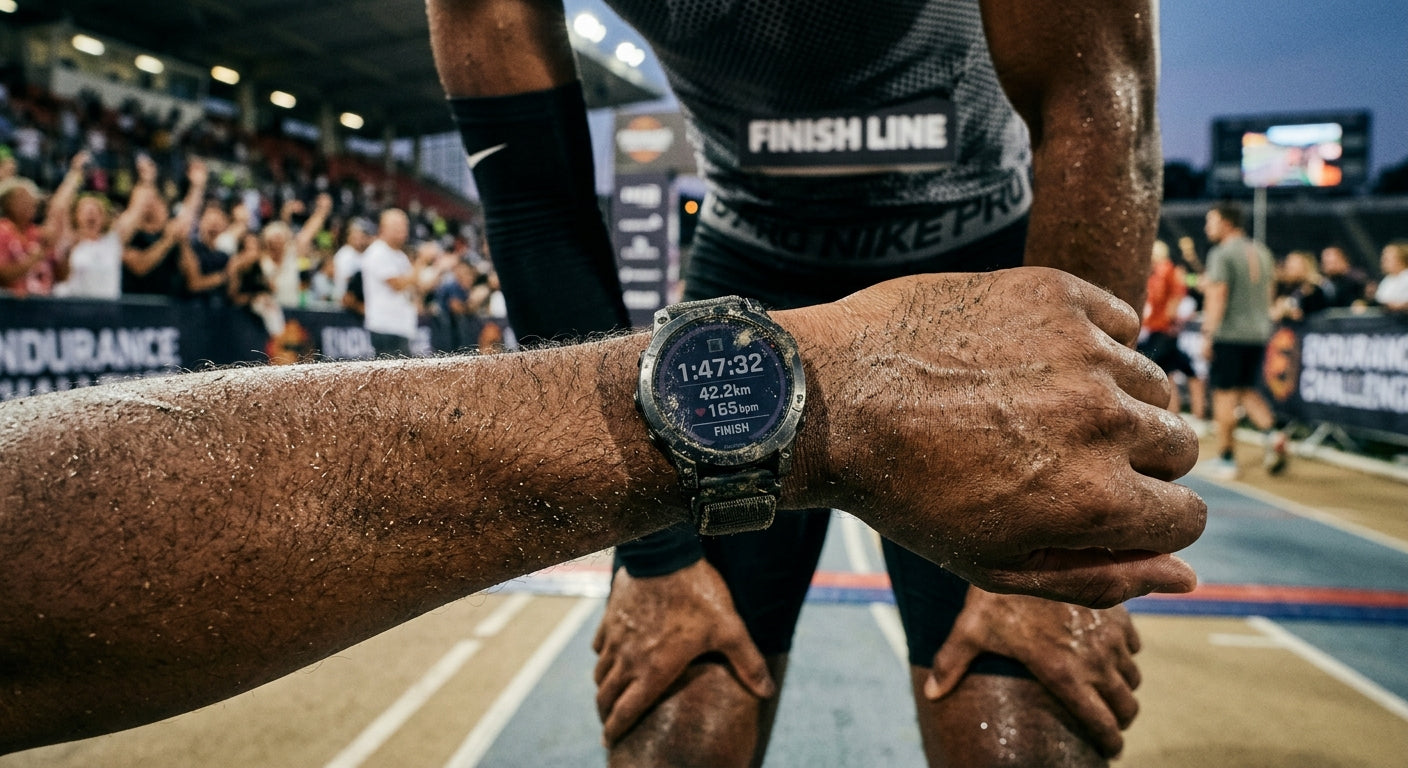
The trajectory of endurance wearables began with rudimentary heart-rate monitors that required bulky chest straps. The evolution into integrated wrist-based optical sensors was the first major leap. We have moved from watches that lasted eight hours on a single charge to current iterations that can survive over 100 hours of continuous GPS recording.
This progress was driven by the necessity of the 24-hour and 100-mile racing circuit. As athletes pushed their physical boundaries, the technology had to adapt or face obsolescence. The transition from power-hungry LCD screens to power-efficient Memory-in-Pixel (MiP) displays and organic LED alternatives has been the cornerstone of this historical shift.
What to Expect in the future?
The future of ultra-endurance tech lies in ambient energy harvesting. Beyond solar, we are seeing research into kinetic charging, where the motion of the arm during a run provides a trickle charge to the internal cell. Furthermore, the integration of AI-driven power management will soon allow watches to predict battery consumption based on terrain, temperature, and current exertion levels, automatically adjusting settings to ensure the user reaches the finish line.
Special Features & Technical Specifications
Material Composition
The current generation flagship models utilise sapphire crystal lenses for scratch resistance and titanium alloy bezels to balance extreme durability with a feather-light profile. Internally, the boards are coated in a hydrophobic nano-layer to prevent moisture ingress during torrential rain or river crossings.
Physical Dimensions and Weight
Most ultra-endurance units hover around the 45mm to 51mm case size, with weights restricted to under 70 grams including the strap. This reduction in mass is achieved through computer-aided structural engineering, which removes any unnecessary material from the watch case without compromising its crush resistance.
Engineering Changes
Compared to previous generations, the modern power management unit has been redesigned to support a 'low-power state' that maintains Bluetooth connectivity while disabling non-essential background processes. This has resulted in a 40% improvement in battery efficiency during continuous activity compared to models released as recently as 2021.

