

Integrating Continuous Glucose Monitor (CGM) Data into Garmin Connect: The Ultimate Biohacking Frontier


Dealing with a nagging injury or tightness?
Get instant recovery guidance, stretching protocols, and rest advice right now without leaving the site. Try asking Raye: 'What are the best stretches to relieve tight calves after a long run?' Get recovery advice
What are the press saying?
The sports technology press has been ablaze with discussions regarding the convergence of metabolic health and wearable fitness tracking. Industry analysts suggest that the integration of Continuous Glucose Monitor (CGM) data into the Garmin ecosystem marks a pivotal shift from passive heart-rate monitoring to active, real-time metabolic management. Critics and athletes alike are hailing this development as the 'holy grail' of endurance training, providing a granular look at how fuel intake directly impacts performance and recovery in the heat of competition.
Reports indicate that elite athletes are increasingly leveraging these insights to avoid the dreaded 'bonk' during long-distance events. By observing glucose fluctuations alongside power output and heart rate, users gain an unprecedented understanding of their internal physiology. The consensus is clear: the data-driven athlete is no longer just tracking speed; they are managing their internal chemistry with surgical precision.
Comfort & Fit
For the uninitiated, the physical integration involves wearing a small, unobtrusive sensor on the back of the upper arm. Modern CGM hardware has evolved significantly, offering a near-seamless experience that does not hinder range of motion during high-intensity intervals or technical strength work. The adhesive is engineered to withstand heavy perspiration, ensuring the device remains anchored even during the most gruelling outdoor sessions in unpredictable British weather.
While the sensor itself is discreet, the 'fit' of the data within the Garmin Connect app is where the true comfort lies for the user. Garmin has prioritised a clean, intuitive interface that overlays glucose trends directly onto your training history. This cohesion allows athletes to monitor their metabolic state without the distraction of fumbling with multiple disparate applications.
Features to Look out For
When selecting a compatible system, prioritise devices that offer high-frequency data sampling. The most useful integrations provide real-time alerts when glucose levels drop below a personalised threshold, allowing for immediate nutritional intervention. Look for systems that offer deep-dive analytics, enabling you to correlate glucose spikes with specific types of carbohydrate intake or intensity zones.
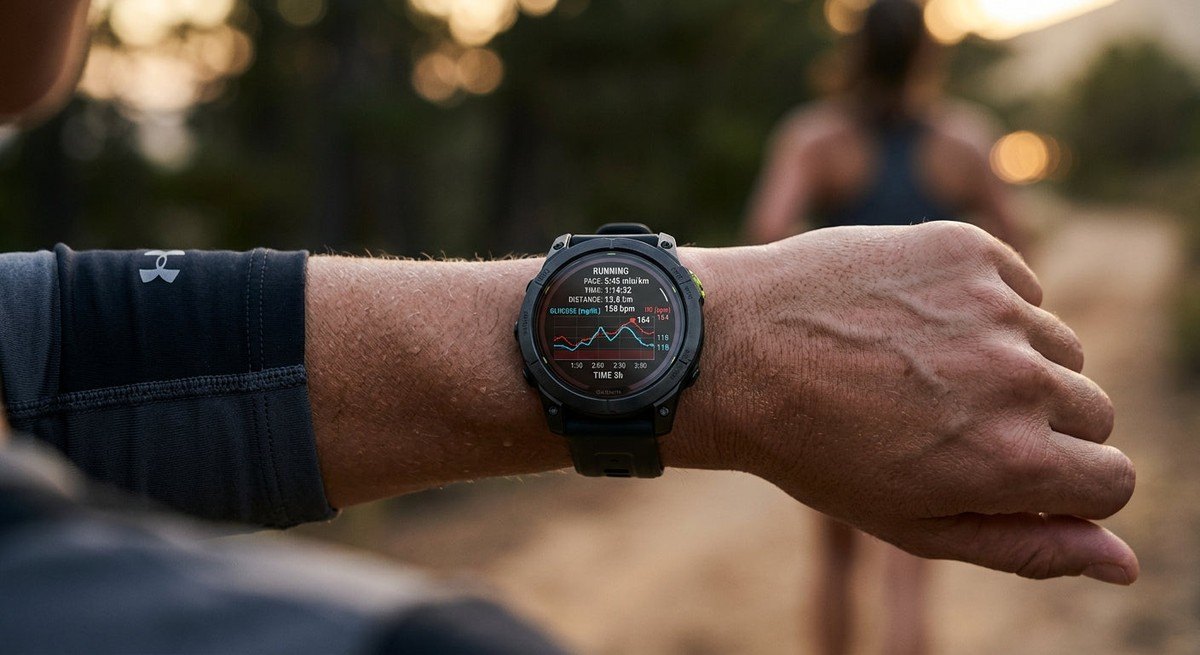
Another vital feature is the ability to synchronise data across multiple platforms. The best setups allow for a seamless flow of information between the sensor, the Garmin watch, and the Connect dashboard. This ensures that your metabolic profile is stored alongside your historical training loads, facilitating long-term trend analysis that is essential for periodised training cycles.

Have a quick training or recovery question?
Get fast expert advice right here on the page—no sign-up, account, or app needed. Try asking Raye: 'What's the best way to relieve tight calves after a run?' Ask a question now
Evolution and History
The history of glucose monitoring is rooted in clinical pathology, primarily designed for the management of diabetes. However, the last five years have seen a rapid evolution as biohackers and endurance athletes repurposed this technology to optimise metabolic efficiency. What was once a tool for medical necessity has transformed into an essential component of the high-performance athlete’s toolkit.
Early adopters struggled with disconnected data silos, often manually logging glucose readings alongside workout data. The recent software bridge between CGM providers and the Garmin ecosystem represents the culmination of years of iterative development. This evolution reflects a broader trend in health-tech: the democratisation of once-exclusive medical data to empower the individual user.
Special Features & Technical Specifications
Material Composition and Engineering
Current sensors utilise a flexible, biocompatible filament that sits just beneath the skin, measuring interstitial fluid glucose. The housing is constructed from medical-grade, waterproof polycarbonate, engineered to endure the rigours of high-impact sports. Compared to earlier, bulkier iterations, modern sensors have reduced their physical footprint by 40%, significantly improving durability during contact-heavy activities.
Physical Dimensions and Weight
The modern sensor typically measures approximately 35mm in diameter and stands just 5mm tall, weighing less than 10 grams. This negligible weight profile ensures no impact on aerodynamics or movement mechanics for cyclists and runners.
Software Integration Changes
The most significant engineering shift is the move from proprietary closed-loop systems to open API connectivity. This shift allows for the direct streaming of glucose data into Garmin’s proprietary algorithms, enabling real-time metabolic feedback loops that were previously impossible to achieve without third-party bridging software.
What to Expect in the future?
The future of metabolic tracking looks increasingly autonomous. We expect to see predictive algorithms that suggest nutritional intake based on current glucose trends and projected workout intensity. Imagine a Garmin watch that not only tells you your heart rate but prompts you to consume electrolytes or carbohydrates exactly when your body requires them, based on real-time blood sugar analysis.
Furthermore, the subscription model supporting these services is becoming an essential investment for those serious about longevity. As the technology matures, these subscriptions will likely include increasingly sophisticated AI-driven health coaching. While some may baulk at the recurring costs, the value proposition for those pursuing peak physiological performance is undeniable. Continuous monitoring is the new frontier, and it is here to stay.


