

Unlocking Peak Performance: Strength Training for Cyclists


Want to build strength to support your running?
Get targeted strength routines and mobility exercises designed specifically for runners directly on-site. Try asking Raye: 'What are 3 key gym exercises to improve running economy?' Get strength tips
Building the Engine: Why Strength Matters
As a coach, I see many cyclists who spend every waking hour in the saddle, yet they plateau because they neglect the engine's chassis. Off-season training is your golden opportunity to build a robust foundation that will carry you through the gruelling climbs of the summer season. By incorporating strength training, you are not just lifting weights; you are reinforcing your structural integrity.
The primary focus for any cyclist should be the posterior chain and core stability. When you are pushing a heavy gear, your legs act as the pistons, but your core is the frame that keeps everything aligned. If that frame is weak, you lose power through energy leakage. Prioritise compound movements like squats and deadlifts to recruit maximum muscle fibres.
To get the most out of these sessions, invest in quality gym apparel that allows for a full range of motion. Tight, restrictive clothing will only hinder your form. Look for moisture-wicking fabrics that keep you comfortable as you ramp up the intensity. Remember, you are training like an athlete, so dress the part to maintain that professional mindset.
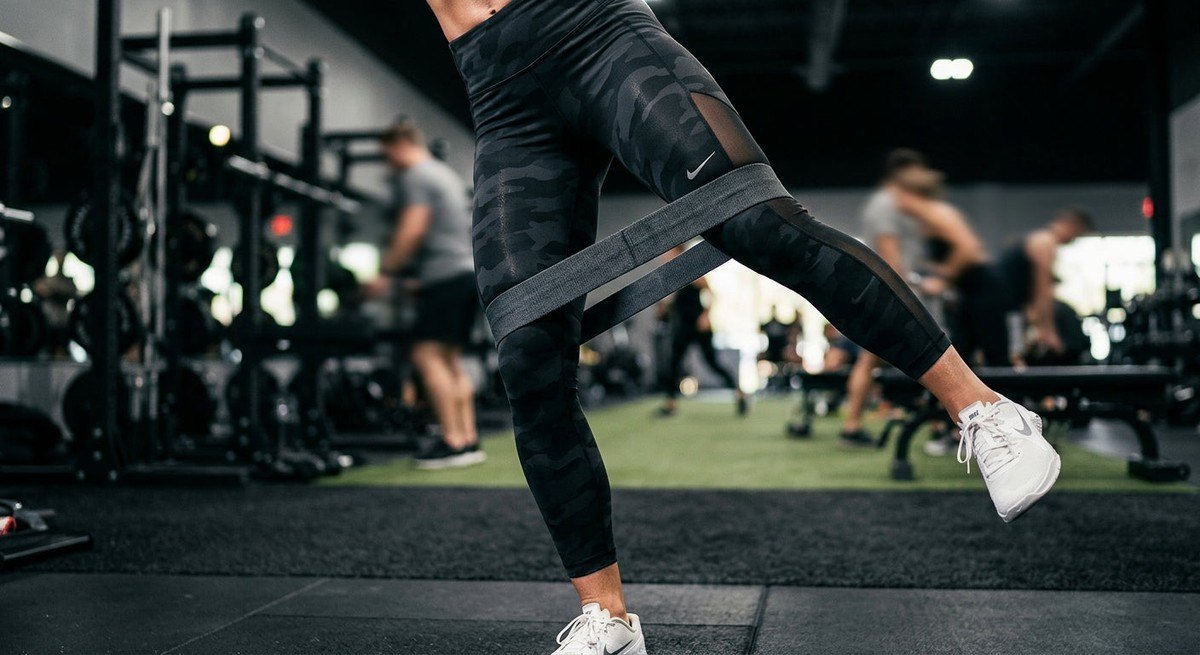
Resistance bands are another essential piece of kit. They are brilliant for glute activation exercises before you touch a barbell. Using bands to perform lateral walks or clamshells ensures your glutes are firing correctly, which is vital for preventing common cycling injuries like knee pain. Never skip the warm-up; it is the difference between a productive session and a sidelined recovery period.
Will It Make me Faster
The short answer is an emphatic yes. Strength training increases your force production. When you improve your maximum strength, you reduce the relative effort required to maintain a certain wattage. Essentially, you make the sub-maximal effort of riding feel significantly easier, allowing you to sustain higher speeds for longer durations without succumbing to fatigue.
Furthermore, increased muscular endurance means your legs will not burn out during the final kilometres of a race. By training in the gym, you are teaching your nervous system to recruit more motor units. This neurological adaptation is exactly what you need when you are sprinting for the finish line or attacking a steep gradient.
Do not fear the bulk. It is a common misconception among cyclists that lifting heavy will add unnecessary weight. In reality, strength training improves your power-to-weight ratio by increasing your functional power output. You will become a more efficient machine, capable of putting more force into the pedals with every single revolution.

Have a specific performance goal in mind?
Get direct feedback on your training targets right here on the page—no sign-up or account required. Try asking Raye: 'How should I adjust my weekly mileage for a sub-20 minute 5K?' Ask about your goals
How long before I see improvements
Consistency is your best friend. You can expect to feel a difference in your pedal stroke within four to six weeks of dedicated, twice-weekly gym sessions. This is when your body begins to adapt to the new stimulus, and you will notice that your legs feel more stable and powerful on the bike.
True physiological transformation, however, takes a full off-season block of three to four months. By the time spring arrives, you will find that your hill climbing has improved dramatically. Your capacity to handle high-torque situations will have increased, and your overall fatigue resistance will be noticeably higher compared to previous years.
Stay patient and trust the process. Strength gains are cumulative. Keep a log of your lifts, track your progress, and ensure you are progressively overloading your muscles. If you do not challenge your body, it will not change. Keep pushing the boundaries, and the results will follow.
10 alternative training techniques
- Plyometric Box Jumps: Explosive movements like box jumps are exceptional for developing the fast-twitch muscle fibres required for sprinting. By focusing on a rapid landing and immediate vertical take-off, you train your body to generate maximum power in a split second, which translates directly to explosive pedal strokes during high-intensity efforts or climbs.
- Kettlebell Swings: This exercise is the gold standard for posterior chain development. It targets the hamstrings, glutes, and lower back simultaneously. By mimicking the hinge motion of a pedal stroke, kettlebell swings help build the explosive hip drive necessary for maintaining high power output while keeping your spine safe and supported.
- Bulgarian Split Squats: Unilateral training is non-negotiable for cyclists. Since cycling is a repetitive motion, imbalances often develop. Split squats force each leg to work independently, ensuring that your weaker leg catches up to your stronger one. This leads to a more balanced pedal stroke and significantly reduces the risk of overuse injuries.
- Medicine Ball Rotational Throws: Core strength is not just about holding a plank; it is about rotational stability. Medicine ball throws against a wall engage your obliques and transverse abdominis. This mimics the core engagement required to keep your torso stable while you are rocking the bike during an out-of-the-saddle effort.
- High-Intensity Interval Training (HIIT) on the Bike: While gym work is vital, you must maintain your cycling-specific fitness. Short, sharp intervals of 30 seconds at maximum effort followed by 30 seconds of recovery force your cardiovascular system to adapt to the high-intensity demands of racing, ensuring your heart and lungs can keep up with your legs.
- Yoga for Cyclists: Flexibility is often overlooked but is crucial for aero positioning. Yoga routines focused on hip flexor release and hamstring elongation help prevent the tightness that causes lower back pain. By improving your range of motion, you can hold a more aggressive, aerodynamic position for longer periods without discomfort.
- Single-Leg Deadlifts: Similar to split squats, these build stability and proprioception. Because you are balancing on one leg while hinging at the hips, you are training the stabilising muscles around the knee and ankle. This is highly effective for correcting muscle imbalances and improving overall control of the bike.
- Pilates for Core Endurance: Pilates focuses on deep, sustained core contraction, which is exactly what a cyclist needs for long days in the saddle. By strengthening the deep stabilisers that support the spine, you can prevent the 'slump' that occurs when you get fatigued, maintaining your form and efficiency until the end.
- Sled Pushes: This is a fantastic way to build leg power without the eccentric load of heavy squats, which can sometimes cause excessive muscle soreness. Pushing a heavy sled recruits the entire lower body and forces you to maintain a strong, braced core, building functional endurance that lasts throughout a long ride.
- Jump Rope Training: Often seen as a boxing staple, jumping rope is excellent for developing ankle stability and calf endurance. Strong, stable ankles are the foundation of your power transfer. Regular skipping sessions improve your coordination and foot speed, which can help with smoother, more efficient pedalling mechanics over long distances.


