

The Science of Movement: Static Stretching vs. Dynamic Warm-ups


Planning your next fitness milestone?
Get immediate guidance on pacing, workout structure, or race prep directly on-site for free. Try asking Raye: 'Can you outline a simple 4-week build plan for a 10K?' Get instant guidance
The Great Debate in Modern Athletics
In the high-stakes environment of professional training, the methodology behind movement preparation and post-exertion recovery remains a subject of intense analytical scrutiny. For decades, the fitness industry relied on antiquated static protocols, but modern biomechanical research has shifted the paradigm toward dynamic preparation. Understanding when to mobilise and when to elongate is critical for any athlete seeking to prioritise performance and longevity.
Dynamic warm-ups involve active movements that mirror the specific demands of a sport or training session. By integrating movement through a full range of motion, athletes increase their core temperature, enhance neuromuscular activation, and improve synovial fluid viscosity in the joints. This is not merely about breaking a sweat; it is about priming the central nervous system for the explosive demands of intense physical output.
Conversely, static stretching involves holding a position to lengthen a muscle group. While historically misused as a pre-workout ritual, this practice serves a distinct, evidence-based purpose in the post-workout phase. When utilised after the central nervous system has cooled, static stretching can facilitate parasympathetic nervous system activation, assisting in the transition from a heightened state of training to a restorative state.
How can I start out?
To implement an effective regimen, you must first distinguish between the two modalities. Begin every training session with a dynamic sequence. Focus on movements that challenge your mobility in multiple planes, such as leg swings, torso twists, and walking lunges. These movements serve to wake up the kinetic chain, ensuring that your muscles are prepared to handle mechanical load without the risk of acute strain.
Dedicate at least ten minutes to this dynamic phase before touching a barbell or hitting the track. The goal is to elevate your heart rate and increase blood flow to the working tissues. Avoid static holds during this window, as they have been shown in various clinical studies to temporarily decrease peak power output and force production.
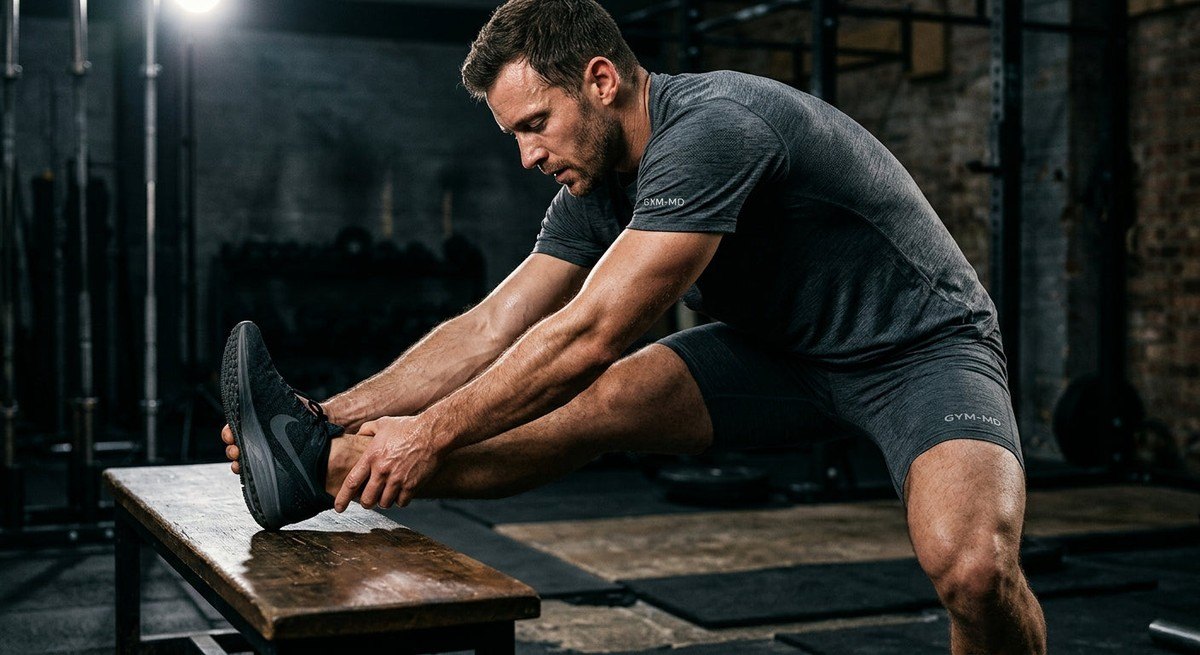
Transition to static stretching only after your session has concluded. Once your heart rate has stabilised, focus on the muscle groups that were subjected to the highest mechanical tension. Hold each stretch for thirty to sixty seconds, maintaining a steady, controlled breath. This is the optimal window to address structural imbalances and improve long-term flexibility.
Tips for Improving
Consistency is the cornerstone of any physiological adaptation. To maximise the benefits of your stretching protocols, treat your mobility work with the same seriousness as your lifting programme. Do not rush through the movements; focus on the quality of the contraction and the precision of the stretch.

Looking to shave time off your personal best?
Get immediate pacing strategies and interval workout ideas directly on-site for free. Try asking Raye: 'What is the best threshold session to help drop my 10K time?' Get instant pacing tips
Consider integrating myofascial release tools, such as foam rollers, between your dynamic warm-up and your lifting sets. This helps identify areas of tension that require additional attention. By systematically addressing these 'sticky' points, you can significantly reduce the risk of overuse injuries and improve your overall movement economy.
Finally, listen to the feedback provided by your body. If a specific movement causes sharp, nerve-like pain, cease the activity immediately. Flexibility is a long-term project, not a sprint. Prioritise slow, incremental gains in range of motion over aggressive, forced stretching sessions that may lead to ligamentous instability.

Special Features & Technical Specifications
Material Composition and Engineering
Modern athletic performance gear is engineered using high-tensile, moisture-wicking synthetic fibres that facilitate thermoregulation. Unlike traditional cotton, these fabrics maintain their structural integrity under high-intensity load, ensuring that the wearer remains dry and the core temperature is efficiently managed during warm-ups.
Physical Dimensions and Weight
The average professional-grade training mat measures 180cm by 60cm, providing the necessary surface area for complex dynamic movements. These mats are manufactured with a high-density closed-cell foam structure, weighing approximately 1.5kg to provide optimal cushioning and impact absorption without compromising surface stability.
Generational Advancements
Compared to previous iterations, current training equipment features improved non-slip grip technology and anti-microbial coatings. Engineering changes have prioritised a lower centre of gravity for the athlete, allowing for more precise balance during unilateral dynamic exercises compared to the thicker, less stable mats of the previous generation.
In conclusion, the dichotomy between dynamic warm-ups and static stretching is not a matter of 'one versus the other', but rather 'when and why'. By leveraging dynamic movements to prepare for the rigours of training and static stretching to enhance recovery and flexibility, athletes can construct a balanced, sustainable, and highly effective physiological strategy.


