

Rowing and SkiErg Mechanics: Maximizing Power Output


Planning your next fitness milestone?
Get immediate guidance on pacing, workout structure, or race prep directly on-site for free. Try asking Raye: 'Can you outline a simple 4-week build plan for a 10K?' Get instant guidance
Mastering the Ergometer
In the high-intensity landscape of modern functional fitness, the rowing machine and the SkiErg serve as the ultimate arbiters of cardiovascular endurance and raw power. Whether you are prepping for a Hyrox event or grinding through a CrossFit WOD, these machines demand more than just grit; they require a sophisticated understanding of kinetic energy transfer. Precision in movement is the difference between a podium finish and hitting the dreaded wall.
To maximise output, athletes must transition from viewing these machines as simple cardio tools to treating them as complex pieces of engineering. Every stroke on the rower or pull on the SkiErg is an opportunity to generate force from the ground up, utilising the entire posterior chain. Ignoring mechanical efficiency leads to wasted energy, premature fatigue, and stagnant split times.
How can I start out?
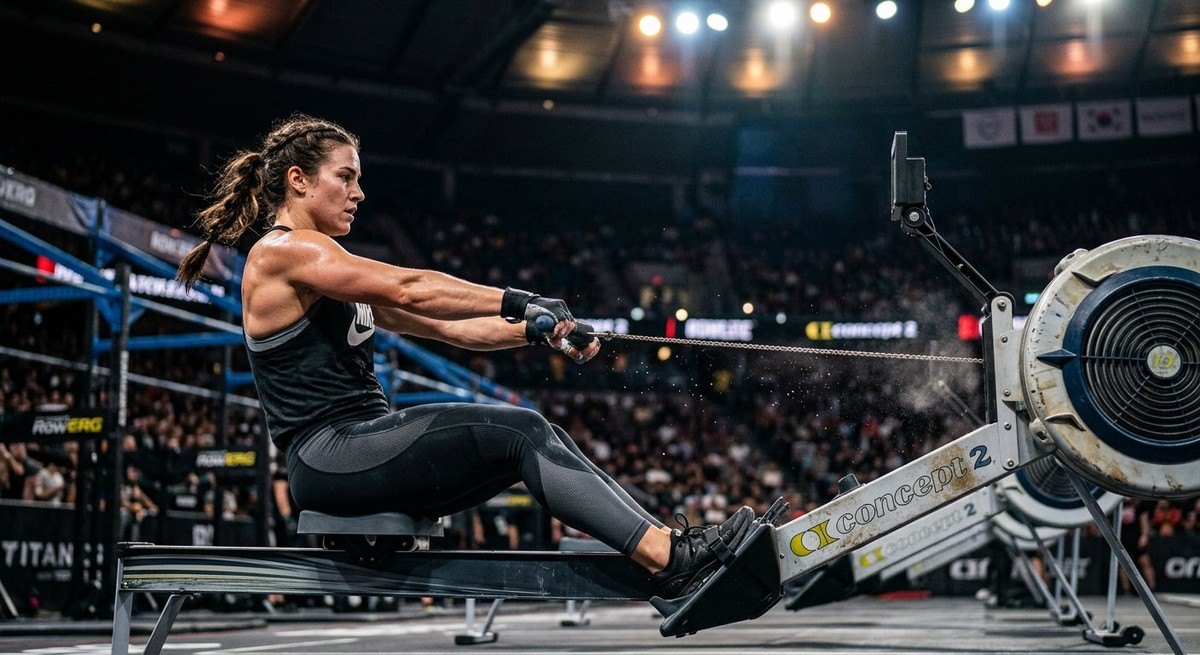
The journey to peak performance begins with the setup. For the rower, ensure your foot stretchers are adjusted so the strap crosses the ball of your foot, not your toes. This allows for optimal ankle mobility and a powerful drive through the heels. When initiating the stroke, focus on the 'legs, body, arms' sequence. Your legs should generate the primary explosion, followed by a controlled swing of the torso, and finally, a crisp finish with the handle at the chest.
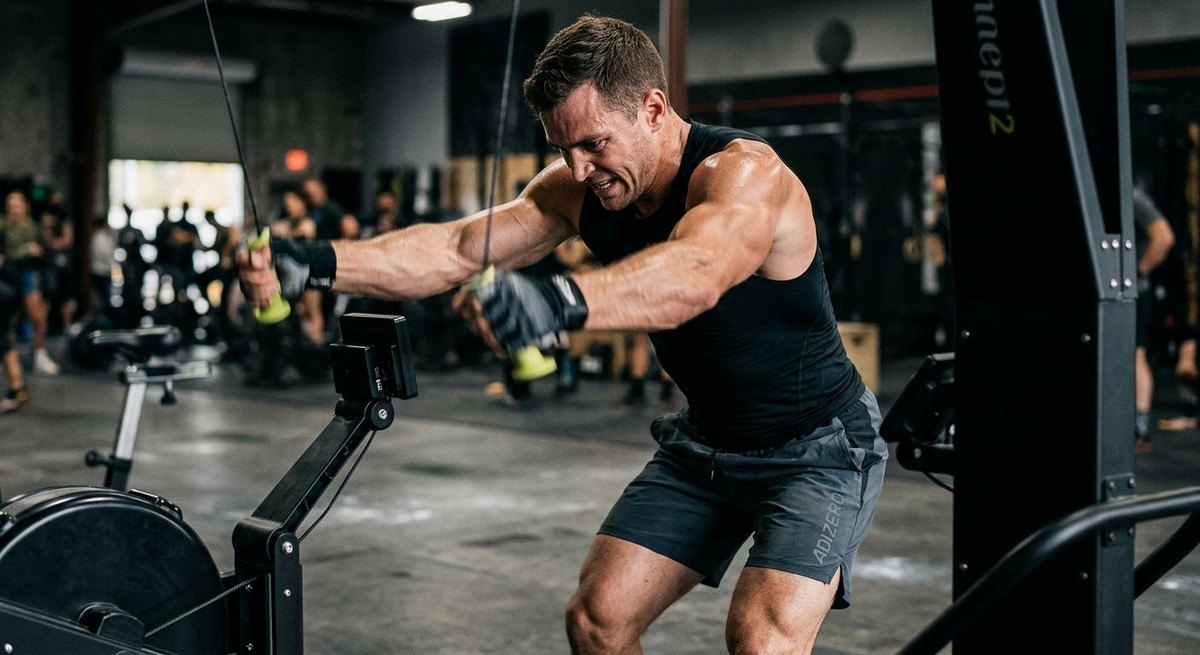
Transitioning to the SkiErg, the mechanics shift to a vertical plane. Start by standing with feet shoulder-width apart, knees slightly flexed. The movement must originate from the core and lats, not merely the triceps. By hinging at the hips and driving your weight downwards into the handles, you engage the larger muscle groups, resulting in significantly higher wattage output compared to an arm-dominant approach.
Tips for Improving
To refine your technique, prioritise the recovery phase. On the rower, do not rush back to the catch position; maintain a ratio of approximately 1:2 between the drive and the recovery. This controlled pace allows for a momentary cardiovascular reset while preparing the muscles for the next explosive contraction. Keep your cadence consistent and monitor your stroke rate to ensure it aligns with your target intensity.
For the SkiErg, focus on the 'double-pole' technique. Your hands should travel from above your head down to your thighs in a fluid, continuous motion. Avoid the common error of bending the arms too early, which limits your leverage. Experiment with your damper settings; while a higher setting feels heavier, a moderate setting—usually between three and five—often allows for a more natural, efficient stroke rate that mimics real-world resistance profiles.

Looking to shave time off your personal best?
Get immediate pacing strategies and interval workout ideas directly on-site for free. Try asking Raye: 'What is the best threshold session to help drop my 10K time?' Get instant pacing tips
Special Features & Technical Specifications
Material Composition and Engineering
Modern machines, particularly those manufactured by Concept2, utilise high-grade aerospace aluminium for the rail and fan housing, ensuring both durability and minimal weight. The flywheel design is engineered for aerodynamic drag, providing a consistent resistance profile that scales linearly with the athlete’s effort. Recent iterations feature updated PM5 performance monitors, which offer unparalleled accuracy in data tracking, including precise wattage, calorie expenditure, and stroke-per-minute metrics.
Physical Dimensions and Weight
The standard indoor rower typically measures 244 centimetres in length with a width of 61 centimetres, weighing approximately 26 kilograms. The SkiErg, when mounted on a floor stand, occupies a footprint of 61 by 132 centimetres and weighs roughly 46 kilograms total. These dimensions are optimised for stability during maximal effort sprints, ensuring that the machine remains grounded even when the athlete is exerting peak torque.
The evolution of these machines has focused on ergonomics and friction reduction. The drive cords have been upgraded to high-strength, low-stretch nylon, reducing the 'dead spot' at the start of the drive phase. Furthermore, the handle geometry has been refined to distribute pressure evenly across the palm, preventing grip fatigue during long-duration endurance sessions. These incremental engineering changes are vital for athletes looking to shave seconds off their personal bests.
Consistency is the final key to unlocking your potential. Integrate interval training into your weekly routine, alternating between short, high-power bursts and sustained, steady-state efforts. By recording your data and analysing your stroke efficiency, you can identify mechanical breakdowns before they manifest as fatigue. The pursuit of power is a technical discipline; master the machine, and the results will follow.


