

Returning to Running After a Meniscus Tear or Knee Injury


Need performance advice right now?
Ask our on-site coach anything about your routines. It's completely free and available immediately right here: 'What are 3 quick exercises for ankle mobility?' Ask Raye for free
The sudden, sharp sensation of a meniscus tear often signals a lengthy hiatus from the track, yet returning to running is not merely a matter of waiting for pain to subside. It is a precise, biomechanically demanding process that requires patience, clinical oversight, and a structured transition back to high-impact loading. For the dedicated athlete, the path to recovery is paved with incremental gains rather than sheer willpower.
Before lacing up your trainers, you must acknowledge that a meniscus injury alters the internal environment of the knee joint. The meniscus acts as a crucial shock absorber, distributing force evenly across the femoral condyles and tibial plateau. Following a tear, the biomechanical efficiency of your gait is compromised, necessitating a rigorous programme of rehabilitation to restore muscular stability and joint proprioception.
How can I start out?
The initial phase of returning to running begins long before you hit the pavement. You must first establish a foundation of pain-free movement through low-impact cross-training. Activities such as swimming or using a stationary cycle help maintain cardiovascular conditioning while sparing the knee from the repetitive impact forces that characterise running. Prioritise these modalities for at least four to six weeks post-injury.
Once you are cleared for weight-bearing exercise, the transition to running must be deliberate. Start with a 'run-walk' protocol. Begin with thirty seconds of light jogging followed by two minutes of brisk walking. This method allows you to monitor your knee's reaction to impact without overloading the joint. If you experience swelling or sharp pain, you have exceeded your current capacity and must scale back the intensity immediately.
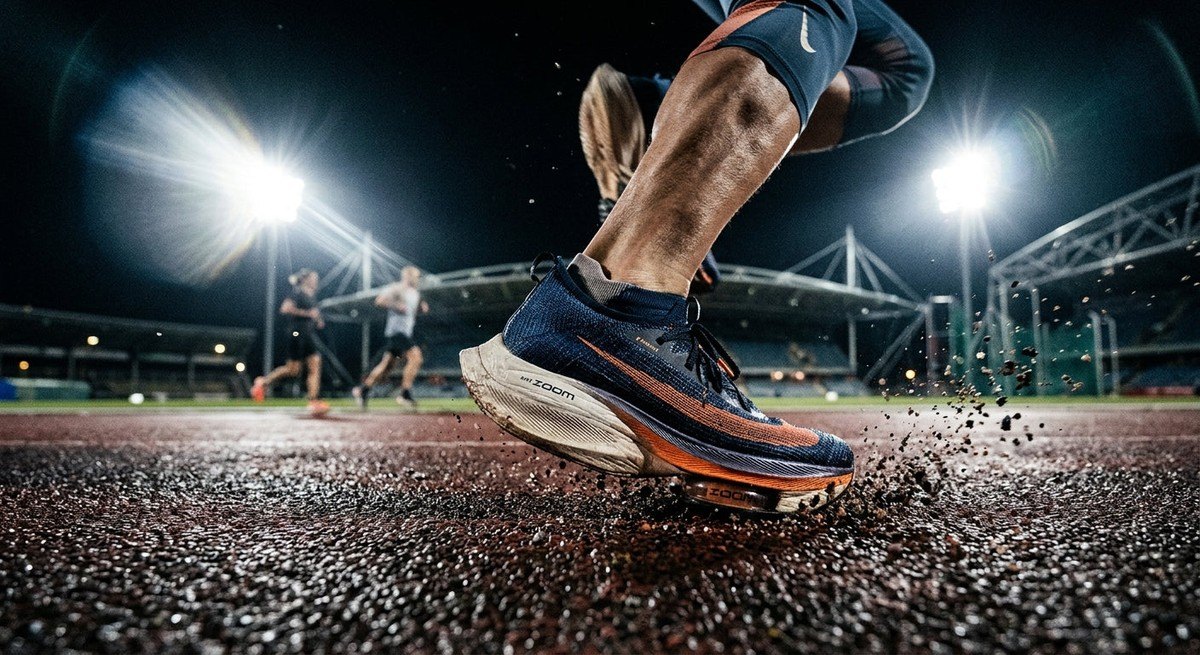
Biomechanical assessment is paramount during this stage. Ensure your cadence is high—aiming for roughly 170 to 180 steps per minute. A shorter stride length reduces the peak impact force on the knee joint significantly. By focusing on a mid-foot strike rather than a heavy heel strike, you distribute the load more effectively, protecting the meniscus from excessive shearing forces.
Tips for Improving
To ensure long-term durability, you must prioritise strength training specifically targeting the posterior chain. A strong gluteus medius and hamstring complex provides the necessary support for the knee joint, preventing the valgus collapse—or inward buckling—that often leads to secondary injuries. Incorporate single-leg stability exercises, such as Romanian deadlifts and split squats, into your routine at least twice per week.

Need a clear race fuelling strategy?
Get instant, practical advice on hydration and race-day nutrition directly on this page for free. Try asking Raye: 'How many grams of carbs should I take per hour during a half marathon?' Ask for fuelling advice
Monitor your training volume with clinical precision. The '10 per cent rule' remains the gold standard for injury prevention; never increase your weekly mileage by more than 10 per cent. This conservative approach allows your tendons, ligaments, and the repaired meniscus tissue to adapt to the progressive load without succumbing to overuse inflammation.
Listen to your body’s internal feedback loop. Delayed onset soreness is expected, but persistent joint effusion—swelling within the knee—is a red flag. If your knee feels stiff or 'puffy' the morning after a session, it is a clear indicator that the intensity or volume was too high. Do not hesitate to consult with a physiotherapist to refine your gait or address lingering muscular imbalances.
Special Features & Technical Specifications
Material Composition and Biomechanical Impact
Modern running footwear for post-injury recovery features advanced dual-density EVA foam mid-soles designed to dampen vertical ground reaction forces. These materials are engineered to provide maximum energy return while minimising the peak torque transmitted through the knee joint during the stance phase of the gait cycle.

Physical Dimensions and Weight
Contemporary performance trainers for rehabilitation typically maintain a drop profile of 8mm to 10mm. This specific geometry assists in offloading the meniscus by facilitating a more natural transition from heel to toe, with an average weight per shoe of 240g to 260g, balancing lightweight construction with structural integrity.
Engineering Evolution
Compared to previous generations, current footwear integrates carbon-fibre plates and rocker-bottom architectures. These engineering changes encourage a smoother 'roll' through the stride, significantly reducing the requirement for the knee to absorb the full brunt of the impact force at the moment of initial contact.
Ultimately, returning to running after a meniscus injury is a marathon, not a sprint. By respecting the biological healing process, adhering to a structured strength programme, and maintaining a high cadence, you can successfully reintegrate into your training cycle. Remain objective, stay consistent, and always prioritise the long-term health of your knee over short-term performance gains.


