

Conquer Plantar Fasciitis: A Runner's Guide to Recovery and Prevention


Need performance advice right now?
Ask our on-site coach anything about your routines. It's completely free and available immediately right here: 'What are 3 quick exercises for ankle mobility?' Ask Raye for free
Understanding the Root Cause
Plantar fasciitis is arguably the most frustrating hurdle a dedicated runner can face. That sharp, stabbing pain near the heel, particularly during those first few steps in the morning, is a clear signal that the thick band of tissue connecting your heel bone to your toes is under excessive strain. As a coach, I have seen many athletes try to run through this discomfort, only to find themselves side-lined for months. Addressing this condition requires a balanced approach of rest, targeted mobility, and gradual strengthening.
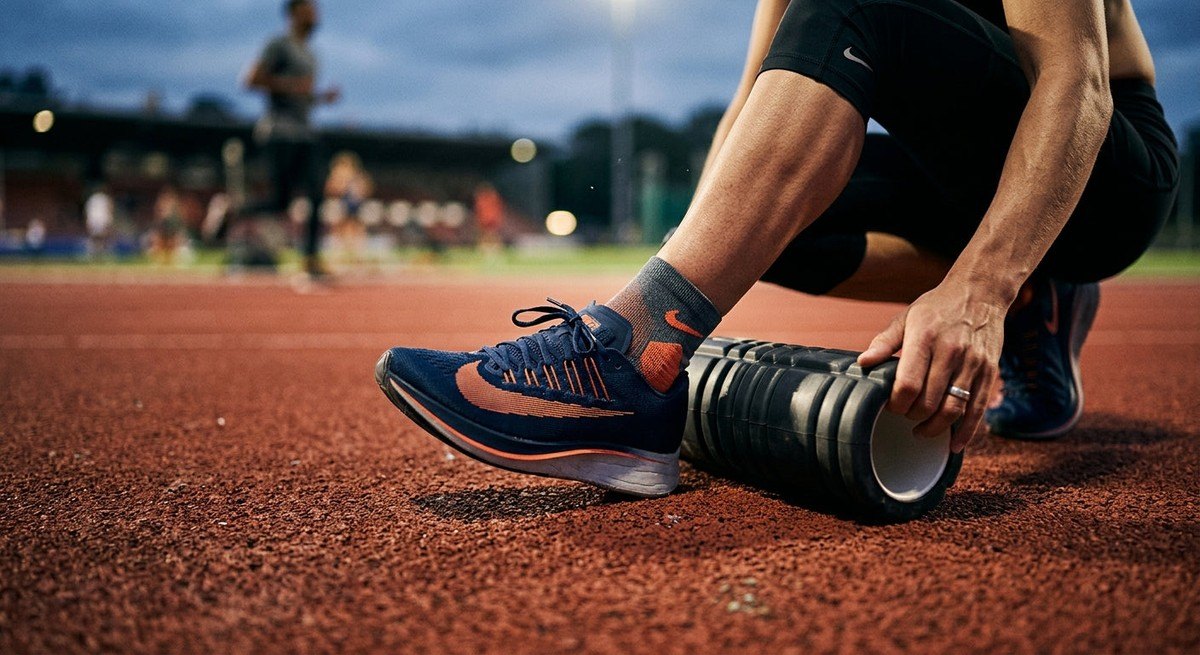
The primary driver is often a combination of increased mileage, worn-out footwear, or tight calf muscles. When your calves are tight, they restrict ankle dorsiflexion, forcing the plantar fascia to work overtime as a shock absorber. To begin your journey back to the track, you must prioritise daily mobility work. Start by rolling your foot over a cold water bottle or a dedicated massage ball for five minutes each evening to help reduce inflammation and break up stubborn tissue adhesions.
Will It Make me Faster
Many runners worry that taking time to rehab will slow them down. However, the opposite is true. By fixing the biomechanical inefficiencies that led to your plantar fasciitis, you are essentially optimising your kinetic chain. A foot that functions correctly allows for a more powerful toe-off and better energy return. When you resolve the pain, your gait naturally returns to a neutral, efficient state, allowing you to maintain your pace without the subconscious compensation patterns that actually drain your performance capacity.
Think of this period as an investment in your long-term speed. By incorporating eccentric heel drops and intrinsic foot strengthening exercises, you are building a more resilient foundation. A stable, pain-free foot is a faster foot. Once the inflammation subsides, you will find that your turnover improves and your endurance increases because you are no longer fighting the restrictive, protective guarding your body puts in place when it is in pain.
How long before I see improvements
Patience is the most difficult tool in any runner's kit. Generally, if you are consistent with your daily rolling, calf stretching, and strengthening, you can expect to feel a significant reduction in morning pain within four to six weeks. Full recovery, allowing for a return to high-intensity intervals or long-distance efforts, often takes three months. Do not be tempted to rush this process; the plantar fascia has a relatively poor blood supply, which means it heals slower than muscle tissue.

Need a clear race fuelling strategy?
Get instant, practical advice on hydration and race-day nutrition directly on this page for free. Try asking Raye: 'How many grams of carbs should I take per hour during a half marathon?' Ask for fuelling advice
During this recovery window, invest in supportive footwear with adequate arch cushioning to alleviate pressure during daily activities. Using orthotic inserts or choosing shoes with higher stack heights can provide the immediate relief needed to keep you mobile. If the pain persists, consult a physiotherapist to ensure you are not dealing with a stress fracture or nerve entrapment.
10 alternative training techniques
- Deep Water Running: Using a buoyancy belt in the deep end of a pool allows you to replicate the exact mechanics of your running stride without any impact forces. This is excellent for maintaining cardiovascular fitness and muscle memory while allowing the inflamed plantar fascia to heal completely without weight-bearing stress.
- Stationary Cycling: Cycling provides an exceptional aerobic workout that keeps the heart rate elevated while keeping the foot in a fixed, non-impact position. Focus on maintaining a high cadence to mimic the turnover required for running, which helps preserve your neuromuscular coordination during your recovery phase from foot injuries.
- Elliptical Training: The elliptical machine offers a fluid, weight-bearing motion that is significantly gentler on the heel than road running. By adjusting the resistance and incline, you can simulate the intensity of hill workouts or tempo runs, ensuring your leg muscles remain conditioned for the eventual return to pounding the pavement.
- Rowing Machine: Rowing is a fantastic full-body exercise that develops core strength and posterior chain endurance without putting any pressure on the feet. It improves your VO2 max and builds the muscular stability in your back and hips that is essential for maintaining proper form during long-distance runs.
- Yoga for Runners: Focusing on restorative yoga poses helps lengthen the posterior chain, specifically the calves and hamstrings. Improved flexibility in these areas reduces the tension pulling on the plantar fascia. Consistent practice encourages better body awareness, helping you identify and correct minor imbalances before they manifest as acute running injuries.
- Pilates Reformer Work: Pilates is superb for isolating and strengthening the intrinsic muscles of the foot and ankle. By performing controlled, low-impact movements, you build the stability needed to support your arch. This targeted strengthening protects the fascia from future strain and improves the overall efficiency of your push-off phase.
- Strength Training: Focusing on single-leg movements like Bulgarian split squats and Romanian deadlifts builds critical stability in the ankles and hips. By strengthening the entire leg, you offload the foot, ensuring that the burden of impact is shared across larger muscle groups rather than concentrated solely on the plantar fascia.
- Swimming Laps: Swimming is the ultimate cross-training tool for runners. It provides a full-body workout that improves breath control and core strength while being entirely non-weight-bearing. It is the perfect way to maintain your aerobic engine while waiting for your foot to reach full, pain-free functionality for high-intensity training.
- Nordic Walking: Using poles to engage the upper body while walking reduces the load on the lower extremities by distributing weight more evenly. This allows you to maintain your outdoor conditioning and enjoy the benefits of fresh air and movement without the high-impact stress associated with traditional running on hard surfaces.
- Anti-Gravity Treadmills: If available at a local clinic, these machines use air pressure to lift a portion of your body weight. This allows you to run at your normal pace with significantly reduced impact, serving as a bridge between complete rest and returning to full-weight-bearing training on the road or track.


