

Lace Up and Launch: A Pro Coach’s Blueprint for Your First Run


Need performance advice right now?
Ask our on-site coach anything about your routines. It's completely free and available immediately right here: 'What are 3 quick exercises for ankle mobility?' Ask Raye for free
Lace Up and Launch: Your Journey from Couch to Kilometres
So, you have decided to take up running. Whether you are aiming to clear your head after a long day at the office or training for your first 5K, stepping out of the door for the first time is the most significant hurdle. As a running coach, I have seen hundreds of runners begin their journey, and the secret to success isn't raw talent—it is consistency and a sensible, structured approach. Forget the 'no pain, no gain' mentality; we are building a foundation that lasts.
The Importance of the Build-Up
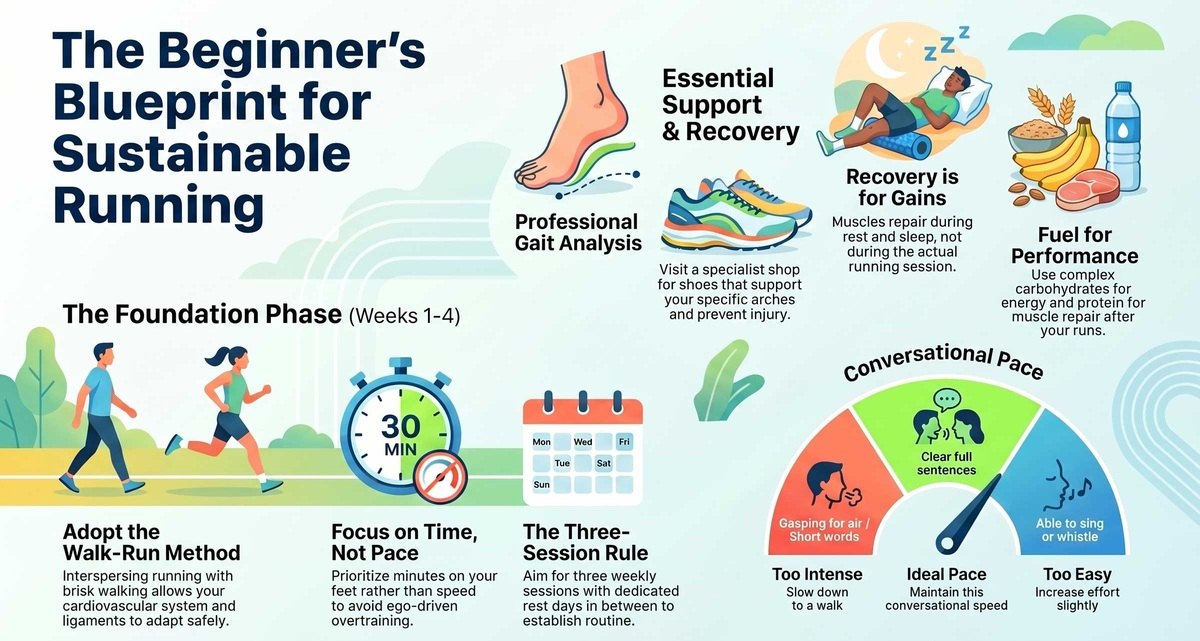
Many beginners make the mistake of going too hard, too fast, often leading to shin splints or burnout within the first fortnight. My philosophy is simple: gradual progression. We start with a walk-run method. By interspersing your running with brisk walking, you allow your cardiovascular system to adapt while letting your tendons and ligaments strengthen. We aren't training for an Olympic sprint; we are training for a lifestyle change. This method keeps your heart rate manageable and ensures you can finish your session feeling energised rather than exhausted.
The First Four Weeks: Establishing the Routine
In the initial phase, I recommend three sessions a week, spaced out with rest days in between. During these sessions, don't worry about pace. Pace is an ego metric that doesn't matter yet. Instead, focus on time on your feet. If you run for twenty minutes and have to walk for ten of them, that is a success. Each week, we aim to increase the running intervals by a small margin, gradually reducing the walking breaks. This helps your body adapt to the impact forces of running without overtraining.
Gear Up: Choosing the Right Kit
You don't need the most expensive gadgets, but you do need appropriate footwear. Visiting a specialist running shop for a gait analysis is non-negotiable. Running in old, worn-out trainers is a fast track to injury. A proper pair of shoes will support your arches and cushion your landing, making those first few weeks far more comfortable. Pair this with moisture-wicking synthetic socks to prevent blisters, and you are already ahead of the curve.
Listen to Your Body’s Signals
There is a distinct difference between the 'good' discomfort of working hard and the sharp, localised pain of injury. As a coach, I encourage my athletes to keep a training log. If you notice persistent pain in your knees, ankles, or shins, take an extra rest day. Skipping a run to avoid an injury is a smart, professional decision, not a sign of weakness. Recovery is when the real physiological gains occur, so prioritise your sleep and hydration as much as your running sessions.

Need a clear race fuelling strategy?
Get instant, practical advice on hydration and race-day nutrition directly on this page for free. Try asking Raye: 'How many grams of carbs should I take per hour during a half marathon?' Ask for fuelling advice
Fueling Your New Habit
Nutrition plays a vital role in your success. You don't need fancy supplements, but you do need to ensure you are fueling your body with complex carbohydrates for energy and protein for muscle repair. If you are running in the morning, a banana or a small slice of toast is sufficient. If you run after work, ensure you have eaten a balanced lunch. Staying hydrated throughout the day is just as important as the water you drink immediately following your run.
Top 10 Tips for the Aspiring Runner
If you want to stay motivated and injury-free, follow these essential rules:
1. Invest in professional shoes: Get a gait analysis at a dedicated running shop.
2. Start with the run-walk method: Consistency beats intensity every time.
3. Don’t worry about pace: Run at a 'conversational pace' where you can speak in full sentences.
4. Prioritise rest: Muscles repair on rest days, not during the run.
5. Focus on consistency: Three small runs are better than one giant, exhausting effort.
6. Stretch post-run: Focus on calves, hamstrings, and hip flexors.
7. Join a community: Whether it's a local club or an online group, accountability helps.
8. Hydrate consistently: Don't wait until you're thirsty to drink water.
9. Set small, achievable goals: Aim to complete the week, not to run a marathon tomorrow.
10. Enjoy the process: If you aren't having fun, you won't keep it up.
Running is a journey, not a race. Take your time, enjoy the fresh air, and celebrate the fact that you are moving your body. Before you know it, that first 5K will feel like a warm-up.


