

Compression Boots vs. Massage Guns: The Ultimate Recovery Showdown


Want to build strength to support your running?
Get targeted strength routines and mobility exercises designed specifically for runners directly on-site. Try asking Raye: 'What are 3 key gym exercises to improve running economy?' Get strength tips
The Science of Recovery
As a running coach, I often see athletes pour hours into their training programmes, only to neglect the most critical component: recovery. Your muscles do not grow or get stronger while you are hitting the pavement; they adapt during your rest periods. To stay at the top of your game, you need to invest in the right tools to accelerate that physiological repair.
The two titans of the recovery industry today are pneumatic compression boots and percussion massage guns. Both serve distinct purposes, and choosing the right one depends heavily on your specific training demands, your budget, and the type of fatigue you experience after your long runs or speed sessions.
Understanding Percussion Massage Guns
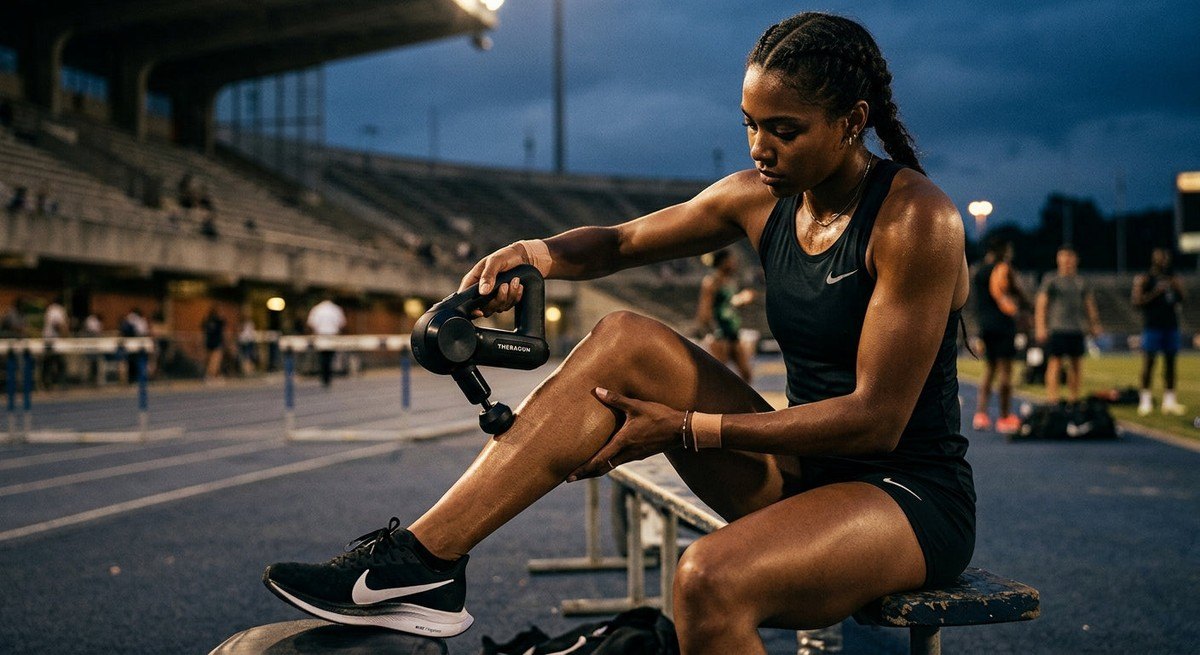
Massage guns, or percussion therapy devices, are designed to target specific areas of tightness. They work by delivering rapid, concentrated pulses of pressure into the deep muscle tissue. This action helps to break down adhesions, improve blood flow to localised areas, and provide immediate relief to those stubborn knots in your hamstrings, glutes, or calves.
For the busy athlete, the massage gun is a godsend. It is portable, relatively affordable, and perfect for a quick five-minute session before or after a workout. However, it requires you to actively perform the massage, which can be taxing if your upper body is already fatigued from a heavy training week.
The Power of Compression Boots
Compression boots are the gold standard for systemic recovery. These devices use air chambers to inflate and deflate around your entire leg, creating a sequential massage pattern. By applying consistent, graduated pressure, they help flush out metabolic waste products like lactic acid and reduce post-exercise swelling.
Unlike the massage gun, compression boots offer a passive recovery experience. You simply zip them up, set the timer, and relax. Because they cover the entire limb, they are far more effective at improving venous return and reducing overall systemic fatigue, making them a preferred choice for marathon runners and ultra-endurance athletes.
Will It Make me Faster
The million-dollar question: will these tools make you faster? The direct answer is that they do not grant you speed, but they facilitate the recovery required to train harder and more frequently. By reducing delayed onset muscle soreness (DOMS), you can return to your next interval session with fresher legs and better form.
When you recover faster, you can prioritise high-intensity workouts without the lingering heaviness that often plagues amateur runners. Speed is a byproduct of consistent, high-quality training. If these tools allow you to hit your paces with greater consistency, your performance improvements will inevitably follow as your aerobic capacity expands.

Have a specific performance goal in mind?
Get direct feedback on your training targets right here on the page—no sign-up or account required. Try asking Raye: 'How should I adjust my weekly mileage for a sub-20 minute 5K?' Ask about your goals
How long before I see improvements
Recovery technology is not a magic pill. You should expect to see noticeable improvements in your recovery timelines within two to four weeks of consistent use. You will likely notice that your legs feel less 'heavy' on recovery days and that your range of motion begins to improve significantly.
Patience is key. While the immediate sensation of relief is satisfying, the long-term benefit is the cumulative effect of reduced inflammation over several months. By integrating these tools into your weekly routine, you are setting the stage for fewer injuries and a more sustainable running career.
Making the Final Decision
If you are a track athlete focusing on explosive power and short-duration speed, a massage gun is your best investment. Its ability to target specific muscle groups will help you maintain optimal mobility for sprinting. Conversely, if you are a road runner clocking up high mileage, the systemic flushing effect of compression boots is unparalleled.
Ultimately, both tools complement a well-rounded recovery strategy that includes sleep, hydration, and proper nutrition. Do not view them as replacements for these fundamental pillars, but rather as force multipliers that help you extract the maximum potential from your body.
10 alternative training techniques
- Active Recovery Cycles: Engaging in low-impact movement like swimming or light cycling encourages blood flow to damaged tissues without the high-impact stress of running. This helps flush out metabolic waste and maintains joint mobility, ensuring that your cardiovascular system stays active while your primary running muscles undergo necessary repair and rebuilding.
- Contrast Water Therapy: By alternating between hot and cold water immersions, you stimulate vasodilation and vasoconstriction. This 'pumping' action in your blood vessels helps to reduce inflammation and accelerate the removal of waste products, effectively helping athletes feel revitalised and ready for the next training session after intense, high-impact workouts.
- Myofascial Release with Foam Rolling: Using a high-density foam roller allows you to apply sustained pressure to tight fascia. This technique helps to release tension, improve overall flexibility, and correct muscular imbalances. It is a fundamental practice that every runner should master to prevent injuries and maintain long-term structural health and efficiency.
- Proprioceptive Neuromuscular Facilitation (PNF) Stretching: This advanced form of flexibility training involves both stretching and contracting the targeted muscle group. By utilising the body's natural reflexes, PNF stretching can significantly increase your range of motion more effectively than static stretching alone, which is essential for maintaining optimal running form and stride length.
- Epsom Salt Baths: Magnesium sulphate, or Epsom salt, is absorbed through the skin to help relax tense muscles and reduce cramping. The warm water also aids in physical relaxation, providing a calming environment that lowers cortisol levels, which is vital for an athlete's hormonal balance and overall systemic recovery.
- Wearable Recovery Monitoring: Utilising heart rate variability (HRV) monitors allows you to track your autonomic nervous system's recovery state objectively. By understanding your HRV data, you can adjust your training intensity daily, ensuring that you do not overtrain and that you hit your hard sessions only when your body is truly ready.
- Sports Massage Therapy: Professional deep-tissue massage provides a level of precision that mechanical tools cannot replicate. A skilled therapist can identify subtle imbalances and scar tissue buildup, providing targeted release that prevents chronic injury and keeps your kinetic chain functioning smoothly throughout your competitive season and training blocks.
- Compression Garments: Wearing medical-grade compression socks during and after runs helps stabilise muscle fibres and reduce the micro-tearing that occurs during high-impact activity. This constant, light pressure maintains blood flow and reduces the accumulation of fluid, helping your legs feel significantly lighter and less fatigued during long-distance training runs.
- Sleep Hygiene Optimisation: Sleep is the most potent recovery tool available. By creating a dark, cool, and quiet environment, you facilitate deep REM cycles where the body releases human growth hormone. This is when the majority of physical repair occurs, making it the most important 'technique' for any serious athlete.
- Mindfulness and Breathwork: Incorporating controlled breathing exercises helps shift your nervous system from a sympathetic (fight-or-flight) state to a parasympathetic (rest-and-digest) state. This rapid transition is crucial for lowering systemic inflammation and reducing the psychological stress that often accompanies high-pressure training cycles, allowing for a more complete and efficient recovery.


