

Hydration 2.0: The Ultimate Guide to Electrolytes and Sugar-Free Hydration


Planning your next fitness milestone?
Get immediate guidance on pacing, workout structure, or race prep directly on-site for free. Try asking Raye: 'Can you outline a simple 4-week build plan for a 10K?' Get instant guidance
I don't remember the stress as a child of always having to have a water bottle on me, but maybe that's just something I don't remember because it was so insignificant. Nowadays, when you send your kids off to clubs, they have drink breaks every five minutes; when you go to a fitness class, everyone has a bottle at the side. However, the way we drink water has massively changed. For years it was basically: if you're sweating buckets, then grab some water. If you're a bit older or running a bit faster, then maybe you would grab a multicoloured sports drink, which was basically a sugar bomb. But now, we have all started paying attention to our bodies, treating them as high-value assets. Along with our approach to looking after our bodies, our approach to drinking has also grown up.
We've moved on from "Hydration 1.0"-which was all about sugary fuel and, from what I remember, inspired by Linford Christie and the Lucozade commercial-and we have now moved into "Hydration 2.0." When you walk into your local supermarket, or even a small corner shop, the shelves are full of sophisticated, fancy drink options. We're seeing less sugar and a big, big comeback for sodium...
Want to learn about Electrolytes while you are on the go? Hit play below
For the Sundried athlete, whether you are rushing between meetings or trying to squeeze in a quick training session, if you find that hydration aisle a bit confusing, then it's time to start finding out what's going on. If you open a newspaper, go online, follow any health blogs, or listen to government advice, we are being told to watch our salt intake: reduce your salt, low-salt bacon, low-salt this, low-salt that. But now we're being told to dump it into our water. We're being sold powders and various drinks that promise to boost our brains along with our immune system at the same time as we are rehydrating.
It is probably good to ask, though: Is the electrolyte renaissance actually based on how our bodies work and some real science, or is it just really, really good marketing? Is a simple squeeze of lemon in some tap water enough? Do high-performance athletes actually need those expensive powders and top-performing sports drinks? Do you need them? You may not class yourself as a top-performing athlete, so where do we draw the line?

Looking to shave time off your personal best?
Get immediate pacing strategies and interval workout ideas directly on-site for free. Try asking Raye: 'What is the best threshold session to help drop my 10K time?' Get instant pacing tips
This isn't all about the hype; we're going to break down how your body handles fluid so you can play the long game.
The evolution from fuel to wellness
To really understand where we are now, we have to look back at where it all started. Back in the day, sports drinks were designed for elite athletes and elite athletes only. They were basically fuel tanks designed to get sugar and water into marathon runners for their final miles or to make sure that sprinter was topped up with energy for his 100m sprint. That's excellent for them, but for the professional who is sitting at his desk or the triathlete who is working on their core base fitness, drinking sugar water isn't exactly ideal.
There has been a massive shift recently where most modern athletes are trying to avoid unnecessary sugar and artificial ingredients. When you look at what's in a sports drink, if the list is longer than your arm, the chances are you don't want to be drinking it. This shift has now pushed us towards Hydration 2.0: clean labels, no sugar, and a serious increase in electrolytes-specifically sodium.
Brands have realised that hydration isn't purely about endurance; it's about thinking clearly and staying healthy. This shift for brands also fixes a basic problem: the problem of boredom. When we say "water tastes boring," it is actually a real psychological issue called "voluntary dehydration." The science says if a drink tastes good, then we will drink more of it. Flavour is a cheat code for us to get more volume.

The science of staying hydrated
To actually know if you really do need these products, you need to understand the tiny mechanics of how water gets from your stomach into your bloodstream. Drinking is just the start; hydration is what happens when your body actually holds onto that fluid.
The VIP entrance: SGLT1 (Sodium-Glucose Cotransporter 1) is a system used to get water from your gut into your system. This specific doorway is called the SGLT1 transporter.
Back in the 1960s, research found that the gut absorbs fluid best when it has a mix of sodium and glucose present together (salt and sugar). This transporter is like a security door that requires two keys to open it: two sodium ions and one glucose molecule. Together they both unlock the door, and when they do, they rush into your bloodstream and drag water along with them. It's a little bit like how we all love ice cream-marrying that perfect balance of sugar and fat together.
Now we are at the sugar-free trend of Hydration 2.0. While removing sugar is excellent and better for your general health, it's technically shutting down the body's fastest way of absorbing water. For a healthy person on a typical normal day, it doesn't really matter. But if you are severely dehydrated, a solution with a little sugar is technically going to work faster.
Why plain water can trick you
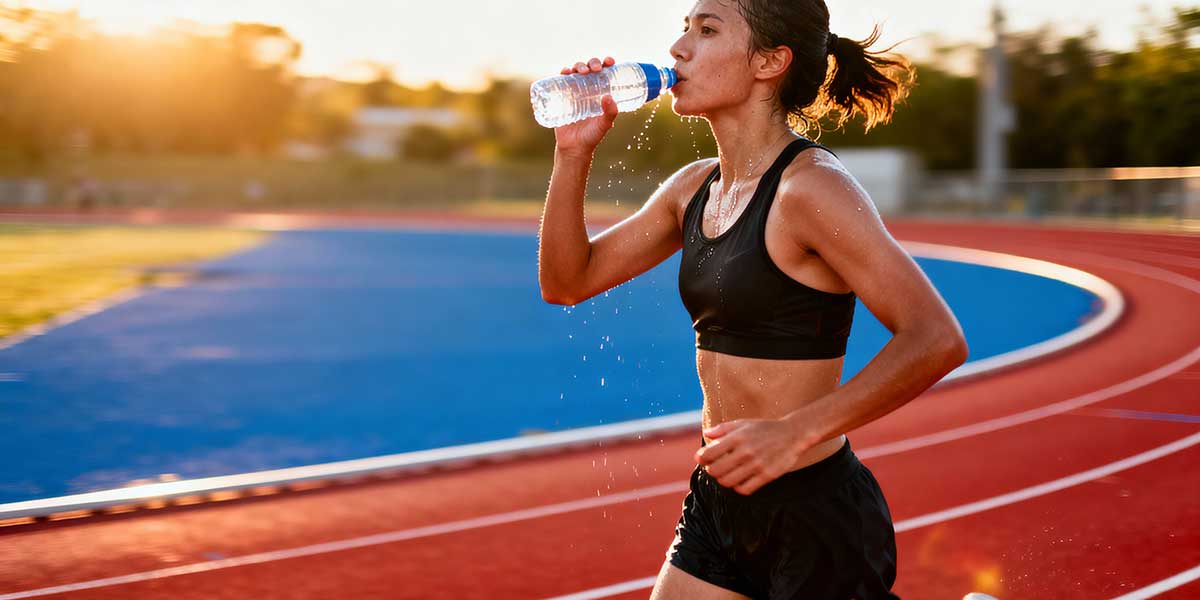
The "boring" nature of water has another downside. Pure water is hypotonic, and that means it's more watery than your blood. While it absorbs fine, drinking lots of water can dilute the sodium in your blood. This, in turn, will trick your brain into thinking you are hydrated before you actually are, and you stop drinking.
That is voluntary dehydration once again. Your brain thinks the job is done. On the other side of things, sugary drinks can sit heavily in your stomach and make that horrible sloshing feeling. To get in the "sweet spot" (no pun intended), you need a drink with enough sodium to keep you thirsty enough to finish a bottle, but not so heavy that it is going to slow you down.
The truth about lemon water
If you like drinking water the same way I do, then you may need to ask the question: is squeezing in some lemon juice enough? The answer is yes, but with a big asterisk. Lemons are healthy, but they aren't magic in the electrolyte department. They are not a true electrolyte replacement.
The electrolyte gap
People think that lemons are packed with electrolytes, but the numbers tell a very different story. A medium lemon has about 30 to 40 mg of Vitamin C and 150 mg of potassium, but it has less than 2 mg of sodium.
During an hour of hard training, you can sweat out between 500 mg and 1500 mg of sodium. A lemon gives you basically zero in return. So if you just drink lemon water after a sweat session, you will have what's known as a "sodium gap." You are drinking fluid, but without the salt to hold onto it, you're likely just going to pee it straight back out again.
Where lemons win: taste and kidneys
However, the best drink is the one you actually drink. The tartness of lemons makes your mouth water and encourages you to keep sipping. If you're just having a light day, lemon juice makes water taste better-in fact, a lot better-so you stay hydrated simply because you drink more of it. Not to mention, one of the best reasons to drink lemon water is kidney health. Lemons are full of citric acid, which stops kidney stones from forming. If you eat a high-protein diet, this is a very smart move.
Market analysis: what are you actually buying?
The "Electrolyte Renaissance" has given us three main types of products. Here is how to spot the difference:
-
The "Medical" Hydrators: These stick to the old-school science. They have a precise mix of salt, potassium, and sugar. The sugar is there to open that "revolving door" for fast absorption. These are amazing if you are ill or dangerously dehydrated, but probably overkill for a standard gym session.
-
The "Lifestyle" Hydrators: These are for the modern athlete who hates sugar. They usually pack a huge punch of sodium (often 1000mg) but zero sugar. The idea is that we get enough carbs from food. These are great for keeping your blood volume up if you sweat a lot, even if they absorb a tiny bit slower.
-
The "Clean" Hydrators: These usually use coconut water powder. They look great on the label and taste nice, but they are often high in potassium and too low in sodium to really help after a heavy sweat session.
The Citrate Trend
You might notice brands switching from Table Salt (Sodium Chloride) to Sodium Citrate. Chloride can taste like sea water and upset your stomach. Citrate is sour (like lemon) and blends better with fruit flavours, plus it's gentler on your gut.
The "Sweat Test": Do You Actually Need Them?
Do you need to buy this stuff? It depends on two things: Time and Sweat.
-
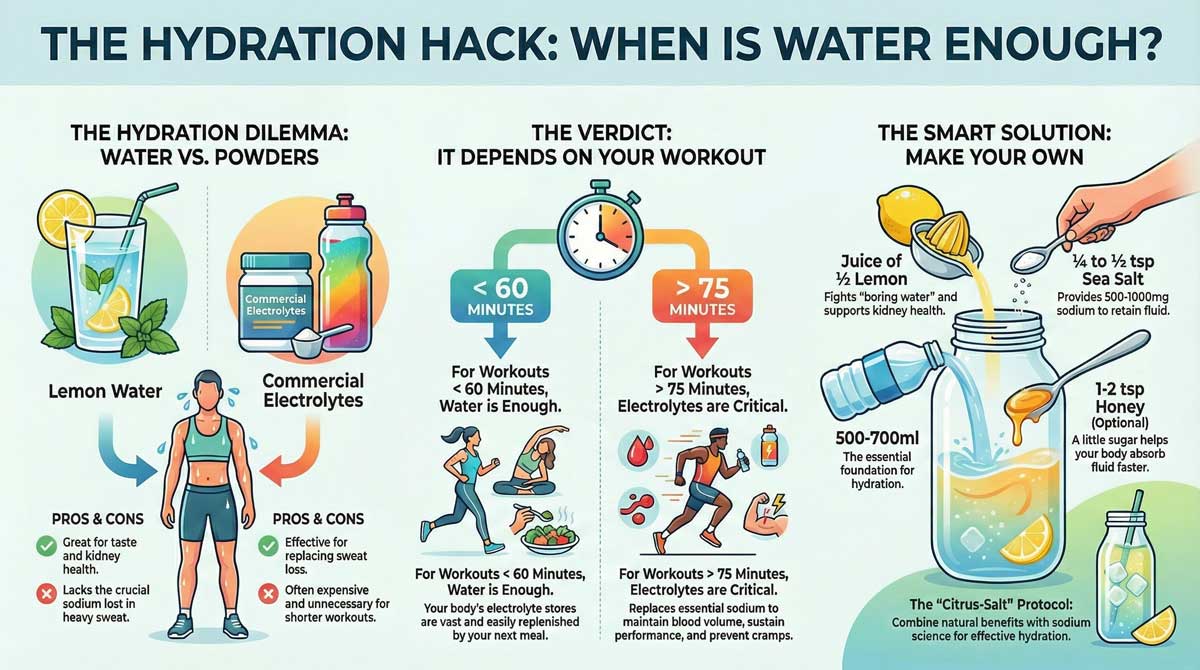
Scenario A: The Moderate Session (Under 60 Minutes) For a gym workout, a 5-mile run, or a swim, you probably don't need fancy electrolytes. Your body has plenty of reserves. A healthy adult holds roughly 90,000 mg of sodium in their body. Losing 500 mg in a workout is a loss of less than 1%. You can handle that. Just eat a meal afterwards and drink water or lemon water.
-
Scenario B: The Endurance Athlete (Over 90 Minutes) If you are going long or you are a "salty sweater" (you get salt lines on your kit), the need is real. Performance starts to drop when you lose 2% of your body weight in fluid. If you just drink plain water now, you dilute your blood too much. For anything over 75-90 minutes, you need electrolytes to keep going.
The Magnesium and Potassium Myth
Don't buy a drink just for magnesium. We lose hardly any magnesium when we sweat. Cramping is usually down to tired muscles, not a lack of bananas. Sodium is the king here; the others are just backup dancers.
The Money Talk and the DIY Solution
Buying pre-mixed sachets every day can cost you over £500 a year. That's a lot for salty water. But you can hack this in your own kitchen for pennies.
The "Citrus-Salt" Protocol
You can get the same results at home. By adding what the lemon lacks-sodium-you make a scientifically perfect sports drink.
The Recipe:
-
Fluid Base: 500-700ml of chilled water.
-
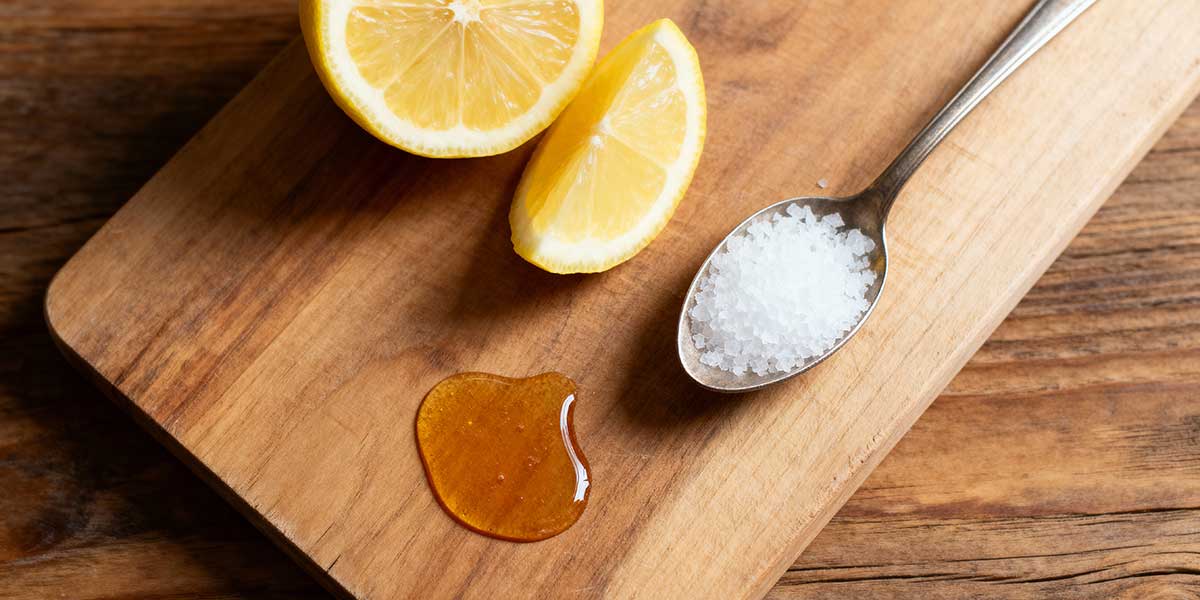
Flavour: Juice of ½ lemon or lime. This adds flavour and protects your kidneys.
-
The Engine: ¼ to ½ teaspoon of high-quality sea salt (like Himalayan). This adds 500-1000mg of sodium, turning it from "nice water" to a heavy-duty hydrator.
-
Optional Boost: 1 teaspoon of maple syrup or honey. This little bit of natural sugar opens up that fast-absorption door without the massive sugar crash of commercial drinks.
The lemon hides the saltiness, and the salt makes the lemon taste sweeter. It sounds weird, but it works.
Electrolyte Renaissance
The "Electrolyte Renaissance" is a mix of real science and loud marketing. Is lemon juice good for you? Absolutely. It won't replace your electrolytes, but it saves your kidneys and makes you drink more. Do hydration drinks work? Yes. High-sodium drinks keep fluid in your body better than water alone. Are they needed? For a workout under an hour? Probably not. For the endurance athlete? They are essential. By adopting the "Lemon-Salt" habit-fresh lemon for health, a pinch of salt for mechanics-you get the best of both worlds. It's smart, cheap, and effective.
The Sundried Roundup
You've got the info; here is how to actually use it.
What are the pros doing? The elites aren't waiting until they are thirsty. They are "sodium-loading." Before a big race, they drink high-sodium fluids to top up their blood volume before they even start sweating. They are expanding their gas tank.
How can I build this into my life? Listen to your body. If you finish a workout with a headache despite drinking water, you need salt. Use electrolytes (bought or DIY) for sessions over an hour. Try the "Citrus-Salt" mix first thing in the morning to wake up your system.
The budget approach? Stick to the "Citrus-Salt" recipe above. Buy a bag of sea salt and some lemons. You save hundreds of pounds and skip the artificial ingredients.
Middle of the road approach? Keep a tube of electrolyte tablets in your gym bag. Use them only on the hard days or when you feel flat. Water is fine for the easy days.
Pushed for time? If you're busy, pay for the convenience. Keep sachets in your car and desk. If it's easy to reach, you'll drink it.
I have 3 hours a week, what can I do? Focus on quality. If you are short on time, your intensity is probably high. Drink a sodium-rich drink 30 minutes before you go hard to help you push through.
I train 7 days a week. How do I maximise this? You can't rely on thirst. Weigh yourself before and after sessions to see how much fluid you lose, then replace it aggressively so you are ready for tomorrow.
Top 10 Tips
Salt is not the enemy
If you sweat, you need it.
Lemon for kidneys
Daily lemon juice helps stop stones.
Timing matters
Drink before you get thirsty.
Don't fear sugar
A tiny bit helps absorption after hard sessions.
Watch the colour
Your pee should be pale straw, not clear and not dark.
DIY is effective
You don't need a degree to mix salt and lemon.
Mind the gap
Water doesn't replace what you sweat out on long runs.
Taste drives volume
If you like it, you'll drink it.
Test yourself
Weigh yourself to learn your sweat rate.
Play the long game
Hydration is about performing well forever, not just for summer.
Hydration FAQ: The Science of Sweat
🏃 Running: Beating Gravity
Running is unique because you have to carry every drop you drink. Since 1 litre of water equals 1 kilogram of mass, hydration strategy changes how you move.
Should I drink before a morning run?
Absolutely. You wake up dehydrated from breathing all night.
-
The Protocol: Drink 250-500ml about 20-30 minutes before you head out. This gets fluid into your blood and out of your stomach so it doesn't slosh around.
Do I need to carry water?
-
Runs under 30 mins: No. Leave the bottle at home; the annoyance isn't worth it.
-
Runs 45-60 mins: This is the tipping point. In cool weather, you can skip it. In heat (>21°C), yes-even rinsing your mouth tricks your brain into feeling cooler.
-
How to carry it:
-
Short runs: Use a Handheld soft flask (stops the sloshing sound). Swap hands every mile to save your shoulders.
-
Long runs (>90 mins): Use a Hydration Vest. It distributes weight well but can act like a blanket, making you sweat more.
-
The Hot Weather Hack
When it's roasting outside, use an "Ice Bandana" or a buff filled with ice around your neck. It cools the blood going to your brain. Or, drink a slushy (crushed ice) before starting to lower your core temp by 0.5°C.
🚴 Cycling: Aerodynamics & Safety
On the bike, the frame carries the weight, so you can-and should-drink more. This isn't just about thirst; it's about staying safe. Dehydration ruins reaction time, which you need when riding in a pack at 40kph.
The 2-Hour Ride Strategy
The rule of thumb is 2 bottles (approx. 600-700ml each).
-
Bottle 1 (Water): To wash your mouth out and avoid "rot gut".
-
Bottle 2 (Carbs & Electrolytes): Sip for fuel.
DIY Cycle Mix
Don't want to buy expensive powders? Make your own:
-
600ml water
-
60g sugar
-
1.5g salt
-
Why: It mimics the fancy brands (like Skratch or Tailwind) for a fraction of the cost.
🏋️ Weight Training: The Pump is Real
Muscles are roughly 75% water. That "pump" you feel is cell swelling, which signals your body to grow muscle. If you are dehydrated, you lose that signal. Even a 1-2% drop in hydration can kill your power output.
Gym Bag Essentials
-
Creatine Users: If you take creatine, it pulls water into the muscles. You must drink an extra 1.0 to 1.5 litres daily to support this.
-
The Salt Hack: Skip the expensive BCAAs. A pinch of sea salt in your water is often enough to keep contractions strong and prevent cramping during a 60-minute lift.
🧪 The Maths: Recovery & Sweat Testing
The Golden Rule of Recovery
Recovery doesn't happen without water. Use the 150% Rule: If you lost 1kg of sweat, drink 1.5 litres of water. Sip it slowly over an hour-if you gulp it in 30 seconds, your kidneys will just flush it out.
The "WUT" Check
Check these three things every morning to see if you're starting the day in a hole:
-
Weight: Down more than 1% from yesterday?
-
Urine: Dark like apple juice?
-
Thirst: Are you thirsty?
If you hit two of these, drink up immediately.
"Am I a Salty Sweater?"
Sweat loss is a two-part equation: Volume (how much liquid) and Sodium Concentration (how salty it is).
-
The Analogy: Think of sweat like coffee. The volume is the size of the cup. The sodium is the strength of the brew.
-
The Variance: Humans vary wildly. Person A might lose 200mg of sodium per litre (weak tea), while Person B loses 2,000mg (double espresso). If Person B drinks only water, they risk hyponatremia (diluting their blood sodium dangerously).
How to Test Yourself
| Method | What it does | Best for... |
| DIY Home Test |
Weigh yourself naked before & after a 1-hour hard session. (Weight loss + Fluid drunk = Sweat Rate). Check your kit: White salt crusts or stinging eyes = High Salt Sweater. |
Everyone. This is the baseline. |
| Wearables | Devices like the Gatorade Gx Patch, Nix, or hDrop measure sweat in real-time. | Tech-loving athletes who want data without a lab. |
| Lab Test | The Gold Standard (e.g., Precision Hydration). Uses chemicals to stimulate sweat while sedentary. | Ultra-runners and Ironman competitors. |


