

AMOLED vs. MIP Displays on Sports Watches: Which is Better?


Need performance advice right now?
Ask our on-site coach anything about your routines. It's completely free and available immediately right here: 'What are 3 quick exercises for ankle mobility?' Ask Raye for free
What are the press saying?
The sports watch industry is currently divided, with tech journalists and professional athletes debating the supremacy of display technologies. Critics point towards AMOLED as the modern standard for vibrancy, while purists argue that Memory-in-Pixel (MIP) remains the only choice for ultra-endurance athletes who prioritise battery longevity over colour depth. The consensus suggests that the choice is no longer about which is 'better' in a vacuum, but which aligns with your specific training intensity.
Reviewers have noted that while AMOLED panels have made significant strides in power efficiency, they still struggle against the relentless glare of the midday sun compared to the reflective nature of MIP screens. Conversely, the high-resolution interface of AMOLED provides a level of data visualisation that makes complex navigation maps far easier to interpret during a race.
Comfort & Fit
Beyond the screen, the integration of these displays dictates the physical form of the watch. AMOLED screens often require thicker chassis designs to accommodate larger batteries needed to power the pixels. This can impact the weight distribution on the wrist during long-distance runs. MIP displays, being less power-hungry, allow for slimmer, more lightweight profiles that many athletes find more comfortable for 24-hour wear.
Engineers must balance the physical footprint with the aesthetic appeal. A watch that feels cumbersome is a liability, yet a display that is difficult to read in the heat of competition is equally problematic. Finding a balance between a high-contrast display and an ergonomic strap system remains the primary challenge for hardware manufacturers.
Features to Look out For
When choosing between these technologies, you must consider ambient light sensors and peak brightness levels. AMOLED screens offer stunning blacks and rich colours, ideal for viewing health metrics in low-light conditions. MIP displays, conversely, thrive in direct sunlight, becoming clearer the brighter the environmental light becomes.
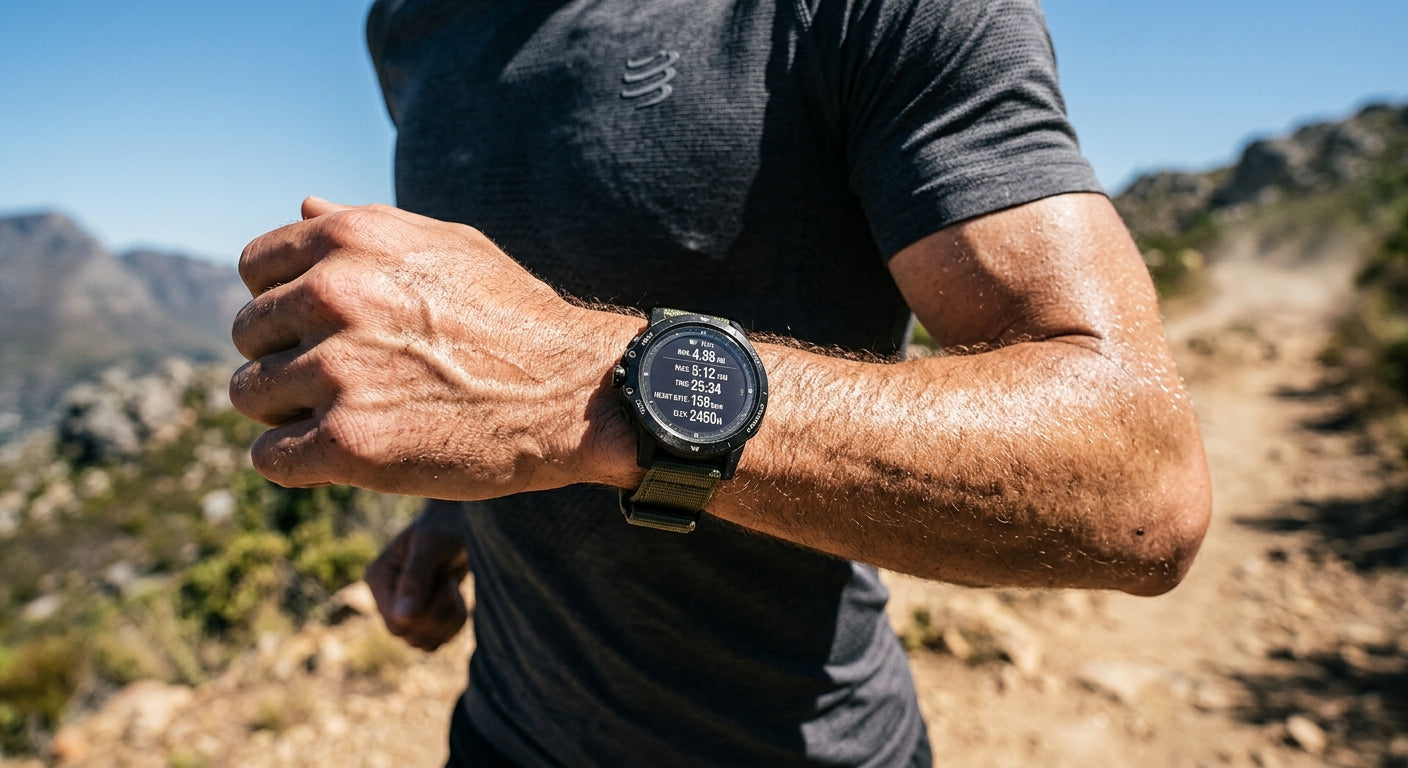
Furthermore, look for 'always-on' capabilities. While modern AMOLED watches offer this, it significantly taxes the battery. MIP displays are inherently 'always-on' without a battery penalty, making them the superior choice for those who need to glance at their pace without a flick of the wrist.
Evolution and History
The history of sports watch displays began with simple, low-power monochrome LCDs. These were functional but lacked the depth required for modern mapping and rich data graphics. The introduction of MIP technology revolutionised the sector by allowing a screen to hold a static image without drawing power, save for when the data changed.

Need a clear race fuelling strategy?
Get instant, practical advice on hydration and race-day nutrition directly on this page for free. Try asking Raye: 'How many grams of carbs should I take per hour during a half marathon?' Ask for fuelling advice
AMOLED technology entered the scene as a premium upgrade, borrowed from the smartphone industry. Initially, it was dismissed as a battery-draining gimmick. However, advancements in LTPO (Low-Temperature Polycrystalline Oxide) backplanes have allowed AMOLED screens to throttle refresh rates, closing the gap between the two technologies significantly over the last three years.
Special Features & Technical Specifications
Material Composition
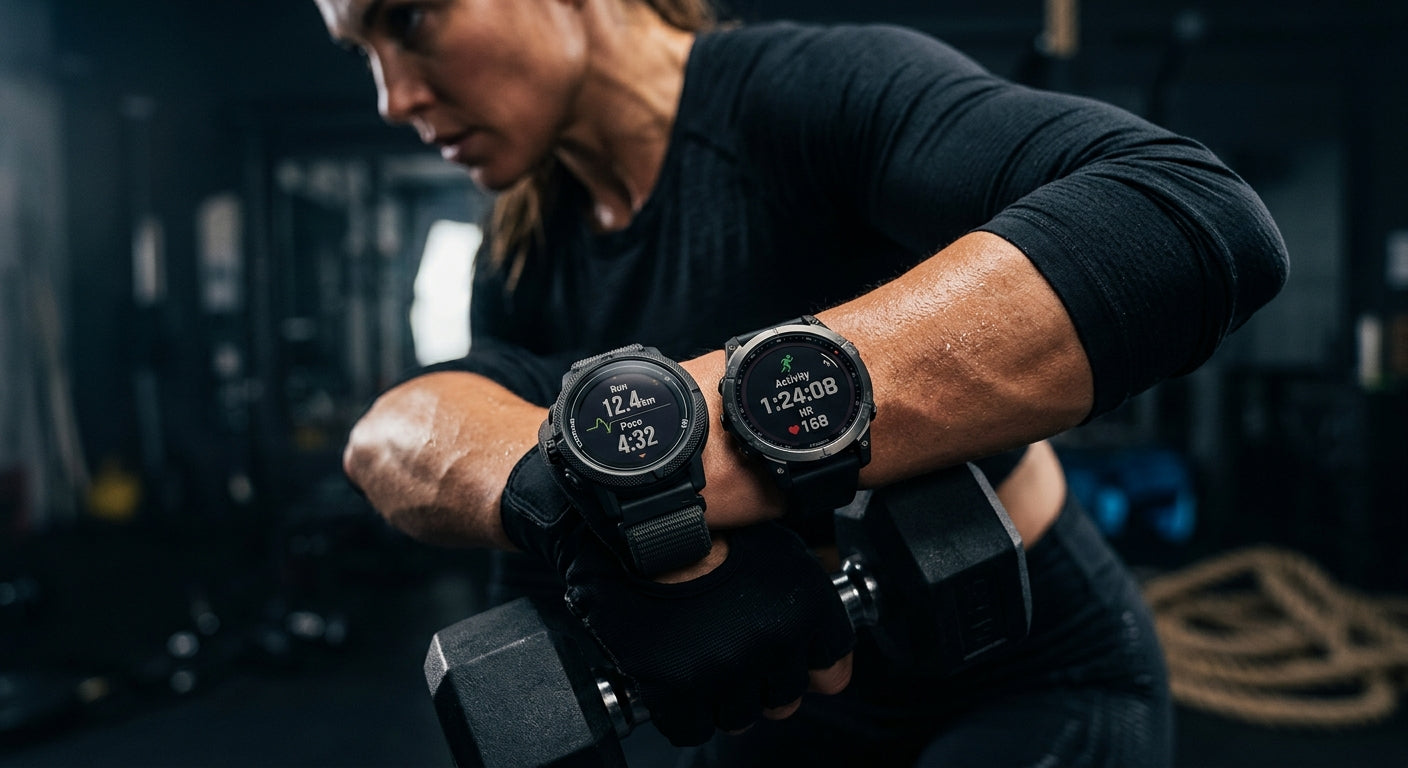
AMOLED displays utilise organic compounds that emit light when current is applied, allowing for individual pixel control. MIP displays utilise a reflective layer behind the liquid crystal, which reflects ambient light to illuminate the screen.
Physical Dimensions and Weights
Current generation AMOLED sports watches typically weigh between 50g and 80g, often featuring reinforced polymer or titanium bezels to manage heat. MIP-equipped models are generally lighter, often ranging from 40g to 65g due to less complex power management circuitry.
Engineering Changes
Manufacturers have moved from standard LCDs to high-refresh-rate AMOLEDs. Simultaneously, MIP screens have evolved to include higher pixel densities, allowing for sharper typography and smoother icons than the blocky designs of the past decade.
What to Expect in the future?
The future likely lies in hybrid technologies. We are already seeing prototypes that attempt to combine the reflective nature of MIP with the colour depth of AMOLED. As manufacturing costs decrease, the divide between these two camps will shrink, likely resulting in a 'best of both worlds' display that offers perfect outdoor visibility alongside stunning indoor clarity.
Expect to see further innovation in micro-LED technology, which promises the brightness of AMOLED without the power consumption issues. For the athlete of tomorrow, the choice between screen types will eventually become a footnote in history, as displays become perfectly optimised for every conceivable lighting condition.


