

Respiratory Muscle Training (RMT): Enhancing Diaphragmatic Endurance under Stress


Want to build strength to support your running?
Get targeted strength routines and mobility exercises designed specifically for runners directly on-site. Try asking Raye: 'What are 3 key gym exercises to improve running economy?' Get strength tips
In the high-stakes arena of elite endurance performance, the limiting factor is often not the capacity of the legs, but the failure of the respiratory system. When an athlete pushes beyond their lactate threshold, the diaphragm—the body’s primary breathing muscle—begins to fatigue. This physiological decline triggers the respiratory metaboreflex, a survival mechanism that diverts blood flow away from the locomotor muscles in the limbs to prioritise the oxygen-hungry diaphragm. The result is a sudden, debilitating heaviness in the legs that brings even the most seasoned competitors to a standstill.
Understanding this reflex is essential for any athlete aiming to break through performance plateaus. By training the inspiratory muscles, you are not merely improving your ability to breathe; you are effectively delaying the onset of the metaboreflex, allowing your cardiovascular system to maintain optimal blood delivery to your quadriceps and calves under extreme physical exertion.
How can I start out?
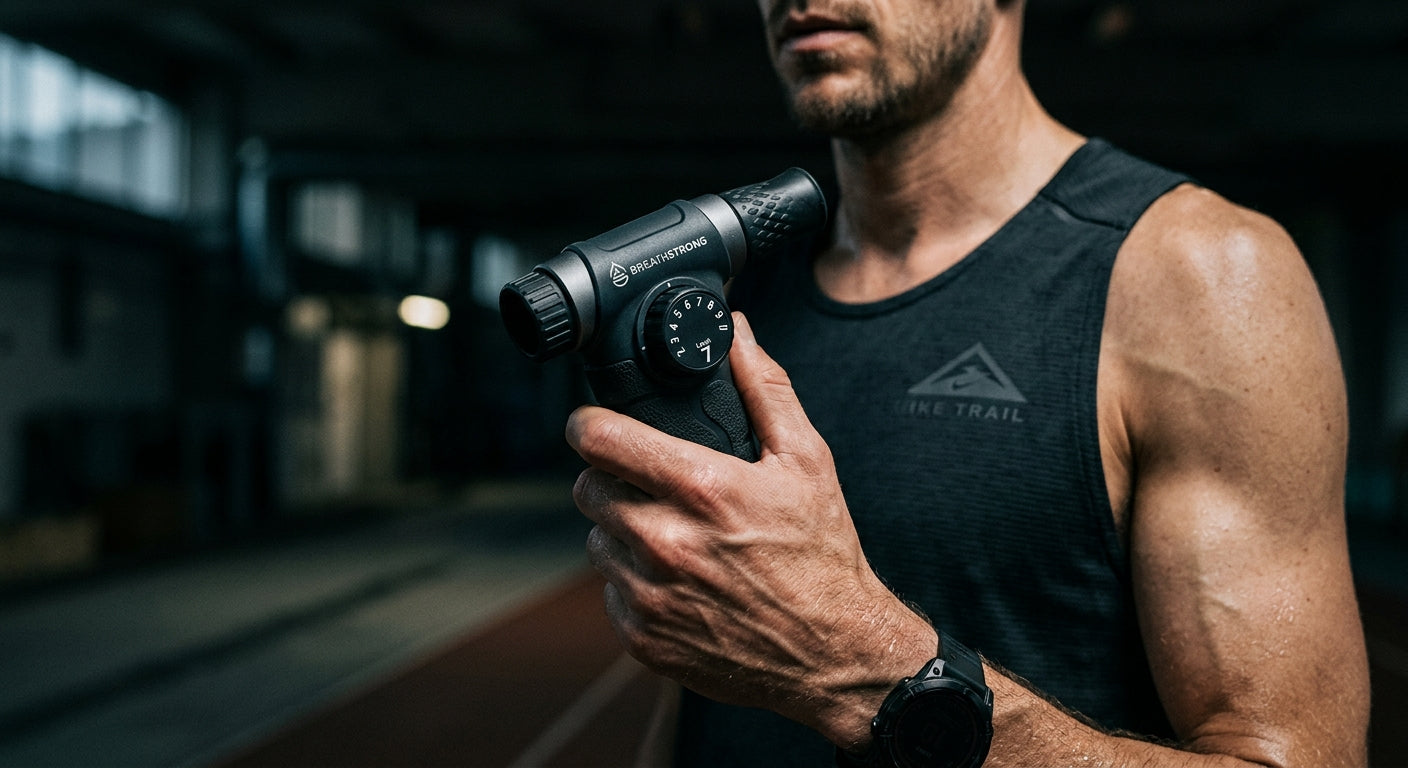
The journey to enhanced respiratory efficiency begins with targeted inspiratory muscle training (IMT). You should start by acquiring a handheld pressure-threshold device, which provides the necessary resistance to force your diaphragm to work against a set load. These devices allow you to precisely calibrate the intensity of your inhalation, much like adding plates to a barbell.
For beginners, the protocol is straightforward. Dedicate two sessions per day, consisting of 30 inhalations at approximately 50% of your maximum inspiratory pressure (MIP). It is vital to maintain a controlled, steady pace. Ensure your posture is upright, as slouching can restrict the thoracic cavity and hinder the full contraction of the diaphragm. Wearing high-quality, breathable apparel, such as a Sundried performance base layer, ensures that you remain comfortable and focused during these concentrated sessions.
Consistency is the cornerstone of success. Much like building strength in the gym, respiratory muscles require progressive overload. After the first week of training, you will likely notice a reduction in perceived exertion during steady-state runs. At this stage, you may incrementally increase the resistance on your device to ensure continued adaptation.
Tips for Improving
To maximise the benefits of RMT, you must integrate it into your wider training programme without compromising recovery. Avoid performing high-intensity breathing drills immediately before a strenuous track session; instead, treat them as a standalone stimulus or a focused warm-up. Monitoring your heart rate variability (HRV) can provide insights into how your autonomic nervous system is responding to the added load.

Have a specific performance goal in mind?
Get direct feedback on your training targets right here on the page—no sign-up or account required. Try asking Raye: 'How should I adjust my weekly mileage for a sub-20 minute 5K?' Ask about your goals
Furthermore, focus on the mechanics of your breathing during actual training runs. Many athletes default to shallow, chest-dominant breathing as fatigue sets in. Consciously shift your focus to diaphragmatic, belly-driven breaths, even when the pace becomes uncomfortable. This technique ensures that you utilise the full surface area of your lungs, reducing the mechanical strain on your respiratory muscles.
Recovery is equally vital. After intense training blocks, utilise compression-based recovery gear to facilitate blood flow and soothe strained intercostal muscles. A well-rested respiratory system is far more resilient than one that is chronically overstretched. By pairing your RMT protocol with disciplined rest, you create the physiological foundation necessary for sustained, high-intensity endurance.
Special Features & Technical Specifications
Material Composition
Modern respiratory training devices utilise medical-grade, anti-microbial polymers designed to withstand high-pressure airflow. Similarly, the Sundried apparel integrated into this training regimen employs recycled, moisture-wicking fabrics that maintain structural integrity despite the intense thermal output of the wearer.

Physical Dimensions and Weight
Typical handheld RMT units measure approximately 10cm by 5cm, weighing less than 100 grams. This compact design allows for seamless integration into a travel bag, ensuring that training can be maintained regardless of location. The lightweight nature of the device prevents wrist or hand fatigue during the 30-breath protocol.
Engineering Changes
Compared to legacy models, current RMT devices feature a refined, calibrated spring-loaded valve mechanism. This improvement allows for a 10% increase in load precision, preventing the 'flutter' effect seen in older designs. These engineering advancements ensure that every breath provides a consistent, measurable stimulus to the diaphragm, mirroring the incremental gains found in sophisticated gym-based powerlifting equipment.
Ultimately, by treating your diaphragm with the same rigour as your leg musculature, you unlock a hidden reserve of performance. As you master the art of controlled, high-resistance breathing, you will find that the 'wall' you once hit becomes a mere checkpoint on your path to athletic excellence.
