

Critical Power and W’ (W-Prime): Quantifying High-Intensity Work Capacity


Planning your next fitness milestone?
Get immediate guidance on pacing, workout structure, or race prep directly on-site for free. Try asking Raye: 'Can you outline a simple 4-week build plan for a 10K?' Get instant guidance
Understanding the Physiology of Performance
In the high-stakes environment of competitive cycling and endurance running, success is often measured in millimetres and milliseconds. To reach the pinnacle of human performance, athletes are increasingly turning to the mathematical precision of the Critical Power (CP) model. This framework moves beyond simple heart rate zones, offering an objective, data-driven methodology to quantify high-intensity work capacity.
Critical Power represents the highest intensity at which an athlete can maintain a steady state of physiological balance. It is the physiological threshold where your aerobic system is the primary engine, theoretically sustainable for long durations. Understanding this threshold is the cornerstone of modern training, allowing athletes to map their metabolic capabilities with surgical accuracy.
Complementing CP is the concept of W’ (W-Prime), which represents your finite battery of anaerobic work capacity. While CP is your sustainable cruising speed, W’ is the reserves you tap into during explosive surges, steep climbs, or final sprints. Once your W’ is depleted, your ability to perform above your Critical Power threshold vanishes, forcing an immediate reduction in intensity.
How can I start out?
To begin utilising this model, you must first establish your baseline. The most robust method involves completing three separate all-out efforts of varying durations, typically ranging from three to twelve minutes. By plotting these efforts on a power-time or speed-time graph, you can derive both your CP and your total W’ capacity.
Consistency is paramount during these testing sessions. Ensure that you are well-rested and that your equipment is calibrated. For cyclists, a power meter is non-negotiable for precision. Runners should utilise a reliable GPS watch or a foot-based power sensor. Proper attire, such as the lightweight, breathable gear from Sundried, ensures that your thermal regulation remains stable, preventing external factors from skewing your data.

Once you have your numbers, integrate them into your daily training software. Most modern platforms now auto-calculate these metrics, providing a real-time 'remaining W’' gauge during your workouts. This allows you to visualise exactly how much anaerobic fuel you have left in the tank during a simulated race effort.
Tips for Improving
Improving your CP requires a dedication to base-building and high-intensity aerobic intervals. Focus on long, steady-state sessions that push your aerobic engine to its absolute limit without crossing into excessive anaerobic fatigue. By raising your CP, you effectively increase the 'ceiling' of your sustainable performance.

Looking to shave time off your personal best?
Get immediate pacing strategies and interval workout ideas directly on-site for free. Try asking Raye: 'What is the best threshold session to help drop my 10K time?' Get instant pacing tips
To enhance your W’, incorporate short, high-intensity bouts that force your body to recover from oxygen debt. Interval training that forces you to dip into your W’ reserves and then recover while still at a high aerobic pace is essential. Wearing moisture-wicking tech gear from Sundried can help manage the intense heat generated during these high-intensity blocks, allowing for greater focus on power output.
Recovery is not merely the absence of training; it is a critical component of the W’ replenishment cycle. Learn to modulate your intensity during group rides or runs. When you are not in a race-winning move, hover just below your CP. This 'micro-recovery' allows your W’ to recharge, ensuring you have the necessary reserves for the final, decisive surge.
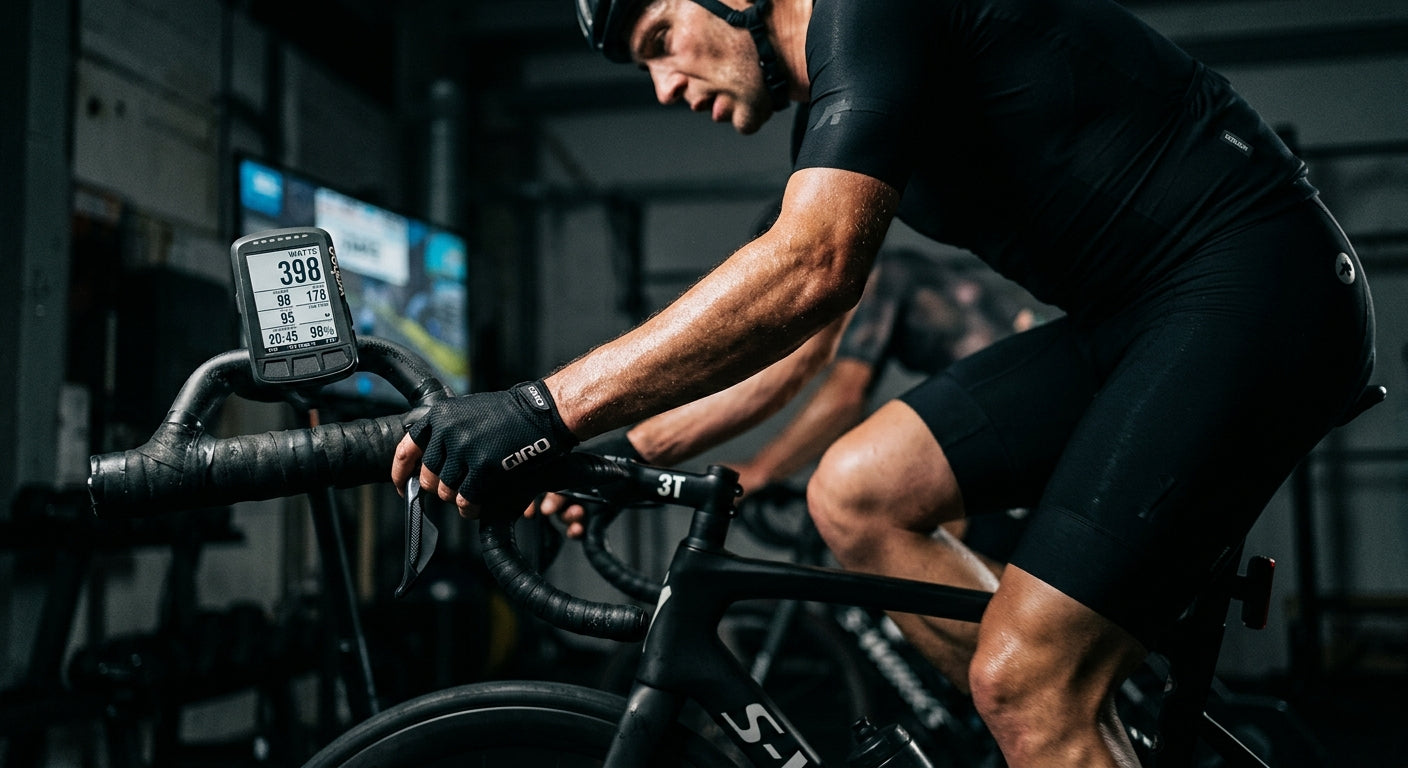
Special Features & Technical Specifications
Material Composition
The latest generation of Sundried athletic gear utilises a proprietary blend of recycled polyester and elastane, engineered to provide high-compression support without restricting range of motion. This fabric composition ensures rapid moisture evaporation, vital for maintaining core temperature during high-intensity efforts.
Physical Dimensions and Weight
Engineered for aerodynamics, the new range of cycling apparel features a streamlined, race-fit cut. The fabric weight has been reduced by 12% compared to previous iterations, with a density of 140gsm, ensuring minimal drag while maintaining durability during high-speed technical descents.
Engineering Evolution
Compared to previous generations, the current technical apparel incorporates seamless construction techniques that eliminate friction points. Furthermore, the integration of laser-cut ventilation zones provides a 15% increase in airflow, directly supporting the athlete's need to dissipate heat during the depletion of W’ reserves.
Ultimately, mastering the interplay between Critical Power and W’ transforms you from a reactive athlete into a tactical strategist. By understanding exactly when to deploy your anaerobic reserves, you ensure that you are never left empty-handed when the race enters its final, critical phase. Train with precision, recover with intent, and rely on equipment designed to support the rigours of elite performance.


