

Core Strength for Cyclists: Preventing Lower Back Pain


Planning your next fitness milestone?
Get immediate guidance on pacing, workout structure, or race prep directly on-site for free. Try asking Raye: 'Can you outline a simple 4-week build plan for a 10K?' Get instant guidance
Understanding the Cyclist's Kinetic Chain
For the dedicated cyclist, the bicycle is an extension of the human form. However, the hunched posture maintained over hundreds of kilometres places significant, often deleterious, stress on the lumbar spine. When the core musculature fails to provide a stable platform, the lower back becomes the primary shock absorber, leading to chronic discomfort and reduced power output. Achieving peak performance requires more than just leg strength; it demands a robust, stabilising core that protects the vertebrae during sustained efforts.
Biomechanically, the core acts as the bridge between your upper and lower body. If this bridge is unstable, energy is lost during the pedal stroke, and the lumbar discs are subjected to shear forces they were not designed to withstand. Addressing this issue requires a clinical approach to conditioning, focusing on deep stabilising muscles rather than superficial aesthetics.
How can I start out?
Initiating a core conditioning programme requires a focus on neutral spine alignment. Begin by prioritising isometric holds, which mimic the sustained postural demands of cycling. The foundational movement is the 'dead bug' exercise, performed slowly to ensure the lower back remains pressed firmly against the floor. This teaches the brain to engage the transverse abdominis while the limbs are in motion, a critical skill for maintaining stability while pedalling.
Progress slowly to the forearm plank, ensuring that the pelvis remains tucked and the glutes are fully activated. Many athletes make the mistake of sagging their hips, which exacerbates the very lower back pain they seek to avoid. Aim for three sets of thirty-second holds, focusing on controlled breathing rather than sheer duration. Consistency is the primary driver of neuromuscular adaptation in this phase.

Tips for Improving
To advance your conditioning, incorporate anti-rotational exercises such as the Pallof press. Since cycling is a sagittal plane activity, the body often forgets how to stabilise against lateral forces. Strengthening the obliques and quadratus lumborum through anti-rotation provides the necessary lateral stability to handle uneven road surfaces and high-torque climbing efforts without compromising the spine.
Furthermore, prioritise posterior chain integration. A strong core is ineffective if the glutes are dormant. Integrate single-leg glute bridges into your routine to ensure that the hips are doing the heavy lifting, thereby unloading the lumbar region. Always consult a chartered physiotherapist if you experience sharp, shooting, or radiating pain during these exercises, as this may indicate underlying disc pathology or nerve impingement.

Looking to shave time off your personal best?
Get immediate pacing strategies and interval workout ideas directly on-site for free. Try asking Raye: 'What is the best threshold session to help drop my 10K time?' Get instant pacing tips
Special Features & Technical Specifications
Material Composition and Engineering
Modern core training equipment utilises high-density closed-cell foam for floor mats to ensure optimal joint cushioning and anti-slip properties. Resistance bands used for anti-rotational work are typically engineered from multi-layered natural latex to provide consistent tension profiles, preventing the snap-back effect that can lead to soft tissue injuries.
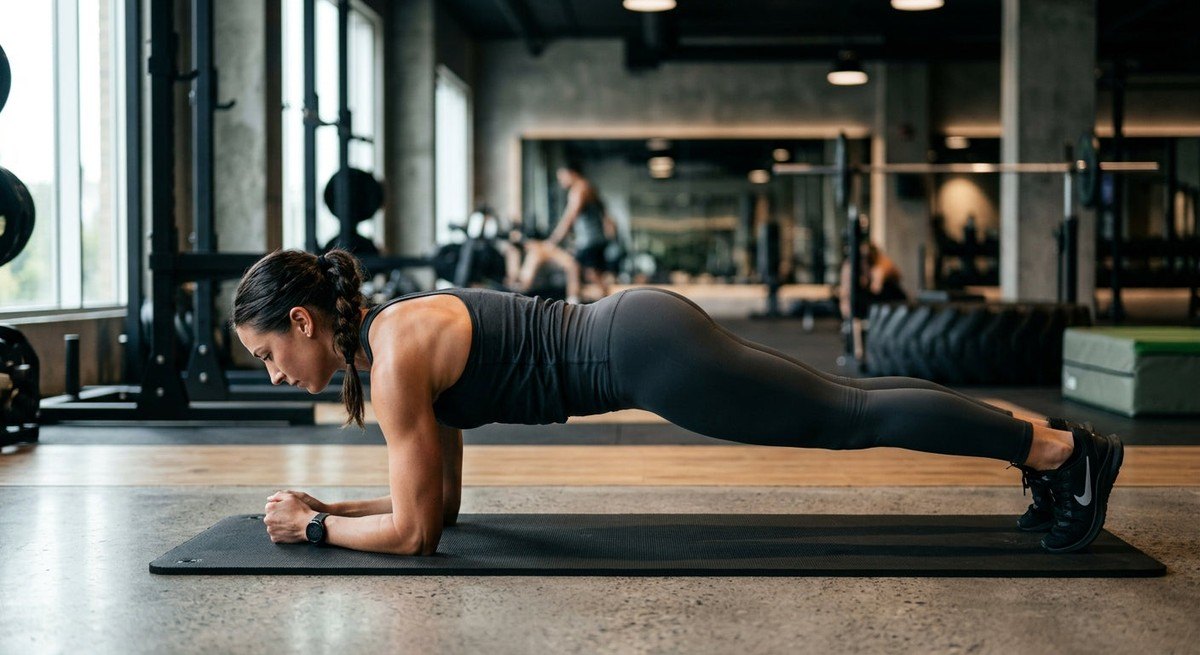
Physical Dimensions and Load Capacity
Standard training mats measure 180cm by 60cm, providing a sufficient centre of gravity for athletes of varying heights. For those utilising weighted vest training, ensure the load does not exceed 5% of your total body mass to maintain biomechanical integrity during functional movements. Evolution in design has shifted towards minimalist, high-tensile materials that reduce the overall weight of equipment by 15% compared to previous generations, allowing for better portability and storage in confined home training spaces.
Final Considerations for Longevity
The transition from a pain-prone cyclist to a resilient athlete is a process of progressive overload. Do not rush the volume of your core training; it should complement your time in the saddle, not detract from it. Listen to your body’s feedback loop. If your lower back feels fatigued after a ride, your core is the likely culprit, and you should adjust your training load accordingly. By treating your core with the same analytical precision you apply to your bike’s componentry, you will ensure a longer, more powerful career on the road.


