

Carbon-Plated Super Shoes: Biomechanical Shifts and Musculoskeletal Adaptation


Planning your next fitness milestone?
Get immediate guidance on pacing, workout structure, or race prep directly on-site for free. Try asking Raye: 'Can you outline a simple 4-week build plan for a 10K?' Get instant guidance
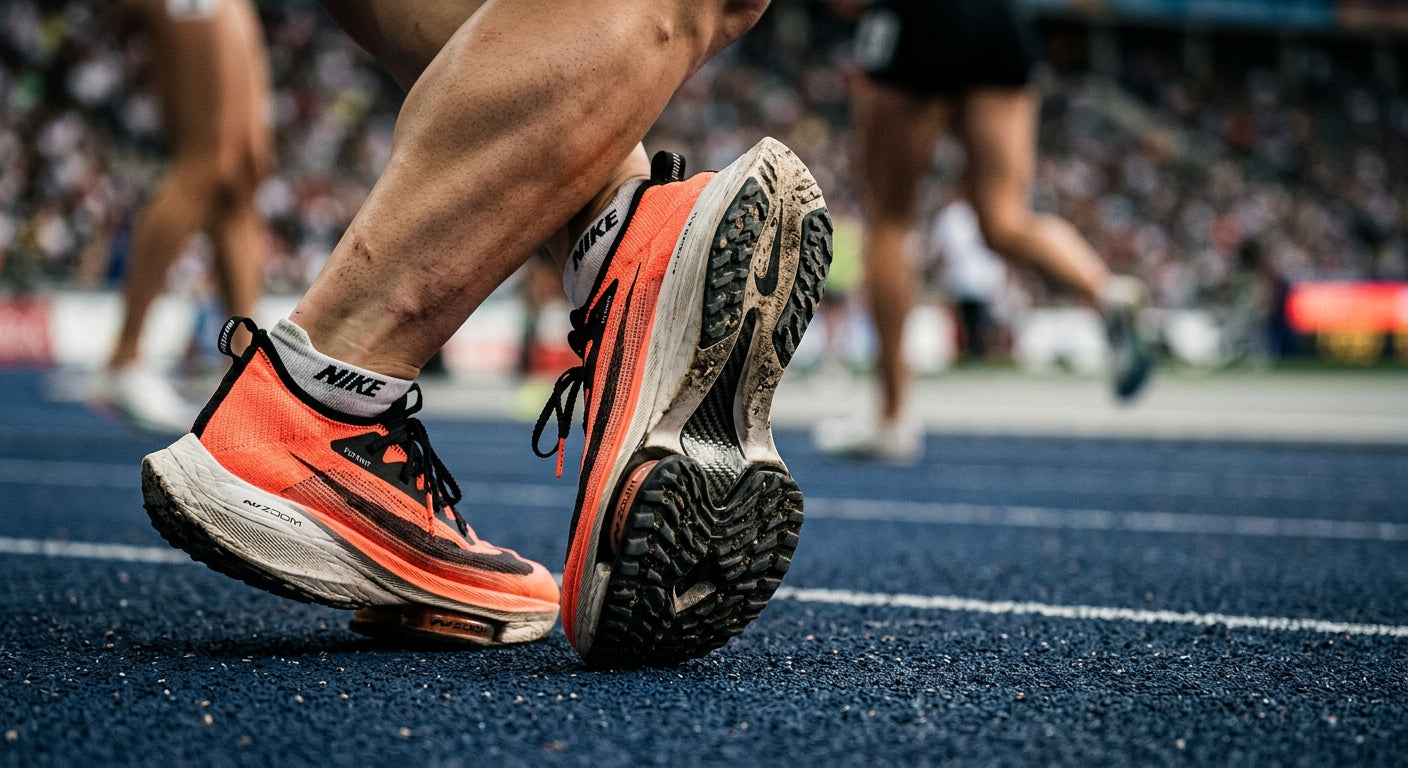
The landscape of endurance sports has been fundamentally altered by the introduction of carbon-plated super shoes. By integrating a rigid carbon-fibre plate within high-rebound PEBA-based foams, these shoes have redefined the limits of running economy. For marathoners and triathletes, this is not merely a marginal gain; it is a structural shift in how the body interacts with the tarmac.
The primary mechanism behind this innovation is the reduction of the ankle moment. By stiffening the forefoot, the plate acts as a lever, reducing the work required by the metatarsophalangeal joints. However, this biomechanical efficiency comes at a cost, as it shifts the load profile significantly towards the calf and Achilles complex, necessitating a more robust approach to foot prehab.
How can I start out?
Transitioning into super shoes should be a calculated, phased endeavour. Do not attempt to integrate these shoes into your high-volume marathon block immediately. Start by incorporating them into shorter, controlled speed sessions once a week. This allows your musculoskeletal system to adjust to the altered gait mechanics without risking acute overload injuries.
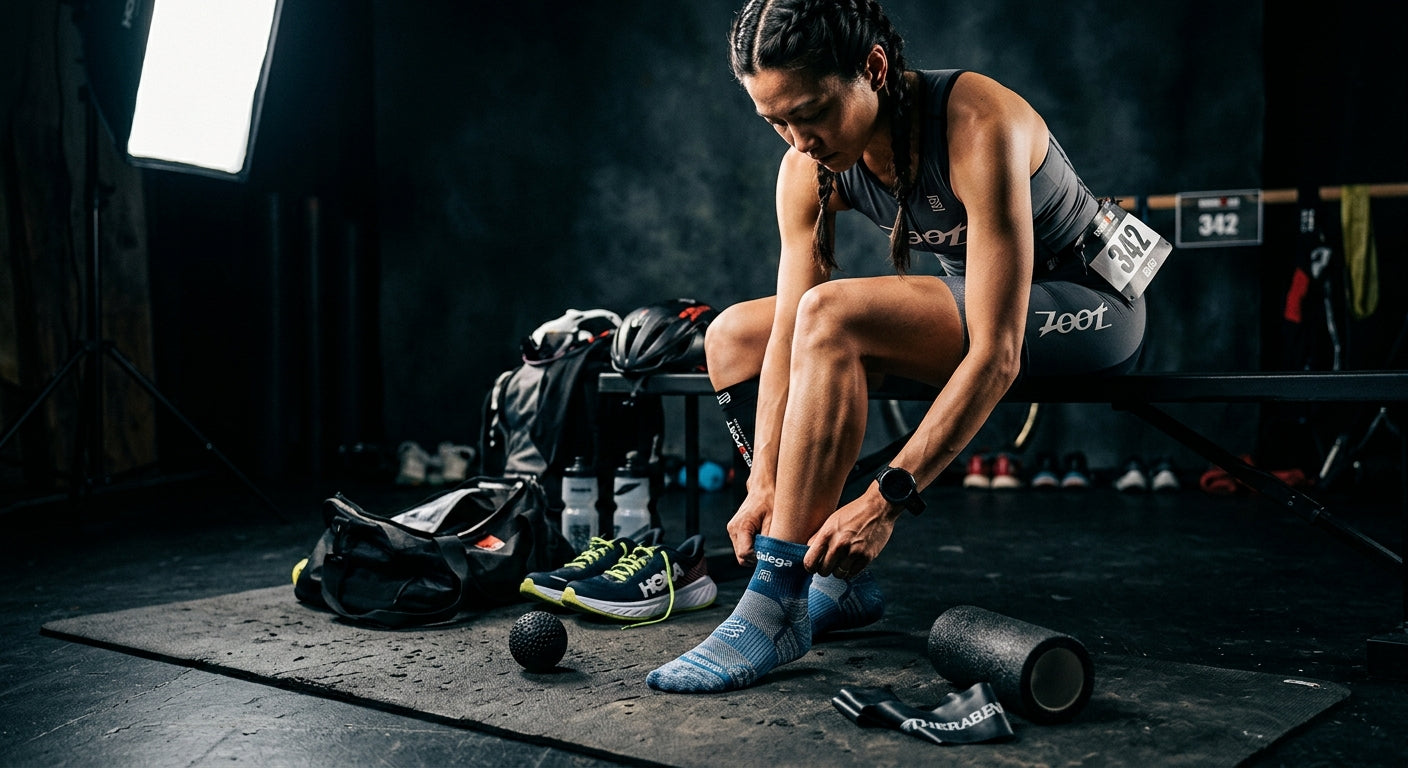
You must prioritise foot and ankle mobility before and after each session. Using specialised foot mobility gear, such as massage balls or bands, helps maintain the suppleness of the plantar fascia. Neglecting this step when wearing high-stack, rigid shoes often leads to tightness that can compromise your stride efficiency over the latter stages of a triathlon.
Furthermore, ensure your kit supports your movement. Wearing high-quality, moisture-wicking running shorts is essential for avoiding chafing during long, intense efforts. Additionally, invest in Sundried anti-blister socks; the increased friction caused by the aggressive energy return of super shoes makes blister prevention a non-negotiable aspect of your training regimen.
Tips for Improving
To maximise the benefits of your footwear, focus on your cadence. Because these shoes encourage a faster turnover, maintaining a cadence above 175 steps per minute can help distribute the load more evenly across the kinetic chain. This is particularly vital for triathletes who must transition from cycling to running with pre-fatigued legs.
Monitor your calf loading closely. Because the carbon plate limits the flexion of the toes, the soleus and gastrocnemius muscles are forced to compensate for the lack of natural spring. Incorporating eccentric calf raises into your strength training will build the necessary resilience to handle these heightened demands, ensuring that your body adapts to the mechanical shift rather than succumbing to stress.

Looking to shave time off your personal best?
Get immediate pacing strategies and interval workout ideas directly on-site for free. Try asking Raye: 'What is the best threshold session to help drop my 10K time?' Get instant pacing tips
Finally, listen to your biofeedback. If you experience unusual soreness in the arch or the posterior chain, regress to standard trainers for a few recovery runs. The goal is to facilitate a sustainable adaptation, not to force a structural change that the body is not yet prepared to handle.
Special Features & Technical Specifications
Material Composition and Engineering
The latest generation of super shoes utilises supercritical foam technology, which involves infusing nitrogen or carbon dioxide into the polymer matrix. This creates a cellular structure with superior energy return compared to traditional EVA. The carbon-fibre plate is typically sculpted with a longitudinal curvature to match the natural rocker of the human foot, effectively creating a pivot point that centres the force application.
Physical Dimensions and Weight
Engineered to sit at the maximum legal stack height of 40mm, these shoes offer significant cushioning without sacrificing stability. Weight has been aggressively reduced, with most elite-level models weighing under 200 grams. This reduction in mass, combined with the extreme energy return, results in a measurable improvement in running economy by approximately 2% to 4% for the average athlete.
Generational Advancements
Compared to previous iterations, the newest models feature wider base geometries to compensate for the inherent instability of high-stack foams. Engineering teams have also refined the upper mesh, utilising ultra-lightweight, hydrophobic materials to ensure the shoe remains consistent in weight even in wet race conditions. These incremental changes prioritise structural integrity while maintaining the explosive responsiveness that has come to define the category.


