

Building Grip Strength for the Hyrox Farmer's Carry


Need performance advice right now?
Ask our on-site coach anything about your routines. It's completely free and available immediately right here: 'What are 3 quick exercises for ankle mobility?' Ask Raye for free
The Hyrox Farmer's Carry is a brutal test of physiological resilience, demanding more than just brute force. It is a synthesis of posterior chain stability, aerobic capacity, and, most crucially, profound forearm and hand endurance. When you are deep into a race, carrying heavy sandbags or kettlebells, the limiting factor is rarely your cardiovascular system; it is the failure of your grip to maintain a secure hold on the implements. For the dedicated athlete, marginal gains in grip strength are the difference between a podium finish and a mid-pack result.
Understanding the demands of the Farmer's Carry requires an analysis of isometric muscular endurance. You are not performing dynamic repetitions but rather holding a sustained contraction under significant load. This places an immense demand on the flexor digitorum profundus and the flexor digitorum superficialis. To excel, you must train these tissues to maintain tension while your body is simultaneously battling systemic lactic acid accumulation.
How can I start out?
Begin by integrating static holds into your current programme. The most effective starting point is the 'heavy hold'. Select a weight equivalent to your total Hyrox race load and hold it for time. Focus on a neutral spine and retracted scapulae to ensure the load is distributed correctly through the kinetic chain. Aim for sets that push you to the brink of failure, ideally between 45 and 60 seconds. This builds the foundational connective tissue strength required to handle the intensity of a race environment.
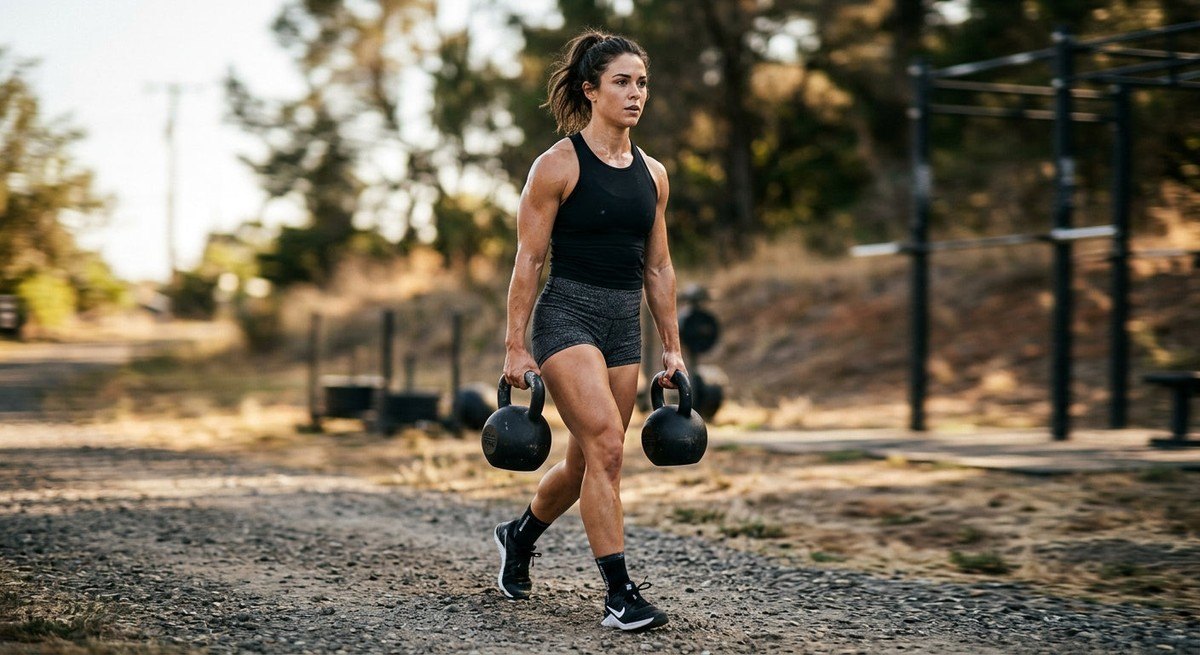
Next, incorporate 'Farmer's Walks' into your metabolic conditioning sessions. By walking with the load, you introduce dynamic instability, which forces your stabilising muscles to work harder to maintain a consistent path. This replicates the race environment where you must navigate turns and crowded lanes while maintaining your pace. Start with shorter distances and prioritise perfect form over excessive weight to avoid injury to the wrists or elbows.
Tips for Improving
To move beyond the basics, you must introduce variety into your training. Use fat grips or thicker-handled kettlebells to increase the diameter of the implement. This forces your hand to open wider, significantly increasing the recruitment of the forearm musculature. This specific adjustment makes standard equipment feel much lighter on race day, providing a psychological and physical advantage.
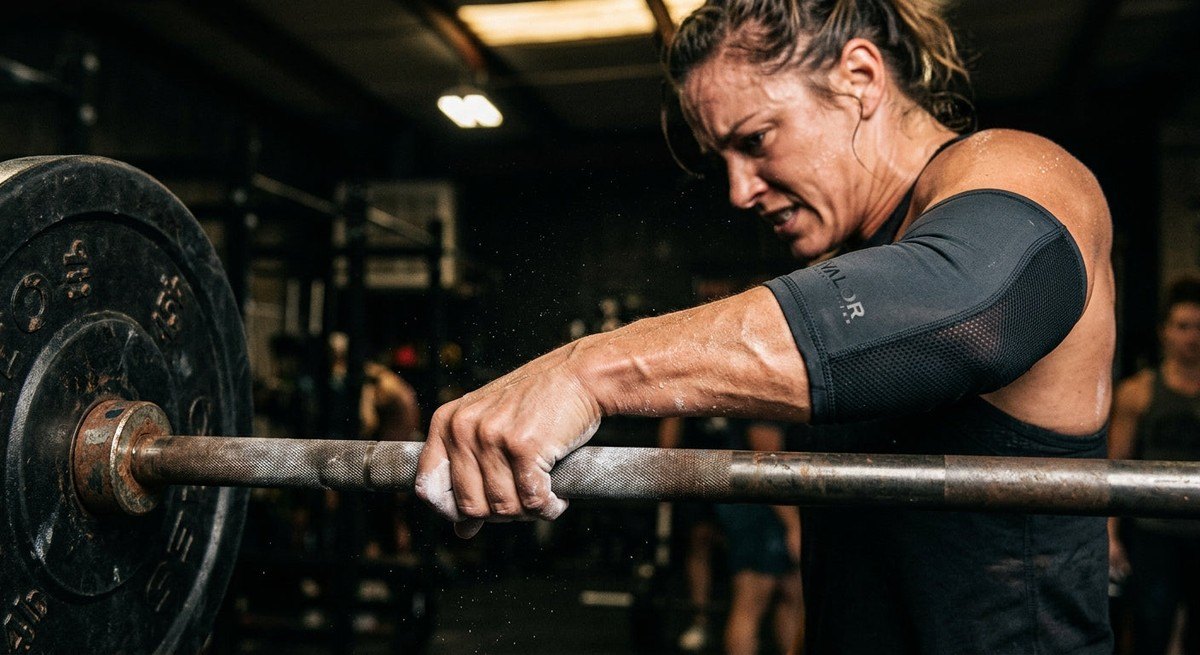
Furthermore, implement 'cluster sets' for your grip training. Perform a short carry, rest for fifteen seconds, and perform another carry. This mimics the stop-start nature of a Hyrox event and trains your forearms to recover rapidly while under load. This method of training is essential for mastering the mental aspect of grip fatigue, as it teaches you to manage discomfort while maintaining your stride.

Need a clear race fuelling strategy?
Get instant, practical advice on hydration and race-day nutrition directly on this page for free. Try asking Raye: 'How many grams of carbs should I take per hour during a half marathon?' Ask for fuelling advice
Do not neglect the role of the thumb. Incorporating 'plate pinches' into your auxiliary training sessions will strengthen the adductor pollicis, providing a more secure 'hook' on the implement handles. A strong thumb acts as a locking mechanism, preventing the handle from sliding out of your grip when the sweat begins to compromise your friction.
Special Features & Technical Specifications
Material Composition
Modern competition-grade Farmer's Carry handles are typically constructed from high-tensile alloy steel with a knurled finish. This texture is engineered to maximise skin-to-metal contact, essential for maintaining a secure hold in high-humidity environments. The integration of a powder-coated finish provides a balance between grip security and skin protection, preventing premature tearing during long-duration efforts.
Physical Dimensions and Engineering
The standard competition handle length is 30 centimetres, providing sufficient space for a wide range of grip styles. Compared to previous generations, modern implements now feature a slightly lower centre of gravity, which reduces the oscillation of the weight during movement. This engineering change allows for a more efficient transfer of force from the core to the ground, significantly reducing the energy lost to correcting the pendulum effect of the load.
Weight Distribution
The weight of the carry is usually fixed by the event specifications, but the distribution is key. Modern handles are designed to be perfectly symmetrical, ensuring that the load remains centred. This prevents uneven stress on the forearm flexors, which is a common cause of premature grip failure in amateur athletes. By maintaining a neutral wrist position, you can preserve your grip integrity throughout the entire duration of the carry.
Ultimately, grip strength is a skill that requires consistent, progressive overload. By treating your forearms with the same analytical rigour you apply to your squat or your running pace, you will find that you can maintain speed and control even when your body is screaming for relief. Focus on these technical pillars, and you will undoubtedly see your times improve in the arena.


