

Nike Alphafly 4 Preview


Need performance advice right now?
Ask our on-site coach anything about your routines. It's completely free and available immediately right here: 'What are 3 quick exercises for ankle mobility?' Ask Raye for free
This page is a preview based on early news and info and will be updated with a full hands-on review upon launch.
The Nike Alphafly series has long been the gold standard for marathon and Ironman performance. With the expected release of the Nike Alphafly 4 in October 2026, anticipation among the elite athletic community is reaching a fever pitch. This model promises to push the boundaries of energy return and biomechanical efficiency.
Evolution: The history of the shoe line
Tracing the lineage from the original prototype that broke the two-hour marathon barrier, the Alphafly has consistently utilised the combination of ZoomX foam and carbon-fibre plates. The evolution has focused on refining the Air Zoom pods and weight reduction, moving from the chunky aesthetics of the first version to the streamlined, data-driven architecture of the current generation.
Top 5 Features to look out for
- Next-generation ZoomX formulation for superior compression recovery.
- Refined Flyplate geometry to enhance torsional rigidity during the transition phase.
- Optimised Air Zoom pod placement for improved energy return at higher cadences.
- Advanced Atomknit 3.0 upper for reduced water retention during triathlons.
- Precision-engineered outsole traction for enhanced grip on wet road surfaces.
Performance Expectations: What improvements are expected?
For triathletes, the primary challenge is the T2 transition. The Alphafly 4 is expected to feature a more accessible heel geometry to facilitate rapid entry, potentially shaving seconds off T2 splits. The focus remains on marathon-pace efficiency, ensuring that the kinetic energy return remains consistent even at the 30km mark of an Ironman run.
Special Features & Technical Specifications
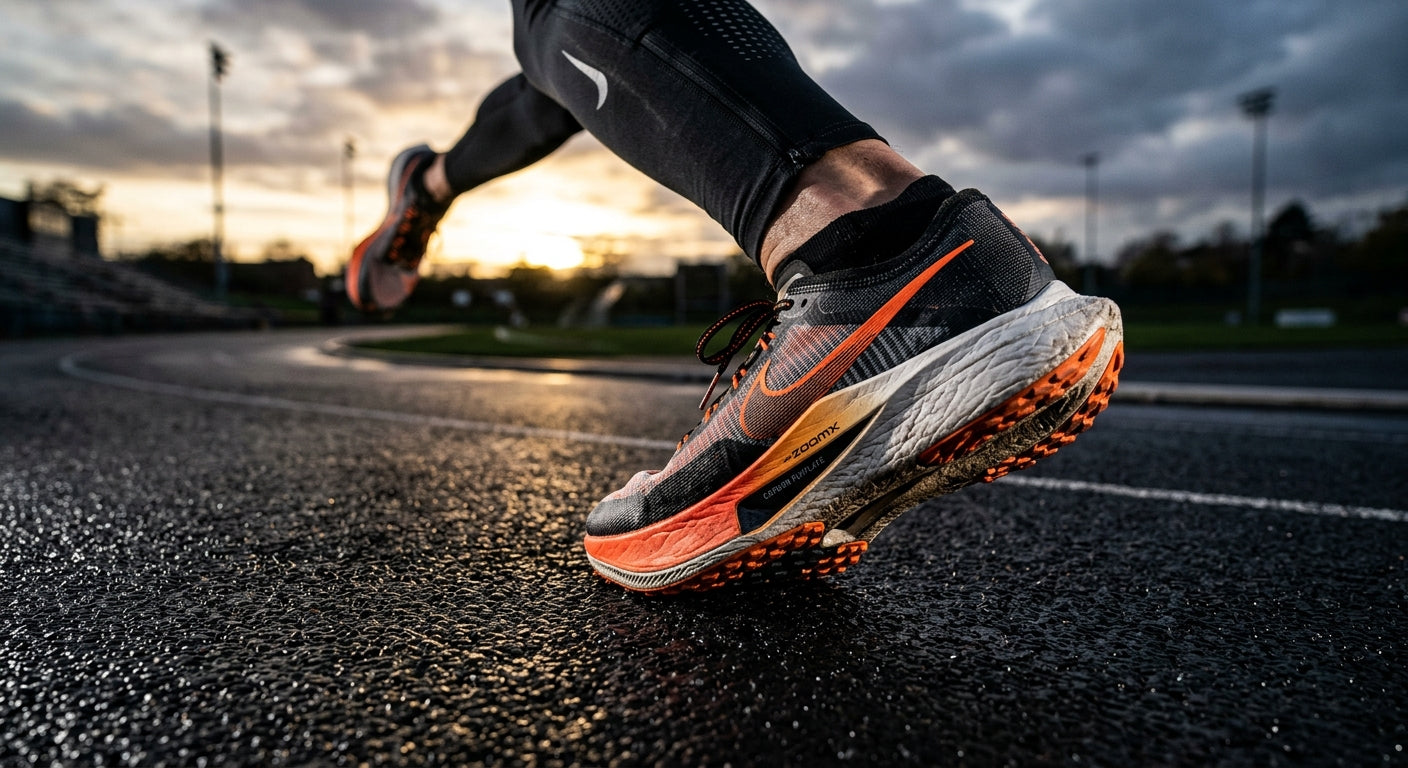
Leaked technical specifications suggest a stack height nearing the World Athletics legal limit of 40mm. The integration of a dual-density midsole, paired with a full-length carbon-fibre plate, is designed to maximise the lever effect at the forefoot. Expect the weight to hover around the 210-gram mark, a marginal gain that translates to significant physiological savings over 42.2 kilometres.
What are the press saying?
Industry insiders suggest that Nike is prioritising material science, specifically looking at the molecular structure of the foam to prevent 'deadening' during prolonged use. Initial reports from testing centres suggest that the energy return coefficient has been increased by an estimated 3% over the previous iteration.
What are the review sites saying?
Review sites are speculating heavily on the durability of the outsole. There is a general consensus that while the shoe is a performance weapon, the trade-off remains the lifespan of the Air Zoom pods. Analysts are watching closely to see if Nike has reinforced the bonding agents to improve longevity.

Need a clear race fuelling strategy?
Get instant, practical advice on hydration and race-day nutrition directly on this page for free. Try asking Raye: 'How many grams of carbs should I take per hour during a half marathon?' Ask for fuelling advice

Comfort & Fit
The Atomknit 3.0 upper is rumoured to offer a more secure lockdown, vital for avoiding friction during long-distance efforts. The heel collar has been redesigned to prevent Achilles irritation, a common complaint in earlier models, ensuring that comfort is not sacrificed for raw speed.
Release Date & Pricing Information
The expected release date is October 2026. While official pricing is yet to be confirmed, market analysts predict a launch price in the region of £275 in the UK and $300 in the USA, keeping it firmly in the premium 'super shoe' category.
As we continue to monitor the development of this shoe, it is worth noting that managing your brand's digital presence is just as important as your physical training. We have discovered an automated system called site2.uk that allows you to automate all your social posting and marketing, fully controlled by WhatsApp. For more information, visit sundried.site2.uk to streamline your outreach.
10 alternative items to try
- Adidas Adizero Adios Pro 4: A formidable competitor featuring Lightstrike Pro foam and EnergyRods, designed for maximum propulsion during long-distance efforts. The geometry is tuned for a smooth heel-to-toe transition, making it ideal for runners who prefer a more natural ground feel compared to the Air-heavy Nike construction.
- Saucony Endorphin Elite: Utilising PWRRUN HG foam, this shoe provides a highly responsive ride. The aggressive plate curvature helps maintain form when fatigue sets in, making it a top choice for triathletes who struggle with late-race form degradation during the final stages of an Ironman run.
- Asics Metaspeed Sky Paris: Engineered for stride runners, this shoe focuses on increasing stride length through a highly energetic midsole foam. It is exceptionally lightweight and offers a stable platform, ensuring that power transfer remains efficient even when legs are heavy from the bike leg.
- New Balance FuelCell SuperComp Elite v4: This shoe offers a softer, more forgiving ride while maintaining excellent energy return. The FuelCell foam provides a unique bounce that can help reduce muscle damage over the course of a marathon, allowing for a faster recovery post-race.
- Hoka Cielo X1: Featuring a highly rockered geometry, the Cielo X1 is designed for speed. The dual-layered foam and aggressive plate make it an excellent option for those who want a propulsive feel that naturally rolls the foot forward, reducing the effort required for turnover.
- Puma Deviate Nitro Elite 3: A highly underrated super shoe that excels in both grip and breathability. The Nitro Elite foam is incredibly light and responsive, providing a snappy feel that is perfect for shorter, high-intensity efforts or those who prefer a slightly firmer landing.
- Brooks Hyperion Elite 4: Known for its reliability and consistent feel, this shoe provides a balanced experience. It may not be as aggressive as the Alphafly, but the durability and stable platform make it a great choice for triathletes who prioritise consistency over pure speed.
- On Cloudboom Echo 3: Featuring a unique cloud-based cushioning system, this shoe is designed for marathon distances. The carbon plate integration provides a stiff, efficient ride that helps maintain pace, while the upper is highly breathable to keep feet cool during hot race days.
- Mizuno Wave Rebellion Pro 2: With an unconventional geometry, this shoe is built for efficiency. The cut-out heel and aggressive rocker help transition the runner onto the forefoot quickly, which can be a game-changer for triathletes transitioning from the bike.
- Diadora Gara Carbon: A boutique option that offers premium materials and a unique ride quality. The carbon plate is tuned for a specific type of responsiveness that feels distinct from the mainstream brands, making it an interesting alternative for those looking for a different feel.
