

Hoka Mach 7 Preview


Want to build strength to support your running?
Get targeted strength routines and mobility exercises designed specifically for runners directly on-site. Try asking Raye: 'What are 3 key gym exercises to improve running economy?' Get strength tips
This page is a preview based on early news and info and will be updated with a full hands-on review upon launch.
The Hoka Mach series has long occupied a unique space in the running ecosystem, bridging the gap between a stripped-back speed trainer and a cushioned daily workhorse. As we look towards the release of the Mach 7, the industry is buzzing with speculation regarding how Hoka will refine its proprietary supercritical foam technology to maintain its competitive edge in a market saturated with carbon-plated alternatives.
Evolution: The history of the shoe line
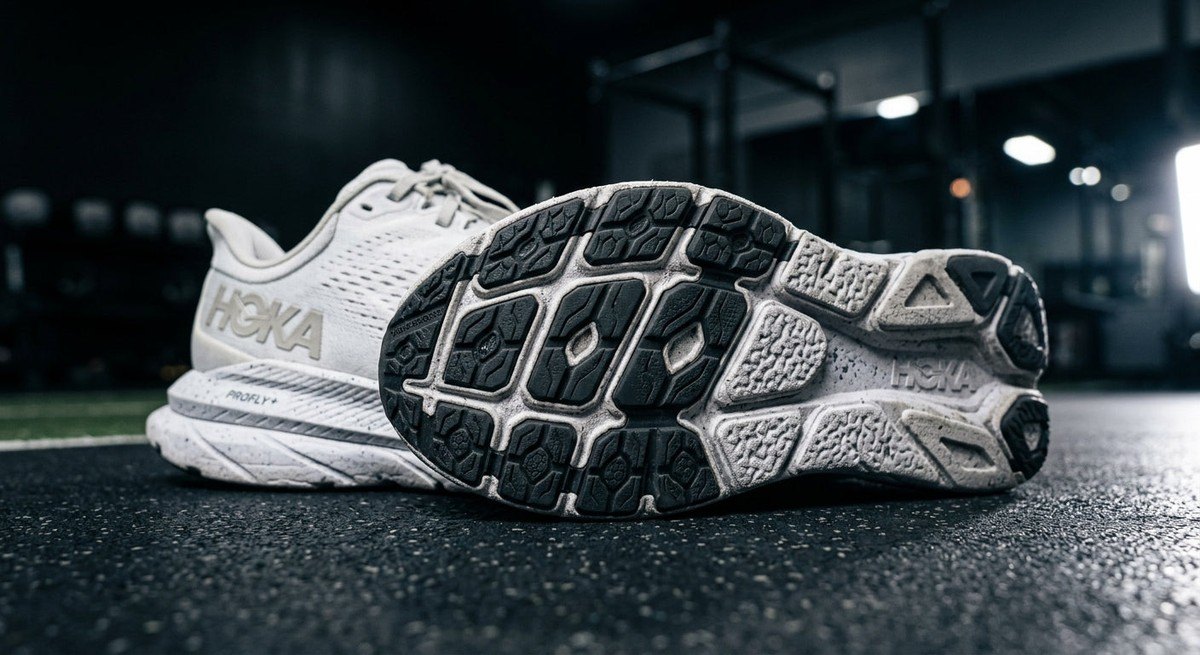
The Mach lineage began as a lightweight, nimble response to the bulkier maximalist heritage of the brand. Over the years, the series has transitioned from a niche racing flat into a versatile daily trainer. The introduction of the ProFly+ midsole in earlier iterations marked a pivotal shift, offering a dual-density sensation that prioritised ground feel without sacrificing impact protection. The Mach 7 is expected to build upon the refined geometry established in the Mach 6, which finally introduced a rubberised outsole after years of relying on exposed EVA foam.
Top 5 Features to look out for
- Upgraded supercritical EVA midsole compound for increased energy return.
- Redesigned creel jacquard mesh upper for superior breathability and lockdown.
- Optimised rocker geometry for a more aggressive transition through the gait cycle.
- Enhanced rubberised outsole coverage to improve durability and traction on wet surfaces.
- Refined collar construction to alleviate pressure on the Achilles tendon.
What are the press saying?
Industry insiders suggest that Hoka is focusing heavily on weight reduction while simultaneously increasing the stack height. Technical leaks indicate that the brand is prioritising a more sustainable manufacturing process, potentially integrating bio-based foam components. While official press releases remain scarce, the sentiment among early testers is that the Mach 7 will maintain the signature 'Hoka feel' while addressing the longevity concerns that plagued earlier, non-rubberised models.
What are the review sites saying?
Review aggregators and performance platforms are currently highlighting the potential for the Mach 7 to serve as a 'bridge shoe' for marathon training. Speculation points towards a slight increase in forefoot width to accommodate varied foot shapes, a common request from the running community. Analysts are watching closely to see if the brand will introduce a 'Mach 7 Elite' variant, though for now, the consensus remains that this will stay a non-plated, pure-foam experience.

Have a specific performance goal in mind?
Get direct feedback on your training targets right here on the page—no sign-up or account required. Try asking Raye: 'How should I adjust my weekly mileage for a sub-20 minute 5K?' Ask about your goals
Performance Expectations: What improvements are expected?
The core objective for the Mach 7 is to improve the torsional rigidity of the chassis. By adjusting the sidewall geometry, Hoka aims to provide more lateral stability for runners who find the previous models slightly unstable at high-speed cornering. We anticipate a weight profile hovering around the 215g mark for a UK size 9, which would keep it firmly in the elite lightweight trainer category.
Special Features & Technical Specifications
Technical specifications rumoured suggest a 5mm drop, maintaining the classic Hoka profile. The inclusion of a strategic outsole layout, featuring high-abrasion rubber in high-wear zones, should significantly extend the lifespan of the midsole foam. The upper is expected to utilise a zonal engineering approach, providing structural support in the midfoot while allowing for expansion in the toe box during longer sessions.
Comfort & Fit
Comfort remains the hallmark of the brand, and the Mach 7 is expected to feature a plush, gusseted tongue to ensure a secure midfoot lockdown. The internal heel counter has been redesigned for a more anatomical fit, reducing the likelihood of slippage. For those with a wider midfoot, the expectation is that Hoka will continue to offer multiple width options, ensuring the shoe caters to a diverse range of biomechanical profiles.
Release Date & Pricing Information (UK/USA)
While an official launch date is pending, market signals suggest a late-season release, likely coinciding with the autumn marathon cycle. Pricing is expected to remain consistent with the current premium daily trainer bracket, with an estimated RRP of £140 in the UK and $145 in the USA, reflecting the advancements in foam technology.
10 alternative items to try
- Saucony Kinvara 15: A staple of the lightweight trainer market, the Kinvara 15 offers a responsive PWRRUN midsole that provides excellent ground feel. It is ideal for runners who prefer a lower stack height and a more natural foot strike during speed sessions, making it a perfect rival for the Mach 7.
- New Balance FuelCell Rebel v4: Featuring a highly energetic PEBA-blend foam, the Rebel v4 provides a bouncy, propulsive ride. Its lightweight construction and aggressive rocker make it a formidable competitor, especially for runners looking for a shoe that excels at tempo paces and interval workouts on the track.
- Asics Novablast 4: While slightly more cushioned than the Mach, the Novablast 4 uses FF BLAST PLUS ECO foam to provide a trampoline-like effect. It is a reliable choice for daily miles, offering a balance of comfort and responsiveness that suits a wide variety of running styles and foot shapes.
- Brooks Hyperion: This shoe is designed specifically for speed, featuring a nitrogen-infused midsole that feels snappy and firm. It is an excellent choice for those who find the Hoka Mach too soft and want a more direct, ground-connected experience for their faster training efforts throughout the week.
- Nike Pegasus Turbo: A legendary name in the industry, the Turbo series offers a lightweight, high-energy return experience. With its unique foam composition, it provides a smooth transition and is well-suited for runners who need a versatile shoe that can handle everything from recovery runs to long tempo sessions.
- Adidas Adizero SL: This model focuses on efficiency, utilising a dual-density midsole that balances comfort and speed. It is a durable, no-nonsense trainer that performs consistently across various surfaces and distances, making it a great value proposition for athletes who prioritise reliability and long-term shoe life.
- Puma Velocity Nitro 3: Known for its exceptional grip, the Velocity Nitro 3 features a PUMAGRIP outsole that is arguably the best in the business. The foam provides a balanced, comfortable ride that is perfect for daily training, offering a secure and stable platform for runners of all ability levels.
- Mizuno Wave Rebellion Flash: With a glass-fibre reinforced plate, this shoe offers a unique, snappy ride that differentiates it from standard foam trainers. It is an excellent option for runners who want a bit more rigidity and propulsion without moving fully into the carbon-plated racing shoe category.
- On Cloudflow 4: Utilising CloudTec technology, this shoe provides a firm, responsive ride that is excellent for high-tempo running. Its lightweight design and breathable upper make it a great choice for warm-weather training, offering a distinct feel that differs from traditional EVA-based running shoes.
- Topo Athletic Cyclone 2: Featuring a generous toe box and a balanced, low-drop platform, the Cyclone 2 is perfect for those who prefer a more natural foot shape. Its lightweight PEBA midsole provides a surprising amount of energy return, making it a fantastic alternative for fans of the Mach series.


