

How to Make Your Own Rice Cakes for Cycling Fuel


Planning your next fitness milestone?
Get immediate guidance on pacing, workout structure, or race prep directly on-site for free. Try asking Raye: 'Can you outline a simple 4-week build plan for a 10K?' Get instant guidance
The Science of Sustained Energy
In the high-performance world of professional cycling, the humble rice cake has long been the gold standard for mid-ride nutrition. Unlike processed gels or sugary bars, home-made rice cakes provide a complex carbohydrate matrix that offers a steady release of glucose, essential for maintaining glycogen stores during gruelling four-hour training sessions. By manipulating the starch structure through cooling and the addition of healthy fats, you create a fuel source that is gentle on the digestive tract and highly efficient for muscle oxidation.
The efficacy of this approach lies in the glycaemic index. By utilising short-grain sushi rice, the higher amylopectin content ensures rapid absorption when needed, while the inclusion of ingredients like coconut oil or cream acts as a buffer, slowing the gastric emptying rate. This prevents the dreaded insulin spike and subsequent crash often associated with synthetic sports nutrition.
How much improvement can I expect?
Athletes transitioning from mass-produced snacks to home-made rice cakes typically report a significant reduction in gastrointestinal distress. Clinical observation suggests that whole-food alternatives are easier to process during high-intensity efforts, where blood flow is diverted away from the gut to the working muscles. You can expect a more stable energy curve, allowing for consistent power output across the latter stages of a ride.
Furthermore, because these cakes are bespoke, you can dial in your sodium requirements precisely. By incorporating sea salt, you ensure optimal electrolyte balance, which is vital for preventing cramping and maintaining nerve conduction in the heat of a summer climb. The improvement in subjective 'gut comfort' is often the most profound benefit reported by endurance cyclists.
Top 5 Core Features
- Digestive Stability: Whole-food starches minimise the bloating common with artificial sweeteners.
- Controlled Glycaemic Load: Sustained energy delivery without the rapid sugar crash.
- Customisable Electrolytes: Precise control over sodium content for better hydration.
- Cost Efficiency: Significant savings compared to premium branded energy bars.
- Texture Optimisation: Designed to remain palatable and firm even in high-temperature conditions.
Other Benefits
Beyond the physiological advantages, the psychological benefit of consuming 'real food' cannot be overstated. After hours in the saddle, the palate often fatigues from the cloying sweetness of artificial flavours. A savoury or subtly sweet rice cake offers a refreshing change, promoting better adherence to nutrition protocols. Moreover, you eliminate the ingestion of preservatives, emulsifiers, and artificial colourings, prioritising long-term health alongside performance.

Looking to shave time off your personal best?
Get immediate pacing strategies and interval workout ideas directly on-site for free. Try asking Raye: 'What is the best threshold session to help drop my 10K time?' Get instant pacing tips
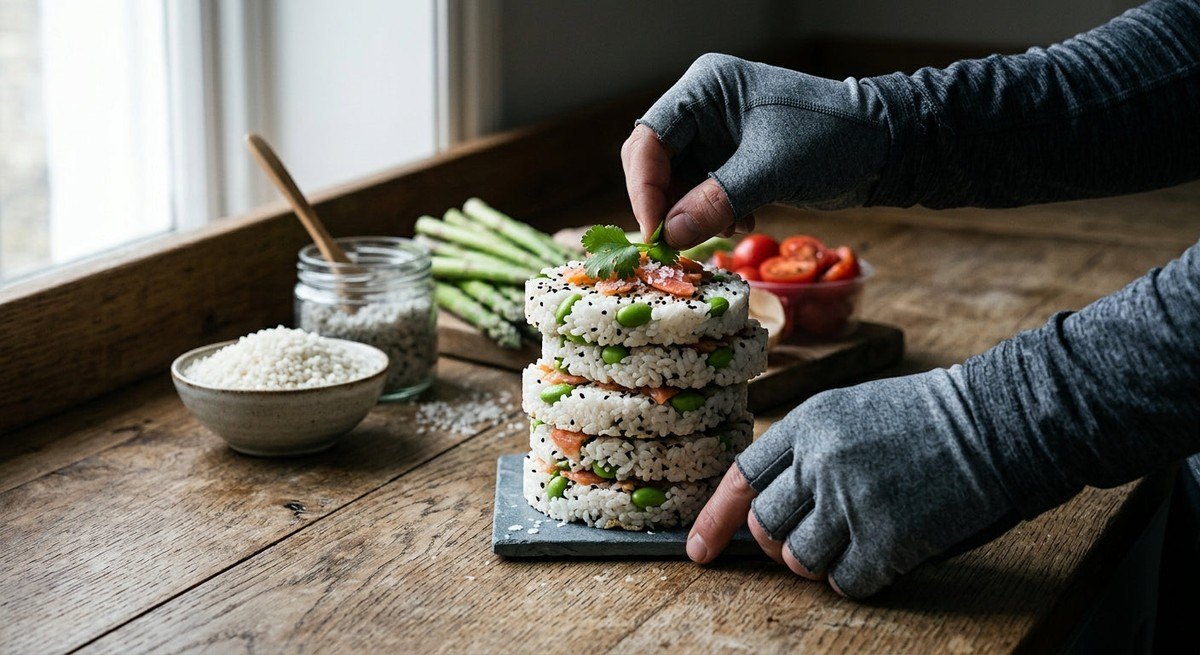
Preparation is straightforward. Begin by rinsing sushi rice thoroughly to remove excess starch. Once cooked, fold in your chosen flavour profile—whether that is maple syrup and cinnamon for a sweet variant, or soy sauce, ginger, and sesame seeds for a savoury punch. Press the mixture firmly into a tray, refrigerate until set, and slice into convenient, pocket-sized squares wrapped in foil. This method ensures the cakes retain their integrity, even when stored in a jersey pocket during a sprint.
For those targeting long-distance events, consider adding a protein source like nut butter or egg whites to the mix. This introduces amino acids, which can assist in muscle repair even while you are still riding. The versatility of the rice cake allows it to be an evolving component of your training toolkit, adaptable to the specific demands of your training block or event.

Ultimately, the transition to home-made fuel represents a shift toward a more professional, intentional approach to your cycling. It is not merely about calories; it is about the quality of those calories and how they serve the physiological machine that is your body. By taking control of your mid-ride nutrition, you remove one more variable from the equation, leaving only the road ahead and your own determination to conquer it.


