

How to Fuel a Century Ride: 60-90 Grams of Carbs Per Hour


Need performance advice right now?
Ask our on-site coach anything about your routines. It's completely free and available immediately right here: 'What are 3 quick exercises for ankle mobility?' Ask Raye for free
The Science of Endurance Fueling
For the dedicated cyclist, the century ride—100 miles of unrelenting road—is the ultimate benchmark of physical and mental endurance. However, the difference between a triumphant finish and an ignominious 'bonk' often comes down to a single, critical metric: your hourly carbohydrate intake. Decades of sports science research have coalesced around a gold standard for endurance performance, suggesting that cyclists should aim for 60 to 90 grams of carbohydrates per hour to maintain optimal power output.
The human body possesses a finite reservoir of glycogen stored in the liver and muscles. During intense, sustained efforts like a century ride, these stores are rapidly depleted. Once glycogen levels drop, the body struggles to maintain blood glucose levels, leading to a precipitous decline in performance. By consuming exogenous carbohydrates, you essentially bypass this limitation, providing your working muscles with a steady stream of glucose.
Why 60 to 90 grams? The answer lies in the physiological limits of intestinal absorption. Simple glucose transport through the SGLT1 transporter becomes saturated at approximately 60 grams per hour. By incorporating multiple transportable carbohydrates—specifically a blend of glucose and fructose—athletes can utilise the GLUT5 transporter, allowing for significantly higher absorption rates and reducing the risk of gastrointestinal distress.
How much improvement can I expect?
Integrating a high-carb fueling strategy can be transformative. Cyclists who shift from inconsistent, low-intensity fueling to a structured 60-90g per hour protocol often report a marked increase in sustained power output during the final 30 miles of a century ride. Rather than fading, you maintain the ability to surge on climbs and hold a consistent pace in the closing stages.
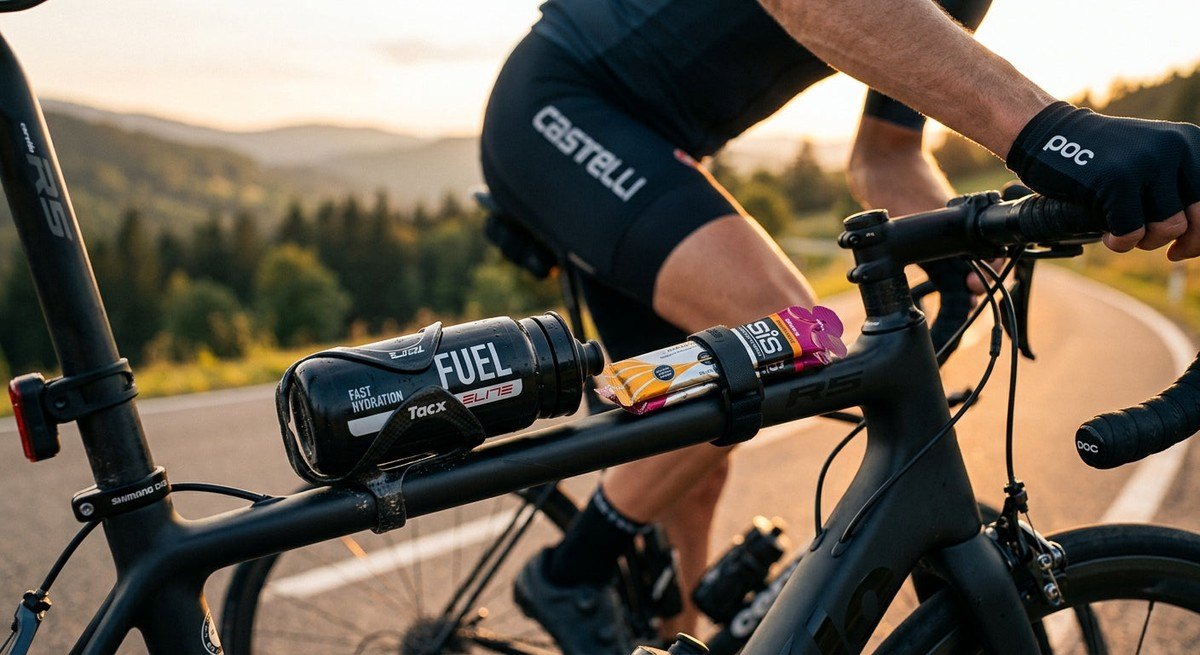
Beyond raw power, you will notice a significant improvement in cognitive function. The brain is a glucose-dependent organ; by keeping blood sugar stable, you prevent the 'brain fog' that often accompanies extreme physical fatigue. This mental clarity allows for better bike handling, tactical decision-making, and overall safety during long, fatiguing efforts.
Other Benefits
Proper fueling does not merely aid the ride itself; it dramatically accelerates your recovery timeline. By preventing the total depletion of muscle glycogen, you reduce the physiological stress placed on your endocrine system. This means less systemic inflammation and a quicker return to training the following day.
Furthermore, consistent fueling helps manage cortisol levels. Prolonged, under-fuelled exercise triggers a massive release of stress hormones, which can suppress immune function and lead to overtraining symptoms. Maintaining a steady influx of carbohydrates keeps the body in an anabolic or neutral state rather than a catabolic one.

Need a clear race fuelling strategy?
Get instant, practical advice on hydration and race-day nutrition directly on this page for free. Try asking Raye: 'How many grams of carbs should I take per hour during a half marathon?' Ask for fuelling advice

Top 5 Core Features
- Glucose-Fructose Ratios: Utilising a 1:0.8 or 2:1 ratio to maximise multi-transportable carbohydrate absorption.
- Gastrointestinal Tolerance: Training the gut to handle high concentrations of carbohydrates through progressive overload in practice rides.
- Electrolyte Synergy: Pairing carbohydrates with sodium to facilitate faster glucose uptake and maintain fluid balance.
- Consistency Protocols: Implementing a timer-based fueling strategy rather than relying on hunger cues.
- Texture Variation: Balancing gels, chews, and drink mixes to prevent flavour fatigue and maintain appetite.
Identifying high-quality products is just as important as the strategy itself. Look for brands that prioritise maltodextrin and fructose blends, as these are scientifically formulated for high-rate oxidation. Avoid products relying solely on sucrose or simple sugars, which are more likely to cause osmotic pressure in the gut and lead to discomfort.
Before you tackle your next century, test your fueling strategy during shorter, high-intensity training sessions. The goal is to 'train the gut' to process these carbohydrates efficiently under load. Start at 40 grams per hour and incrementally increase by 10 grams each week until you comfortably hit the 80-90 gram threshold.
Ultimately, fueling is a skill as essential as bike handling or gear shifting. By treating your nutrition with the same rigour as your training plan, you transform your body into a more efficient, resilient machine. The century ride is no longer a battle against depletion, but a masterclass in controlled, high-performance output.


